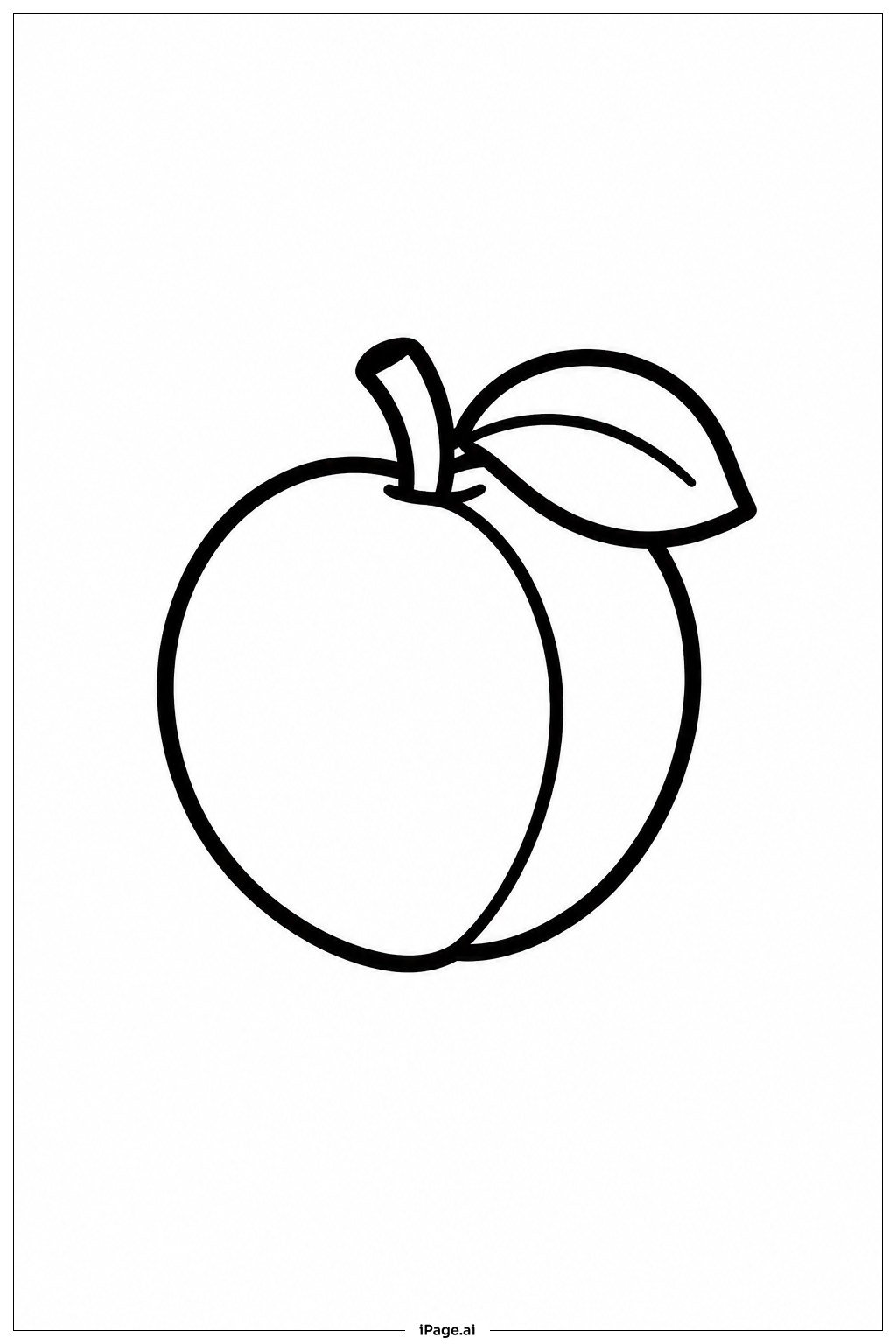
Coloring tips: How to color Apricot Fruit coloring page well?
Start with the apricot fruits using warm shades of orange and yellow. Use a deeper burnt orange along the edges and near the crease to show the fruit's natural roundness. Add a soft golden yellow in the center where light would hit. For the cut half, color the flesh a bright peachy-orange and the pit a warm brown or tan. The leaves work well in medium to dark green, with lighter green or yellow-green highlighting the veins and tips. The stem can be colored in brown or olive green. Use gentle, smooth strokes to blend colors and create a soft, fresh look. Kids can keep it simple with flat colors, while older colorists can try shading for a more realistic feel.
Coloring challenges: Which parts are difficult to color and need attention for Apricot Fruit coloring page?
• Blending the Fruit's Gradient: Real apricots have a smooth transition from golden yellow to deep orange and even a hint of red or pink near the crease. Recreating this gradient without streaks can be tricky, especially for younger colorists. Try layering light colors first and slowly building up darker tones on top.
• Coloring the Crease and Curves: The line running down the side of the apricot gives it shape and depth. Shading just along this line with a slightly darker orange or brown helps the fruit look round and three-dimensional. Pressing too hard in this area can make it look flat or muddy.
• Detailing the Leaf Veins: The leaves have many small veins branching out from the center. Coloring around the veins carefully, or leaving them slightly lighter than the rest of the leaf, adds a realistic touch. This requires a steady hand and a fine-tipped coloring tool.
• Rendering the Pit Realistically: The exposed pit inside the cut apricot has a smooth, hard surface with a slightly different texture from the fruit flesh. Using a warm tan or light brown with a small shadow on one side helps it stand out without blending into the surrounding orange flesh.
• Balancing Colors Across the Whole Page: Since the fruits and leaves sit close together, choosing colors that complement each other without clashing is important. Making sure the greens of the leaves do not overpower the warm oranges of the fruit keeps the image looking balanced and natural.
Benefits of coloring books: Advantages of drawing Apricot Fruit coloring page
Coloring this apricot page offers a wide range of benefits for children and young learners. Working with warm oranges, yellows, and greens helps kids learn about color mixing and how shading can make a flat shape look round and real. Focusing on the details of the fruit, leaves, and pit builds fine motor skills and strengthens hand control, which supports handwriting and other everyday tasks. The natural subject of a fruit connects coloring to real-world learning, sparking curiosity about where food comes from and how plants grow. Completing the page gives kids a sense of accomplishment and boosts self-confidence. The calming, repetitive motion of coloring also helps reduce stress and improve focus, making it a great activity before homework or after a busy day. For older children, practicing shading and blending on this image builds artistic skills they can carry into more complex creative projects. Overall, this simple and inviting page makes learning and creativity feel fun and rewarding.