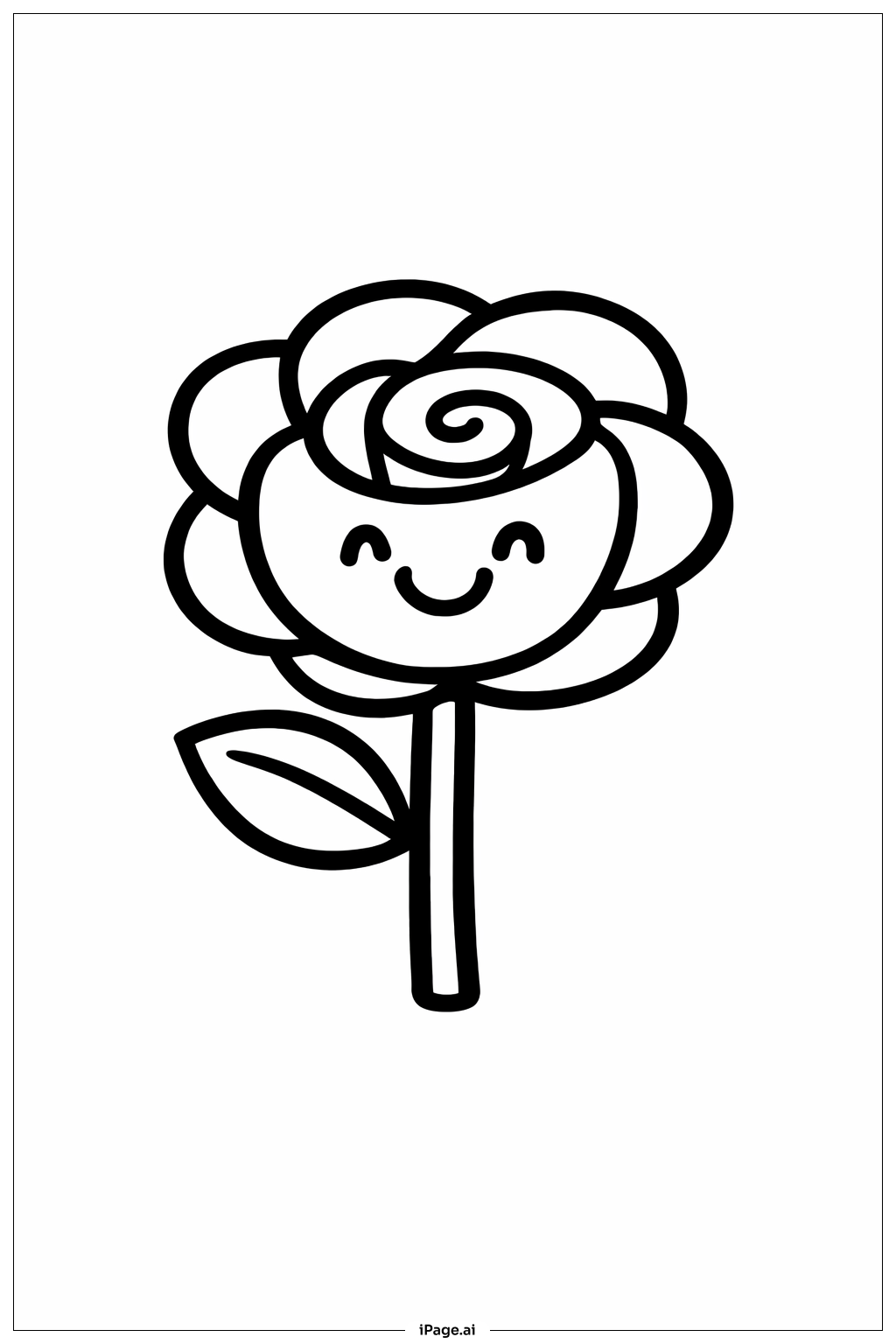
Coloring tips: How to color Smiling Rose Flowers coloring page well?
For the roses, try using different shades of red, pink, or even purple to create depth in each petal layer. Start with a lighter color in the center and gradually darken toward the outer petals. You can make each rose a different color for variety. The smiling faces can be colored in a contrasting darker shade or left white for a classic look. Use various shades of green for the stems and leaves, adding darker tones along the edges to create dimension. Consider adding yellow or orange highlights to the center of the flowers. For a magical touch, try rainbow colors across all three roses, or use warm sunset colors like coral, peach, and golden yellow. Don't forget to add light shading around the leaves to make them pop off the page.
Coloring challenges: Which parts are difficult to color and need attention for Smiling Rose Flowers coloring page?
• Petal Layering Details: The roses feature multiple overlapping petals that create complex depth and dimension. Coloring each petal distinctly while maintaining a cohesive look requires careful attention to shading techniques. Younger children may find it challenging to stay within the curved petal boundaries and differentiate between layers without colors bleeding together visually.
• Small Facial Features: Each rose contains tiny facial elements including eyes and smiling mouths that need precision coloring. These small areas require fine motor control and careful hand-eye coordination. Using the right tool, such as fine-tipped markers or sharp colored pencils, becomes essential to avoid coloring outside these delicate features.
• Leaf Vein and Edge Definition: The leaves display detailed veining and serrated edges that add realism to the illustration. Coloring these intricate details while maintaining the distinction between the leaf body and its outline requires patience and steady hands. Creating natural-looking shading along the veins without making them look muddy presents an additional challenge.
• Stem Overlap and Depth: The three stems cross and overlap at various points, creating spatial relationships that need to be reflected through color choices. Deciding which stem appears in front and which recedes behind requires planning and understanding of depth perception, which can be difficult for younger colorists to visualize and execute effectively.
Benefits of coloring books: Advantages of drawing Smiling Rose Flowers coloring page
Coloring these Smiling Rose Flowers helps children develop fine motor skills and hand-eye coordination through the detailed petals and small facial features. The layered petals encourage experimentation with shading and color blending, teaching basic art techniques in a fun context. The cheerful faces make the activity emotionally engaging, boosting mood and creating positive associations with creative tasks. This design introduces children to botanical shapes and flower anatomy while maintaining a playful, non-intimidating approach. The varying levels of detail accommodate different skill levels, allowing both beginners to enjoy simple color filling and advanced colorists to practice sophisticated techniques. Completing this page builds confidence, patience, and focus while encouraging self-expression through color choices.