Coloring tips: How to color Pair of Flowers coloring page well?
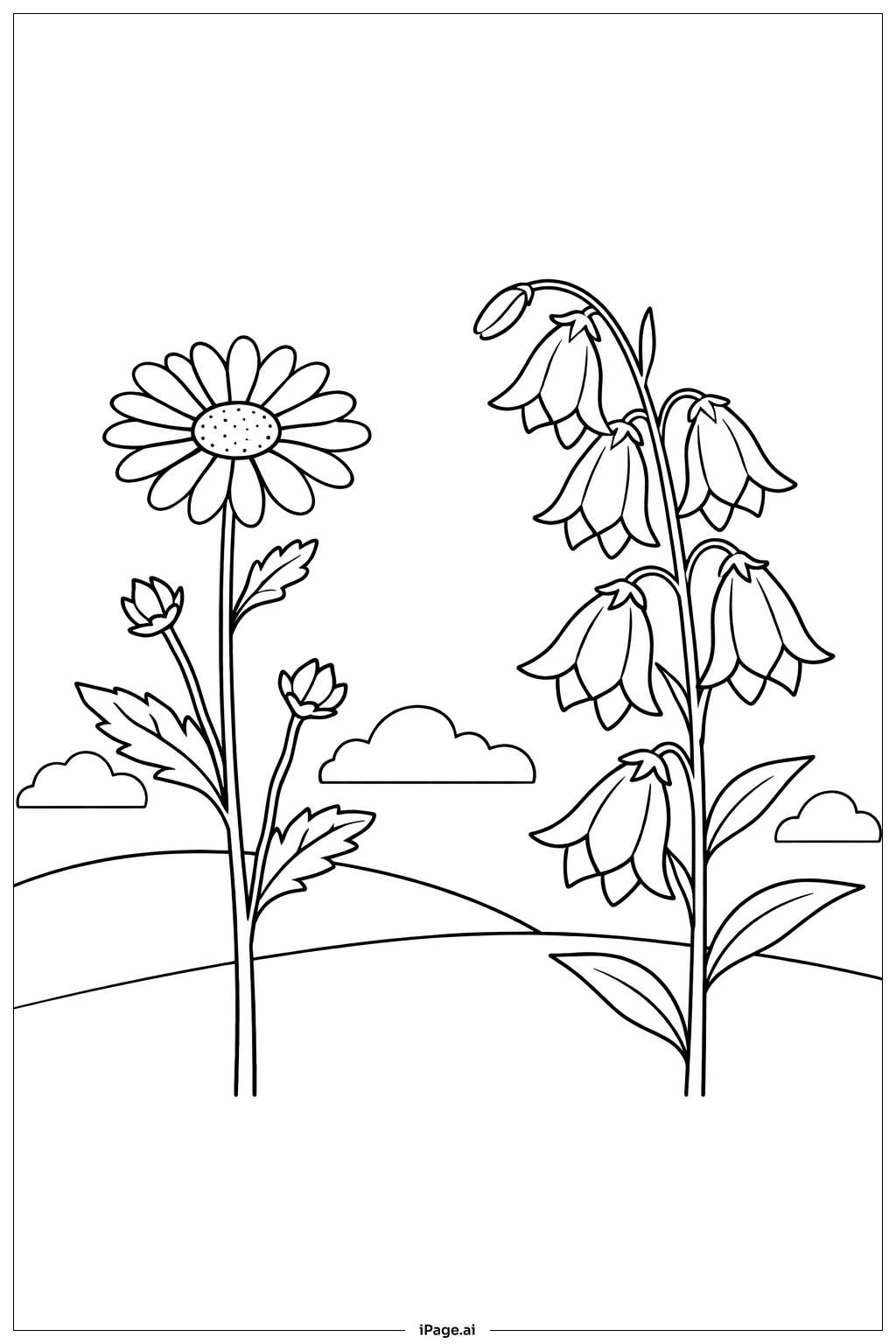
Start by choosing two different color schemes — one for each flower — so they stand out from each other. For example, color one flower in warm shades like yellow, orange, or red, and the other in cool shades like purple, blue, or pink. Use a darker shade around the edges of each petal and a lighter shade toward the center to create a soft, natural look. For the flower centers, try brown, golden yellow, or a contrasting bright color to make them pop. Color the stems and leaves in shades of green — mix light green and dark green to add depth. If you want a fun background, try a light sky blue or a soft pastel color. Feel free to add dots, stripes, or swirls inside the petals for extra decoration. There are no rules — just have fun and let your creativity shine!
Coloring challenges: Which parts are difficult to color and need attention for Pair of Flowers coloring page?
Coloring this image is enjoyable, but there are a few areas that may require extra care and attention. Here are the main challenges to keep in mind:
• Keeping Petal Colors Separate: Each flower has multiple petals that sit close together. It can be tricky to color each petal individually without accidentally blending into a neighboring petal. Working slowly and using fine-tipped tools near the edges will help keep each petal clean and distinct.
• Adding Shading to Rounded Petals: The petals have a smooth, curved shape. To make them look realistic and three-dimensional, you need to apply lighter color in the center and darker color near the edges. Blending these tones smoothly without streaks takes patience and practice.
• Coloring the Flower Centers: The round centers are small compared to the petals. Filling them neatly with a contrasting color while staying inside the lines requires steady hands and a well-sharpened pencil or a fine marker tip.
• Differentiating the Two Flowers: Since both flowers share a similar shape, it is important to choose clearly different color palettes for each one. Selecting colors that contrast well with each other will help each flower stand out and prevent the image from looking flat or repetitive.
• Balancing the Stems and Leaves: The stems and leaves are narrow and thin. Applying color evenly in these small areas without pressing too hard or going outside the lines can be challenging, especially for younger colorists. Using a sharp pencil and light, gentle strokes works best here.
Benefits of coloring books: Advantages of drawing Pair of Flowers coloring page
Coloring this Pair of Flowers page offers a wide range of wonderful benefits for kids and beginners alike. First, it helps improve fine motor skills. Carefully filling in petals, stems, and leaves trains the small muscles in the hands and fingers, which is great for handwriting and everyday tasks. Second, it encourages creativity. Choosing colors and deciding how to decorate each flower builds confidence in making creative decisions. Third, it teaches color theory in a fun and natural way. Experimenting with warm and cool colors, light and dark shades, and complementary combinations helps young colorists develop a strong sense of color. Fourth, it promotes focus and patience. Staying inside the lines and blending colors smoothly requires concentration, which helps children practice mindfulness and calm their minds. Fifth, completing the page gives a real sense of accomplishment. Seeing a finished, colorful artwork boosts self-esteem and motivates kids to keep creating. Overall, this simple but beautiful flower design is a perfect starting point for anyone who loves art and nature.