Coloring tips: How to color Flower Garland Banner coloring page well?
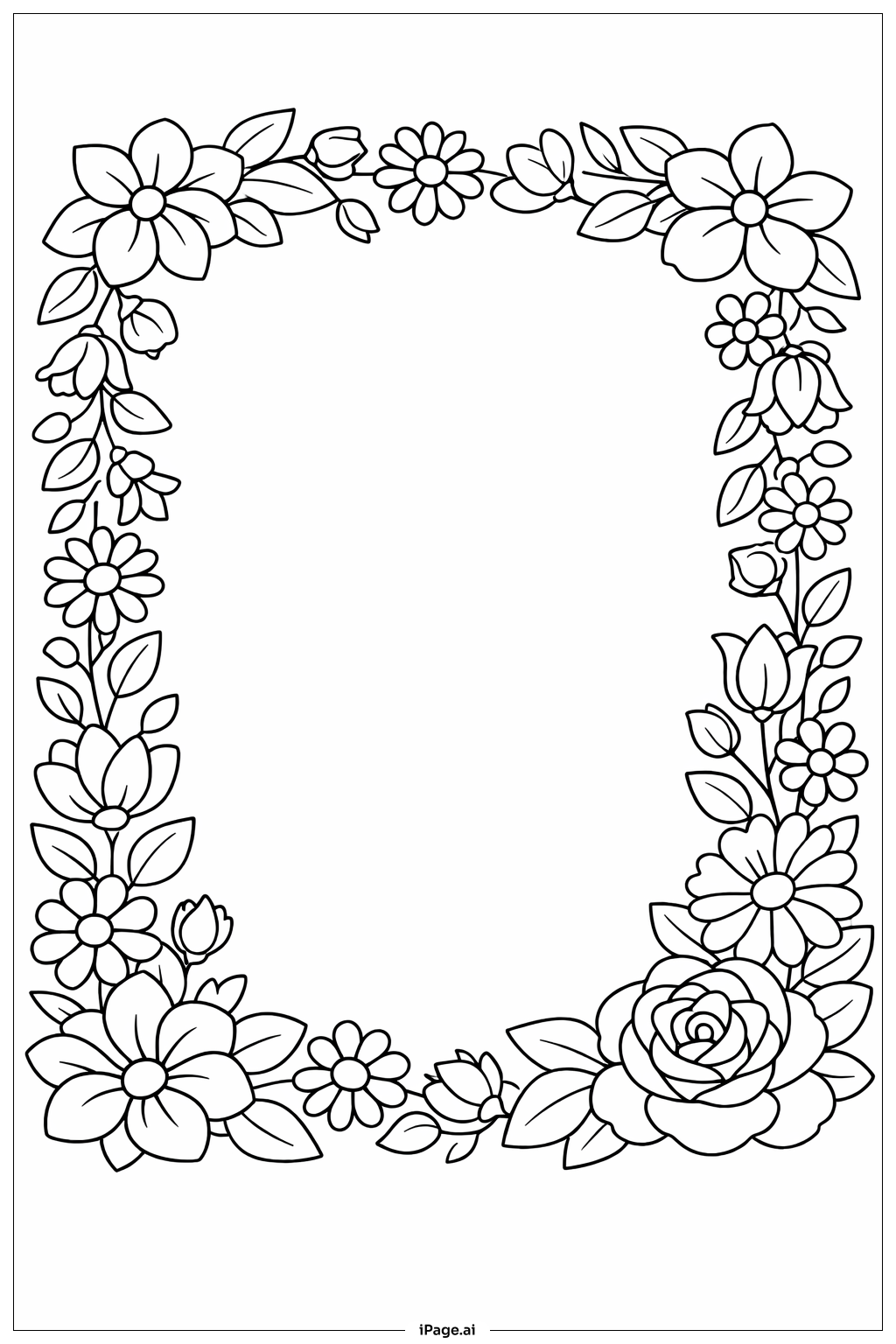
Start with the largest flowers first. Pick bright, happy colors like red, pink, yellow, and orange for the roses and daisies. Use different shades of green for the leaves and vines — light green for smaller leaves and darker green for bigger ones. This adds a natural, layered look. Color the ribbons and bows in bold colors like purple, blue, or gold to make them stand out. For the tiny buds and wildflowers, try soft pastel shades like lavender, peach, or baby blue. If you want your banner to look extra special, use a darker version of each color along the edges of the petals to create shading and depth. Take your time on the overlapping areas and try not to use the same color for two flowers that are right next to each other. That way, every bloom gets a chance to shine.
Coloring challenges: Which parts are difficult to color and need attention for Flower Garland Banner coloring page?
• Overlapping Flowers: Many flowers in the garland sit on top of or right next to each other. It can be tricky to figure out where one flower ends and another begins. You need to look carefully at the outlines and plan your colors ahead of time so neighboring flowers do not blend together or look like one shape.
• Small Details and Tiny Buds: The garland includes very small buds, thin vine curls, and tiny leaves scattered throughout. These small areas are hard to color neatly, especially with larger markers or crayons. A fine-tipped coloring pencil or a thin marker works best for these sections to avoid going outside the lines.
• Ribbon and Bow Sections: The ribbons and bows woven through the garland have folds and curves that create light and shadow. Coloring these areas realistically requires using at least two shades of the same color — one lighter and one darker — to show where the fabric bends. This technique takes some practice and patience.
• Color Planning Across the Full Banner: Because the garland spans the whole page, keeping your color choices balanced from left to right is a real challenge. If you use all your bright colors on one side, the other side might look dull. Try to spread your favorite colors evenly across the entire banner before you start filling them in.
• Leaf and Vine Variety: The leaves and vines appear many times throughout the design. Using the exact same green everywhere can make the garland look flat. Try alternating between two or three shades of green to give the foliage a more lively, natural appearance.
Benefits of coloring books: Advantages of drawing Flower Garland Banner coloring page
Coloring this Flower Garland Banner is a wonderful activity for kids and anyone who loves flowers. It helps build focus and patience because the design has many small sections that need careful attention. Choosing colors for so many different flowers is a great way to practice creative thinking and develop a personal sense of style.
Working through the overlapping petals and layered leaves helps improve fine motor skills, which are important for writing and other everyday tasks. Kids learn to control their tools more precisely as they carefully fill in each small area.
The banner's cheerful, festive design makes the coloring experience feel fun and rewarding. Seeing all the bright blooms come to life on the page builds confidence and a sense of accomplishment. It also makes a great piece of art to display or give as a gift.
For older kids and adults, the challenge of shading the ribbons and creating depth in the petals offers a satisfying way to practice more advanced coloring techniques. It is a relaxing and screen-free activity that encourages mindfulness and calm. Whether you are coloring alone or with friends, this garland banner is a joyful creative experience from start to finish.