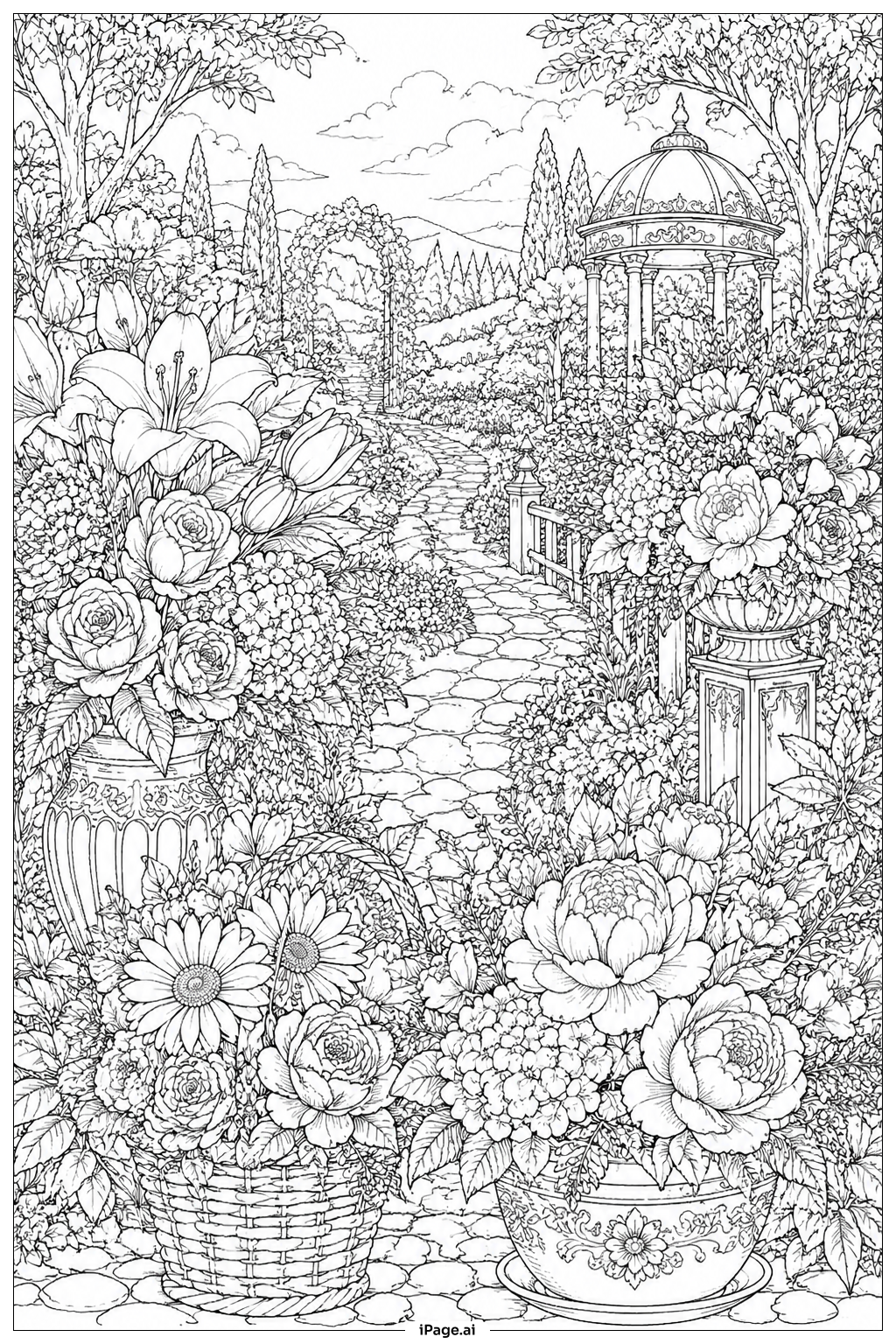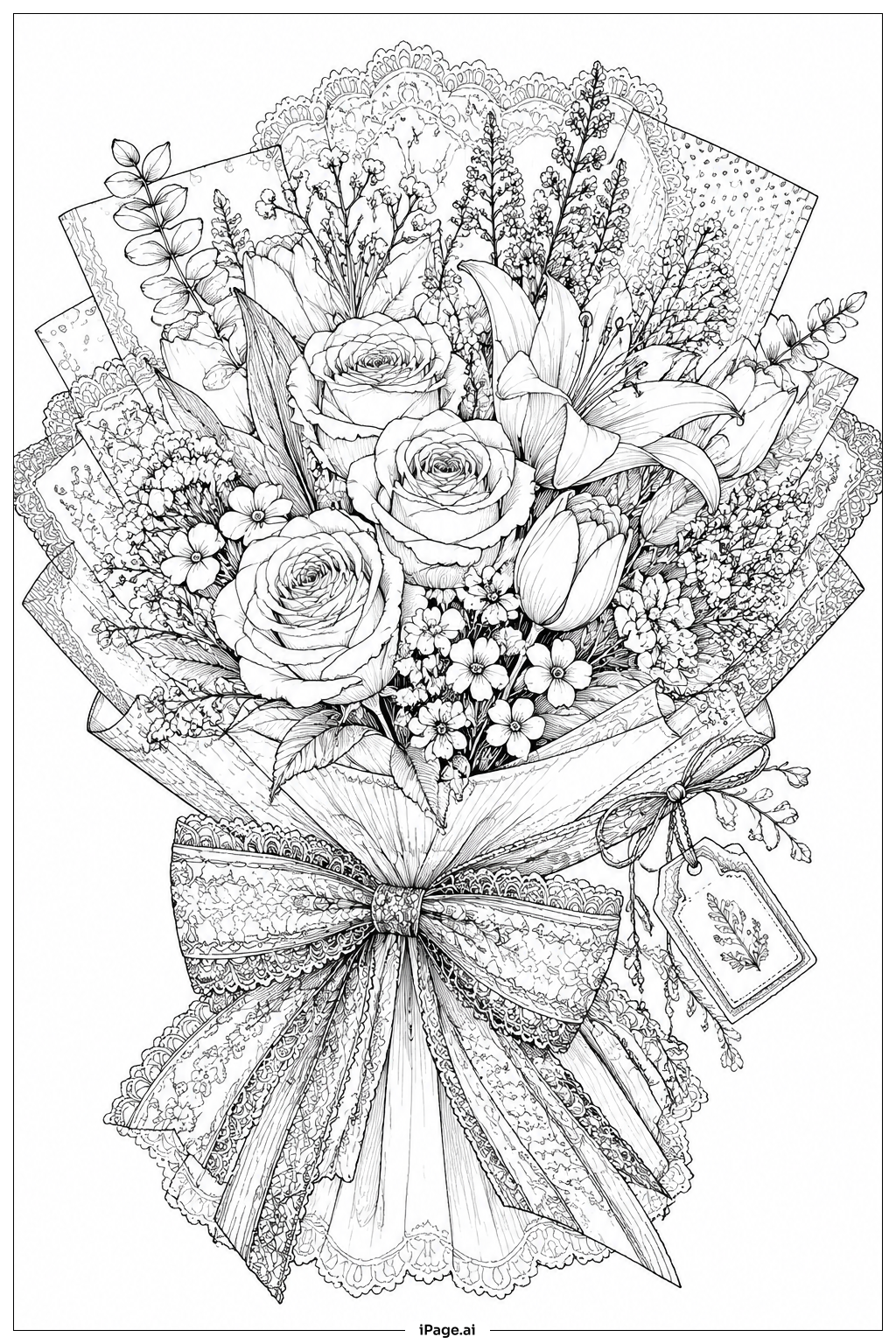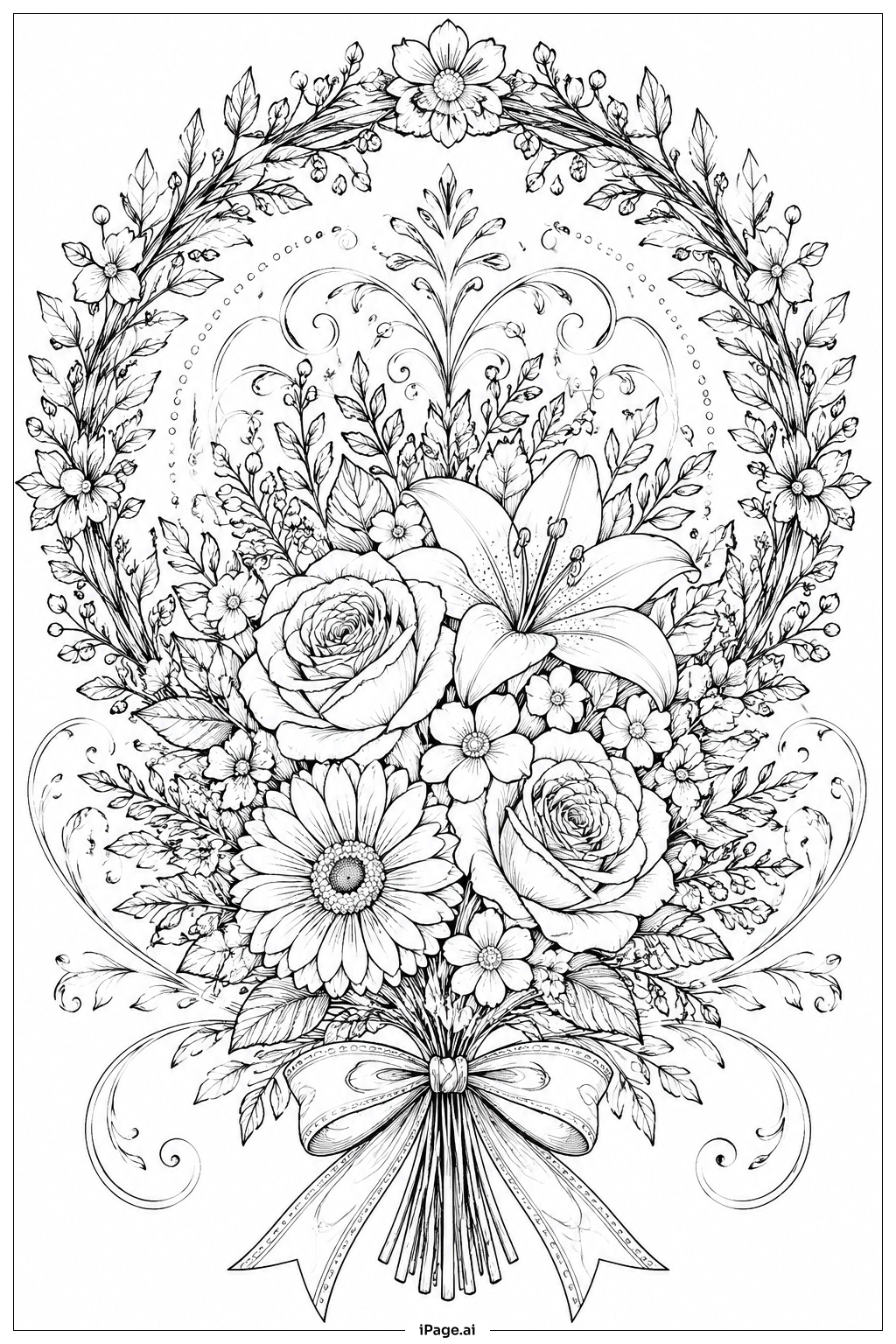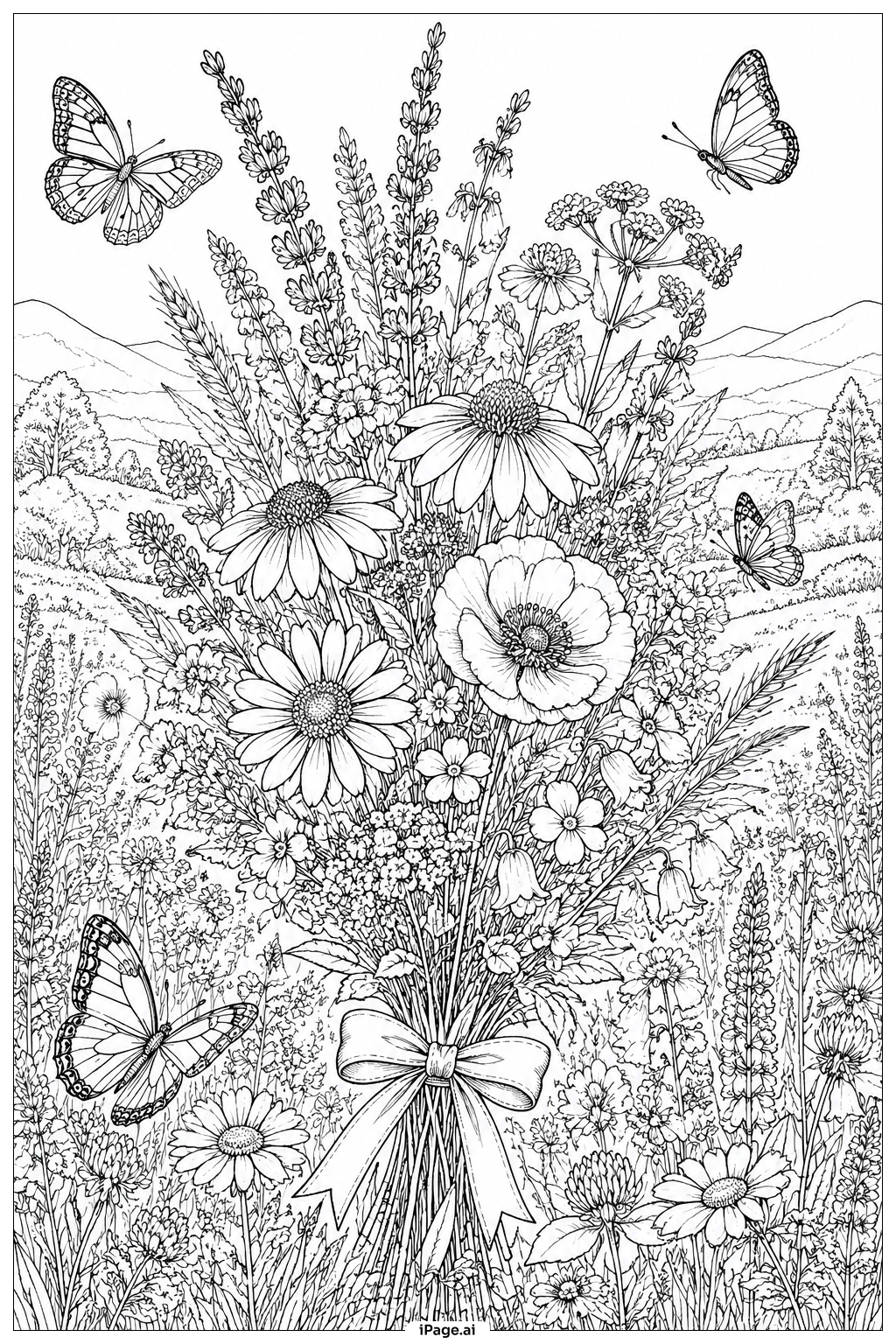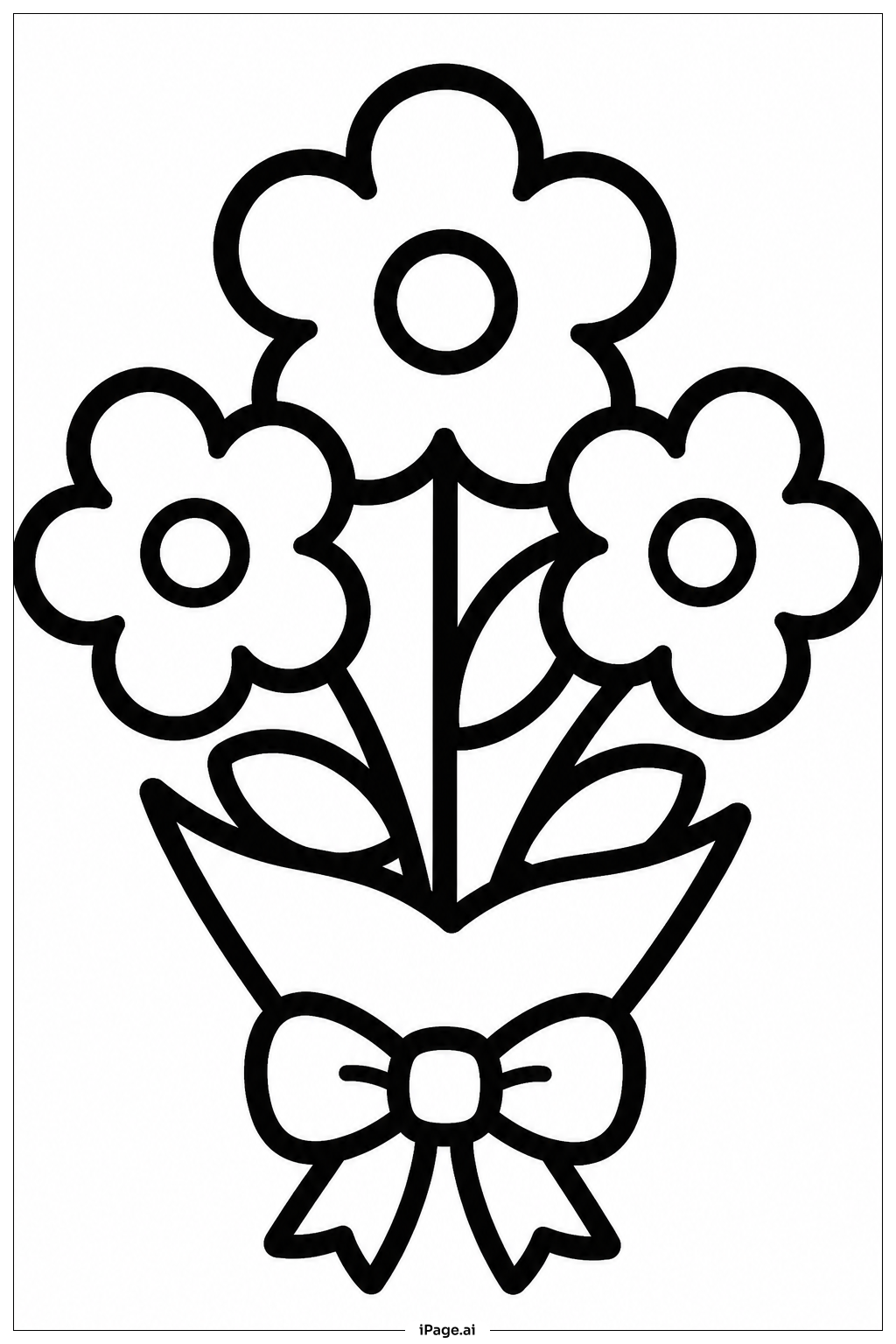
Coloring tips: How to color Simple Flower Bouquet coloring page well?
Try using bright and cheerful colors to make the flowers come alive. You can color the petals in shades like red, pink, yellow, or purple for variety. For the flower centers, use a contrasting color like orange or brown. The leaves and stems look great in different greens—light and dark shades to create depth. The ribbon can be colored with soft pastel colors like light blue or lavender to give a gentle, calming effect. Feel free to experiment with different color combinations to make your bouquet unique and joyful.
Coloring challenges: Which parts are difficult to color and need attention for Simple Flower Bouquet coloring page?
• The fine lines of the flower petals require careful coloring to stay within the edges without smudging.
• The ribbon has curves and folds that can be tricky to shade realistically, especially the overlapping areas.
• Some flower centers are small and need precise coloring to avoid mixing colors.
• The leaves and stems are close to each other, so separating the greens clearly can be a challenge.
• Balancing colors so the bouquet looks harmonious but not too busy requires thoughtful color choices and layering.
Benefits of coloring books: Advantages of drawing Simple Flower Bouquet coloring page
Coloring this Simple Flower Bouquet helps improve fine motor skills by encouraging careful hand movements within small spaces. It also boosts color recognition and creativity with options to mix and match hues for petals, leaves, and ribbon. This activity promotes focus and patience, especially when shading curved ribbon folds and delicate details. For children and adults alike, it offers a calm and joyful experience by connecting with nature’s beauty through art. Completing this image can build confidence by producing a visually pleasing and colorful floral arrangement.