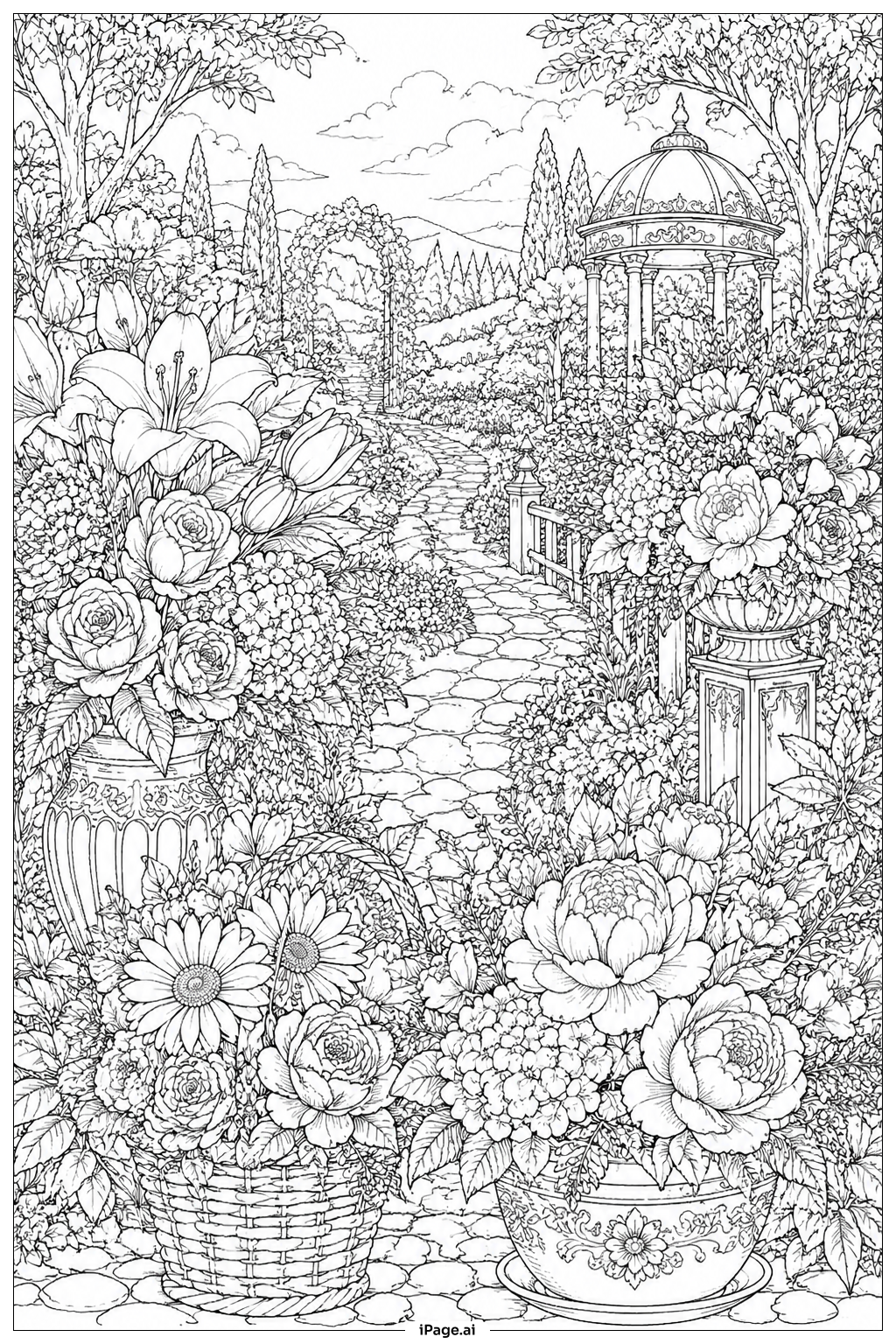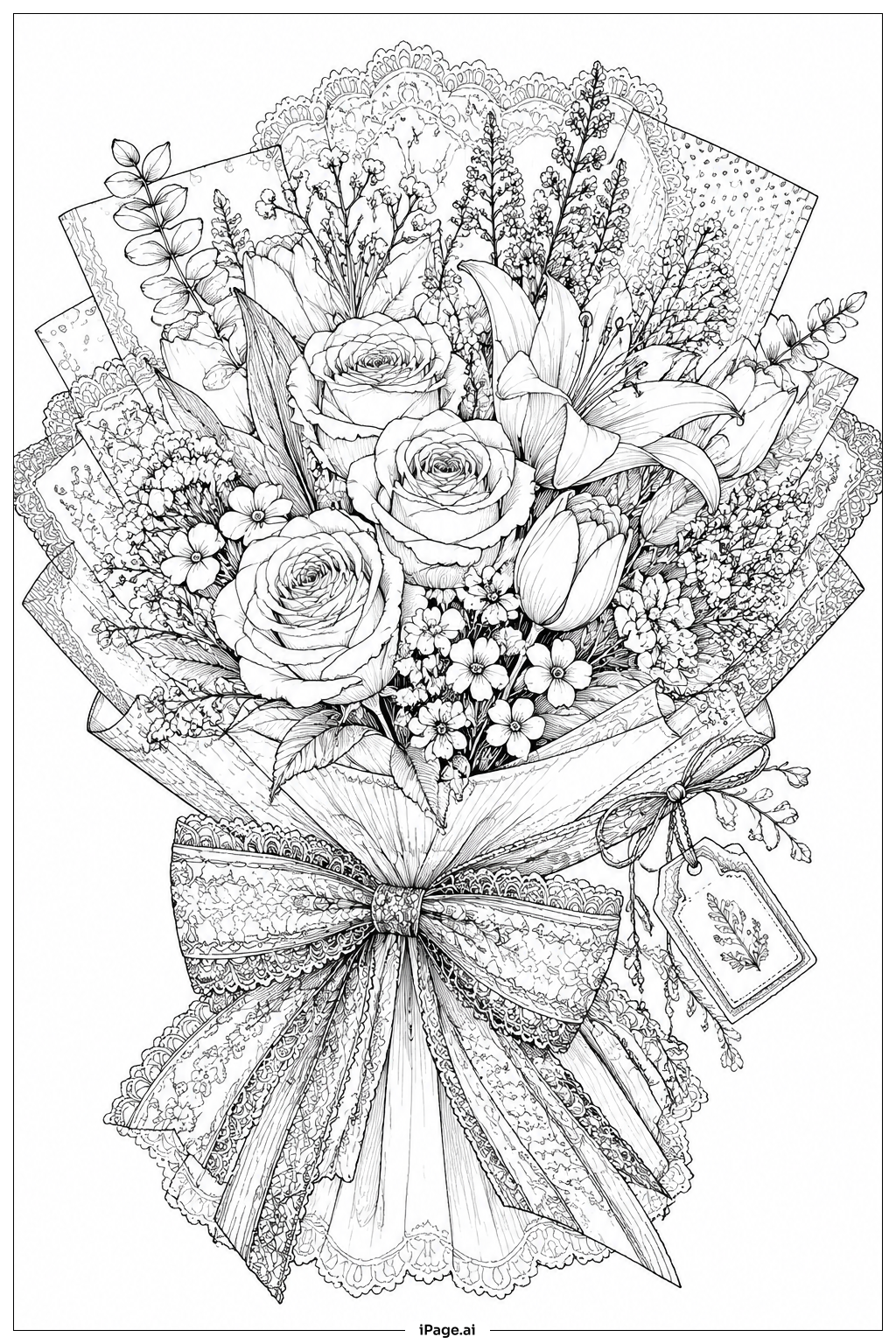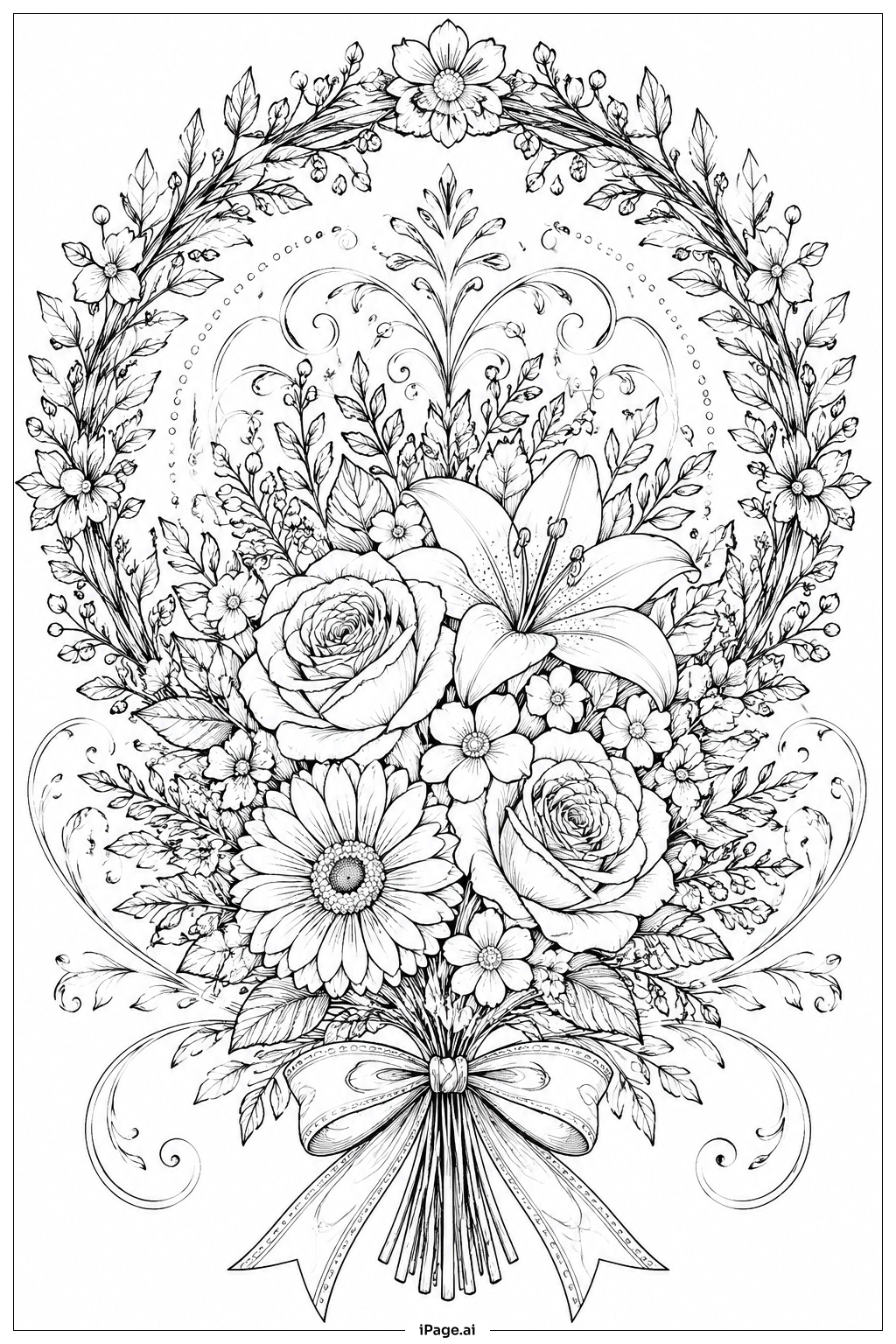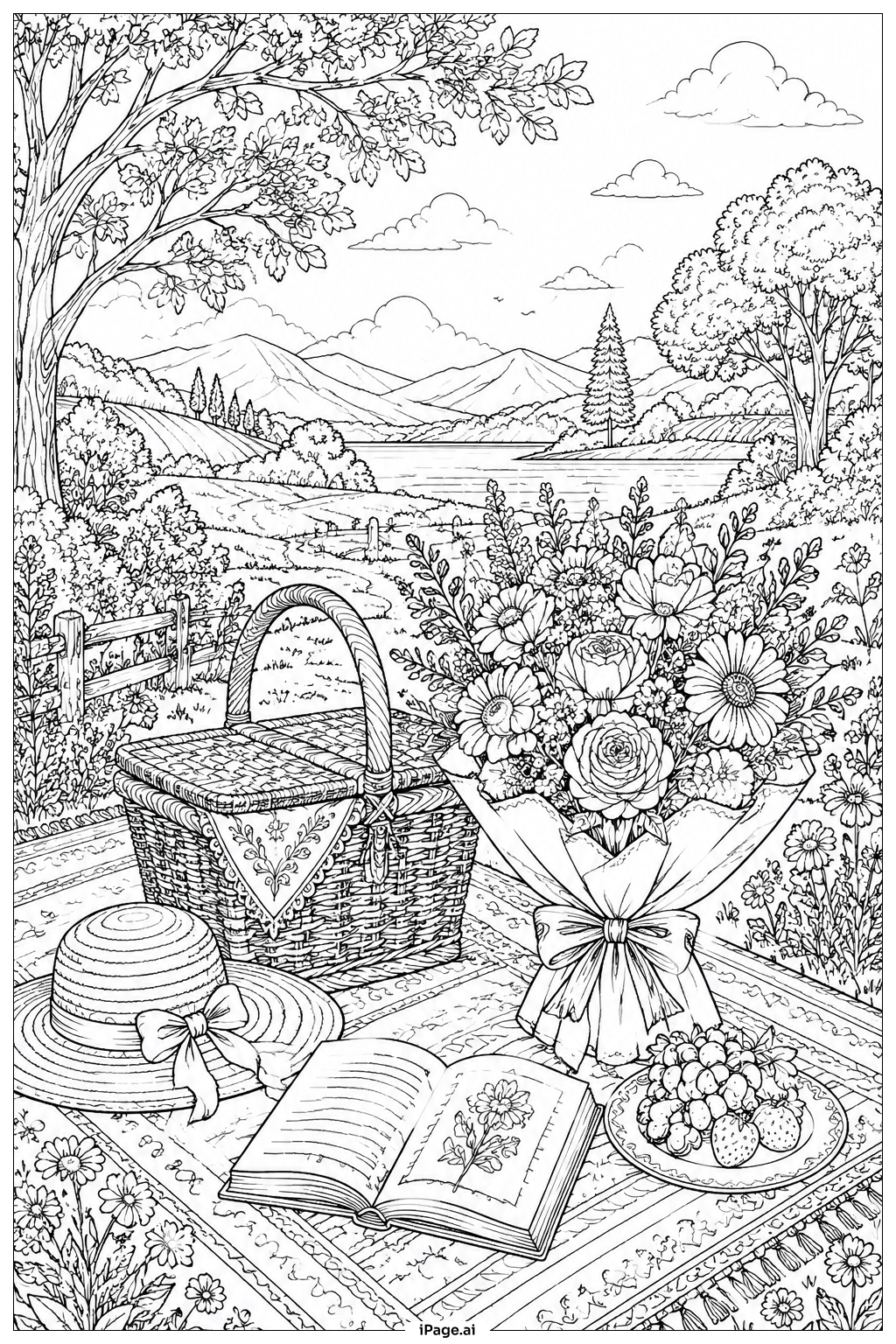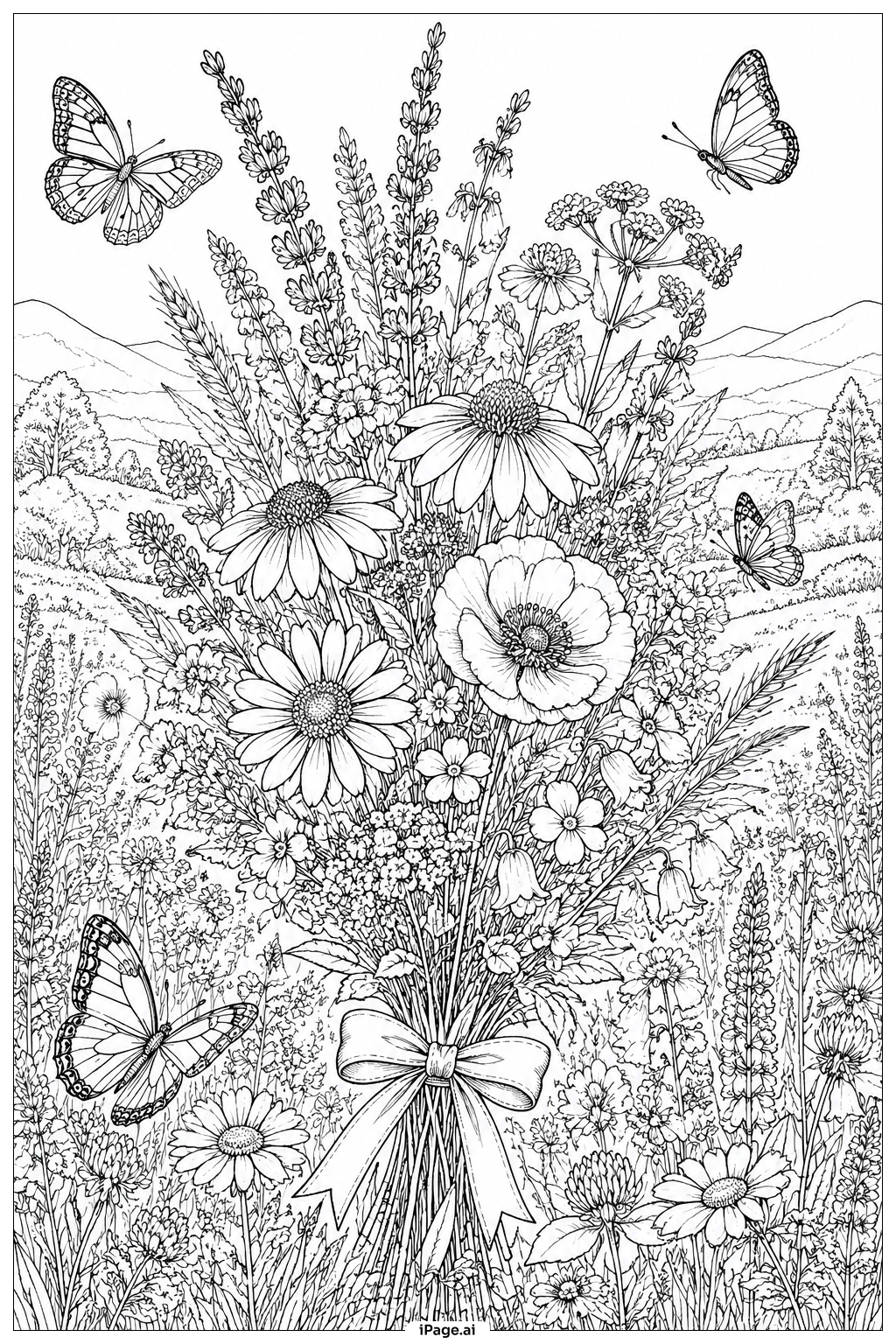
Coloring tips: How to color Butterfly Meadow Flower Bouquet Composition coloring page well?
Start with the butterflies using bright colors like orange, yellow, blue, or purple to make them stand out against the flowers. For the flowers, choose a variety of colors to create a vibrant bouquet. Try pink and red for tulips, yellow and white for daisies, and purple or blue for wildflowers. Color the flower centers with contrasting shades like yellow or brown. Use different shades of green for the leaves and stems, mixing light and dark greens to add dimension. The vase can be colored in earthy tones like brown or terracotta, or try a colorful pattern with stripes or dots. Consider using colored pencils for soft blending or markers for bold, vibrant results. Add shading to petals by coloring darker near the base and lighter at the tips.
Coloring challenges: Which parts are difficult to color and need attention for Butterfly Meadow Flower Bouquet Composition coloring page?
• Intricate Petal Details: Each flower in the bouquet has multiple petals with varying shapes and sizes that require careful coloring to stay within the lines. The overlapping petals create small spaces that need precision, especially for younger children. Using fine-tipped coloring tools can help maintain neat edges and prevent colors from bleeding into adjacent areas.
• Butterfly Wing Patterns: The butterflies feature delicate wings with potential pattern segments that may be challenging to color consistently. Keeping symmetry between the left and right wings while adding decorative details requires patience and attention. Children may find it helpful to color one wing completely before moving to match the other side.
• Overlapping Elements: The composition shows flowers, leaves, stems, and butterflies layered over each other, creating complex intersections. Deciding which element is in front and maintaining color boundaries where they overlap can be confusing. Planning the color scheme before starting and working from background to foreground helps manage these challenges.
• Leaf and Stem Variations: The numerous leaves and stems throughout the bouquet need varied green shades to avoid a flat, monotonous appearance. Creating natural-looking depth by alternating light and dark greens while keeping track of which stem connects to which flower requires careful observation and color management skills.
Benefits of coloring books: Advantages of drawing Butterfly Meadow Flower Bouquet Composition coloring page
Coloring this flower bouquet composition helps children develop fine motor skills and hand-eye coordination as they carefully fill in petals, leaves, and butterfly wings. The variety of shapes and sizes encourages focus and concentration, building patience and attention span. This nature-themed image introduces children to different types of flowers and butterflies, sparking curiosity about the natural world. Choosing colors for various elements promotes decision-making skills and creative expression. The repetitive motion of coloring has a calming effect, reducing stress and anxiety while providing a sense of accomplishment. Working with multiple overlapping elements improves spatial awareness and problem-solving abilities. Completing this detailed bouquet boosts confidence and self-esteem, especially when children see their finished colorful creation. This activity also provides an excellent opportunity for learning color names, practicing color mixing, and understanding how different hues work together harmoniously.