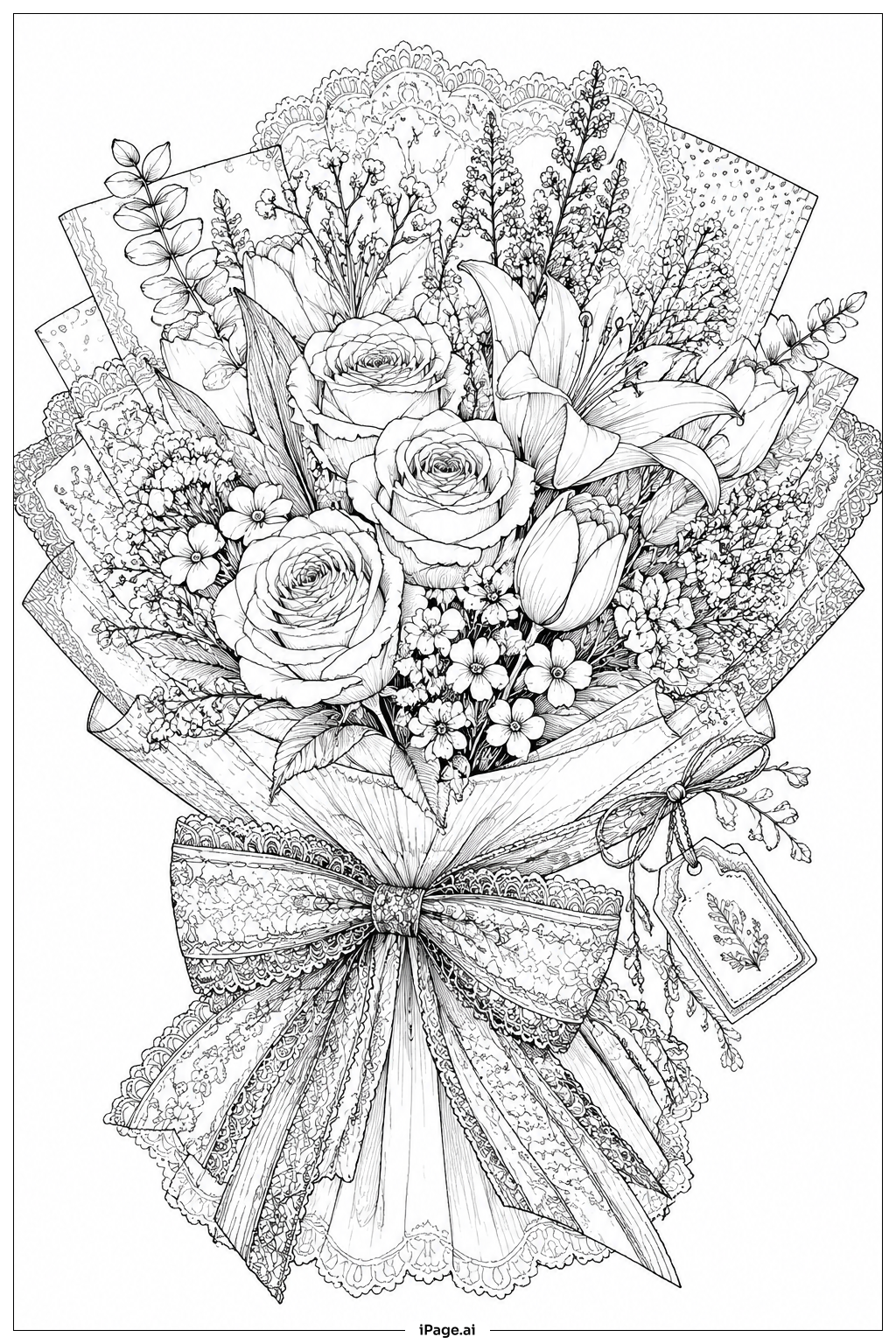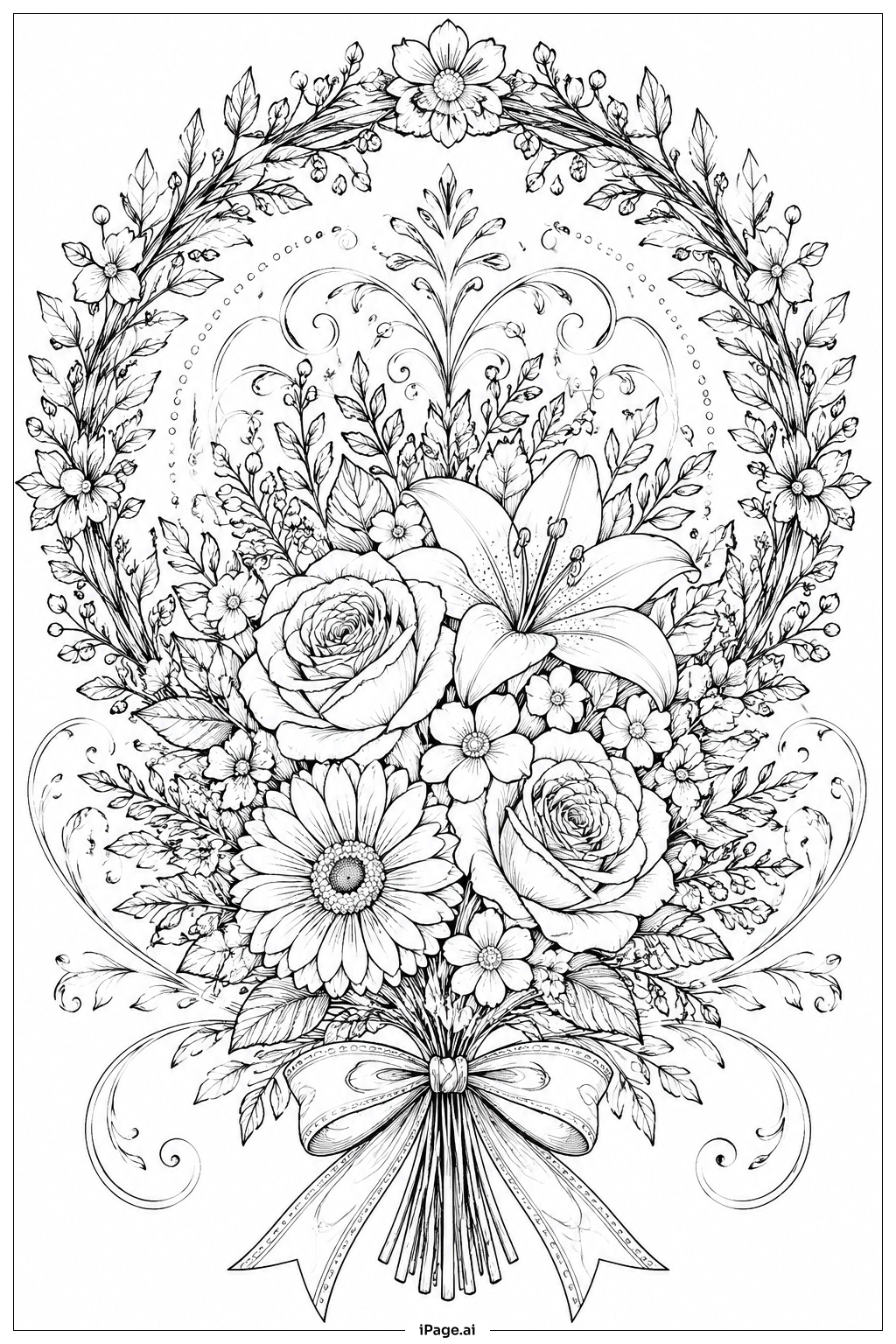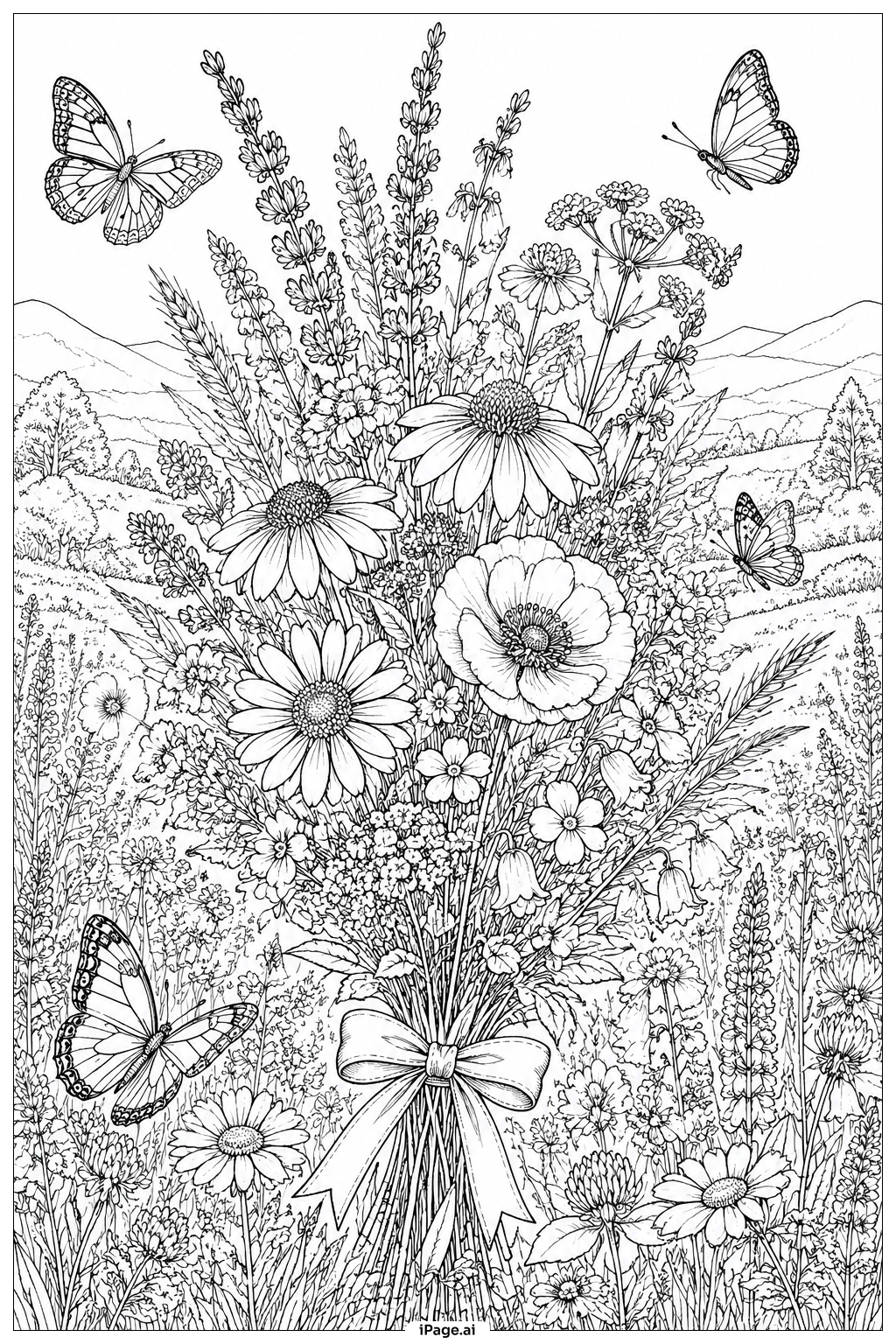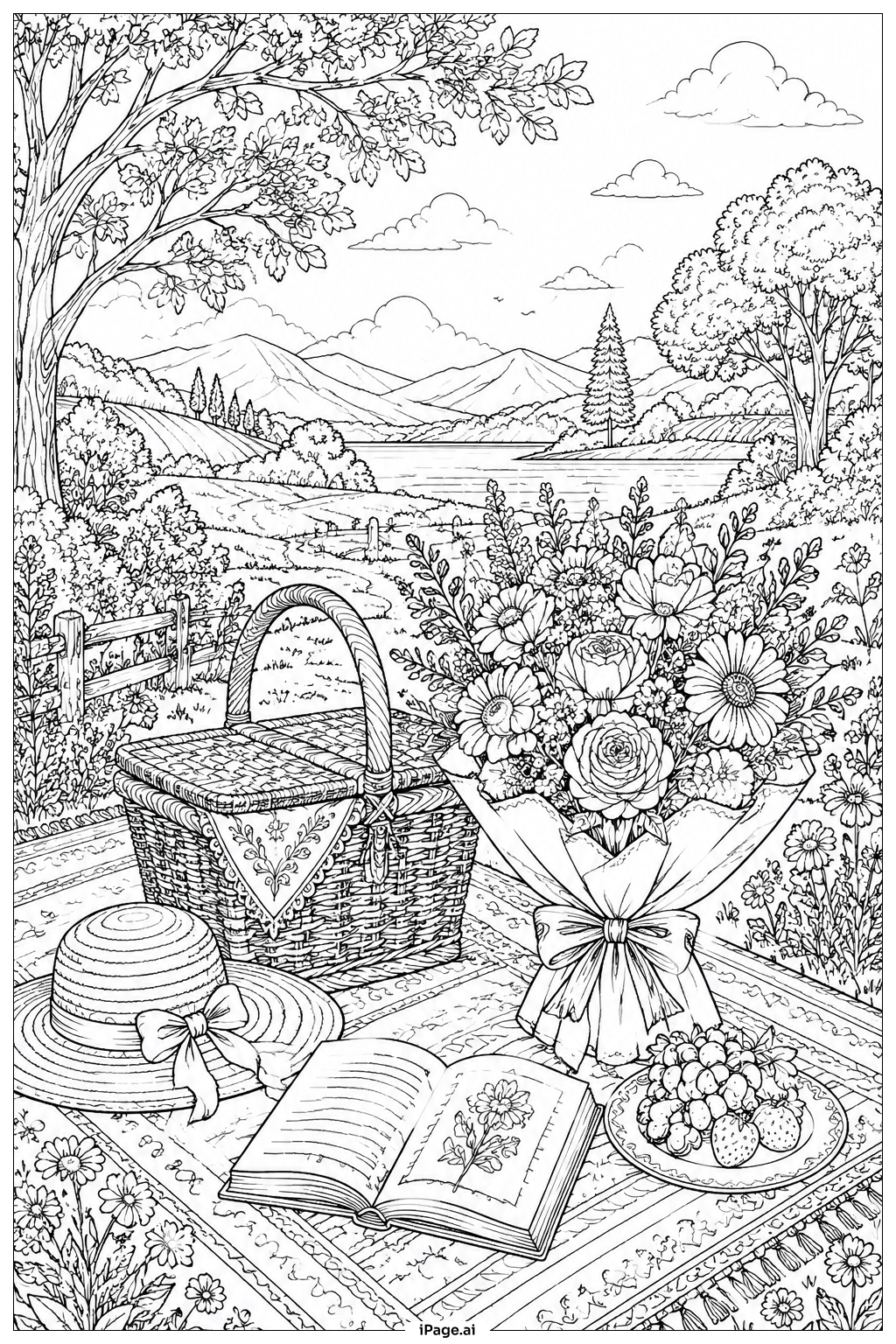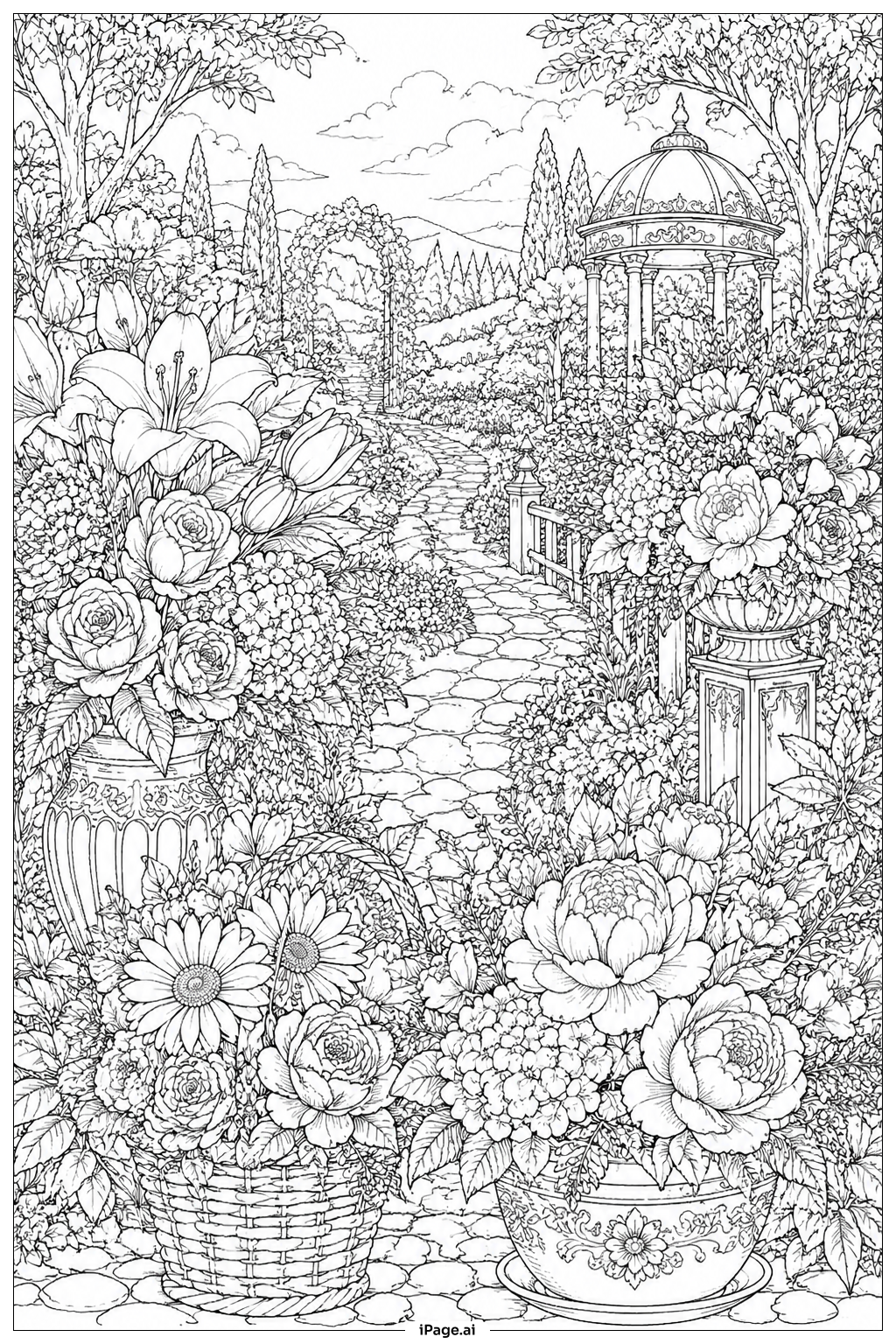
Coloring tips: How to color Layered Garden Flower Bouquet Panorama coloring page well?
Start by choosing a color palette that reflects a real garden or create a fantasy bouquet with imaginative hues. Consider coloring the largest flowers first as focal points - try pink or red for roses, yellow or orange for dahlias, and white or purple for daisies. Use different shades of the same color family to add depth to individual petals, making them lighter near the center and darker at the edges. For leaves, experiment beyond basic green by adding hints of blue-green, yellow-green, or even burgundy tones. Smaller filler flowers can be colored in complementary colors to make the main blooms stand out. Add soft shading between overlapping flowers to create dimension. You might color some flowers brightly and leave others in pastel tones for variety and visual balance throughout the panorama.
Coloring challenges: Which parts are difficult to color and need attention for Layered Garden Flower Bouquet Panorama coloring page?
• Overlapping Elements: The flowers and leaves overlap extensively throughout this panoramic design, creating complex layered sections. Deciding which element sits in front and maintaining consistent color boundaries where petals intersect requires careful attention and planning before you begin coloring.
• Intricate Petal Details: Each flower type has numerous individual petals with curved edges and fine line work. Staying within these small, organic shapes while applying color evenly demands precision and a steady hand, especially in the tightly clustered areas of the bouquet.
• Color Coordination: With so many different flower varieties present, choosing a harmonious color scheme that makes each bloom distinct yet cohesive as a whole bouquet presents a creative challenge. Balancing warm and cool tones across the panoramic layout requires thoughtful planning.
• Small Spaces and Details: The design includes tiny flower centers, narrow gaps between petals, and delicate leaf veins. Coloring these intricate details without bleeding into adjacent areas can be challenging, particularly for younger colorists or when using markers and wet media.
• Maintaining Visual Balance: Since this is a panoramic composition, distributing colors evenly across the horizontal layout to avoid one side looking too heavy or chaotic requires stepping back frequently to assess the overall effect and adjust your approach as needed.
Benefits of coloring books: Advantages of drawing Layered Garden Flower Bouquet Panorama coloring page
Coloring this layered flower bouquet offers wonderful benefits for creative development and relaxation. The intricate details help improve fine motor skills and hand-eye coordination as you carefully navigate petals and leaves. This design encourages color theory exploration, allowing you to experiment with complementary colors, shading techniques, and creating natural gradients. The repetitive yet varied nature of flowers provides a calming, meditative experience that reduces stress and promotes mindfulness. Working through the overlapping elements builds problem-solving skills and spatial awareness. The botanical theme connects you with nature and can spark interest in gardening and plant identification. Completing this detailed panoramic bouquet brings a strong sense of accomplishment and pride. The cheerful subject matter naturally boosts mood and creativity, making it perfect for artistic expression and personal relaxation time.