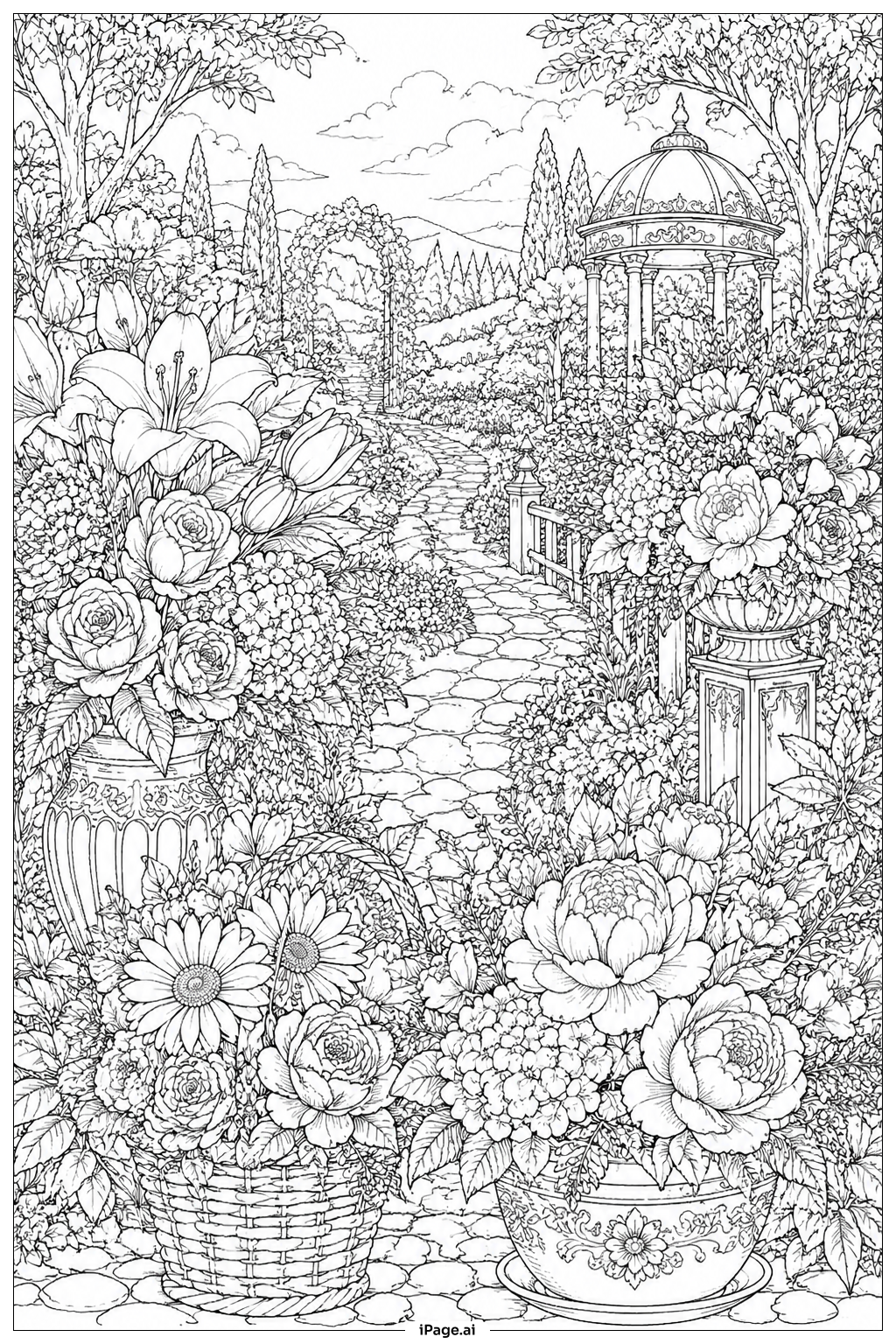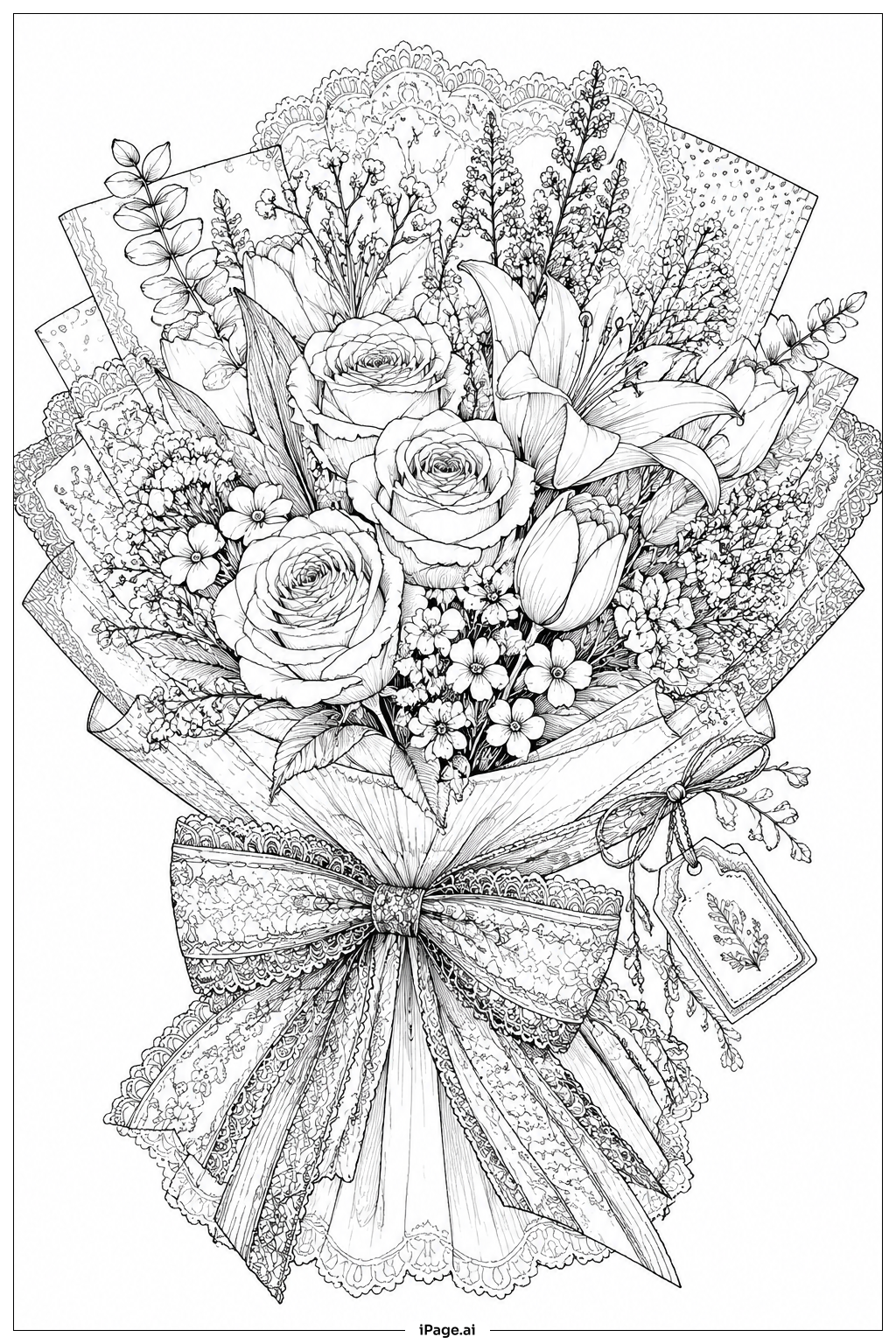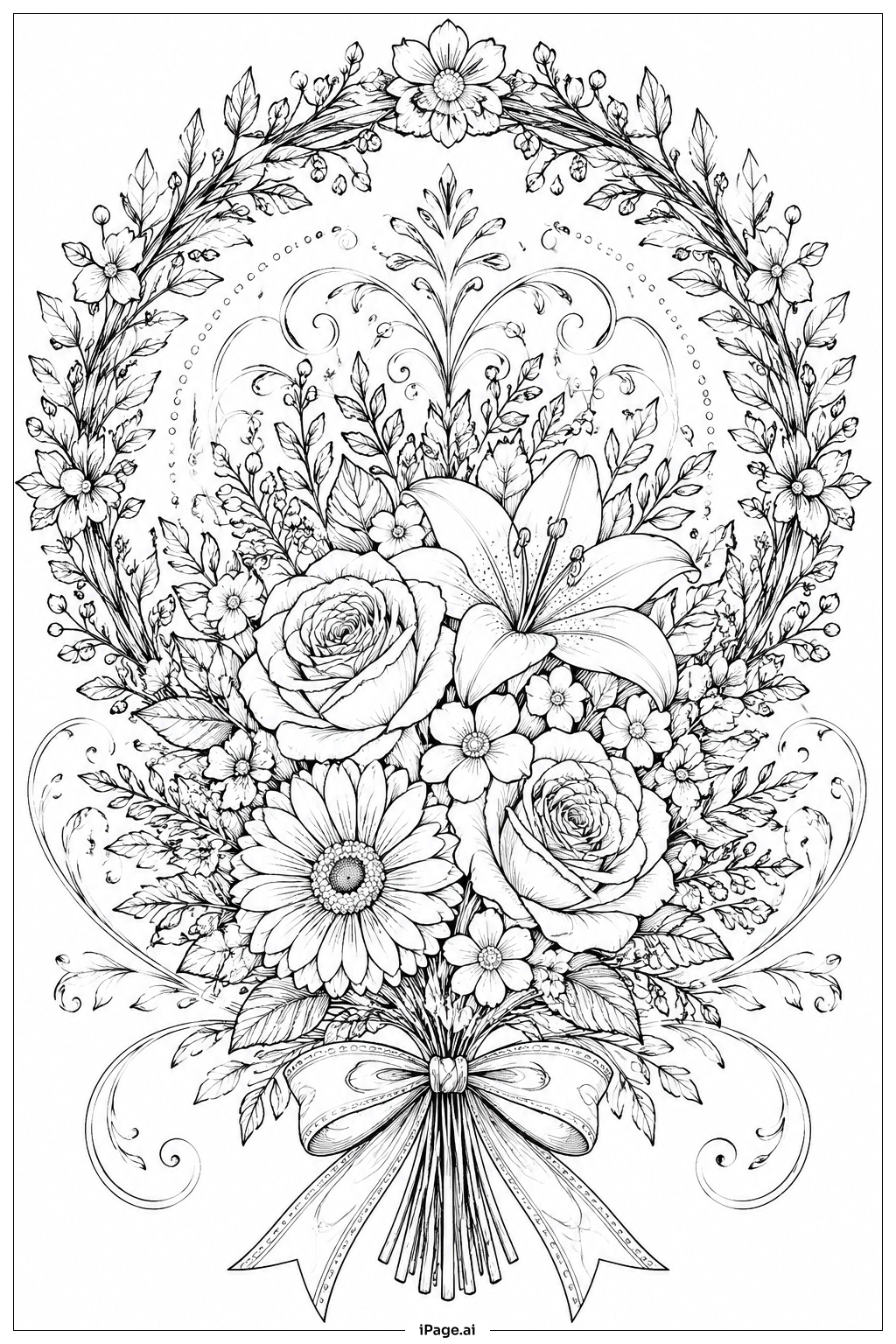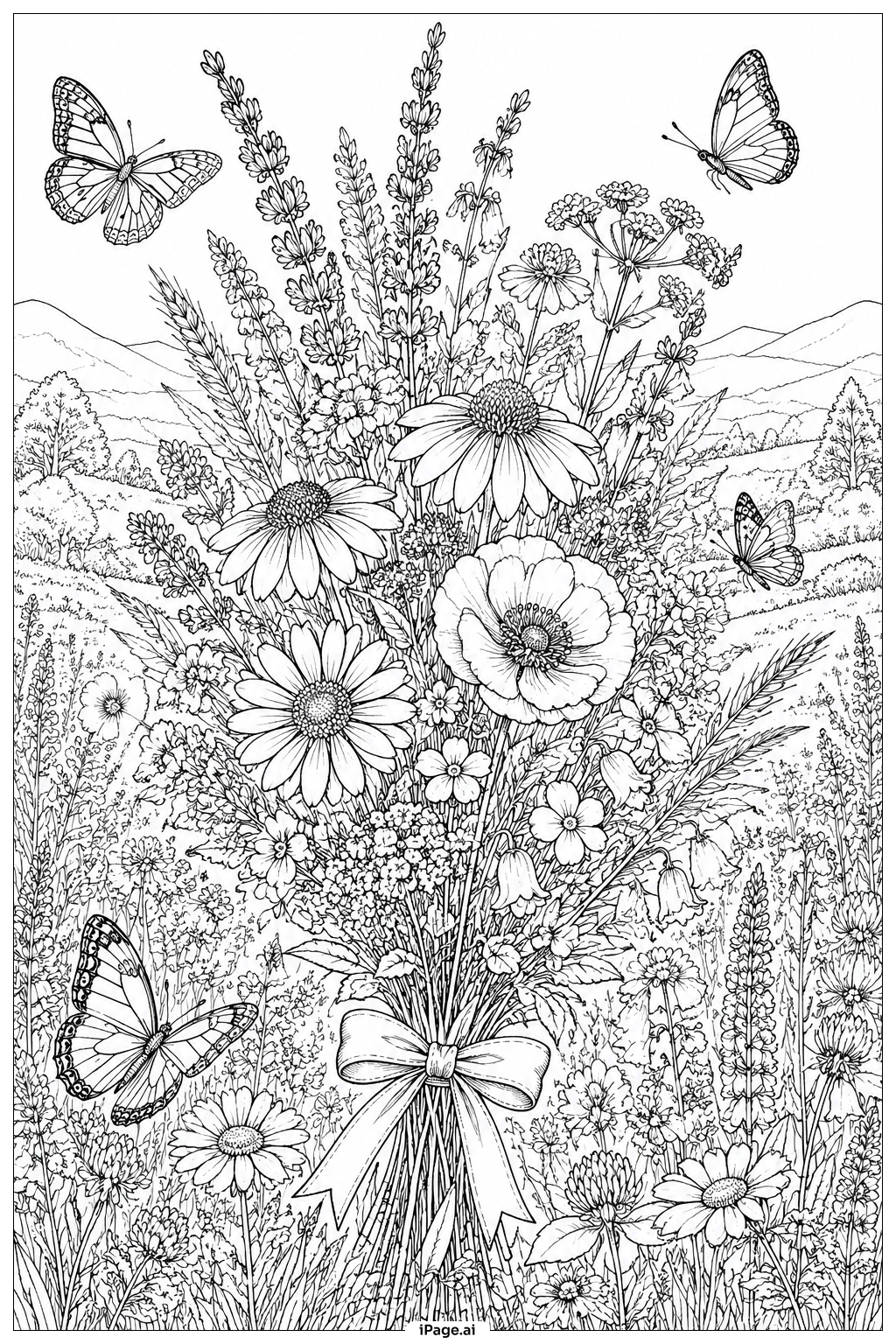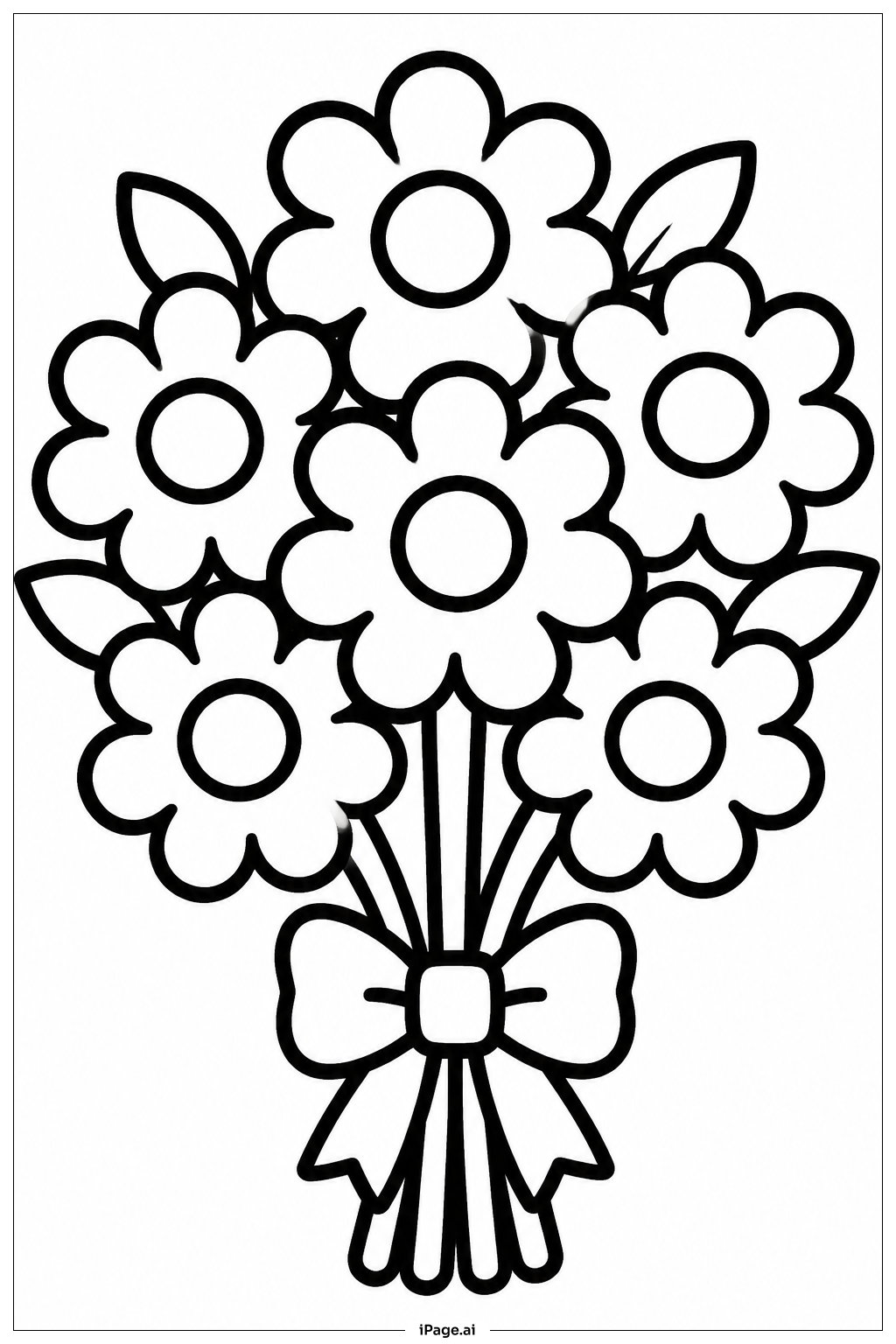
Coloring tips: How to color Round Daisy Flower Bouquet coloring page well?
To color this Round Daisy Flower Bouquet, start with soft yellows or whites for the daisy petals, since these colors are common and cheerful. Use a sunny yellow or light cream for petals and a deeper yellow or orange for the flower centers to add warmth. The leaves and stems can be colored in various shades of green, from light grassy green to dark forest green, to create natural contrast. You can add hints of blue or purple in the background or shadows to make the bouquet stand out. Feel free to be creative—daisies can also be colored with soft pinks or pastel hues for a fun twist. Remember to use different shading intensities to give depth and texture to each petal and leaf.
Coloring challenges: Which parts are difficult to color and need attention for Round Daisy Flower Bouquet coloring page?
• The many small, narrow petals require careful coloring to avoid going outside the lines, which can be challenging for younger children.
• Achieving a natural look for the flower centers means blending colors smoothly, which might be difficult without good coloring tools or practice.
• Differentiating between overlapping petals involves subtle shading and attention to detail to show depth and prevent the bouquet from looking flat.
• The multiple layers of petals and leaves mean colors must be chosen thoughtfully to ensure each part stands out while maintaining harmony.
• Coloring the thin stems and leaves also requires precise control to avoid mixing colors unintentionally and to keep the bouquet looking neat.
These aspects make this coloring page a good practice for improving fine motor skills, patience, and understanding of color layering.
Benefits of coloring books: Advantages of drawing Round Daisy Flower Bouquet coloring page
Coloring this Round Daisy Flower Bouquet helps develop fine motor skills and hand-eye coordination through the careful coloring of small petals and leaves. It encourages focus and patience, as staying inside the lines and blending colors requires attention to detail. Choosing colors and shading techniques improves creativity and understanding of natural color patterns. For children aged 4–16, this activity also offers relaxation and an opportunity to express emotions through art. Completing the bouquet coloring brings a sense of accomplishment and boosts confidence. Overall, it’s a delightful way to explore nature’s beauty while practicing important artistic skills.