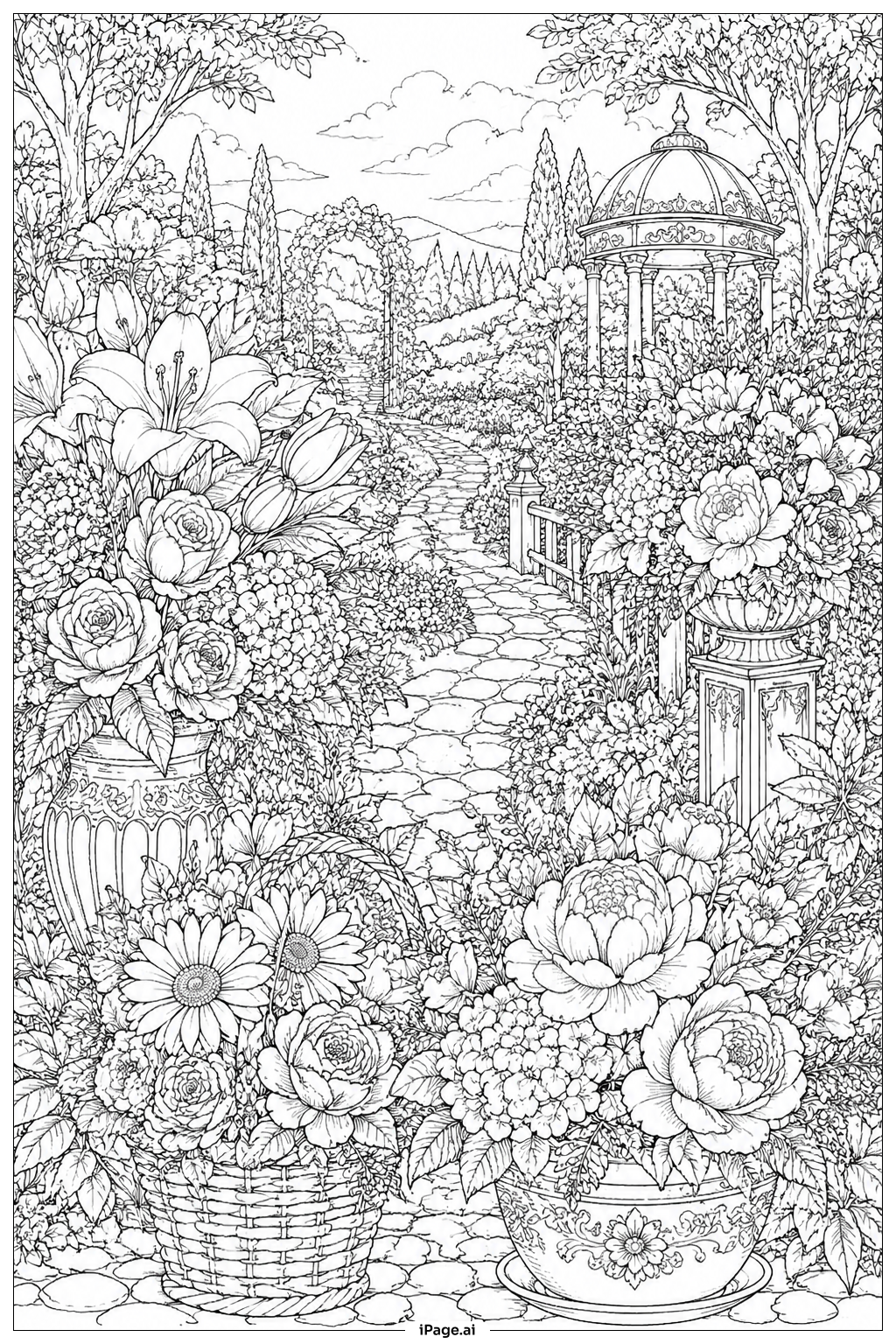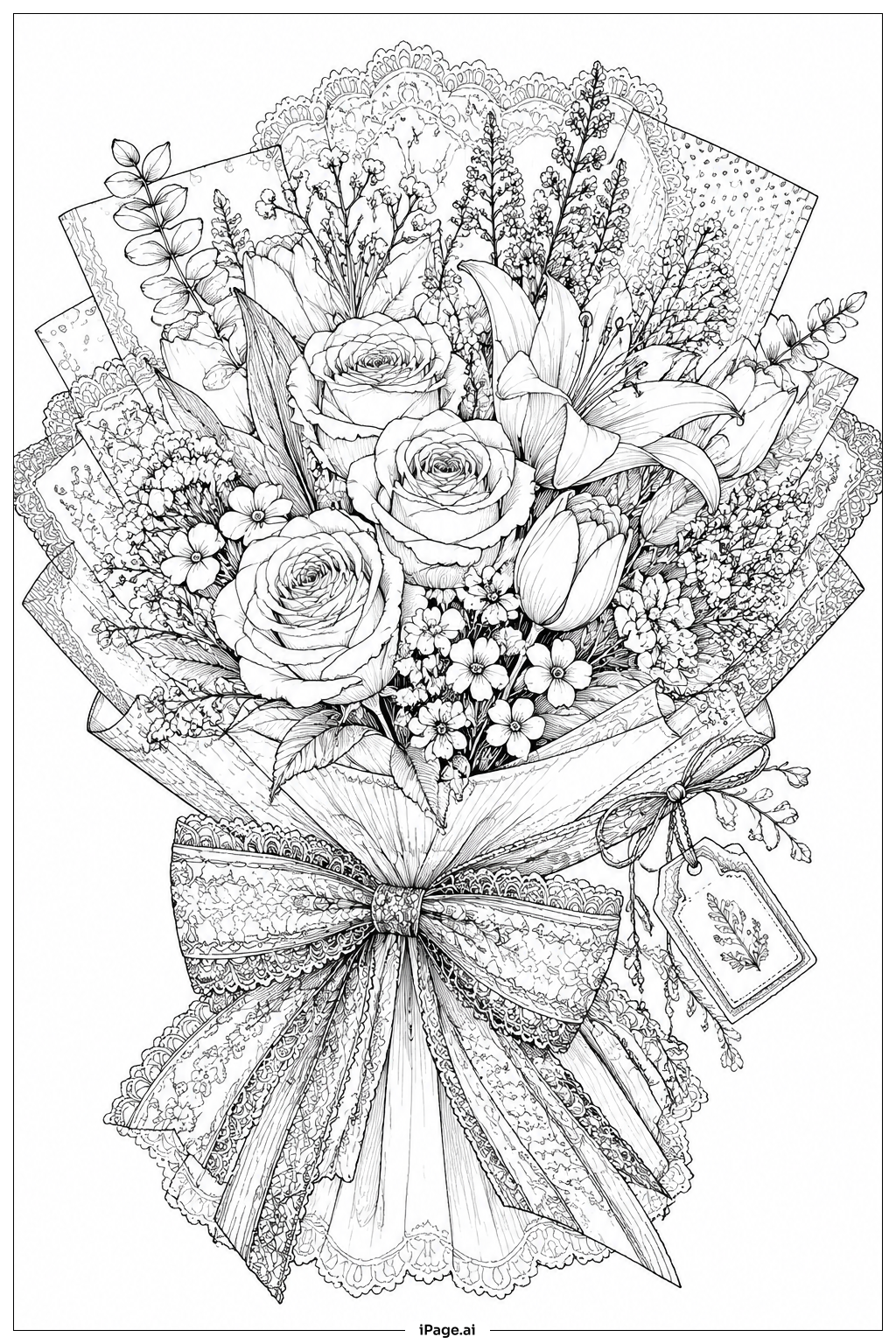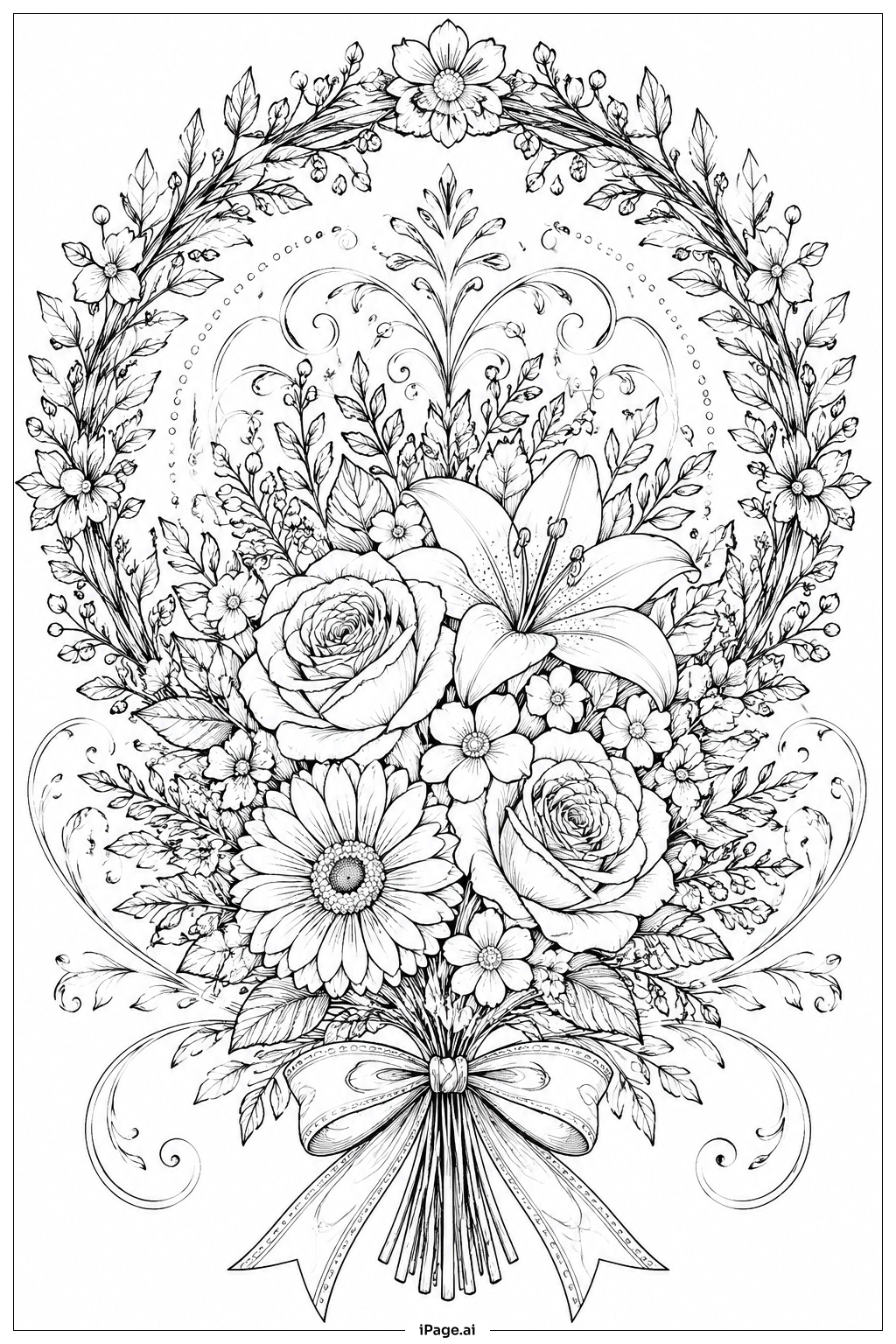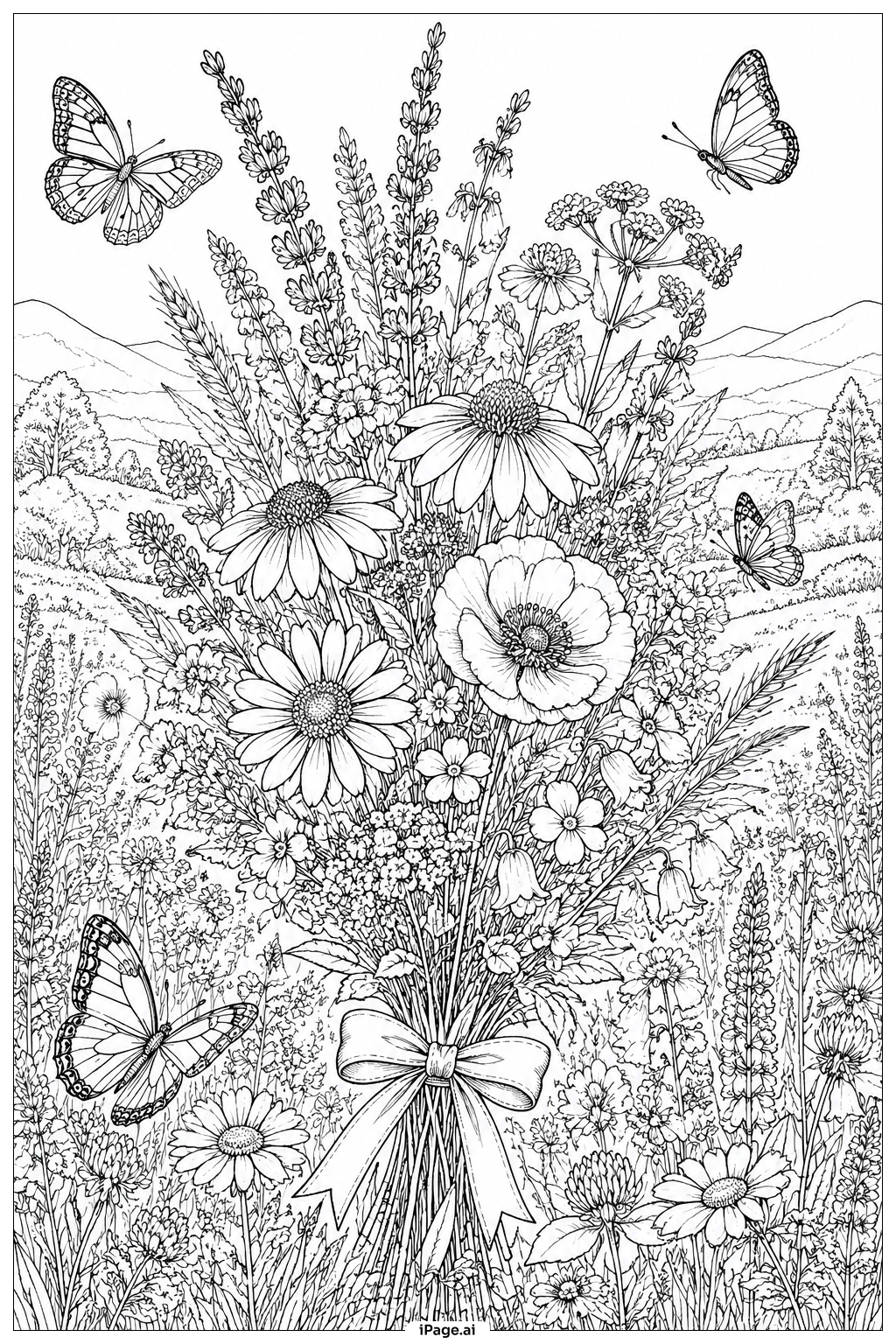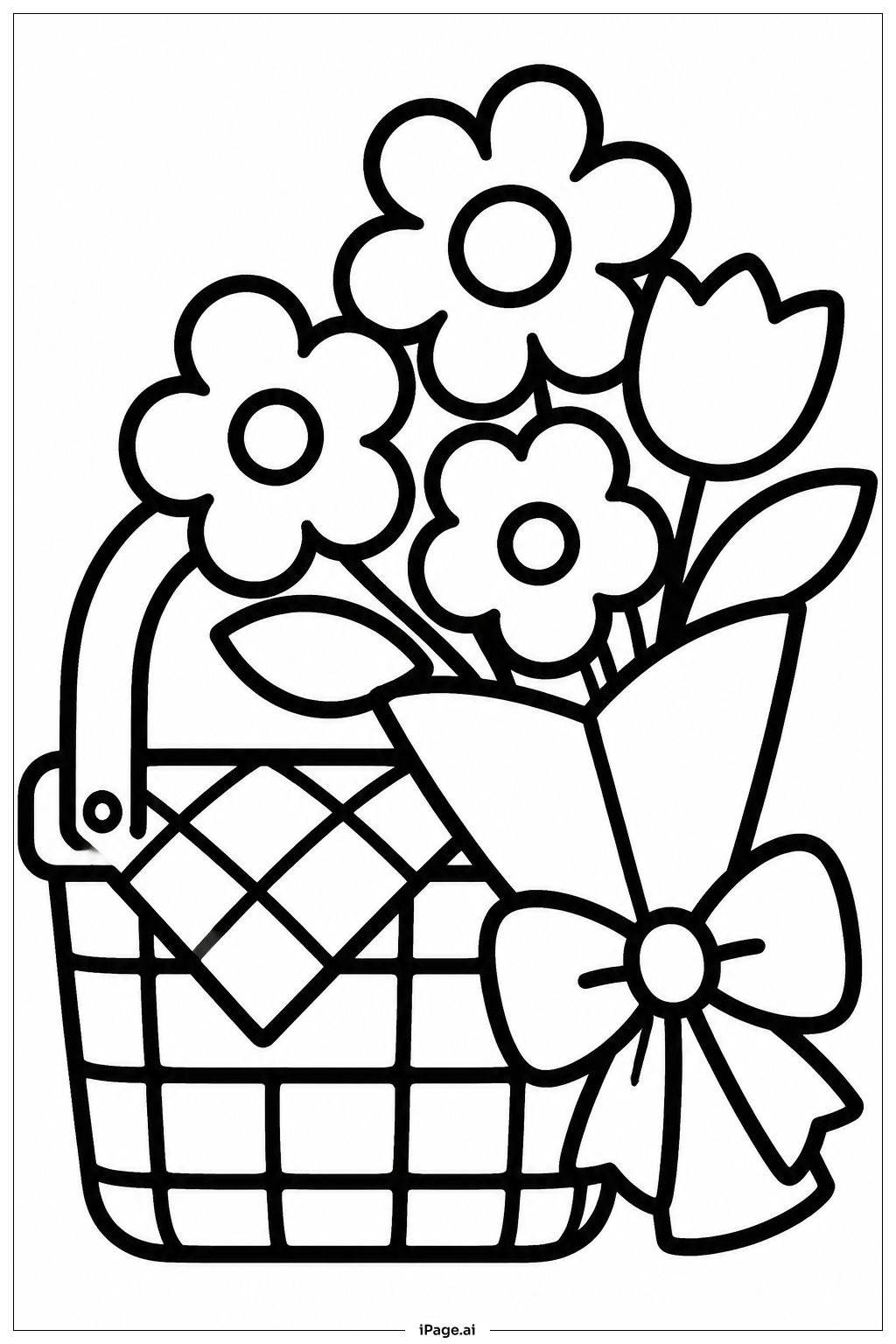
Coloring tips: How to color Picnic Flower Bouquet coloring page well?
Start with the largest flowers first. Use bright, happy colors like yellow for sunflowers, pink or red for roses, and white for daisies. Try orange or purple for smaller accent flowers to add variety. Color the leaves in different shades of green — light green for young leaves and darker green for bigger ones. Use a warm brown or tan for any wicker basket or twine details. The ribbon bow looks great in soft pastel colors like lavender, sky blue, or pale pink. Add a light blue or soft yellow background to give the bouquet a sunny picnic-day feel. Don't be afraid to mix colors and make it your own!
Coloring challenges: Which parts are difficult to color and need attention for Picnic Flower Bouquet coloring page?
• **Intricate Petal Details:** The bouquet contains many overlapping flower petals from different bloom types. Staying within the lines of each individual petal can be tricky, especially where petals from different flowers overlap. Take your time and use a fine-tipped coloring tool for the smaller petals to keep each flower looking clean and distinct.
• **Color Differentiation Between Flowers:** Because there are many flowers grouped closely together, it can be challenging to choose colors that make each bloom stand out. Without careful color planning, the bouquet may look muddy or flat. Try to alternate warm and cool colors next to each other so every flower pops.
• **Layered Leaves and Stems:** The leaves and stems weave in and out between the flowers, creating a layered look. Coloring them consistently while keeping them separate from the flower petals requires patience and attention to detail. Use different shades of green to help separate overlapping leaves.
• **Small Decorative Accents:** Tiny details like butterflies, small buds, and decorative swirls are scattered throughout the design. These small elements are especially challenging for younger colorists because they require a steady hand and careful control of the coloring tool.
• **Ribbon and Bow:** The flowing ribbon tied around the bouquet has curved folds and shadows implied by the line work. Coloring a ribbon to look three-dimensional — using lighter and darker shades of the same color — can be a fun but challenging task for beginners.
Benefits of coloring books: Advantages of drawing Picnic Flower Bouquet coloring page
Coloring this Picnic Flower Bouquet page offers many wonderful benefits for kids and families alike. Working through the detailed petals and leaves helps children build fine motor skills and improve hand-eye coordination. Choosing colors for each flower encourages creative thinking and artistic expression, giving kids a chance to make every bouquet uniquely their own. The nature-inspired design — with its flowers, leaves, and butterflies — gently teaches children about the beauty of the outdoors and the joy of a sunny picnic day. Focusing on a detailed coloring page also helps kids practice patience and concentration, skills that support learning in school. For older children, blending colors and shading the ribbon or petals adds an extra creative challenge that builds confidence. Best of all, completing a beautiful finished page gives kids a real sense of pride and accomplishment. This page is a wonderful activity to enjoy alone, with friends, or as a family on a relaxed afternoon.