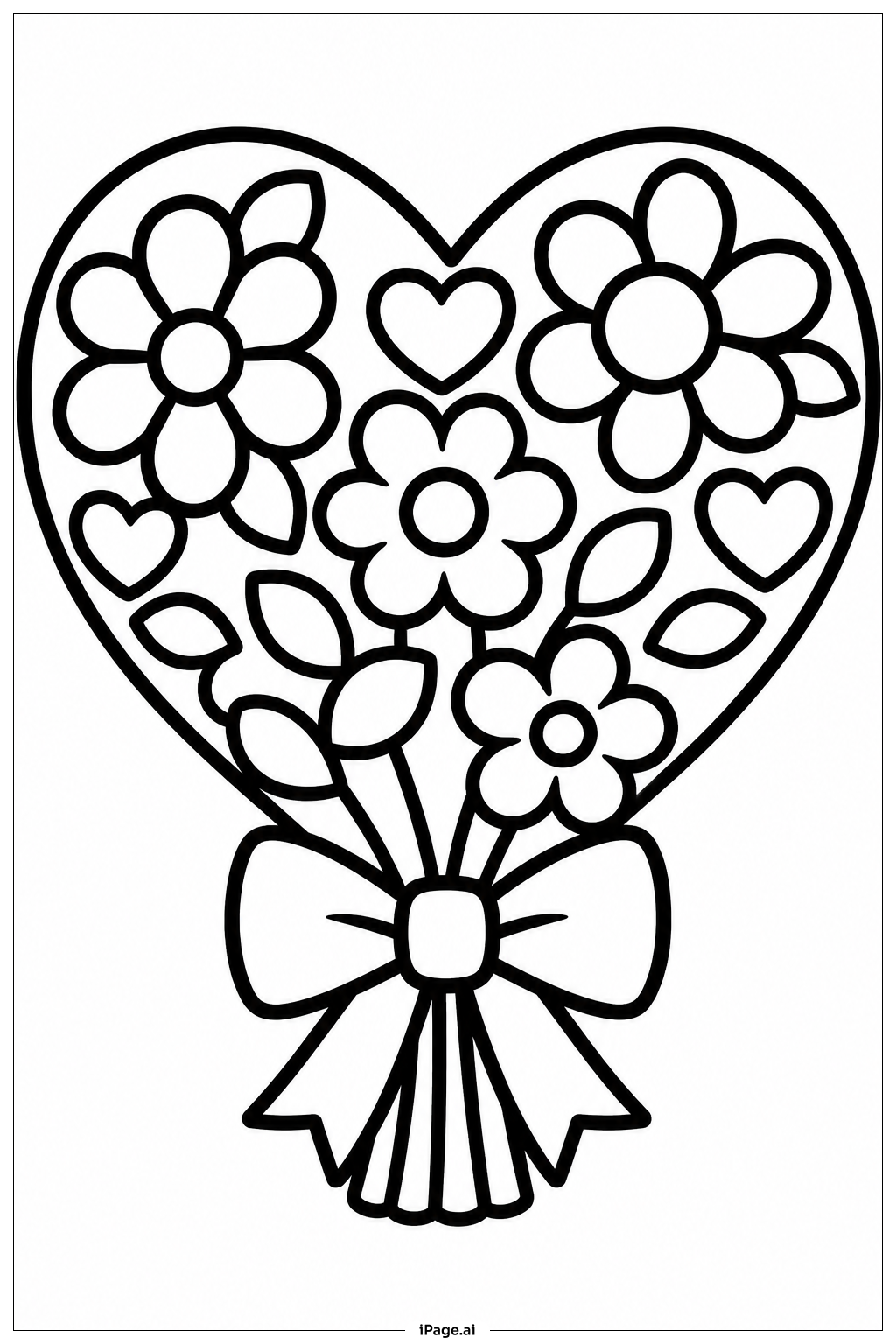
Coloring tips: How to color Heart Shaped Flower Bouquet coloring page well?
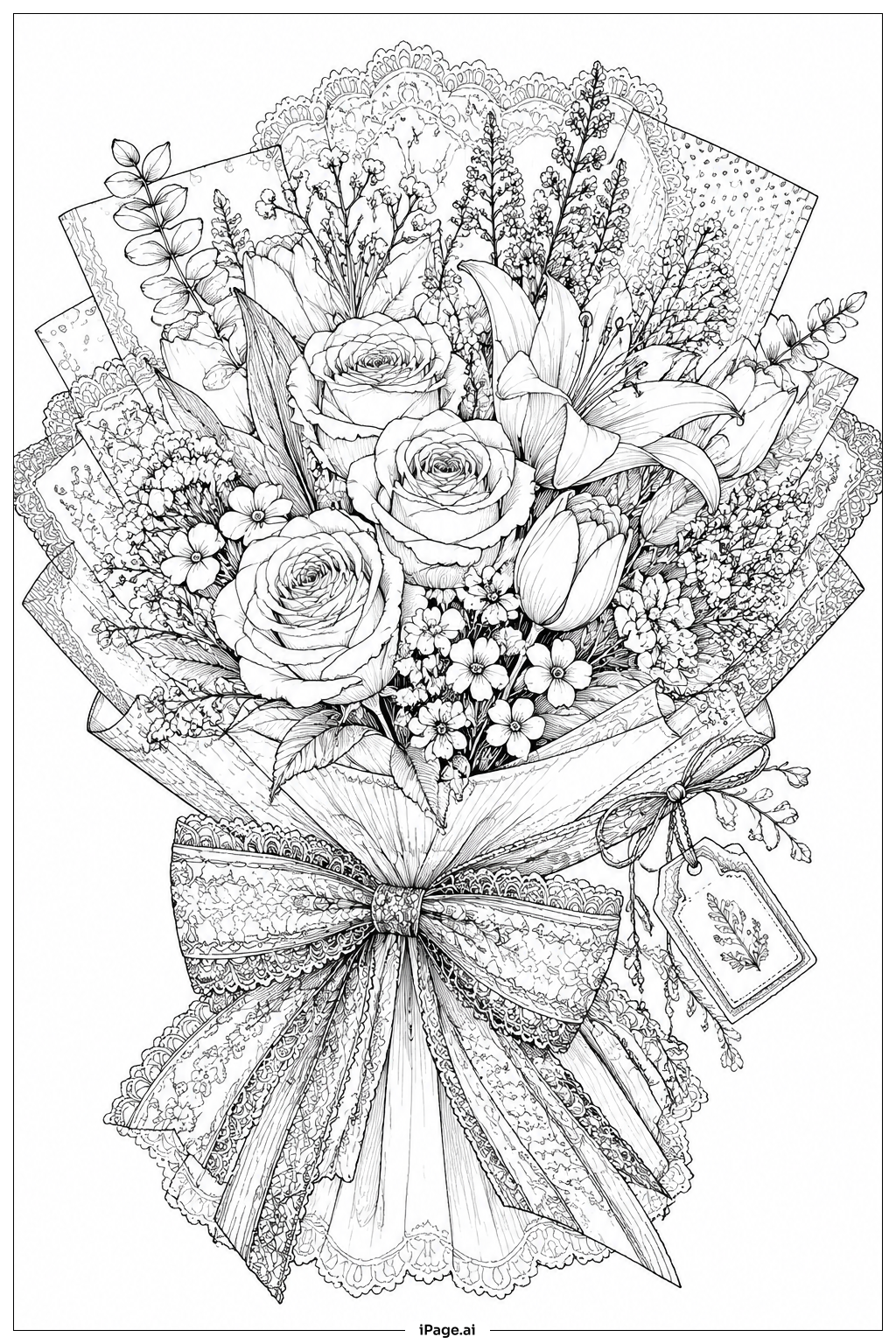
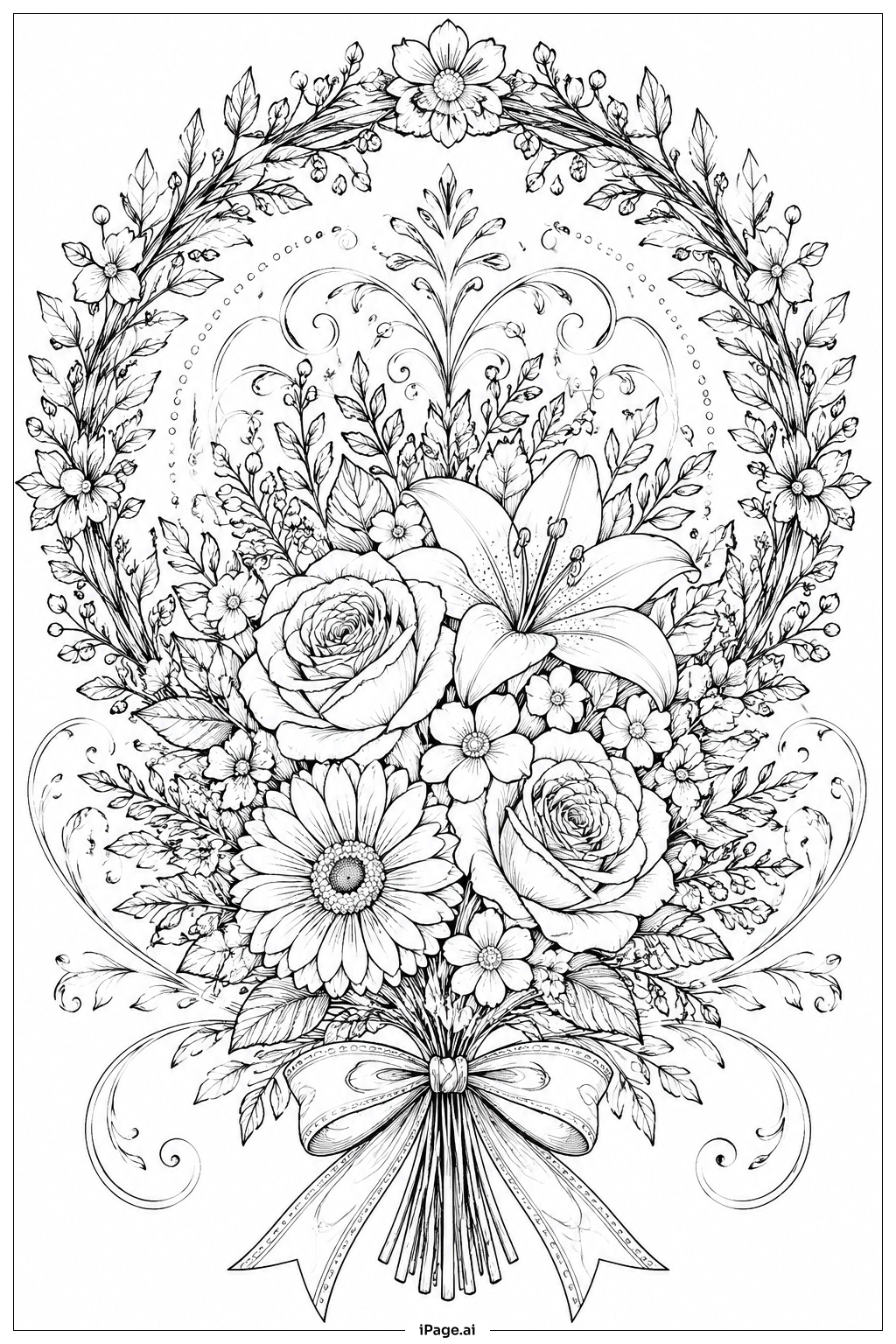
Start with the largest flowers first, using vibrant reds, pinks, and purples for the roses to create a romantic feel. Consider coloring the tulips in warm yellows, oranges, or soft pinks. The daisies can be classic white with sunny yellow centers, or you can experiment with pastel shades like lavender or peach. Use various shades of green for the leaves and stems, mixing darker forest greens with lighter spring greens to add dimension. Color the ribbon in a contrasting shade like red, gold, or silver to make it stand out. Try blending colors within each petal to create realistic gradients, starting with a darker shade at the base and lightening toward the tips. Add depth by using darker colors in the shadowed areas between flowers and lighter tones on the outer edges.
Coloring challenges: Which parts are difficult to color and need attention for Heart Shaped Flower Bouquet coloring page?
• Petal Layering Details: The overlapping petals in the roses and other flowers create multiple layers that require careful attention to maintain depth and dimension. Colorists need to decide which petals are in front and which are behind, using lighter and darker shades appropriately to show this spatial relationship. This requires planning before coloring and consistent shading techniques throughout the entire bouquet.
• Maintaining the Heart Shape: Since the flowers are arranged in a heart shape, it is important to use color strategically to preserve this overall silhouette. Placing too many dark colors in the wrong areas might obscure the heart outline, while poor color distribution could break the visual flow. Balancing warm and cool tones across the arrangement helps maintain the recognizable heart form while keeping each individual flower distinct.
• Small Decorative Elements: The tiny filler flowers, stamens, and intricate leaf details scattered throughout the bouquet present a challenge for precision coloring. These small spaces require steady hands and fine-tipped coloring tools. Deciding whether to color these elements in contrasting or complementary colors affects the overall harmony of the piece, and rushing through these areas can make the finished work look incomplete.
• Ribbon Texture and Flow: The ribbon bow at the bottom has curved surfaces and folds that need shading to appear three-dimensional and realistic. Creating the illusion of fabric texture and showing where the ribbon twists and turns requires understanding of light and shadow. The ribbon also needs to stand out from the stems while still feeling integrated into the overall composition.
Benefits of coloring books: Advantages of drawing Heart Shaped Flower Bouquet coloring page
Coloring this heart-shaped flower bouquet offers wonderful benefits for creative development and emotional well-being. The variety of flower types and petal shapes helps children practice fine motor control and hand-eye coordination as they carefully fill in different sized spaces. The symmetrical heart design naturally teaches balance and planning, encouraging kids to think about color distribution across the entire image. Working with flowers introduces children to nature and botanical diversity, sparking curiosity about different plant species. The romantic theme makes this design perfect for creating handmade gifts for loved ones, teaching thoughtfulness and the joy of giving. The detailed elements require focus and patience, helping to develop concentration skills and the ability to complete longer projects. The satisfying act of bringing this bouquet to life with color provides a sense of accomplishment and boosts confidence in artistic abilities.