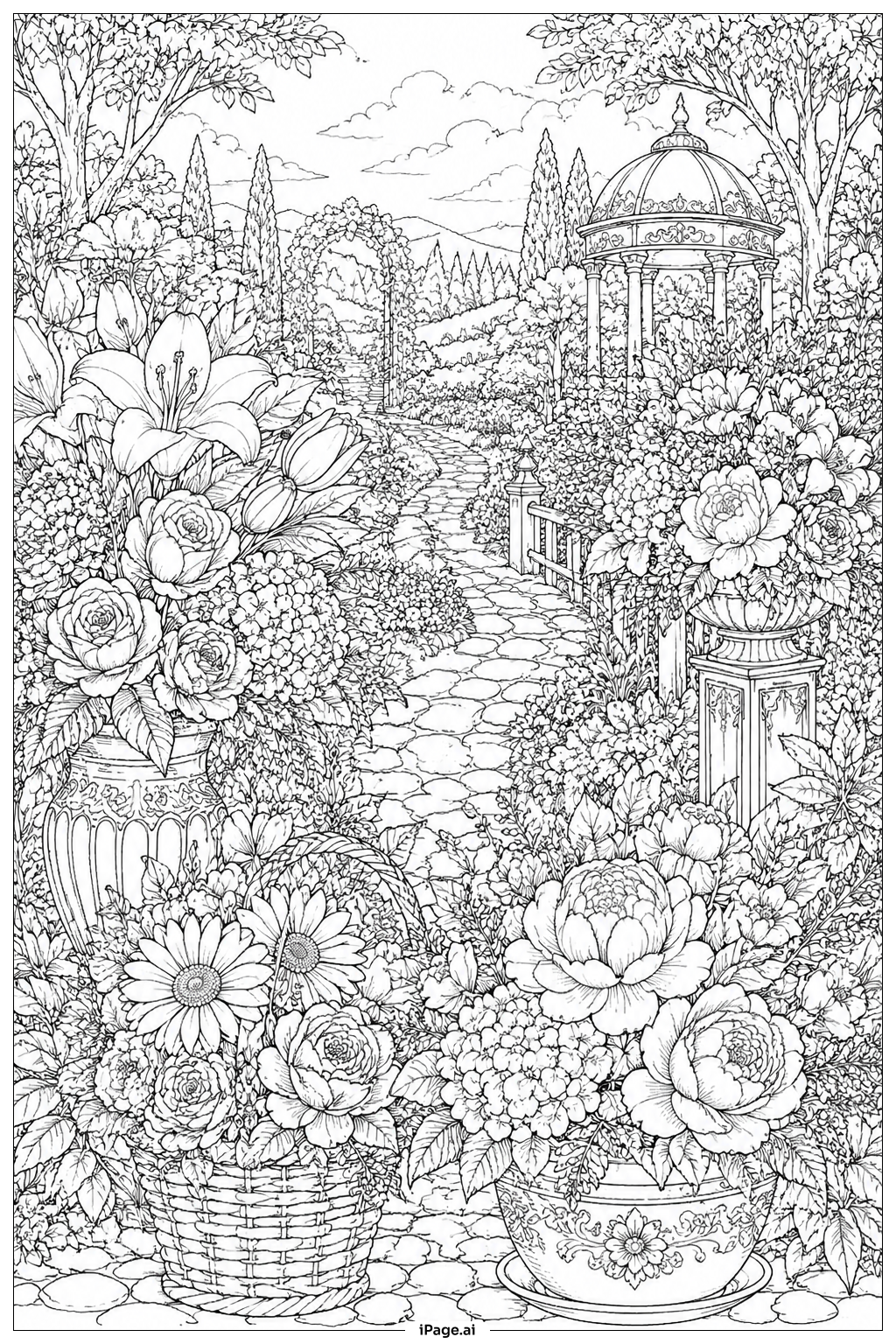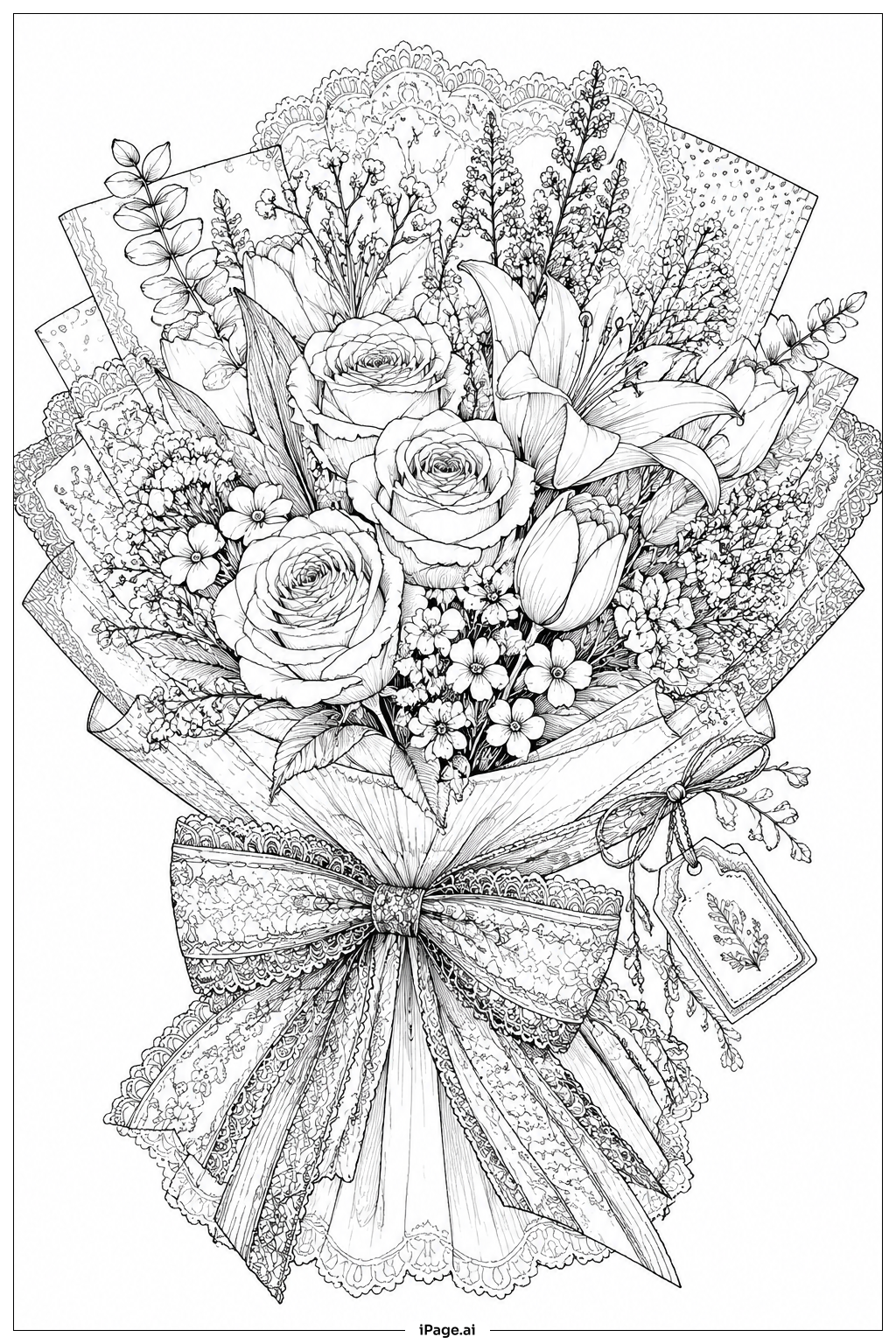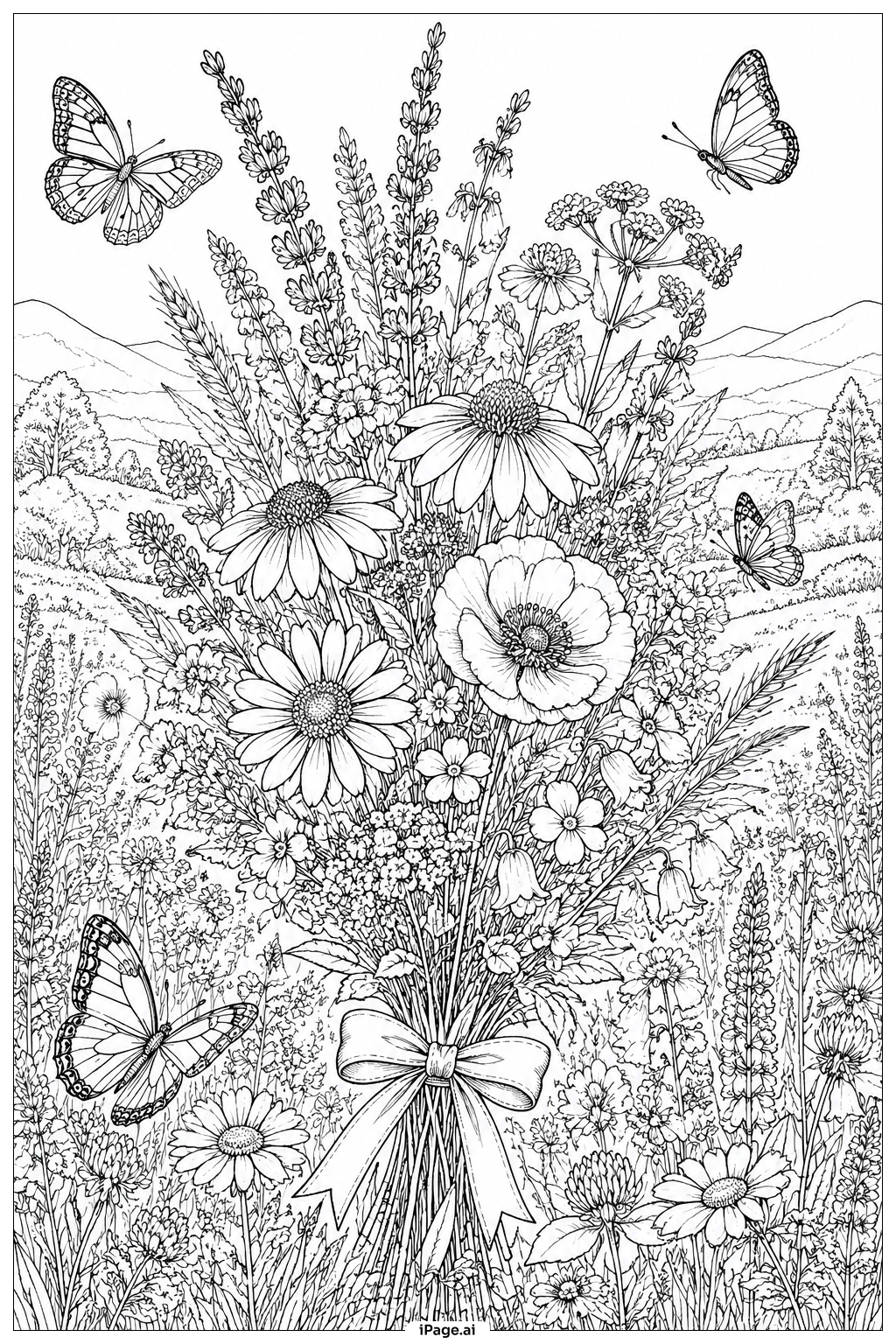
Coloring tips: How to color Flower Bouquet With Sun coloring page well?
Start with the sun in the background. Use a warm yellow or golden orange for the center circle, and a lighter yellow for the rays spreading outward. This keeps the background bright without overpowering the flowers in front.
Next, move to the flowers. Give each type of flower its own color. Try red or pink for roses, white or purple for daisies, and soft orange or yellow for tulips. Using a mix of colors makes the bouquet look full and exciting.
For the leaves and stems, use different shades of green. A darker green on the outer edges and a lighter green in the middle adds a sense of depth.
If you want the bouquet to pop, add a soft shadow underneath the flower heads using a slightly darker version of each color. Young colorists can keep things simple with solid, bright colors. Older kids and teens can experiment with blending and shading for a more realistic look. Have fun and make it your own!
Coloring challenges: Which parts are difficult to color and need attention for Flower Bouquet With Sun coloring page?
• Overlapping Petals: The bouquet is packed with flowers, and many petals overlap each other. It can be tricky to keep each petal's color separate without accidentally crossing into a neighboring bloom. Take your time and use a fine-tipped marker or colored pencil to carefully outline each petal before filling it in. Working from the front flowers to the back ones can also help you stay organized.
• Sun Rays and Flower Edges: The sun's rays extend behind the bouquet, and where they meet the flower outlines, the edges get close together. Coloring neatly in these tight spaces requires a steady hand and a sharp pencil or a thin marker. A light hand and slow strokes work best here to avoid smudging or going outside the lines.
• Color Balance Between Bouquet and Sun: Choosing colors that make both the sun and the flowers stand out without clashing is a real creative challenge. If the sun is too bright, it may overshadow the flowers. Try using a softer, warm yellow for the sun so the bouquet remains the center of attention.
• Leaf and Stem Variety: The bouquet contains many leaves and stems in different shapes and sizes. Coloring each one individually while keeping the overall look natural and cohesive takes patience. Using two or three shades of green and alternating them across the leaves can help add variety without making it look too busy.
• Small Inner Details: Some flowers have tiny stamens, vein lines on petals, or small decorative centers. These fine details are easy to miss but add a lot of life to the finished piece. A thin-tipped tool and careful attention will bring these small elements to life beautifully.
Benefits of coloring books: Advantages of drawing Flower Bouquet With Sun coloring page
Coloring this Flower Bouquet With Sun page offers a wide range of wonderful benefits for kids and teens alike.
First, it builds focus and patience. Carefully coloring each flower, petal, and sun ray teaches kids to slow down, pay attention to detail, and stay on task — skills that help in school and everyday life.
Second, it sparks creativity. Choosing colors for roses, daisies, and leaves encourages children to make their own creative decisions. There is no single right answer, so every finished page becomes a unique piece of art.
Third, it improves fine motor skills. Holding a pencil or marker and coloring within detailed outlines strengthens the small muscles in the hands and fingers. This is especially helpful for younger children who are still developing their grip and hand control.
Fourth, it introduces children to nature and botany in a fun, hands-on way. Recognizing different flower types and thinking about natural colors builds early science awareness.
Finally, coloring is a calming activity. The quiet, repetitive motion of filling in shapes reduces stress and anxiety, helping kids feel relaxed and happy. Completing the page also gives a real sense of pride and accomplishment. It is a simple, joyful activity the whole family can enjoy together.