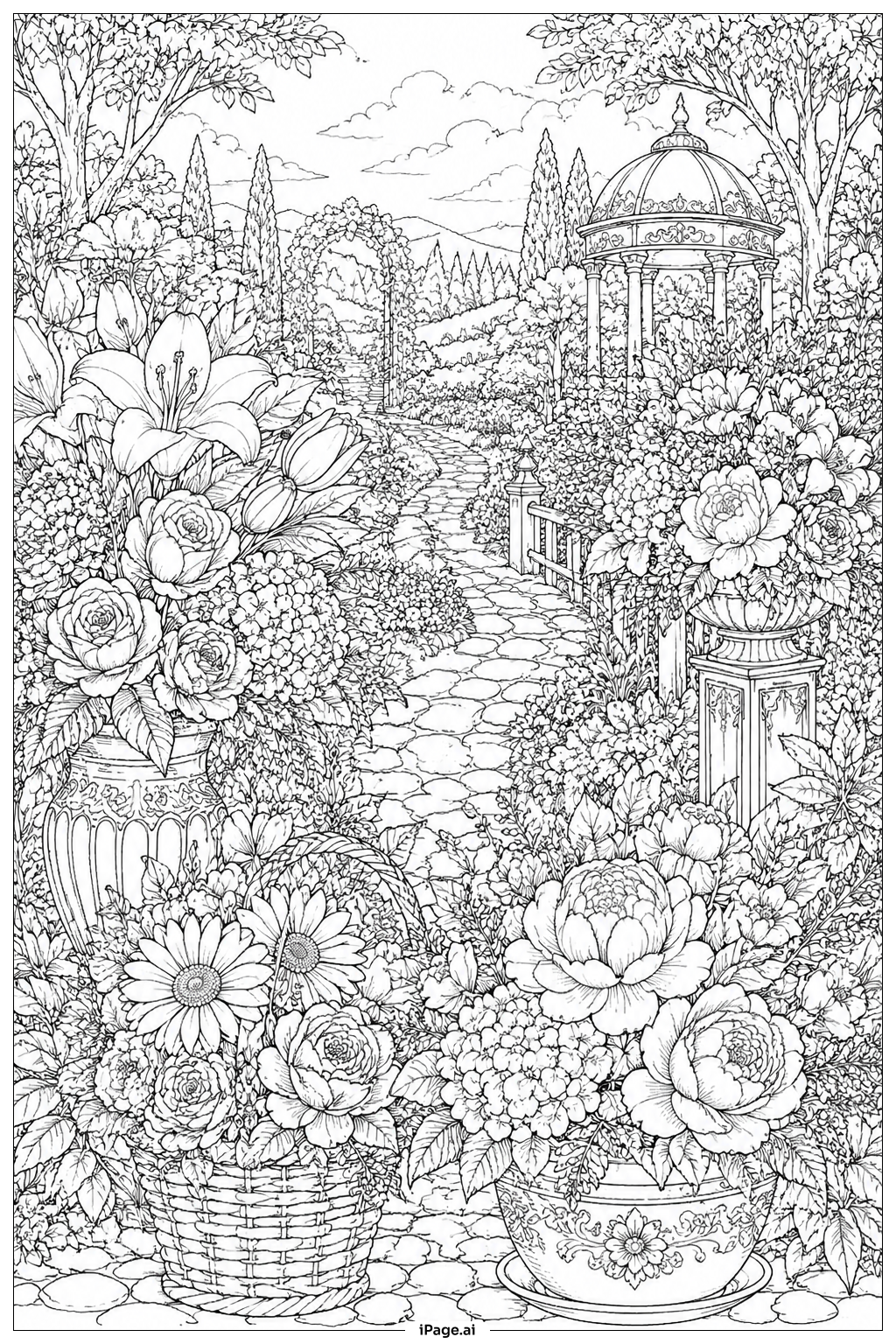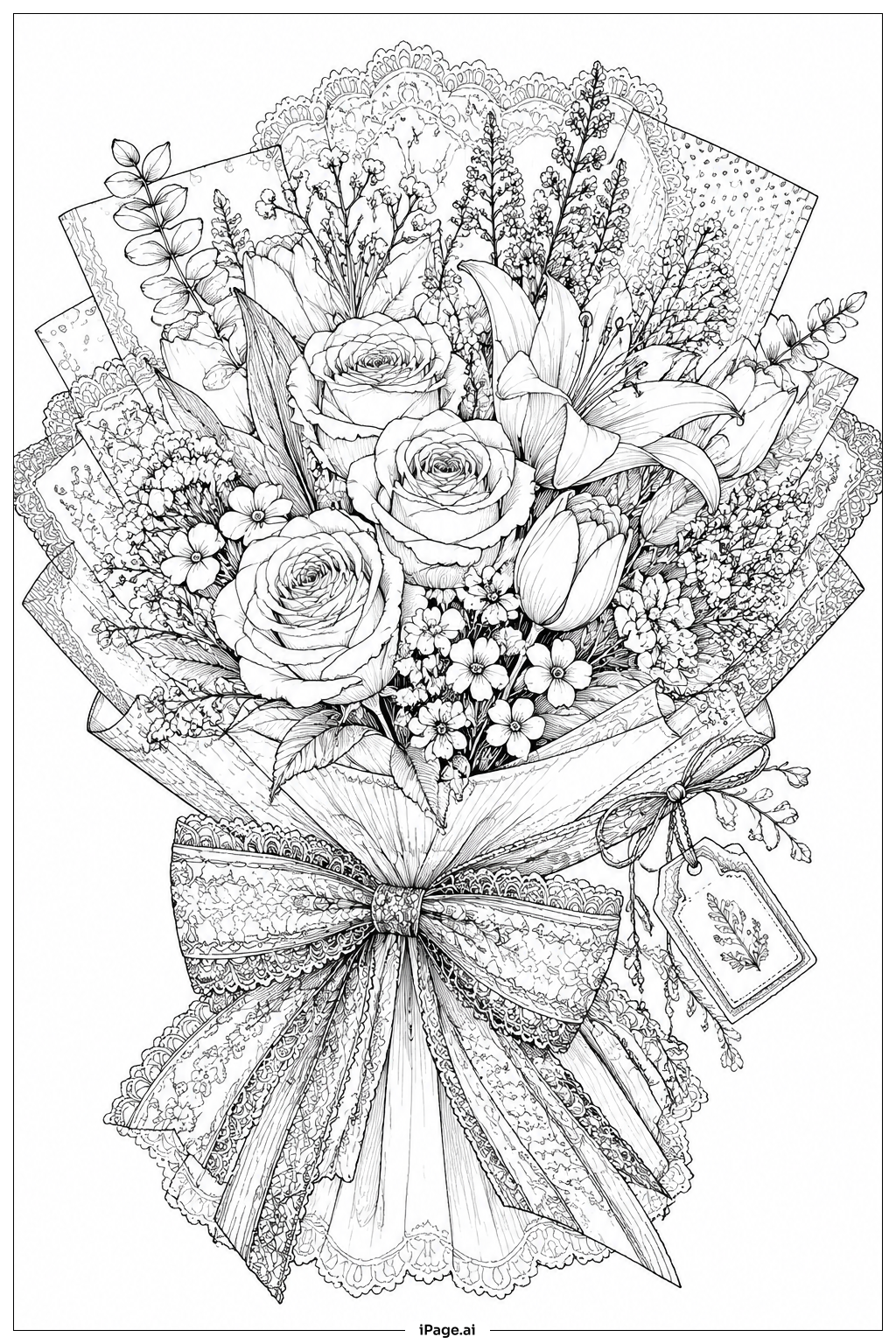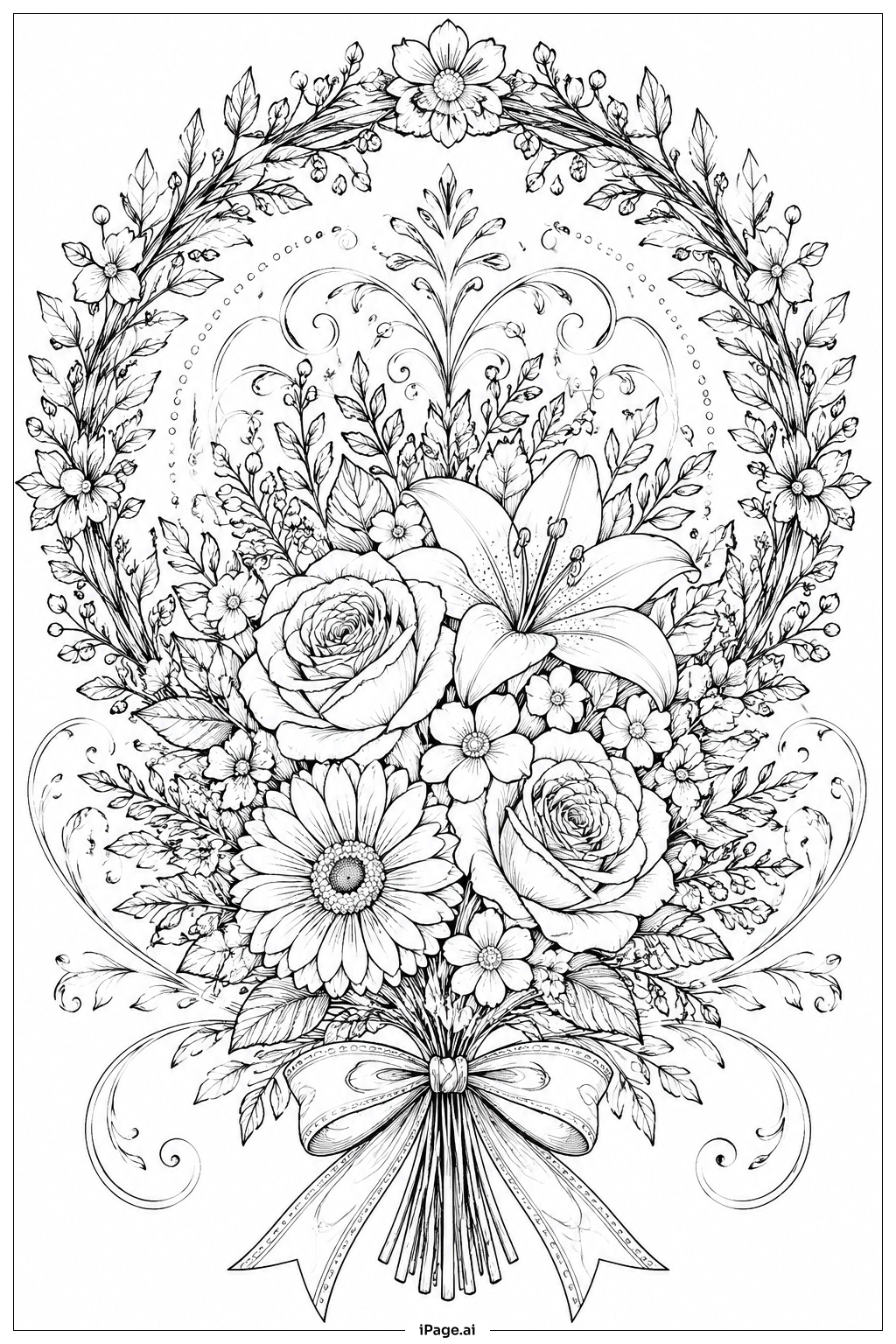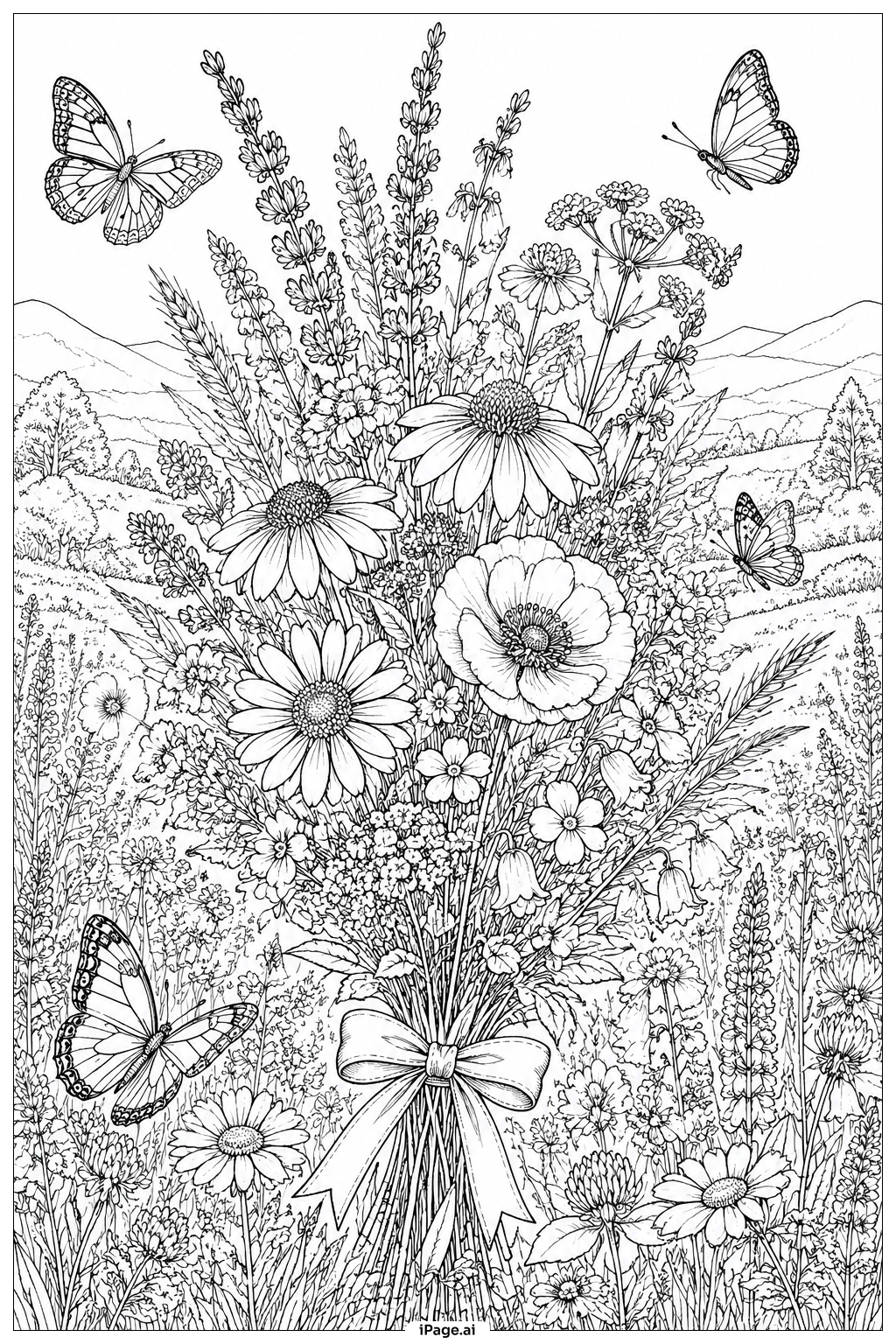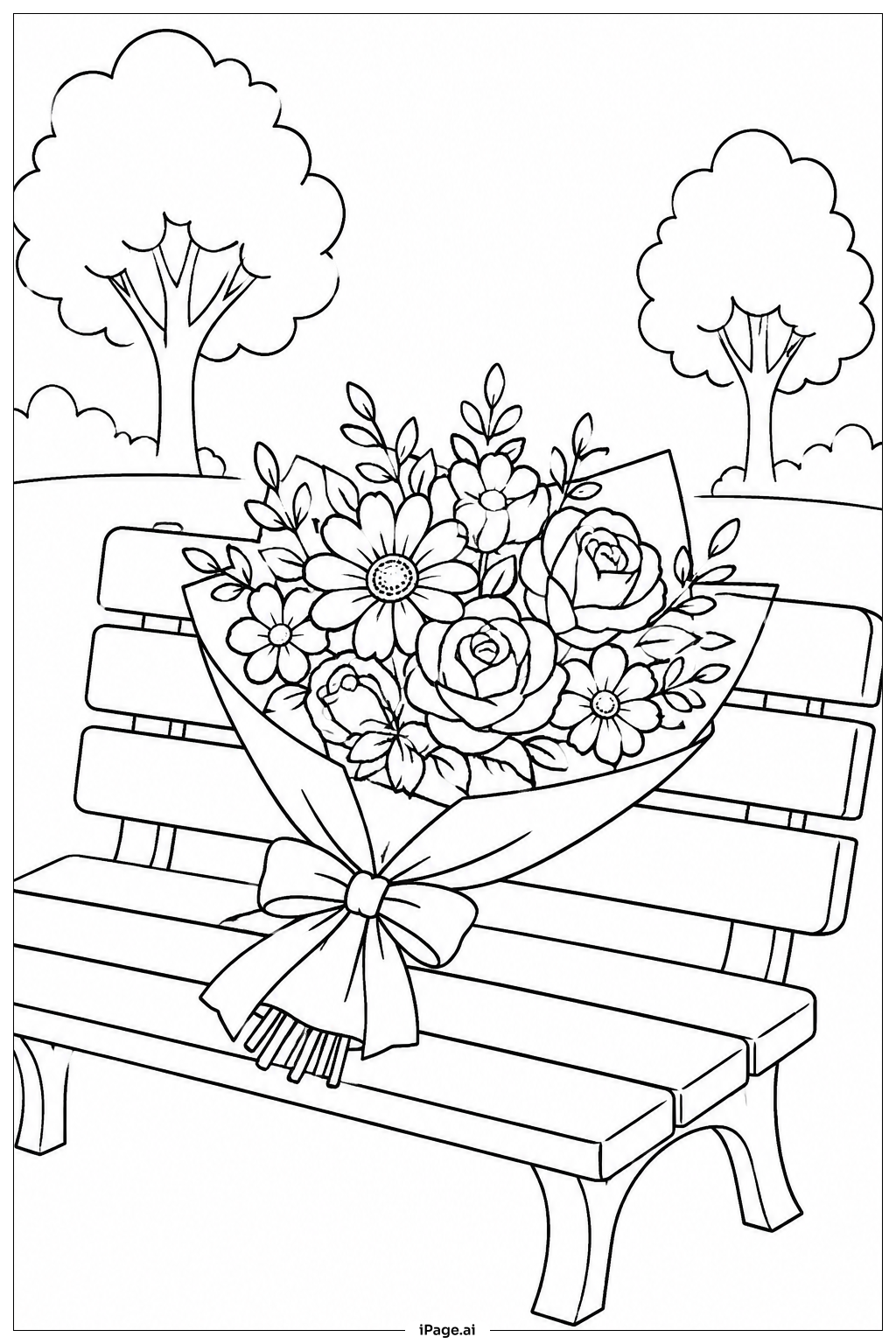
Coloring tips: How to color Flower Bouquet On Bench coloring page well?
Start with the flowers. Pick bright, cheerful colors like red, pink, yellow, and purple for the petals. Each flower can be a different color to make the bouquet look fun and lively. Use green in different shades for the leaves — light green for small leaves and darker green for the bigger ones. The ribbon can be your favorite color. Try light blue, lavender, or soft pink. For the bench, use warm brown or tan tones. Add darker brown to the edges of the slats to show shadow and depth. You can also try a soft watercolor look by blending colors gently on the petals. Leave some areas lighter to show where the sunlight hits. If you want the bouquet to feel extra special, use warm golden yellows or soft pastels throughout. There are no strict rules — just enjoy filling every corner with color and make this garden scene your own.
Coloring challenges: Which parts are difficult to color and need attention for Flower Bouquet On Bench coloring page?
• Petal Detail and Overlap: The bouquet contains many flowers layered closely together. Petals overlap and curve in different directions, making it tricky to decide where one flower ends and another begins. Take your time and color one flower at a time to keep things clean and avoid mixing up neighboring colors.
• Shading Within Petals: Each petal has swirling inner lines that suggest texture and curves. To bring these details to life, you need to use light and dark versions of the same color. This kind of gradual shading can be challenging, especially in smaller petal areas where there is little space to blend.
• Leaf Variety and Depth: The bouquet includes many leaves of different sizes. Some are in front, some are tucked behind flowers. Giving each leaf its own slightly different shade of green helps show depth, but deciding which leaf is in front and which is behind takes careful observation.
• Ribbon and Bow: The flowing ribbon tied at the base of the bouquet has soft curves and folds. Coloring folded fabric naturally requires adding shadows in the creased areas and lighter tones on the raised parts. Getting this to look realistic takes patience and a light touch.
• Bench Wood Texture: The wooden bench has horizontal slats with grain-like details. Applying even color while still suggesting the texture of wood can be difficult. Using long, smooth strokes in one direction and adding a slightly darker tone at the plank edges helps achieve a natural wood look without overcrowding the detail lines.
Benefits of coloring books: Advantages of drawing Flower Bouquet On Bench coloring page
Coloring this Flower Bouquet On Bench scene offers a wide range of benefits for kids and adults alike. The detailed flowers and leaves encourage focus and patience, which helps train the ability to concentrate for longer periods of time. Choosing colors for petals, leaves, and the ribbon sparks creativity and allows self-expression — there are no wrong answers, just personal choices. For younger children, staying within the lines of the petals and bench planks helps develop fine motor skills and hand-eye coordination. Working through a complex bouquet also builds a sense of accomplishment when the page is finished. For older kids and adults, the repetitive motion of coloring has a calming effect, similar to meditation. It can reduce stress and quiet a busy mind after a long day. The garden theme also connects colorists with nature in a gentle, imaginative way. Overall, this page is a joyful and rewarding activity that supports both mental well-being and artistic growth.