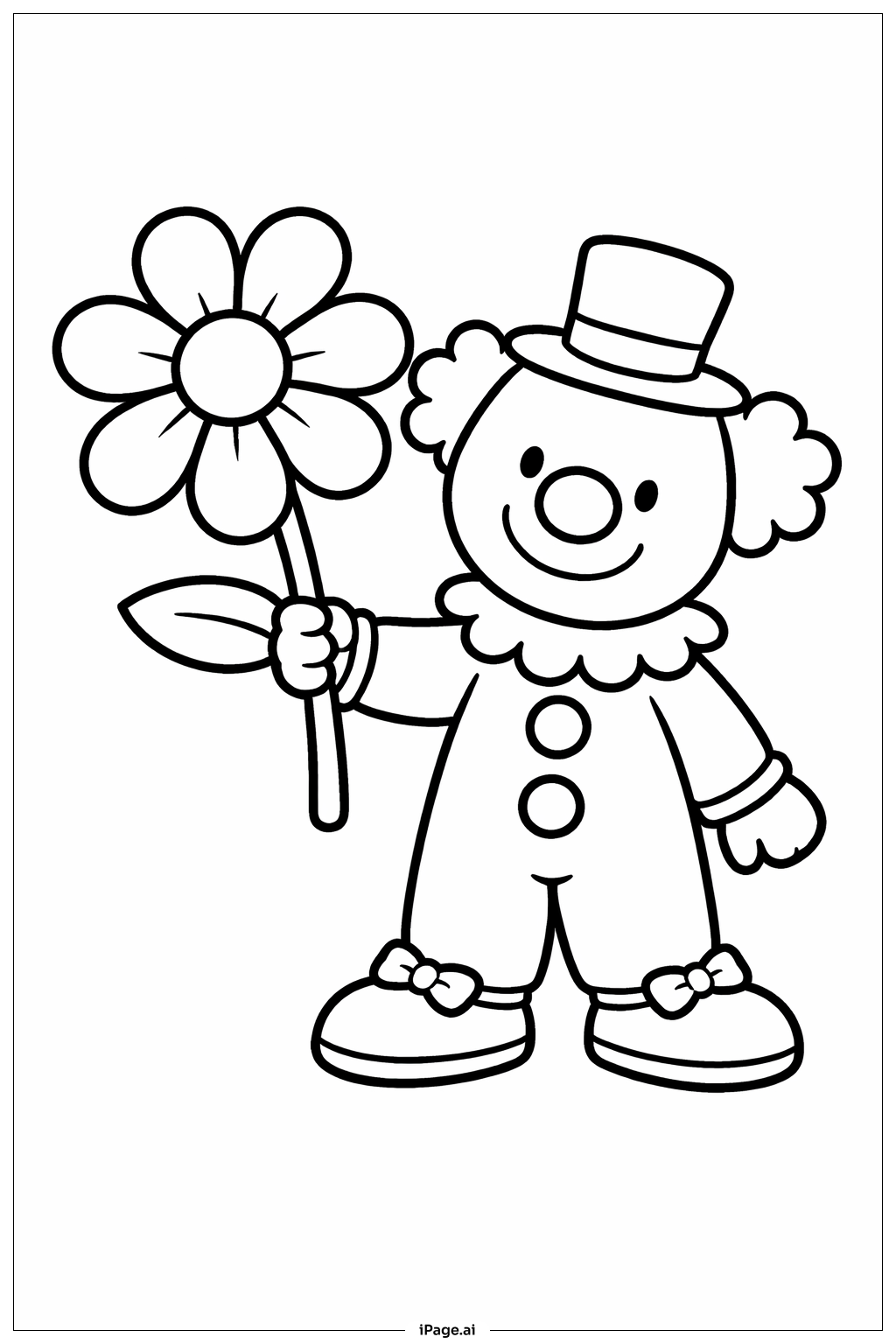
Coloring tips: How to color Clown With Flower coloring page well?
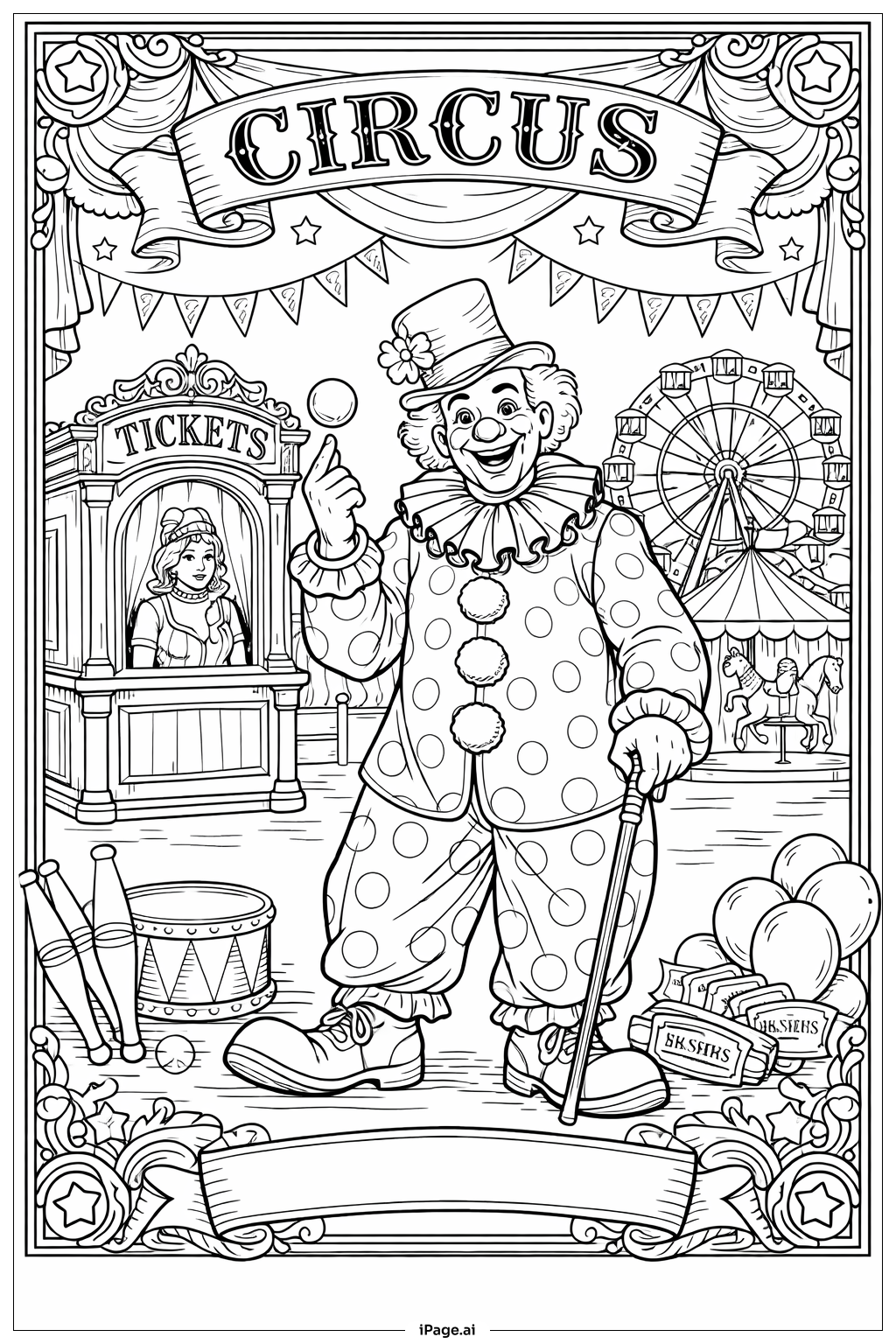
Start with the clown's face by using a light peach or tan for the skin. Make the round nose red or orange to give it that classic clown look. Use bright, bold colors like yellow, blue, red, and green for the costume sections to create a fun, eye-catching contrast. The ruffled collar looks great in white or light yellow. For the flower, pick a cheerful color like pink, purple, or orange for the petals, and use green for the stem and leaves. The hat can be striped with two contrasting colors. Try to keep neighboring sections different colors so each part of the image stands out clearly. If you want a softer look, use pastel shades instead. Don't forget small details like the buttons — tiny dots of color can make them pop. Take your time with each section and enjoy the process.
Coloring challenges: Which parts are difficult to color and need attention for Clown With Flower coloring page?
• Face and Expression Details: The clown's face includes small, closely spaced features like the eyes, eyebrows, nose, and smile. Coloring these areas neatly without blending colors together can be tricky, especially for younger colorists. Using fine-tipped tools like colored pencils or thin markers will help keep each feature clean and well-defined.
• Ruffled Collar Sections: The collar is made up of many small, curved segments sitting close together. Each segment may need a slightly different shade or alternating colors to show the ruffle effect clearly. This requires patience and a steady hand to stay inside each tiny section without going over the lines.
• Costume Patterns and Details: The baggy costume features various patterns, stripes, or decorative shapes. Keeping consistent colors across each pattern area while making sure neighboring sections contrast well is a genuine challenge. Planning your color choices before you start can save a lot of backtracking.
• Flower Petals: The flower has multiple overlapping or closely arranged petals. Shading each petal individually to give a sense of depth and dimension takes careful blending. If petals are colored the same flat shade, the flower can look dull, so consider using two tones of the same color — lighter in the center and darker at the edges.
• Oversized Buttons and Small Accents: Small circular buttons and tiny decorative accents on the costume require precise coloring. These spots are easy to accidentally color over, so using a fine-tip tool and working slowly around their edges will give the best results.
Benefits of coloring books: Advantages of drawing Clown With Flower coloring page
Coloring this Clown With Flower page brings a wide range of benefits for children and adults alike. The playful subject makes the activity feel fun and low-pressure, which helps reduce stress and encourages a relaxed, positive mood. For younger children, working within the lines of the costume patterns and facial details builds fine motor skills and improves hand-eye coordination. Choosing colors for the clown's outfit, hat, and flower also sparks creativity and helps children develop their own sense of color and style. The variety of shapes and sections in this image — from the ruffled collar to the flower petals — keeps colorists engaged and focused, naturally improving attention span and concentration. For older kids and adults, the detailed patterns offer a satisfying challenge that promotes mindfulness and a sense of accomplishment once complete. Sharing the finished page with others adds a social and emotional element, building confidence and encouraging self-expression. Overall, this cheerful image turns a simple coloring session into a genuinely enriching experience for all ages.