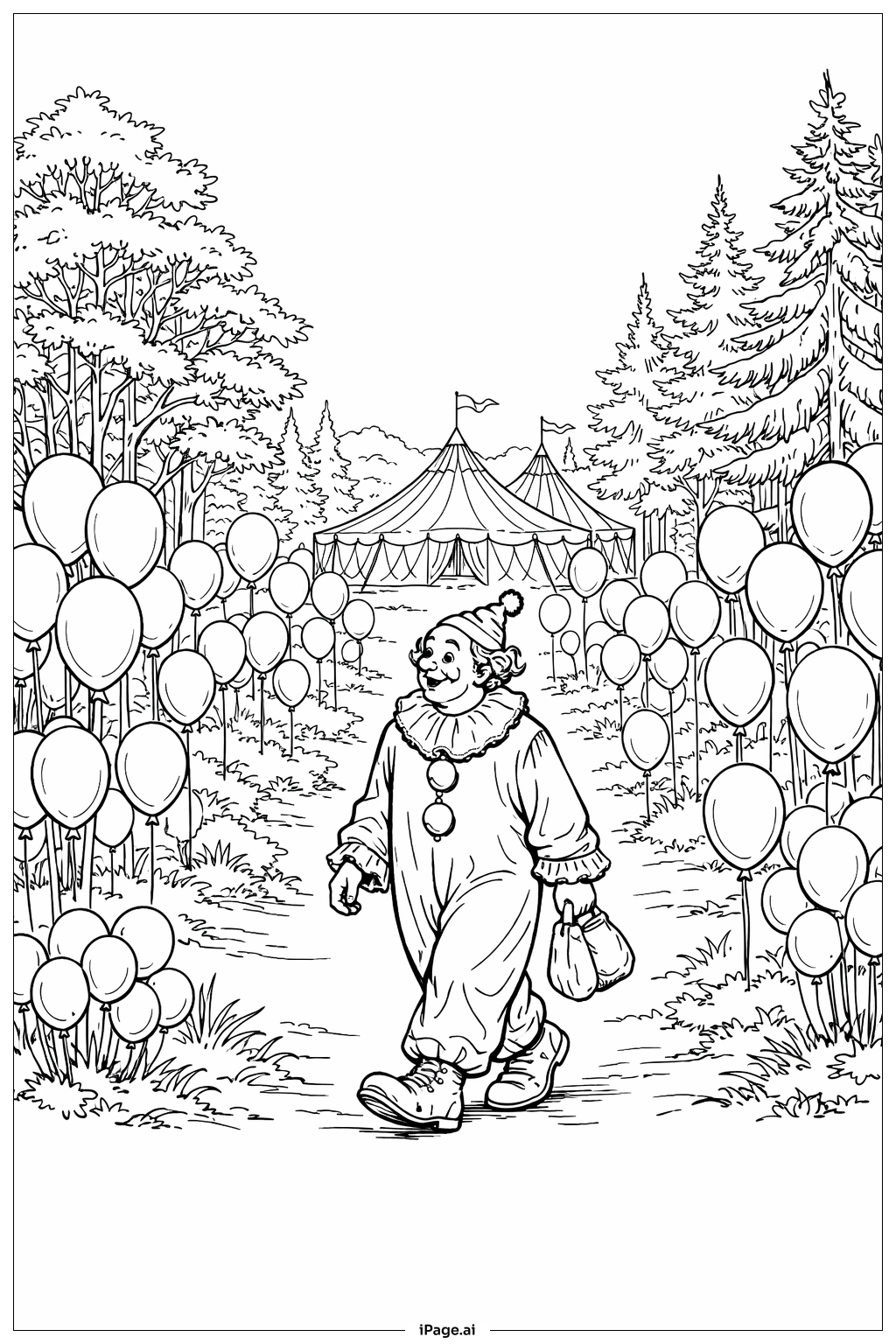
Coloring tips: How to color Clown In Balloon Forest coloring page well?
Start with the clown's costume using bright, bold colors. Try red or blue for the main outfit, with a contrasting yellow or orange for the bow tie and collar ruffles. The clown's nose should be bright red, a traditional choice. For the face, use light peach or pink tones, with rosy cheeks to enhance the cheerful expression. The balloon forest offers endless creative possibilities. Use a rainbow approach with different colors for each balloon tree—purple, green, blue, yellow, pink, and orange. Create depth by making background balloons lighter or pastel versions of your chosen colors. The floating balloons can match or contrast with the trees. Consider adding shading on one side of each balloon to create a three-dimensional effect. The ground can be colored in soft greens or even kept as a neutral tan to let the balloons stand out.
Coloring challenges: Which parts are difficult to color and need attention for Clown In Balloon Forest coloring page?
• Balloon Shading and Dimension: Creating realistic balloon effects requires understanding light reflection and spherical shading. Each balloon should have a highlight area where light hits and a darker section on the opposite side. The curved surface means gradual color transitions rather than hard lines. This is particularly challenging with the many overlapping balloons in the forest scene, where each needs individual attention to avoid a flat appearance.
• Intricate Costume Details: The clown's outfit contains multiple small elements including ruffles on the collar, decorative patterns on the clothing, buttons, and the textured bow tie. These details require precision and patience, especially when working with fine-tipped coloring tools. Maintaining consistent pressure and staying within the lines becomes more difficult in these smaller spaces. The baggy pants may also have folds and wrinkles that need different shading values to appear realistic.
• Color Coordination and Balance: With so many balloons in the scene, choosing a harmonious color scheme while maintaining visual interest presents a challenge. Too many different colors can look chaotic, while too few may appear boring. Deciding which balloons should be bold versus pastel, and which areas need contrast versus harmony, requires thoughtful planning. The clown's costume must also complement rather than clash with the surrounding balloon forest.
• Depth and Layering: The image contains multiple layers with foreground, middle ground, and background elements. Creating depth requires making distant balloons lighter or less saturated than closer ones. Understanding which balloons overlap others and adjusting your coloring accordingly helps establish spatial relationships. This atmospheric perspective technique is essential but challenging for younger or less experienced colorists.
Benefits of coloring books: Advantages of drawing Clown In Balloon Forest coloring page
Coloring this imaginative scene offers wonderful developmental benefits for children. It encourages creativity and imagination as they bring the fantastical balloon forest to life with their own color choices. The variety of shapes and sizes helps develop fine motor skills and hand-eye coordination, especially when working on the detailed costume elements and numerous balloon outlines. The whimsical nature of the image promotes positive emotions and joy, making the coloring experience both relaxing and uplifting. Children learn about color theory by experimenting with different combinations for the many balloons, discovering which colors work well together. The clown character introduces elements of storytelling, encouraging kids to imagine what adventures might happen in this magical place. This page also builds patience and focus as completing the detailed scene requires sustained attention. The satisfying result of a fully colored balloon forest boosts confidence and provides a sense of accomplishment.