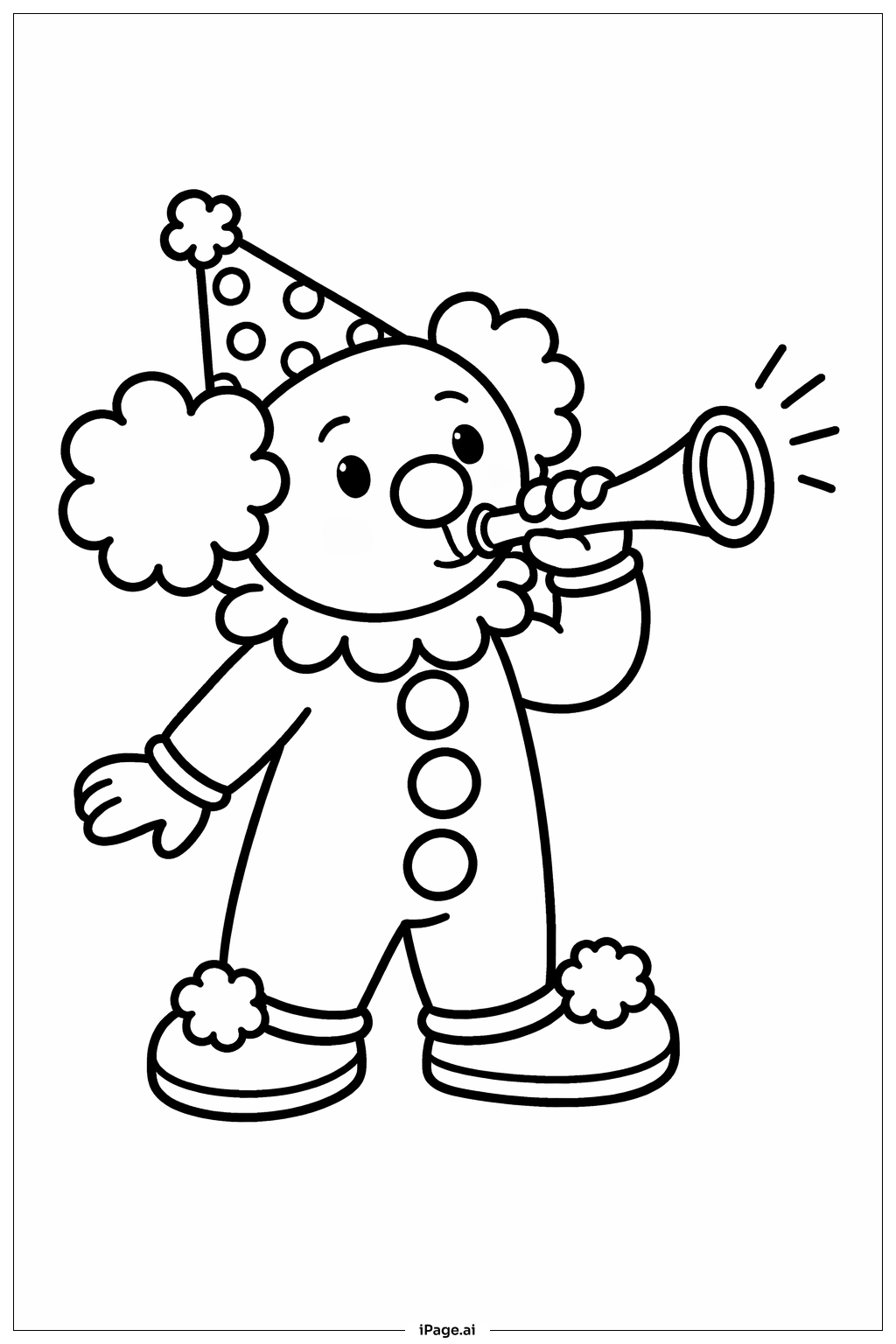
Coloring tips: How to color Clown Playing Horn coloring page well?
Start with the clown's face using a peachy or light pink tone for a warm, friendly look. The hair can be bright orange, red, or yellow to create that classic clown appearance. For the clothing, choose vibrant circus colors like purple, blue, red, or green. The ruffled collar looks wonderful in white or a contrasting bright color. Make the horn shine with golden yellow or brass tones, adding darker shades for depth. The hat can be a bold color that complements the outfit. Use red for the nose to maintain the traditional clown look. The musical notes floating in the air can be colored in light blue or left as outlines. Add patterns to the clothing using stripes, polka dots, or checkered designs in contrasting colors. Don't forget to color small details like buttons and trim to make the image pop with personality and circus magic.
Coloring challenges: Which parts are difficult to color and need attention for Clown Playing Horn coloring page?
• Facial Features and Expression: The clown's face contains multiple small details including eyes, nose, mouth, and expression lines that require careful coloring to maintain the joyful character. Children may find it challenging to stay within the lines around the curved features and to choose colors that keep the face looking lively and friendly rather than overwhelming it with too many dark tones.
• Ruffled Collar Texture: The collar features multiple layers and folds that create a three-dimensional ruffled effect. Coloring each segment while maintaining consistent color and showing the texture through shading can be difficult. Younger children might struggle with the repetitive pattern and keeping each ruffle distinct from the next.
• Horn Details and Shading: The musical instrument has curved surfaces, a bell opening, and valve details that benefit from shading to appear realistic and dimensional. Creating the metallic look of a brass horn requires blending lighter and darker yellows or golds, which demands more advanced coloring skills and patience.
• Clothing Patterns and Decorations: The clown's outfit includes various decorative elements, buttons, and potential pattern areas that need coordination. Deciding on complementary colors and maintaining pattern consistency throughout the costume requires planning and color theory understanding that may challenge younger colorists.
• Hair Texture and Curls: The curly hair has many individual ringlets and strands that need to be colored while maintaining the sense of volume and texture. Each curl should be defined without making the hair look flat or muddy, requiring attention to detail and possibly multiple shades of the same color family.
Benefits of coloring books: Advantages of drawing Clown Playing Horn coloring page
Coloring this cheerful clown playing horn helps children develop fine motor skills through detailed work on facial features, ruffled textures, and small decorative elements. The musical theme encourages appreciation for performing arts and circus entertainment. Kids can explore bright, bold color combinations that celebrate creativity and fun, learning about complementary colors through the costume and accessories. The expressive face teaches emotional recognition and helps children understand how to show happiness and joy through art. Working on the curved surfaces of the horn and the flowing ruffles improves hand-eye coordination and control. This image sparks imagination about circus performances, music, and entertainment, potentially inspiring interest in musical instruments or performance arts. The cheerful subject matter promotes positive feelings and can boost mood while coloring. Completing this detailed page builds confidence and provides a sense of accomplishment, especially when bringing the lively clown character to life with personal color choices.