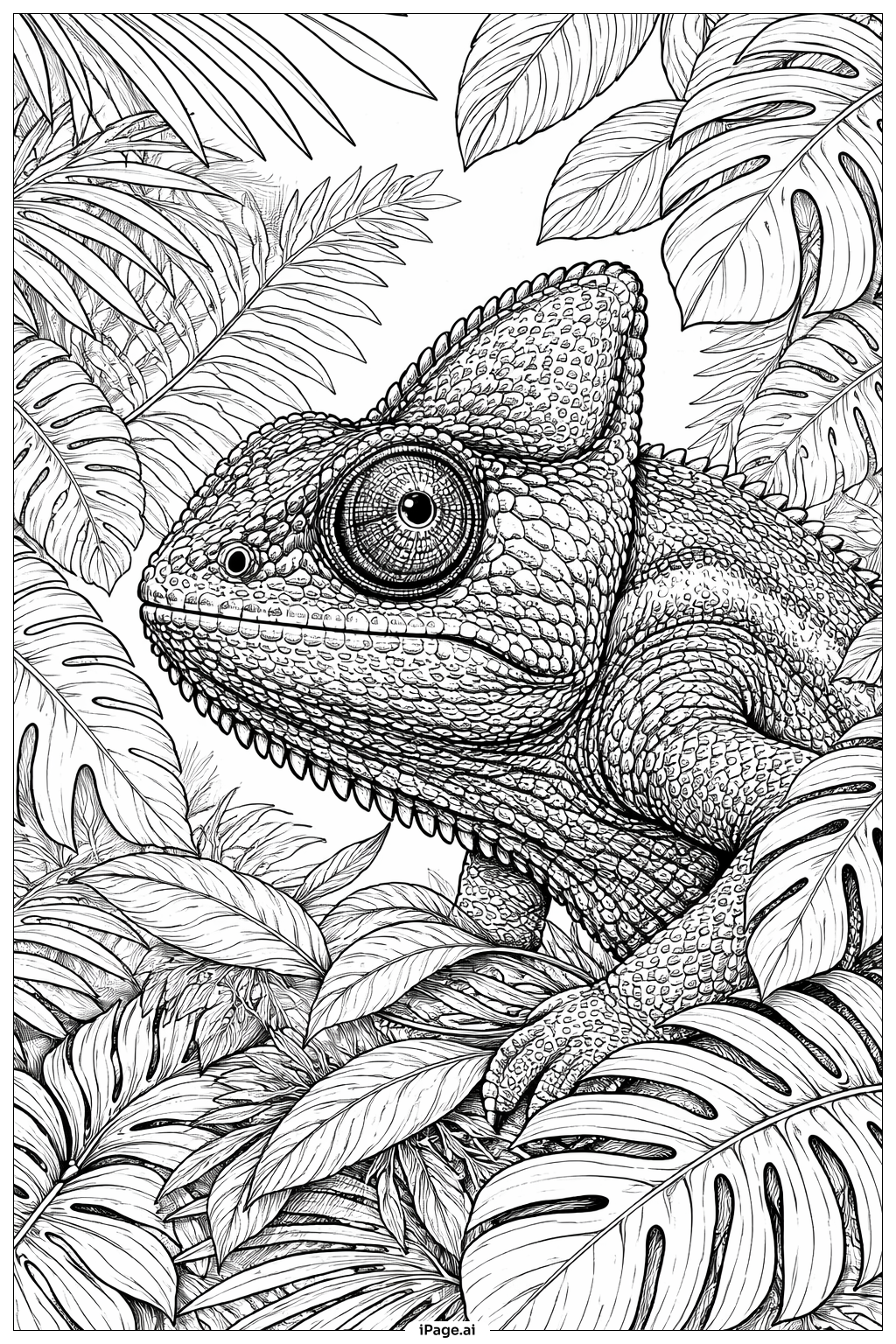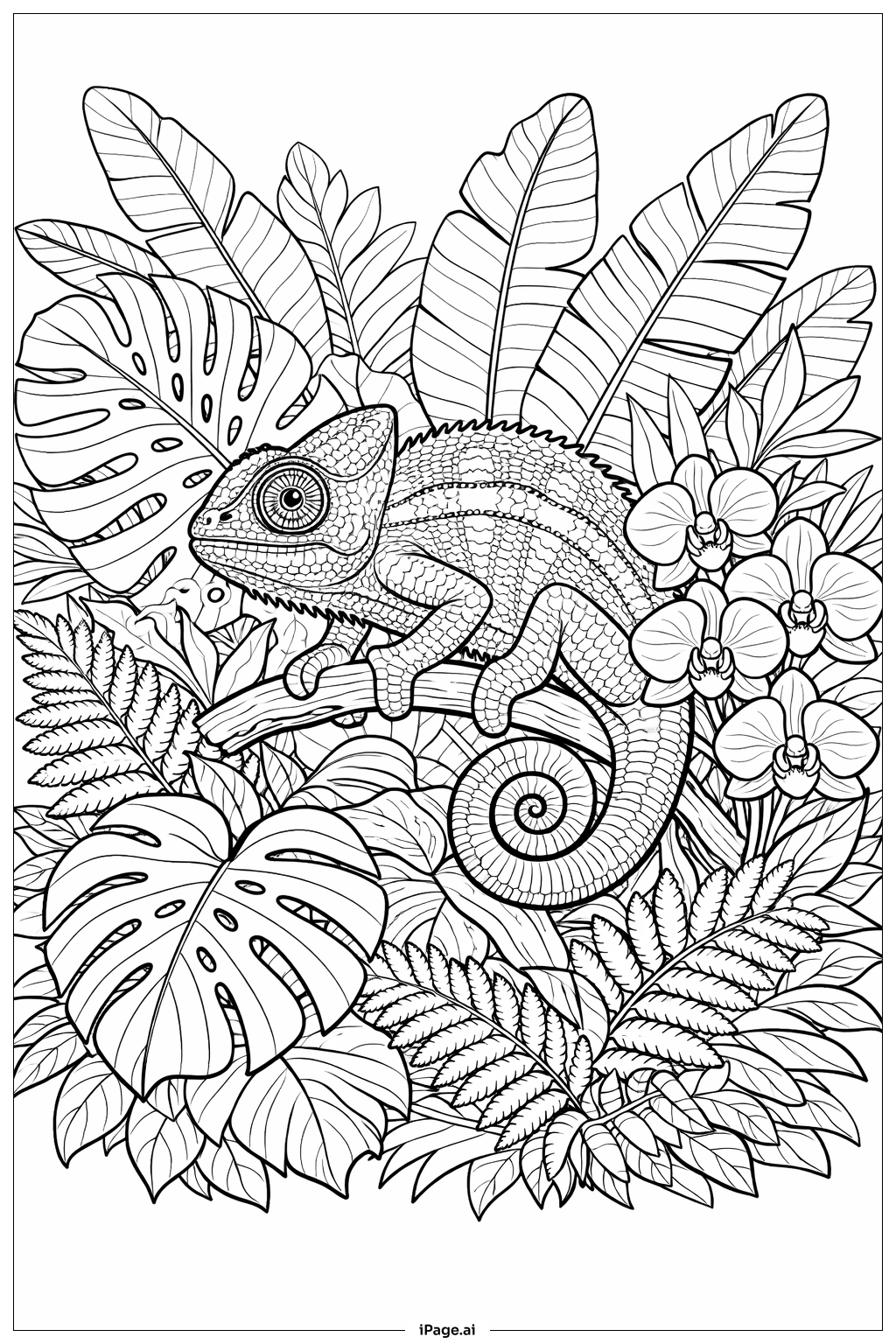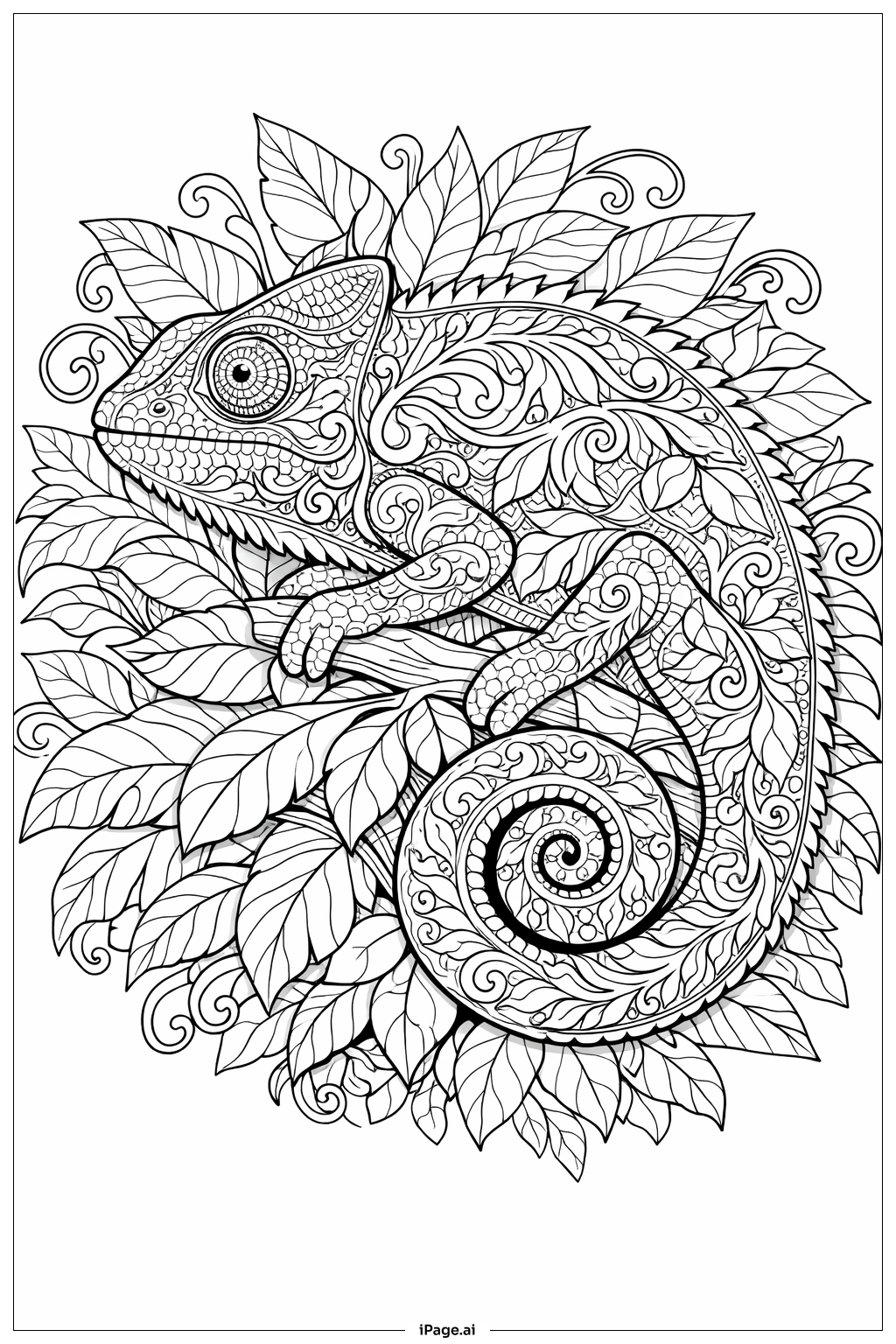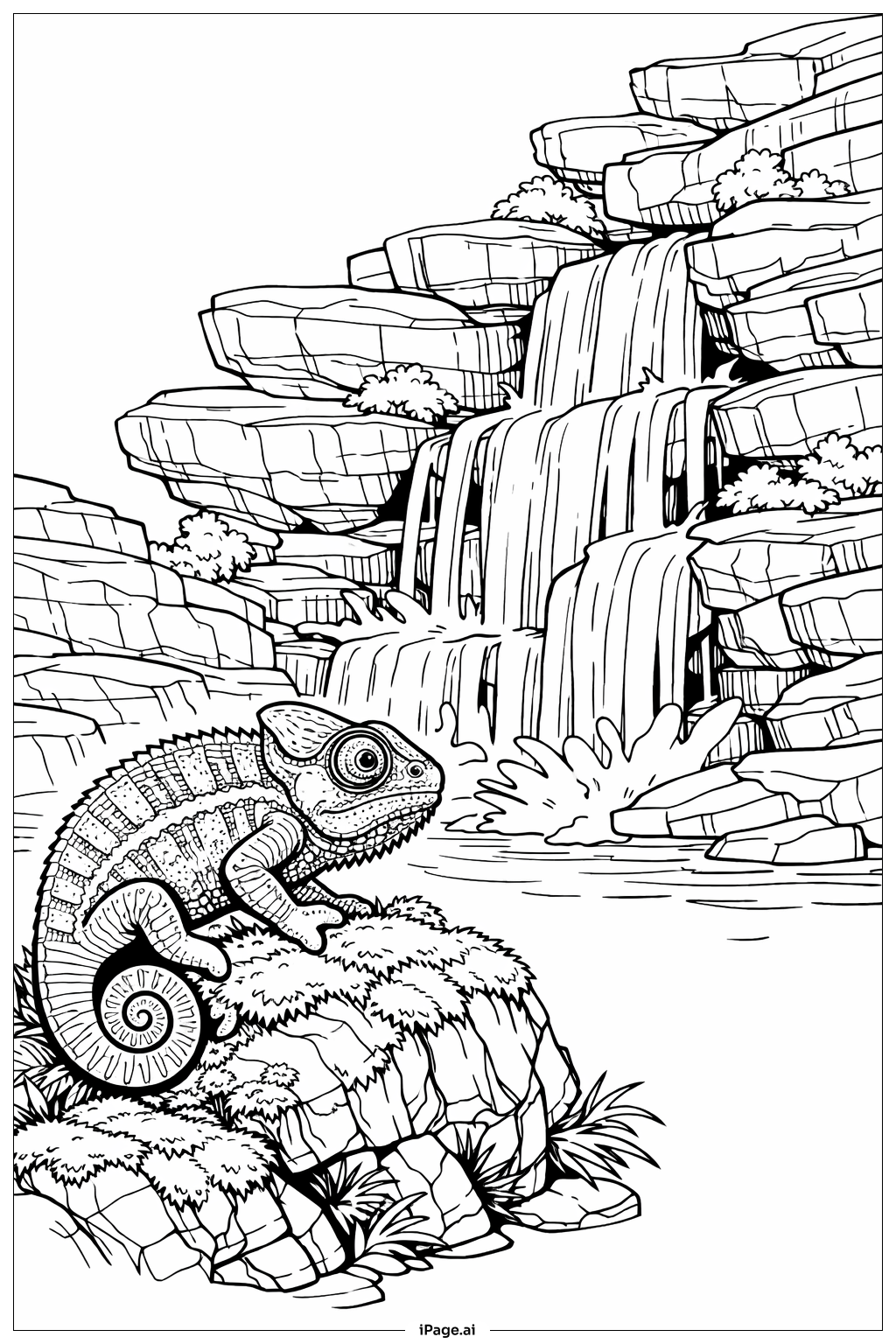
Coloring tips: How to color Happy Chameleon Face coloring page well?
Chameleons are famous for their ability to change colors, so feel free to be creative! Try bright greens and yellows for the main body to capture that classic chameleon look. The circular spots offer a wonderful opportunity to use contrasting colors like orange, blue, or purple to make them pop. Consider using gradient techniques by blending colors together to show how chameleons naturally shift their hues. The curled tail can feature a different color pattern than the body for added visual interest. For the eyes, use bright colors like yellow or orange with a darker pupil. Don't forget to add shading with darker greens or browns in areas where shadows would naturally fall. The background can remain white or be filled with light colors to make your chameleon stand out.
Coloring challenges: Which parts are difficult to color and need attention for Happy Chameleon Face coloring page?
• Circular Spot Consistency: The chameleon's body features multiple circular spots of different sizes scattered across its form. Keeping colors consistent within each spot while maintaining clean edges requires patience and steady hand control, especially for the smaller spots near the tail and limbs.
• Color Blending and Gradients: To achieve a realistic chameleon appearance, you may want to blend multiple colors together smoothly. Creating seamless transitions between greens, yellows, blues, or other colors requires careful layering and blending techniques that younger children might find challenging without practice.
• Curved Body Contours: The chameleon's rounded body shape and curled tail create continuous curved lines that need consistent coloring pressure. Staying within these curved boundaries while maintaining even color saturation throughout can be tricky, particularly where the tail spirals tightly.
• Eye Detail Work: The chameleon's large, expressive eyes require careful attention to create depth and life. Coloring the circular eye structure while leaving highlights and adding pupils demands precision and control in small spaces.
• Spot-to-Body Color Coordination: Choosing complementary colors that make the spots stand out while keeping the overall design harmonious requires color theory understanding and planning before starting the coloring process.
Benefits of coloring books: Advantages of drawing Happy Chameleon Face coloring page
Coloring this happy chameleon face offers wonderful developmental benefits for children. The various circular spots help improve fine motor skills and hand-eye coordination as young artists carefully fill each shape. The curved lines and spiral tail encourage smooth, controlled movements that build pencil grip strength. This image introduces children to the fascinating world of chameleons and their amazing color-changing abilities, sparking curiosity about nature and wildlife. The cheerful expression promotes positive emotions and can be a calming activity that reduces stress. Working with multiple colors to create the spotted pattern helps develop color recognition and decision-making skills. The detailed features allow children to practice patience and focus while seeing their artistic choices come to life, boosting confidence and self-esteem upon completion.