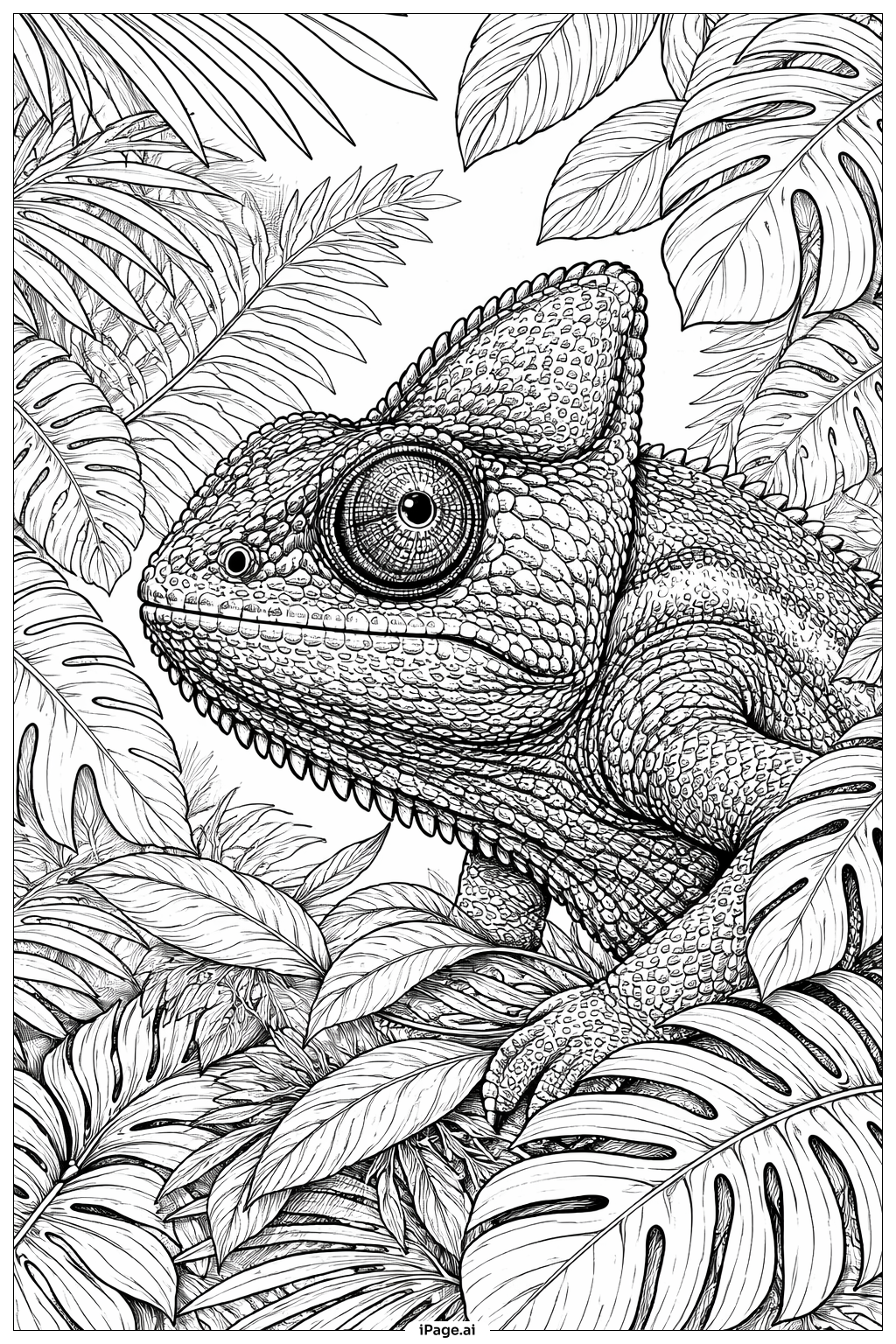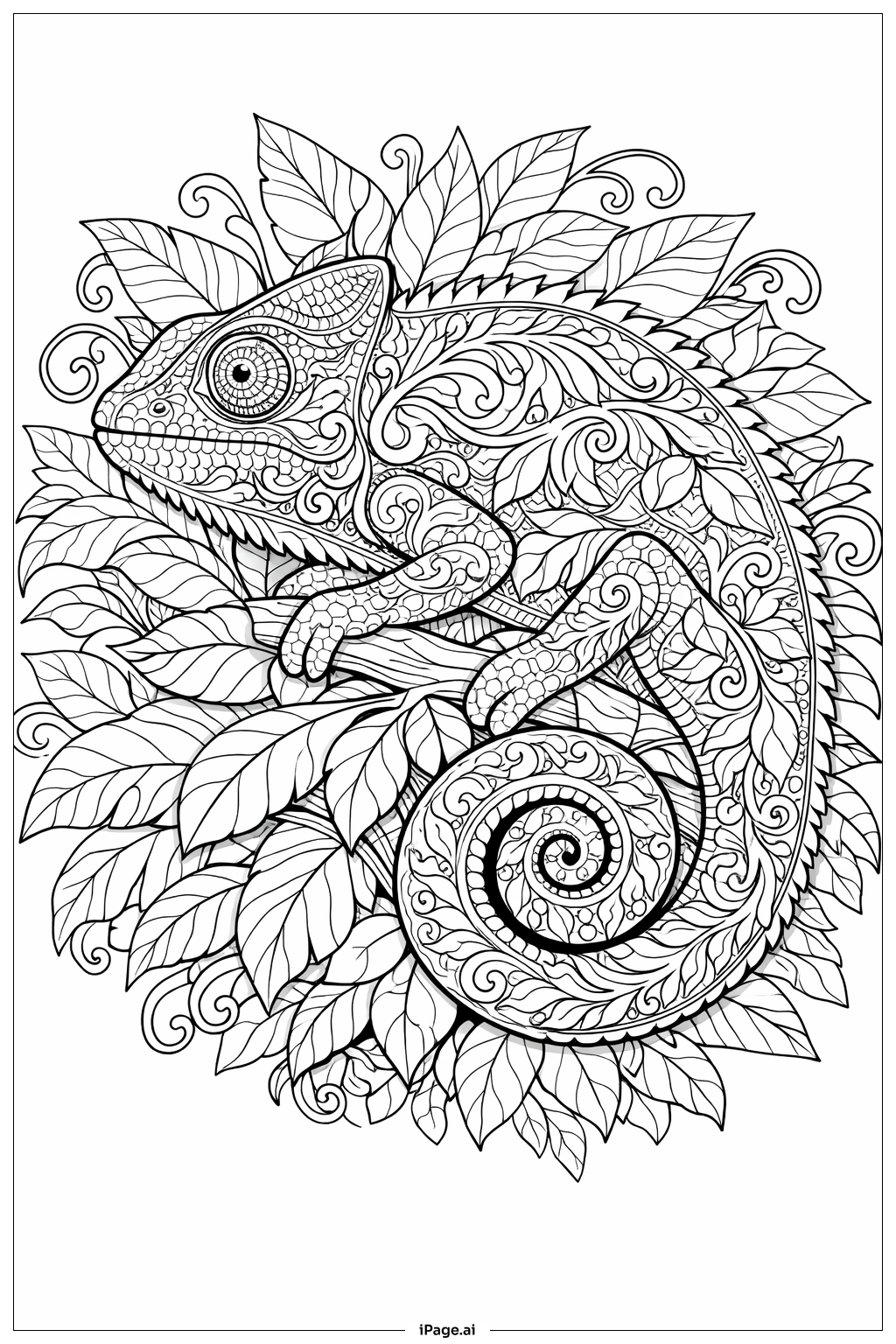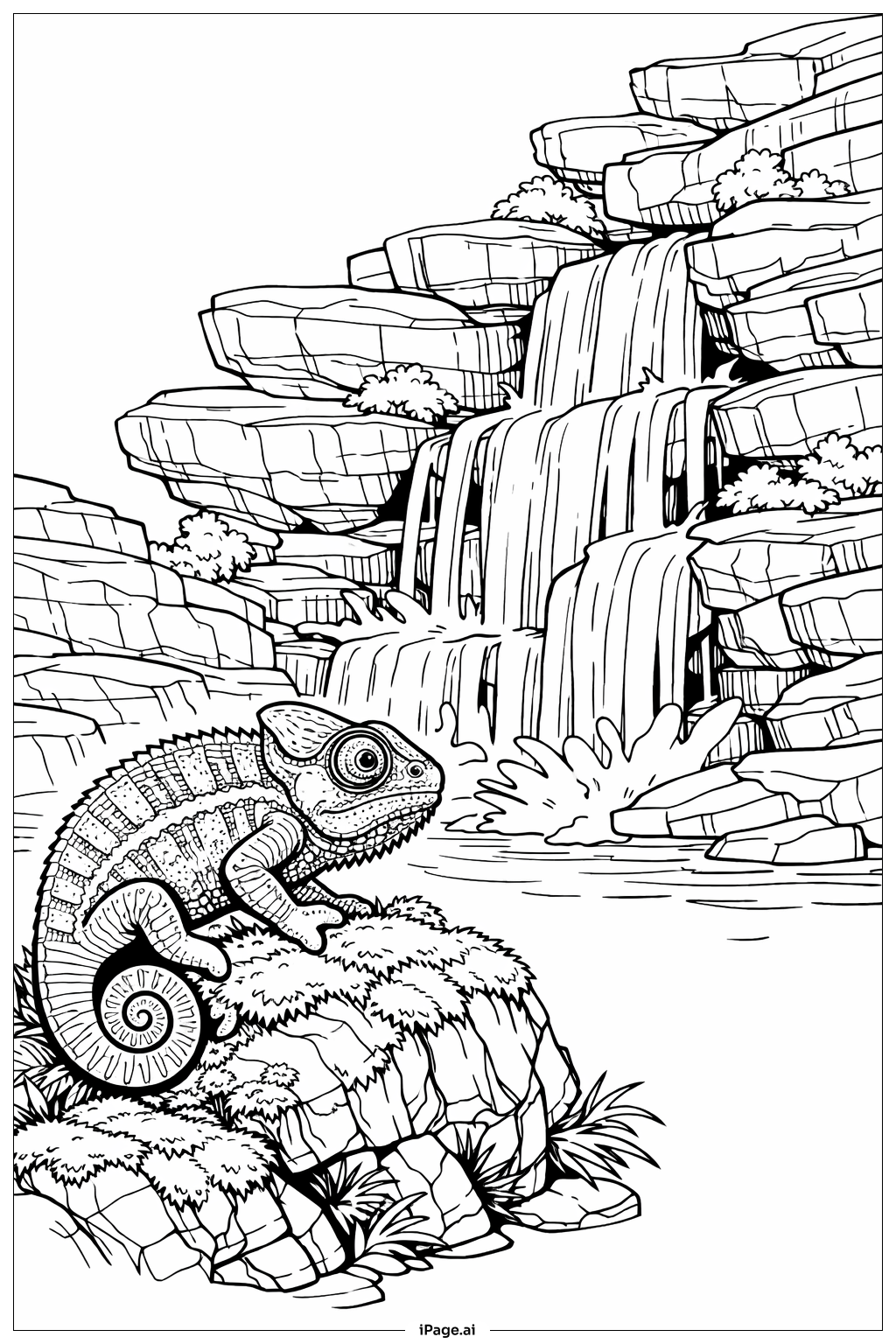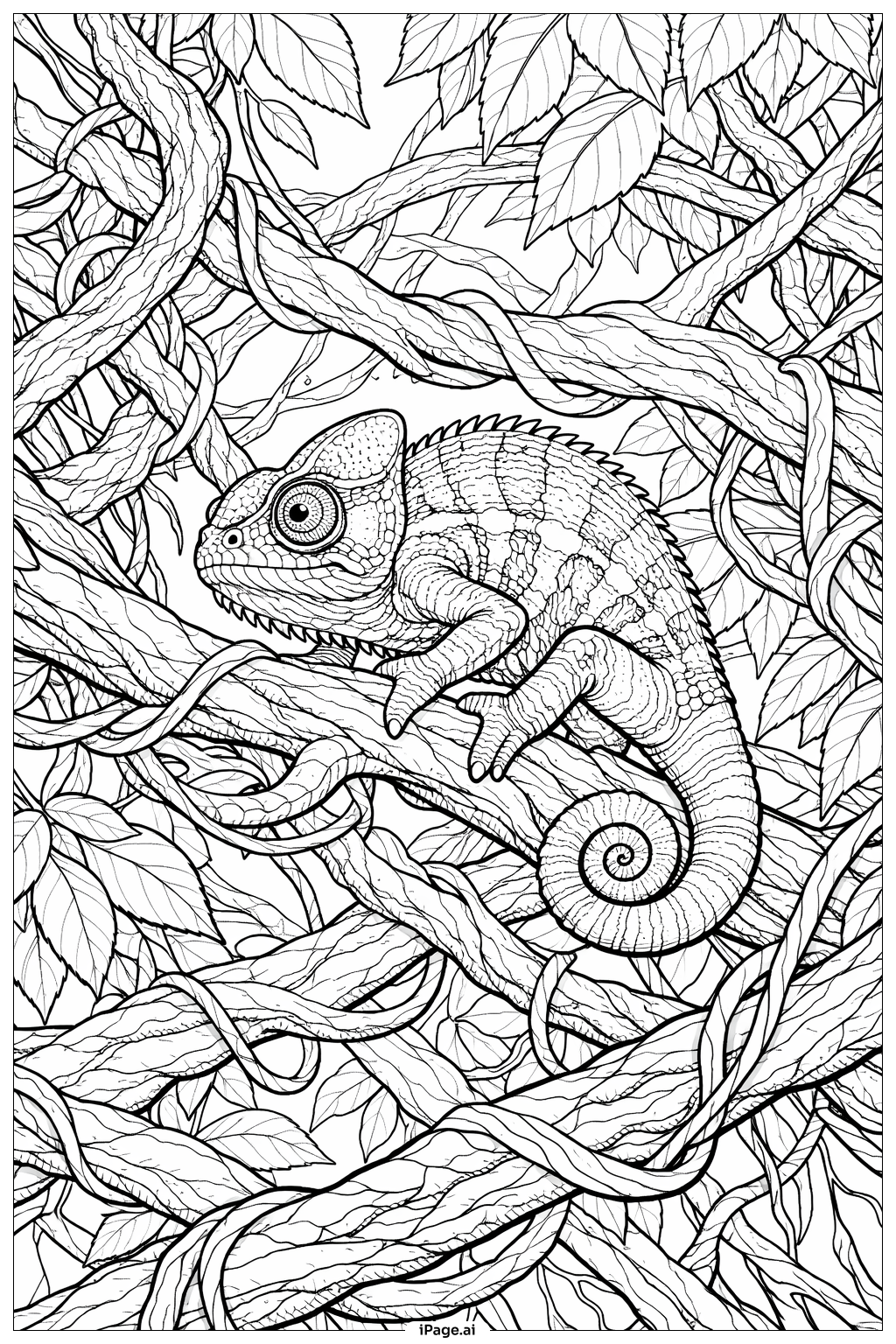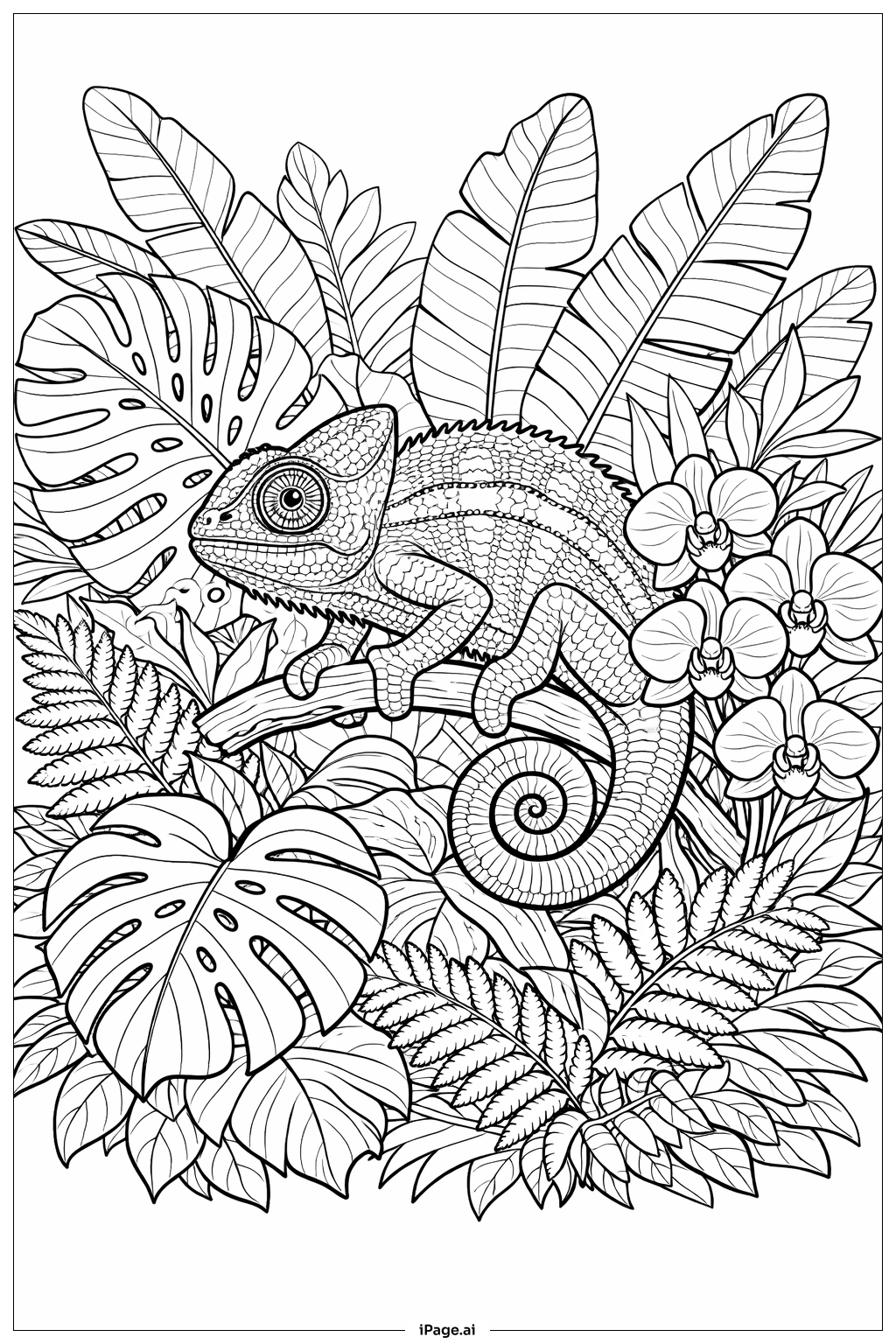
Coloring tips: How to color Chameleon Among Tropical Plants coloring page well?
Start with the chameleon's body before moving on to the background plants. For the chameleon, you can go with natural greens and browns, or have fun with bright colors like turquoise, orange, and yellow to show off its famous color-changing ability. Use a darker shade to add depth along the ridges of its back and under its belly. Try adding spots or stripe patterns across the body for extra detail. For the tropical leaves, use different shades of green — light lime for young leaves and deep forest green for the larger ones. Add a little yellow or brown at the leaf edges to make them look realistic. Use earthy tones like tan and dark brown for the branch. Feel free to experiment — there are no wrong color choices when it comes to a chameleon!
Coloring challenges: Which parts are difficult to color and need attention for Chameleon Among Tropical Plants coloring page?
• Chameleon Skin Texture: The chameleon's body is covered in small, overlapping scales and raised ridges. Coloring each of these tiny sections neatly takes patience and a fine-tipped tool. Blending two or three shades within the same area helps bring out the three-dimensional look of the scales without muddying the colors together.
• Overlapping Leaves and Plants: The background is filled with many tropical leaves layered on top of one another. It can be tricky to tell where one leaf ends and another begins. Using slightly different shades of green for each leaf helps separate them visually and keeps the scene from looking flat or confusing.
• Feet and Claws on the Branch: The chameleon's toes grip the branch in a very specific way, with small, curved claws wrapping around the wood. These tiny areas are hard to color neatly because the spaces between the toes and claws are narrow. A sharp pencil or a fine marker works best here.
• Expressive Eyes: The chameleon's large, round eyes are a focal point of the image. Getting the shading right — leaving a small highlight dot and adding a darker ring around the iris — can be challenging but makes the eyes look alive and full of character.
• Branch and Vine Details: The branch and any vines have rough, uneven textures with cracks and curves. Using multiple tones of brown and gray, and leaving some areas lighter to suggest reflected light, will give the branch a natural, woody appearance without it looking too flat.
Benefits of coloring books: Advantages of drawing Chameleon Among Tropical Plants coloring page
Coloring this chameleon scene is a wonderful activity for kids and beginners alike. It helps build focus and patience, especially when working through the many small details like the scales, leaves, and claws. Spending time on a detailed image like this trains the eye to notice shapes, textures, and how light and shadow work together.
Choosing colors for a chameleon is also a great creative exercise. Since chameleons are known for changing color, there are no rules — kids can explore wild, imaginative color combinations and feel proud of a result that is totally their own.
The tropical plant setting introduces a natural world theme, which can spark curiosity about rainforests, wildlife, and ecosystems. Parents and teachers can use this page as a starting point for conversations about animals and nature.
On a personal level, the calm, repetitive motion of coloring is relaxing and helps reduce stress. It gives children a screen-free activity that still feels engaging and rewarding. Finishing the page builds a real sense of accomplishment, encouraging kids to take on more creative challenges with confidence.