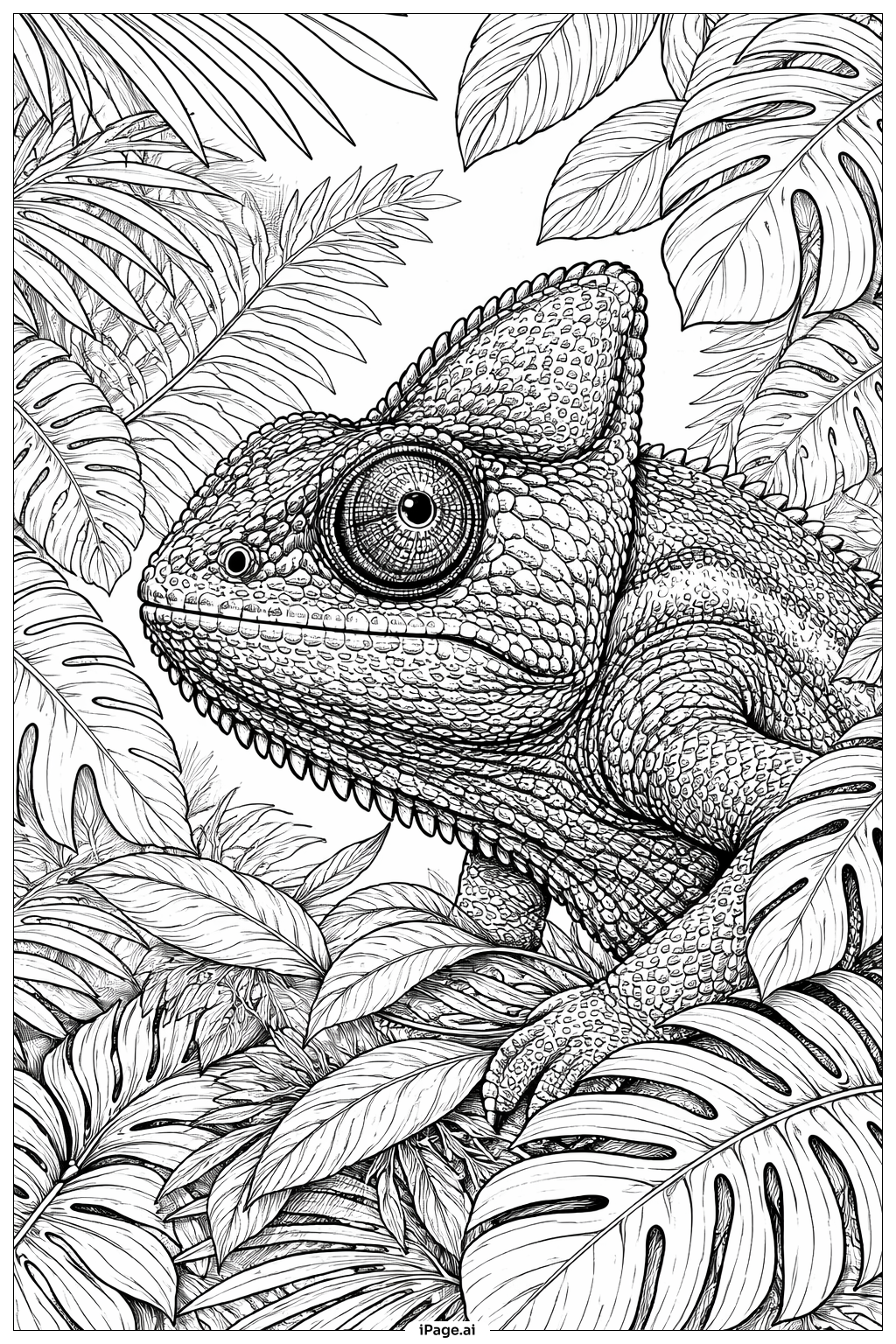
Coloring tips: How to color Chameleon Portrait With Textured Background coloring page well?
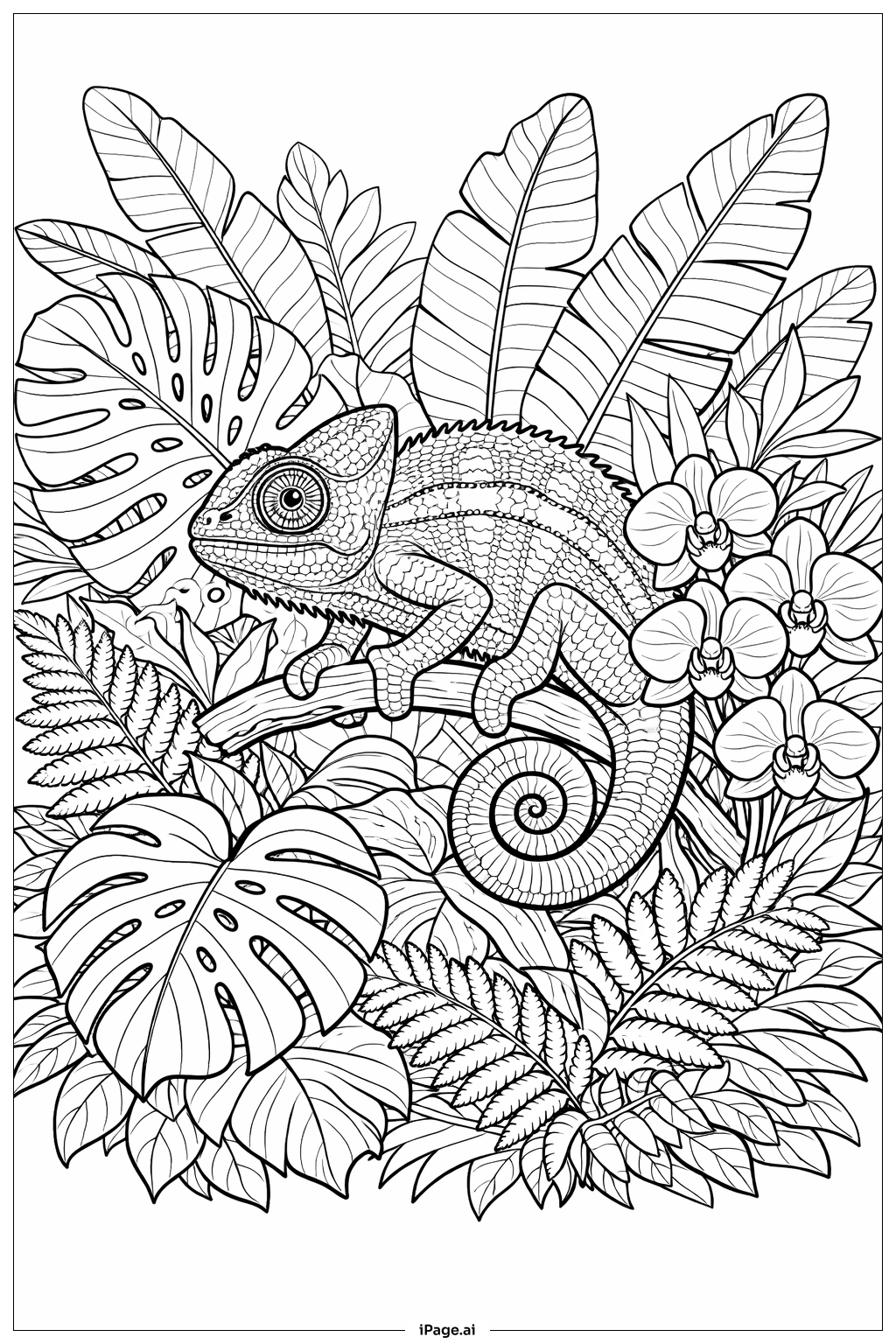
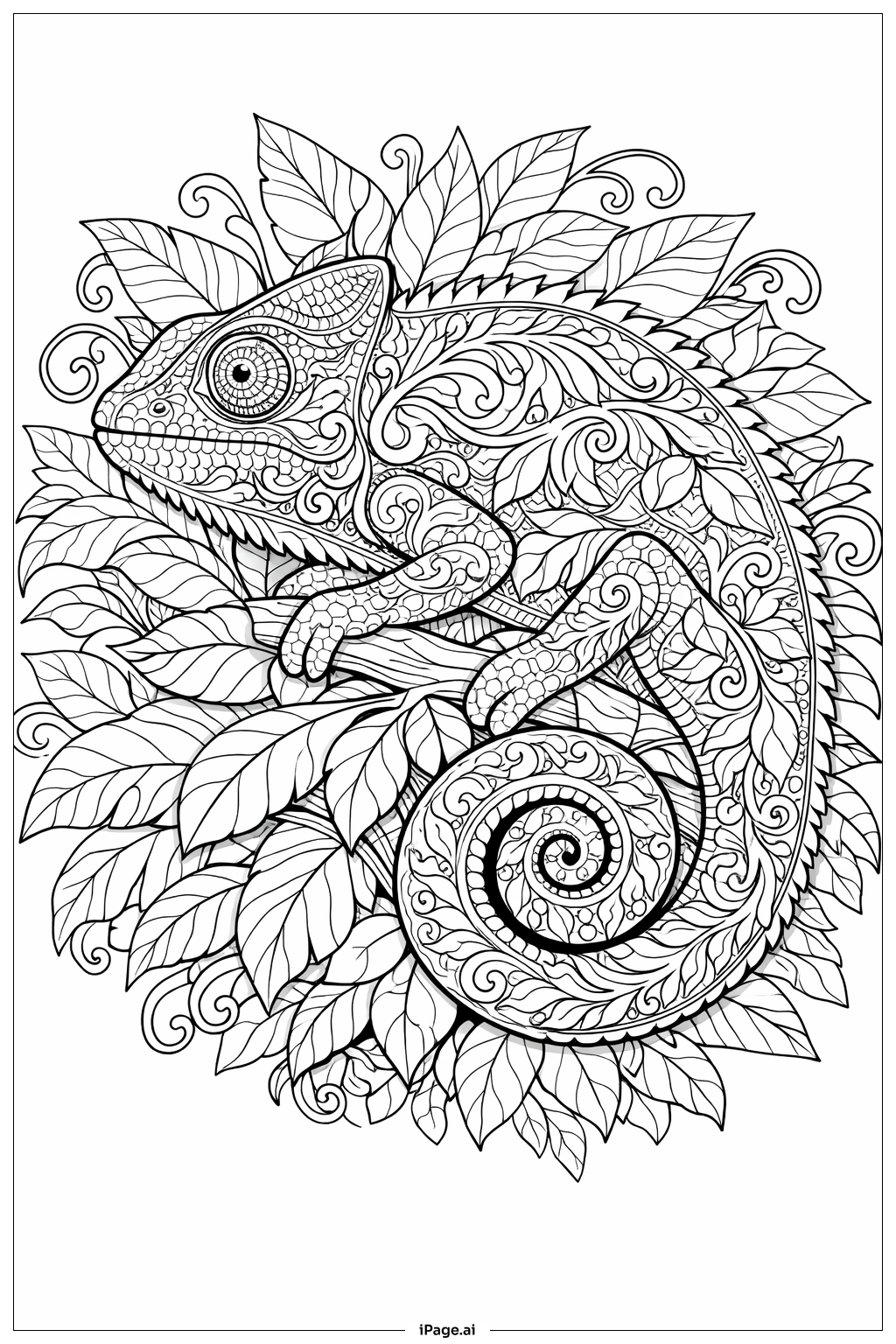
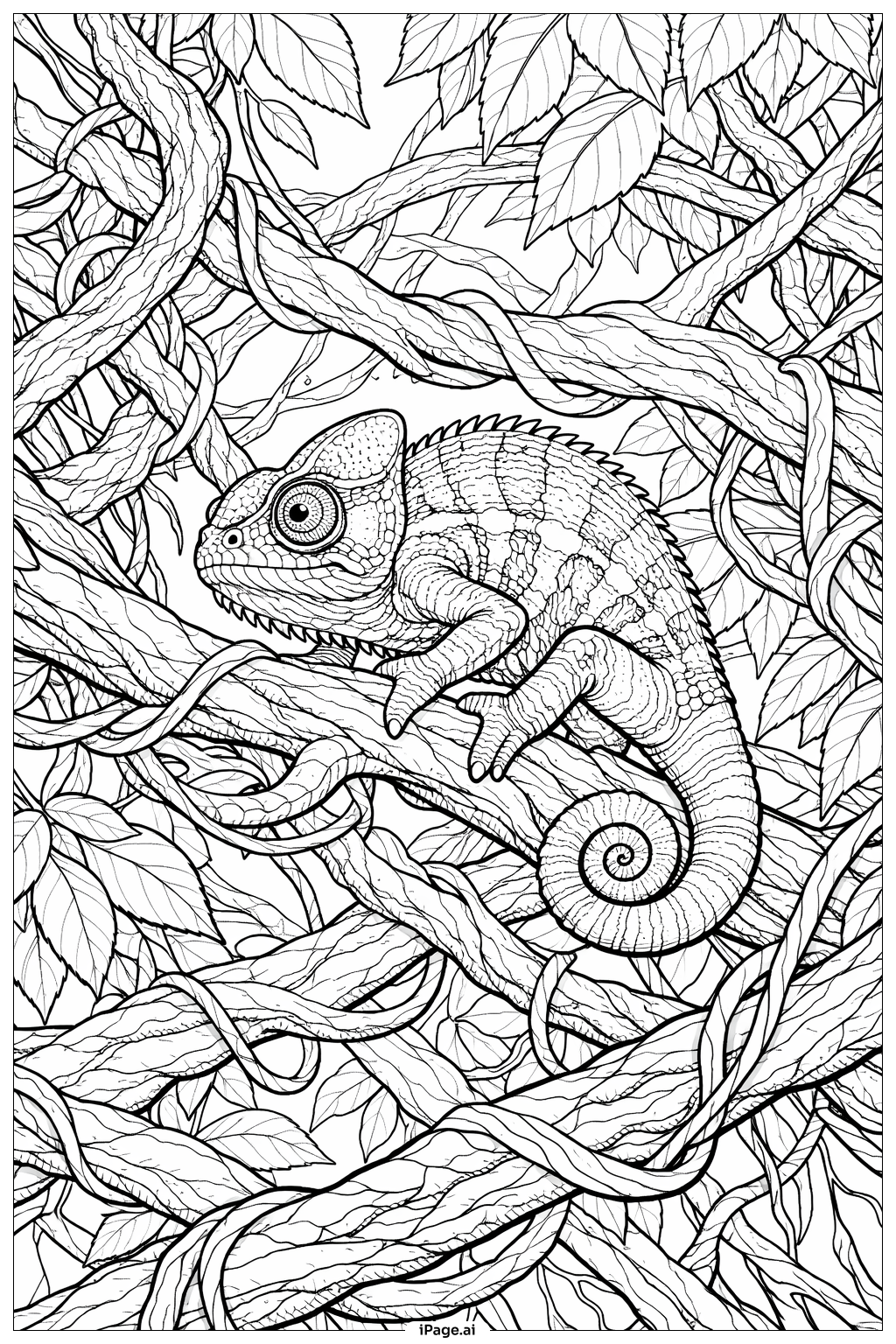
Use many shades of green to color the leaves, like light green for younger leaves and dark green for older ones. The chameleon can be colored using a mix of colors such as green, yellow, brown, and even hints of blue or orange to make it look real and interesting. Pay attention to coloring the scales carefully to show texture by using different shades for shadows and highlights. For the eyes, try using bright colors and add a white dot to create a shiny effect. Remember to color the background lightly so that the chameleon stands out as the main focus of the page.
Coloring challenges: Which parts are difficult to color and need attention for Chameleon Portrait With Textured Background coloring page?
1. The chameleon has very small and detailed scales, which require careful coloring to keep the fine lines clear. 2. The many layers of leaves overlap, making it tricky to decide which ones to color darker for depth. 3. Creating a realistic texture on the chameleon’s skin by mixing colors and shading is challenging. 4. The eye has intricate lines that need precise coloring to avoid losing details. 5. Balancing the colors between the chameleon and leaves so that one does not overpower the other can be difficult.
Benefits of coloring books: Advantages of drawing Chameleon Portrait With Textured Background coloring page
Coloring this picture helps improve attention to detail because of the many tiny scales and leaf details. It also encourages children to explore natural colors and how different shades work together. This activity can boost patience and fine motor skills as careful coloring is needed. Additionally, it promotes creativity by allowing children to choose their own colors for the chameleon and jungle leaves. Finally, it helps develop an appreciation of nature and the unique animals that live in the wild.