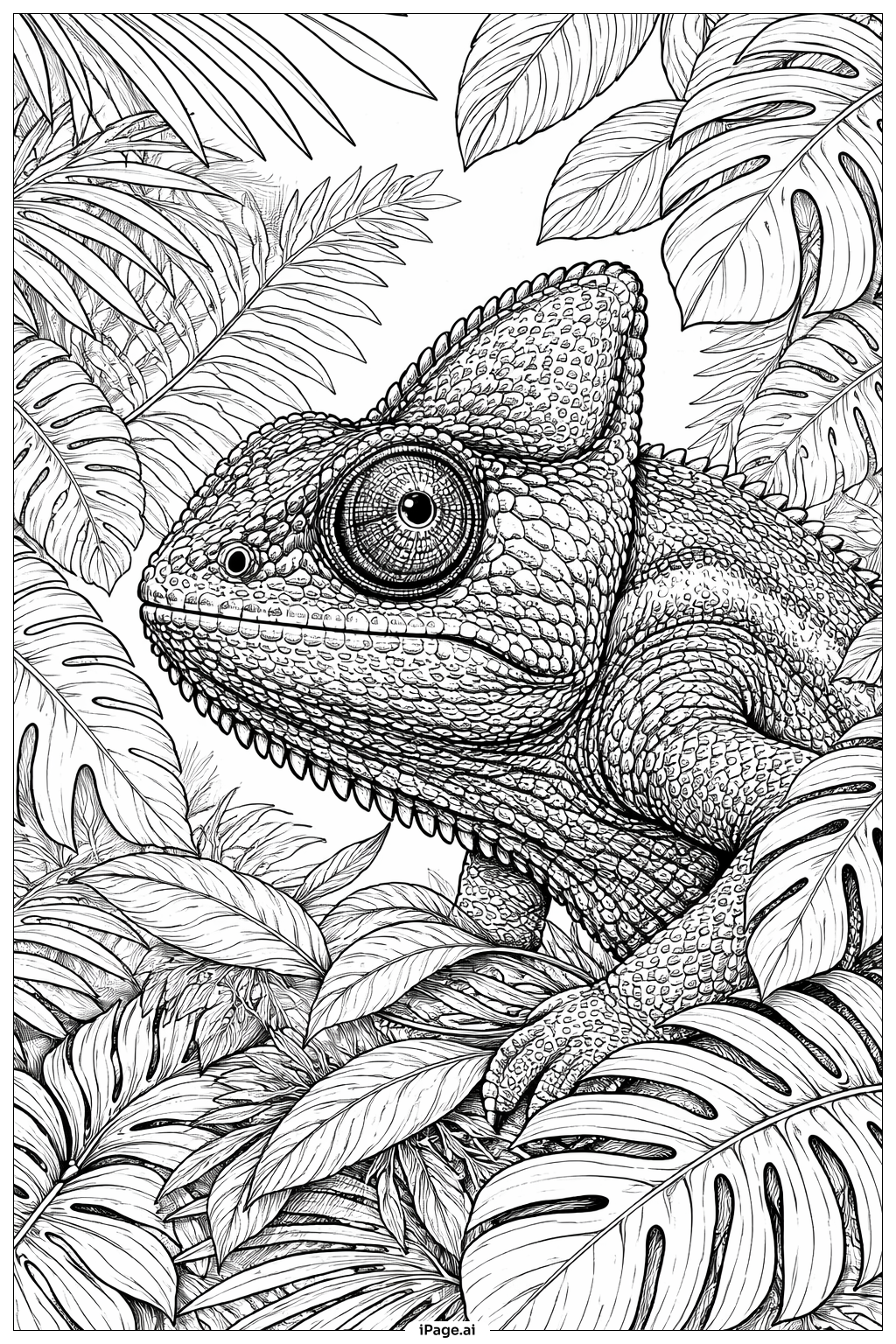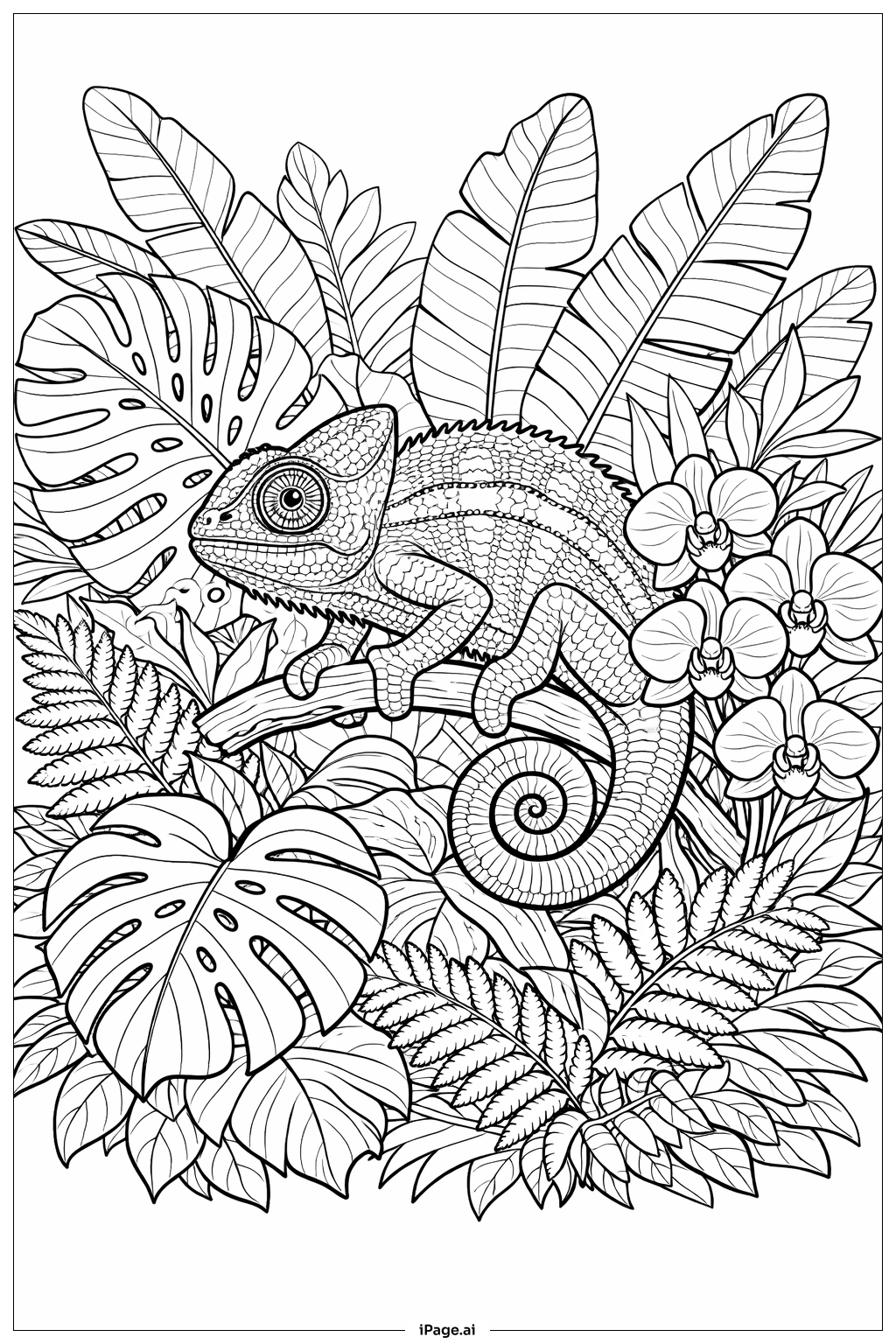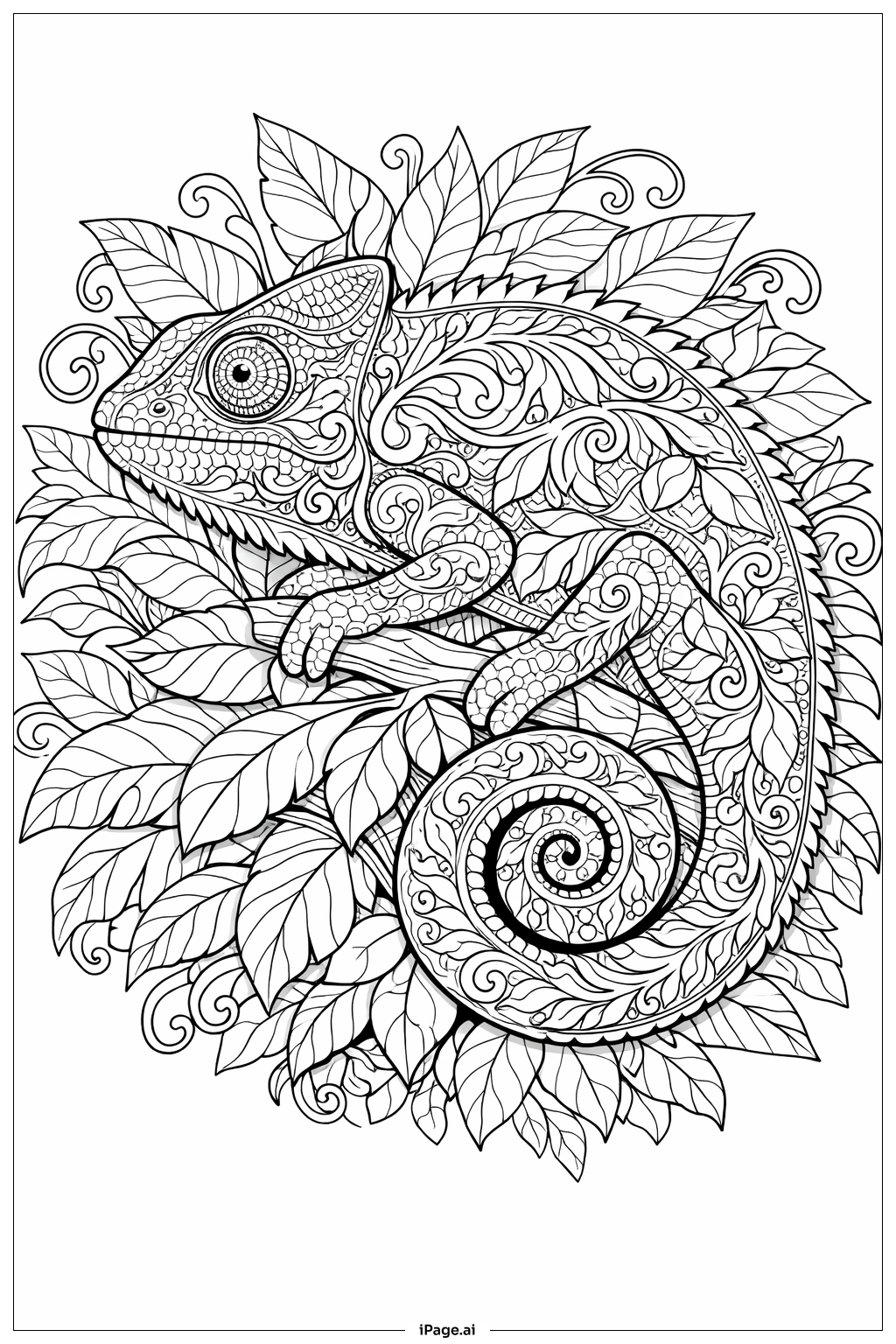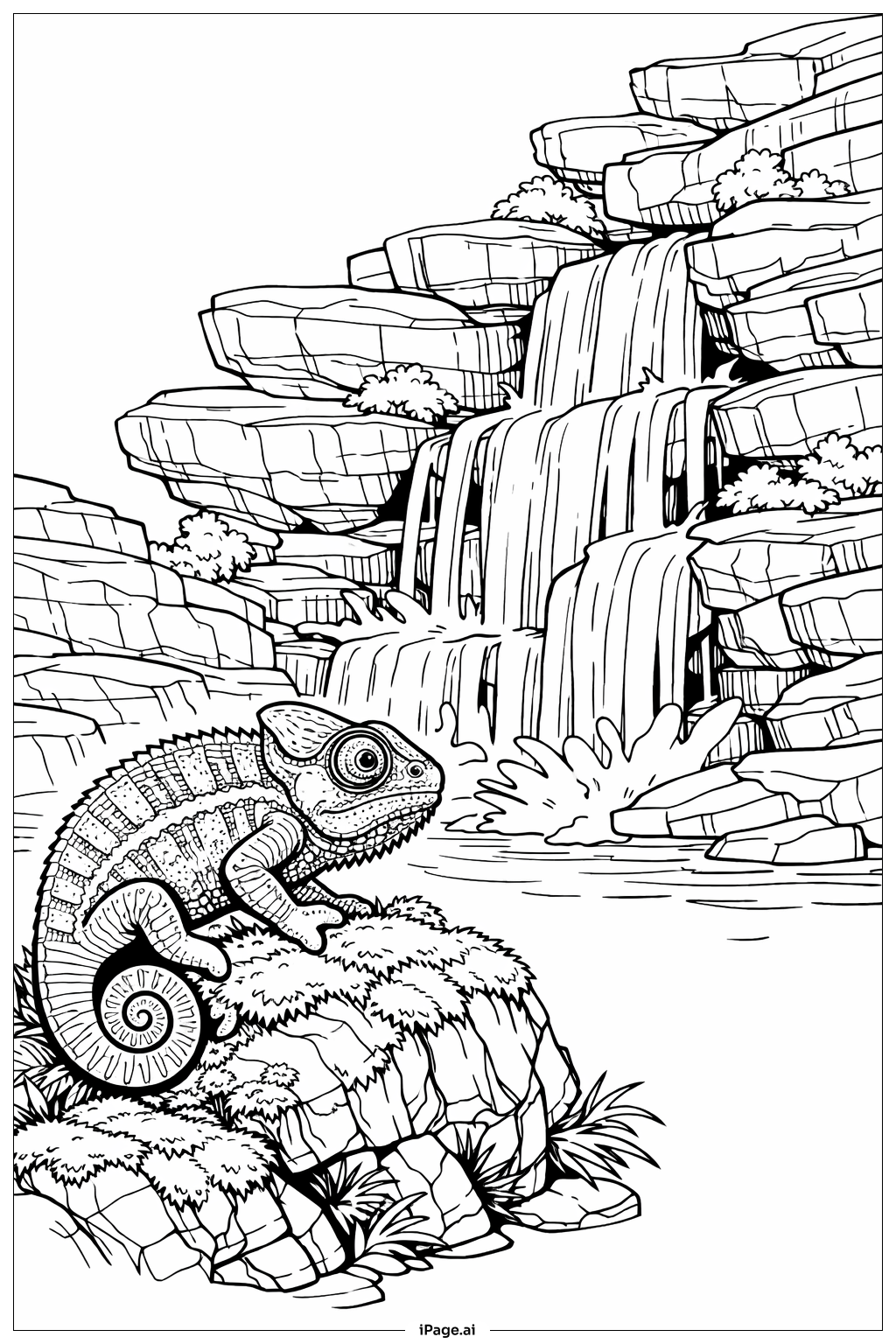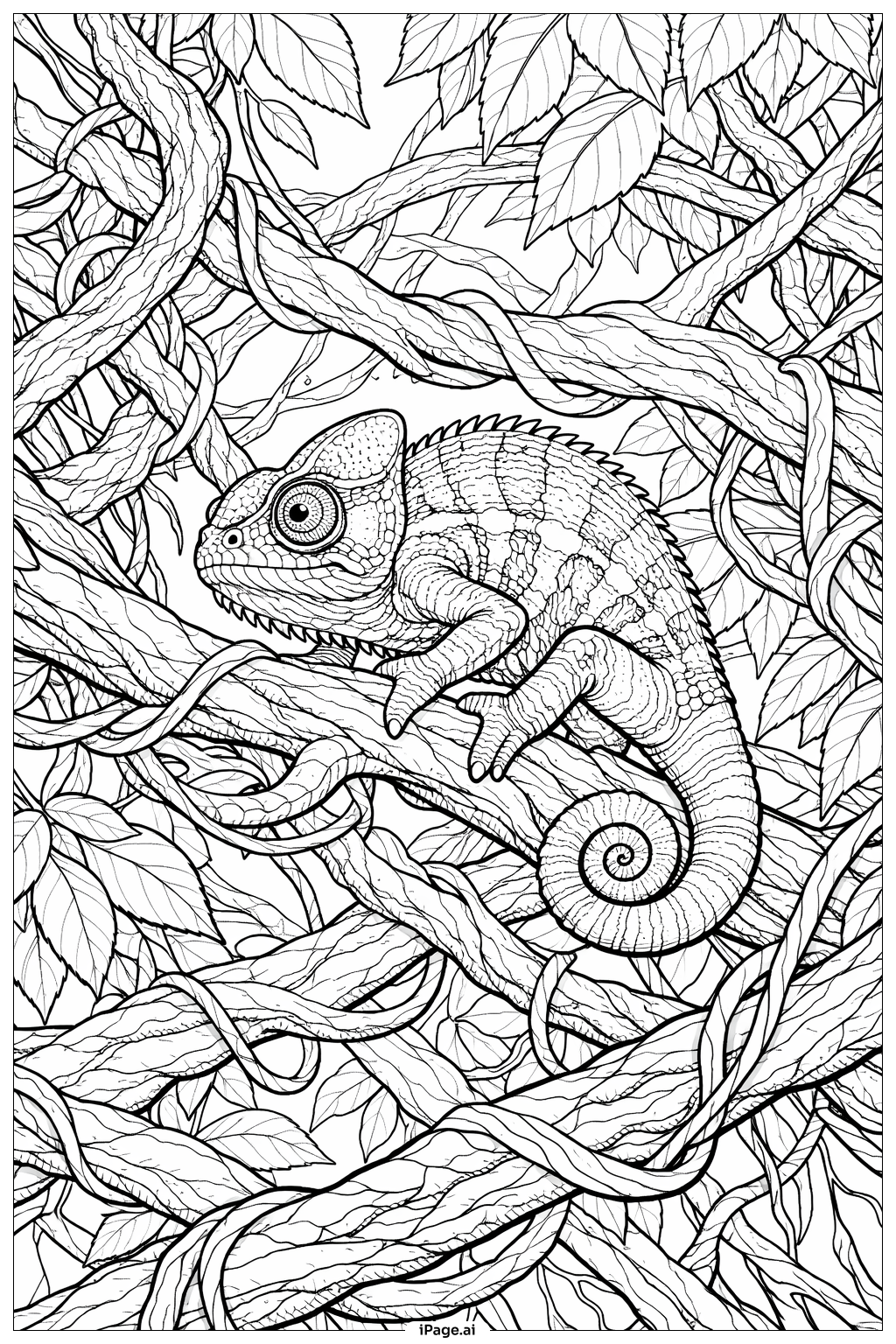
Coloring tips: How to color Chameleon On Twisted Vines coloring page well?
Use shades of green and brown to color the vines and leaves, making the forest feel alive. The chameleon can be bright with colors like green, yellow, or blue to stand out or blend with the background. Try blending different colors on the chameleon's body to show its changing colors, a special feature of chameleons. Use lighter colors for the background and darker shades for the vines to create depth. Color carefully inside the lines to bring out the details of the scales and leaves.
Coloring challenges: Which parts are difficult to color and need attention for Chameleon On Twisted Vines coloring page?
1. The many twisted vines overlap, making it tricky to stay inside the lines. 2. The chameleon's detailed scales need careful coloring to show texture. 3. Leaves have veins that require patience to color neatly. 4. The curled tail shape can be hard to shade properly to show it is round. 5. Balancing bright and natural colors without making the picture too crowded can be challenging.
Benefits of coloring books: Advantages of drawing Chameleon On Twisted Vines coloring page
Coloring this picture helps improve focus and patience because of its many details. It encourages creativity by letting you choose different patterns and colors for the chameleon and vines. It also teaches about nature, showing how animals live and blend in with plants. Coloring the small parts improves fine motor skills and hand-eye coordination. Overall, it is a fun way to relax and learn about wildlife.