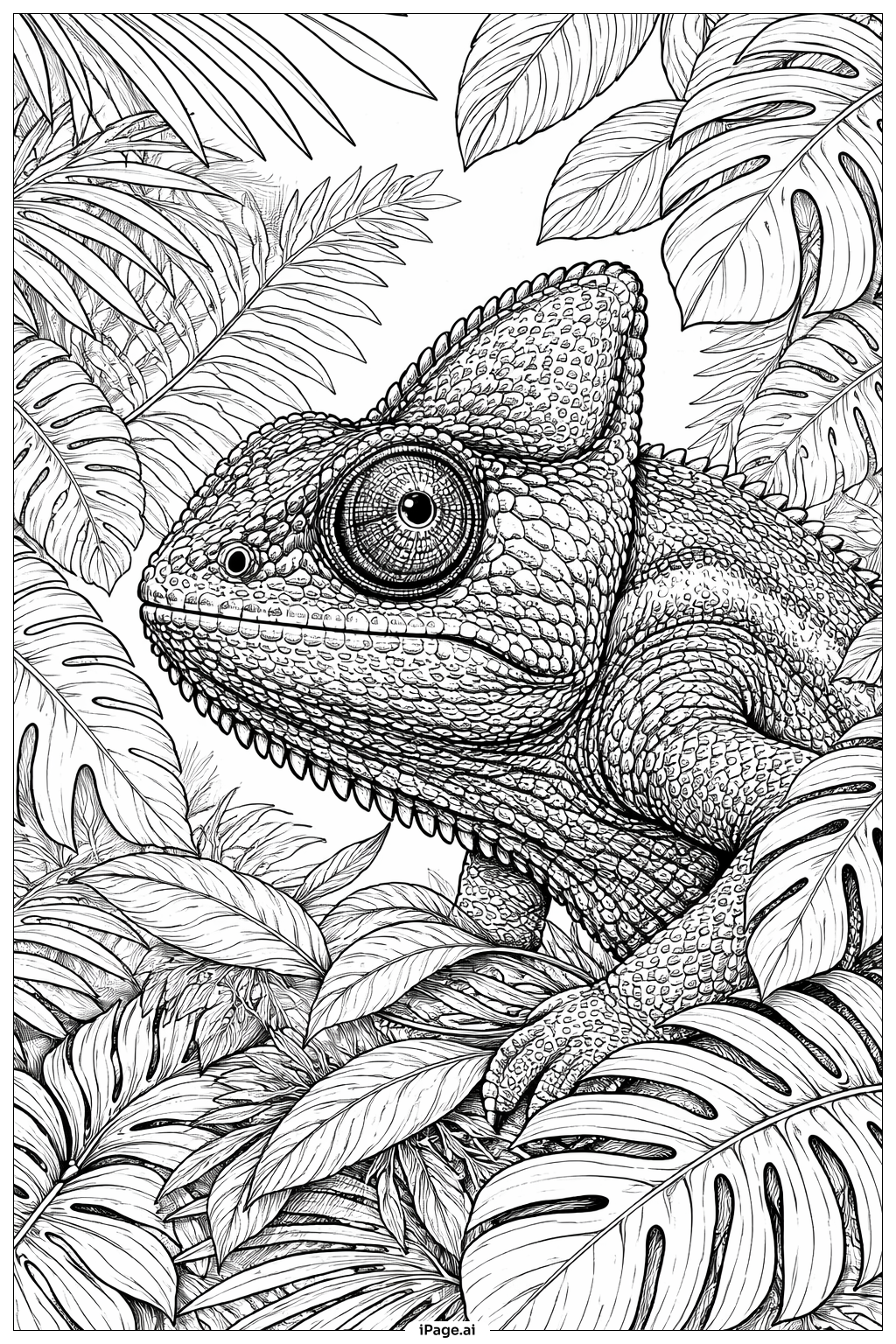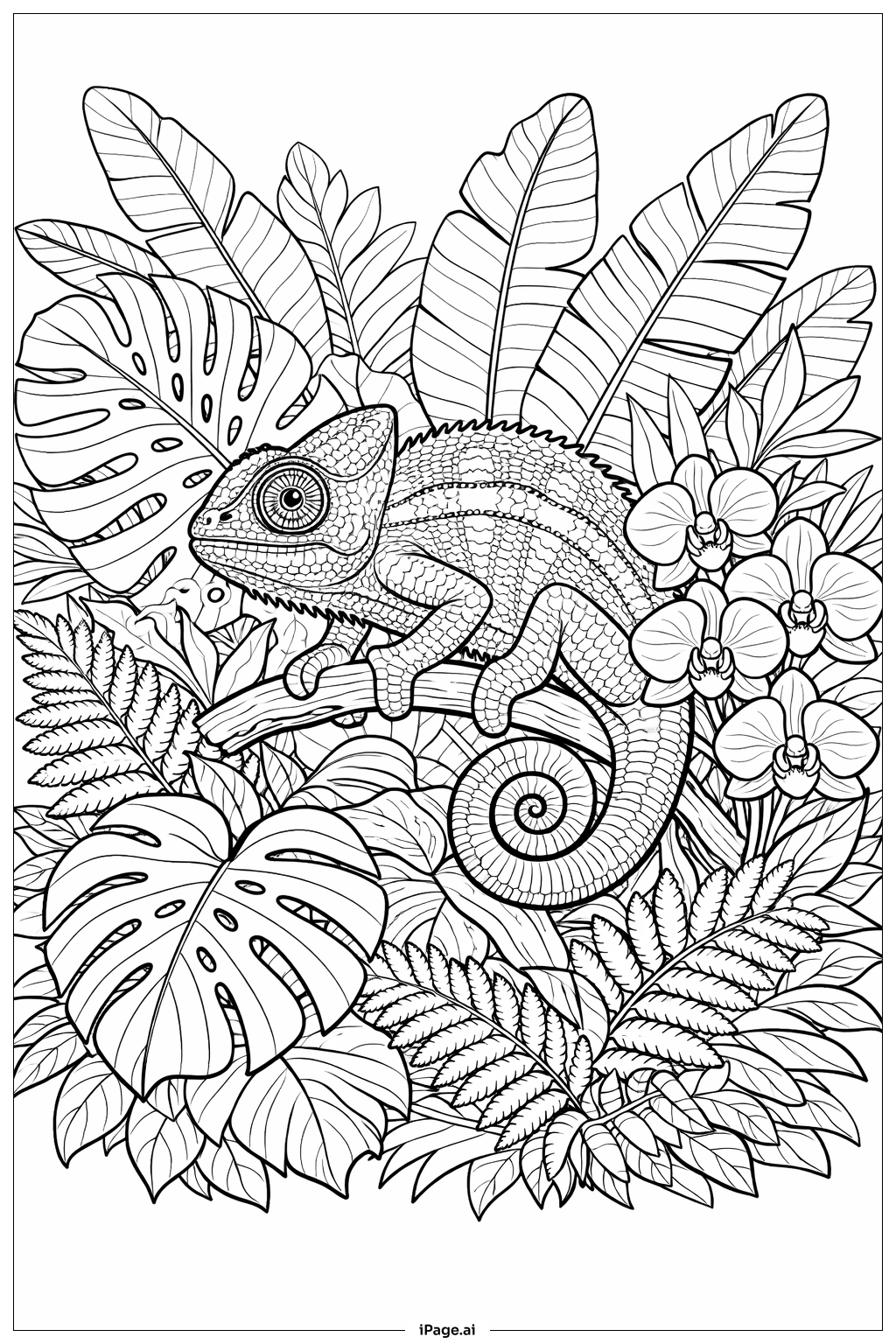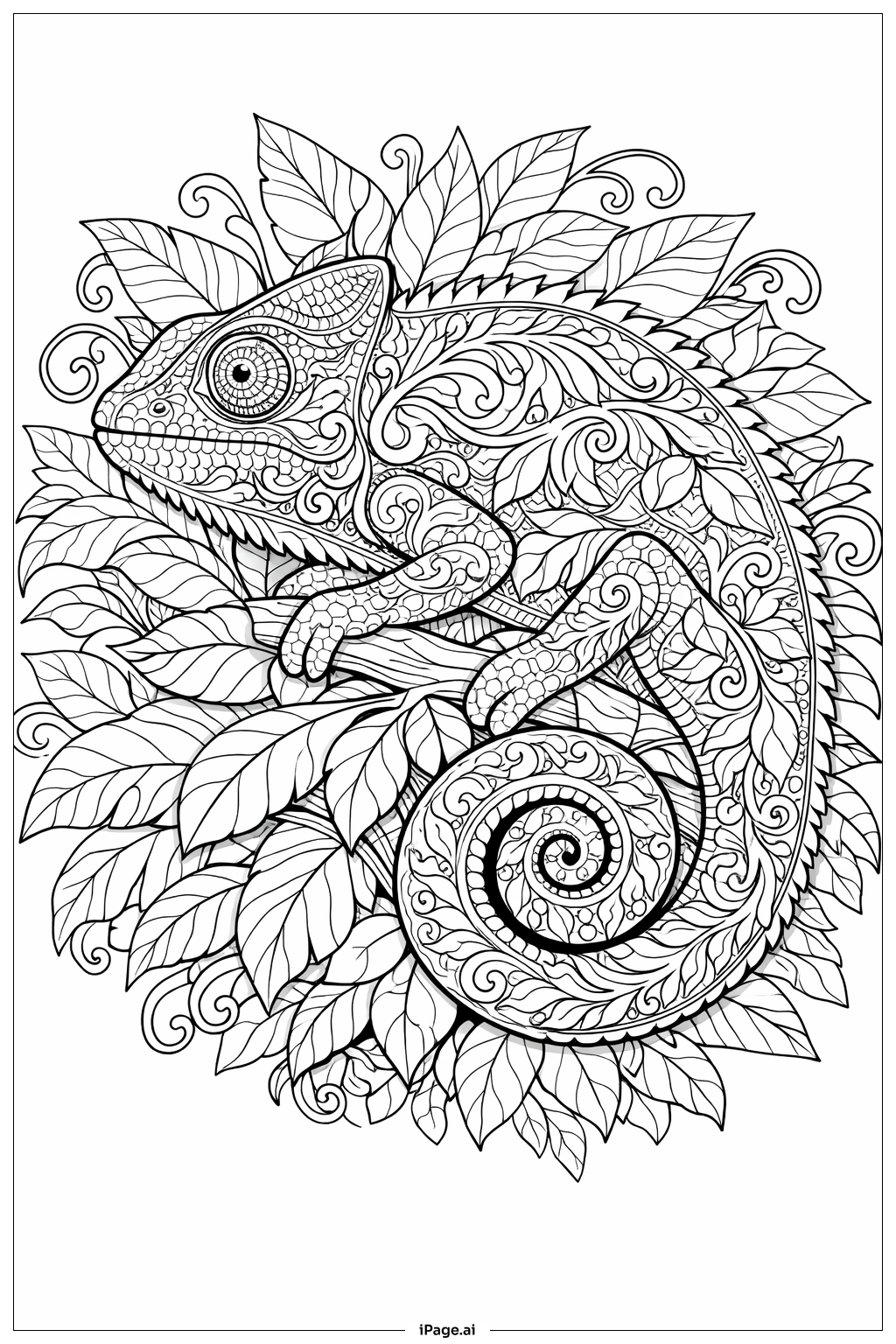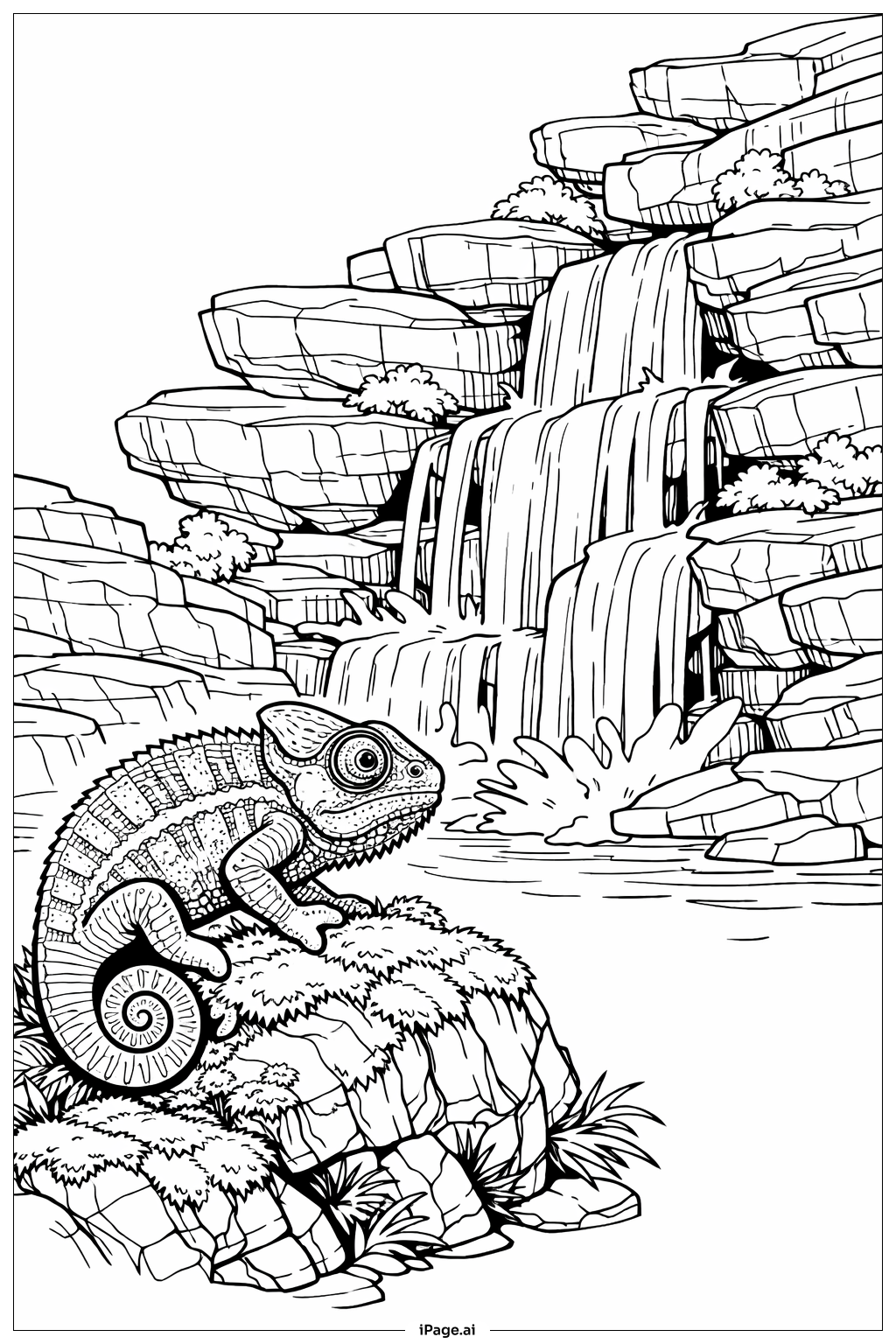
Coloring tips: How to color Chameleon With Butterfly Friends coloring page well?
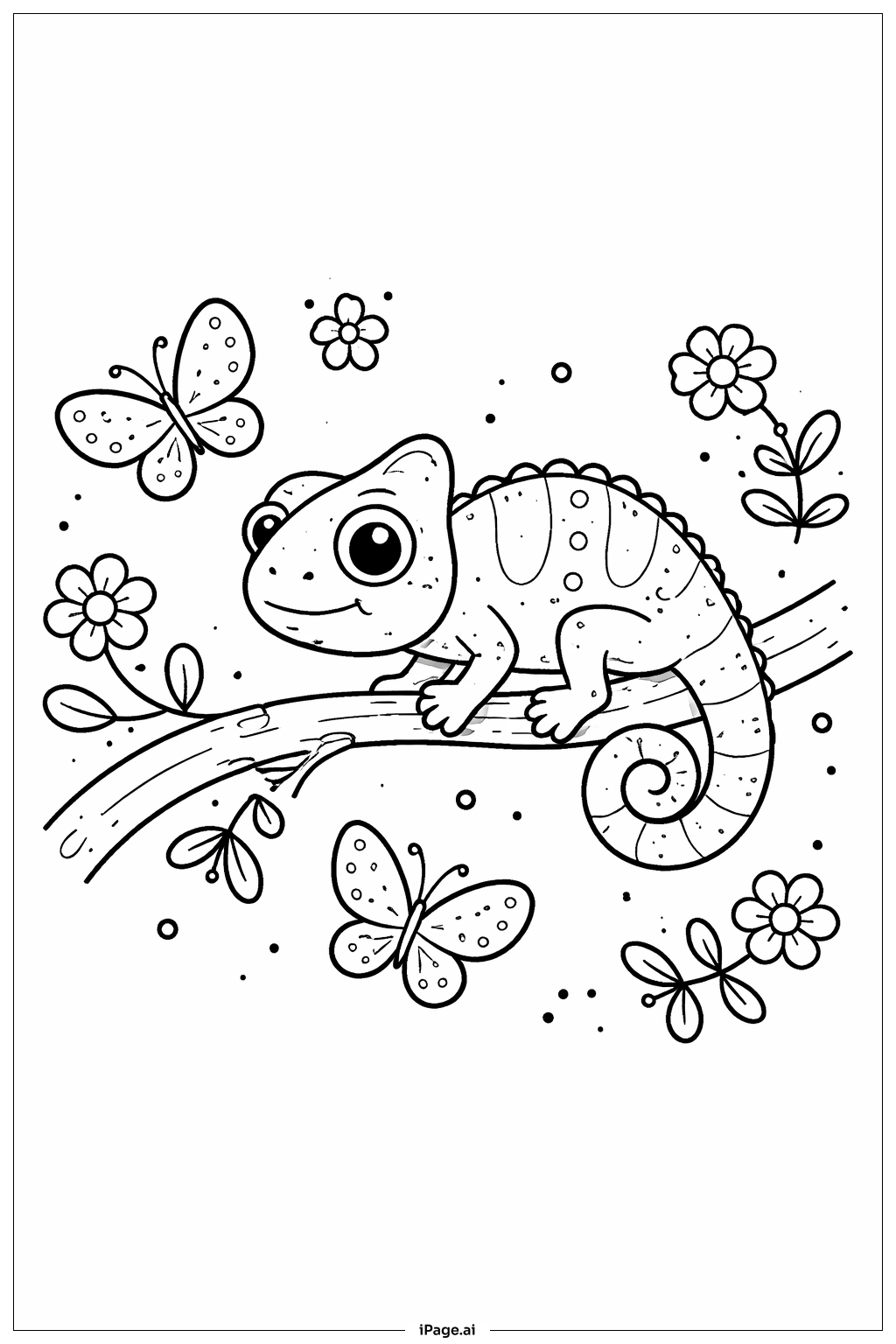
For the chameleon, consider using vibrant greens as the base color, then add yellows, blues, or even pinks to show its color-changing ability. You can create a gradient effect by blending multiple colors across its body. The textured scales can be colored with alternating shades to add depth. For the butterflies, use bright, contrasting colors like orange, purple, blue, and yellow. Each butterfly can have its own unique color scheme. Color the wing patterns with different hues to make them pop. The branch can be colored in realistic browns and tans, or use creative purples and blues for a fantasy look. Add light greens and darker forest greens to the leaves for a natural forest feel. Consider using colored pencils for smooth blending or markers for bold, vibrant results.
Coloring challenges: Which parts are difficult to color and need attention for Chameleon With Butterfly Friends coloring page?
• Chameleon Scale Texture: The chameleon's body features intricate scale patterns that require careful attention to detail. Each scale needs to be colored individually or with a consistent pattern to create a realistic textured appearance. Young colorists may find it challenging to maintain uniform coloring within these small spaces without going outside the lines. Using fine-tipped coloring tools and taking time with each scale will help achieve the best results.
• Butterfly Wing Patterns: The butterflies display detailed wing segments and patterns that demand precision. Each wing is divided into multiple sections with delicate lines separating them. Coloring these tiny compartments requires steady hands and patience, especially when trying to create symmetrical patterns on both wings. Children may struggle with keeping colors within the intricate boundaries and maintaining pattern consistency across multiple butterflies.
• Curled Tail Details: The chameleon's distinctive spiral tail presents a unique challenge as it curves in three-dimensional space. Coloring the tail requires understanding how light and shadow work on curved surfaces to make it appear round rather than flat. Adding darker shades on one side and lighter tones on the other helps create depth, but this shading technique can be difficult for younger artists to master.
• Overlapping Elements: Various parts of the image overlap, including butterflies crossing over branches, leaves touching the chameleon, and the tail weaving through the composition. These overlapping areas require careful color planning to ensure each element remains distinct and visible. Deciding which colors to use where elements meet challenges spatial reasoning and color contrast skills.
Benefits of coloring books: Advantages of drawing Chameleon With Butterfly Friends coloring page
Coloring this chameleon and butterfly scene offers wonderful developmental benefits for children. It helps improve fine motor skills and hand-eye coordination through the detailed work required for scales and wing patterns. The intricate designs build patience and concentration as children focus on staying within the lines of small spaces. This image encourages color recognition and creative decision-making as kids choose from nature's palette or invent fantasy colors for the chameleon's color-changing ability. Working with the overlapping elements develops spatial awareness and problem-solving skills. The nature theme provides an opportunity to learn about chameleons, butterflies, and their habitats, connecting art with science education. Completing this detailed coloring page builds confidence and provides a sense of accomplishment. The peaceful garden scene can also have calming effects, reducing stress and promoting mindfulness in young artists.