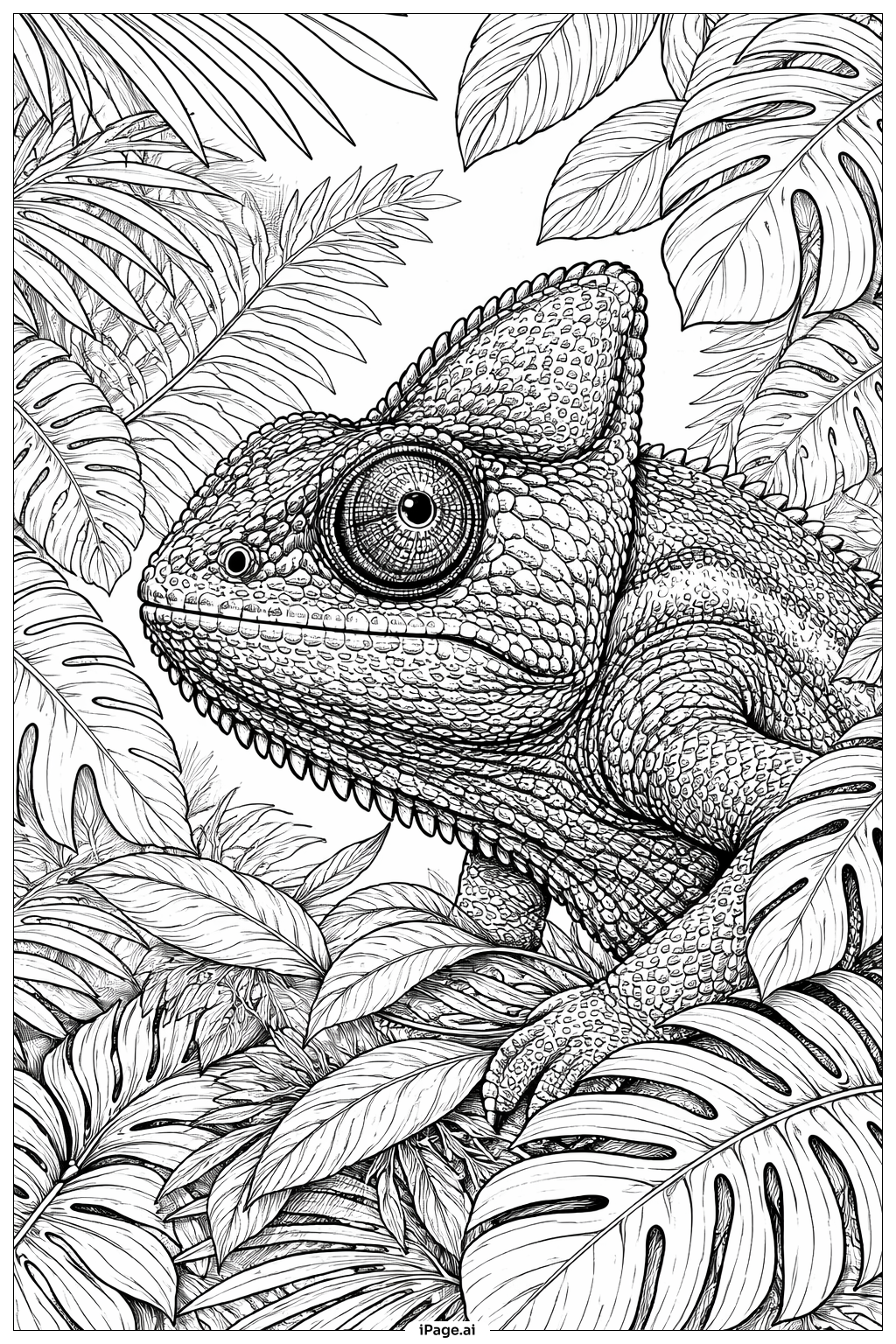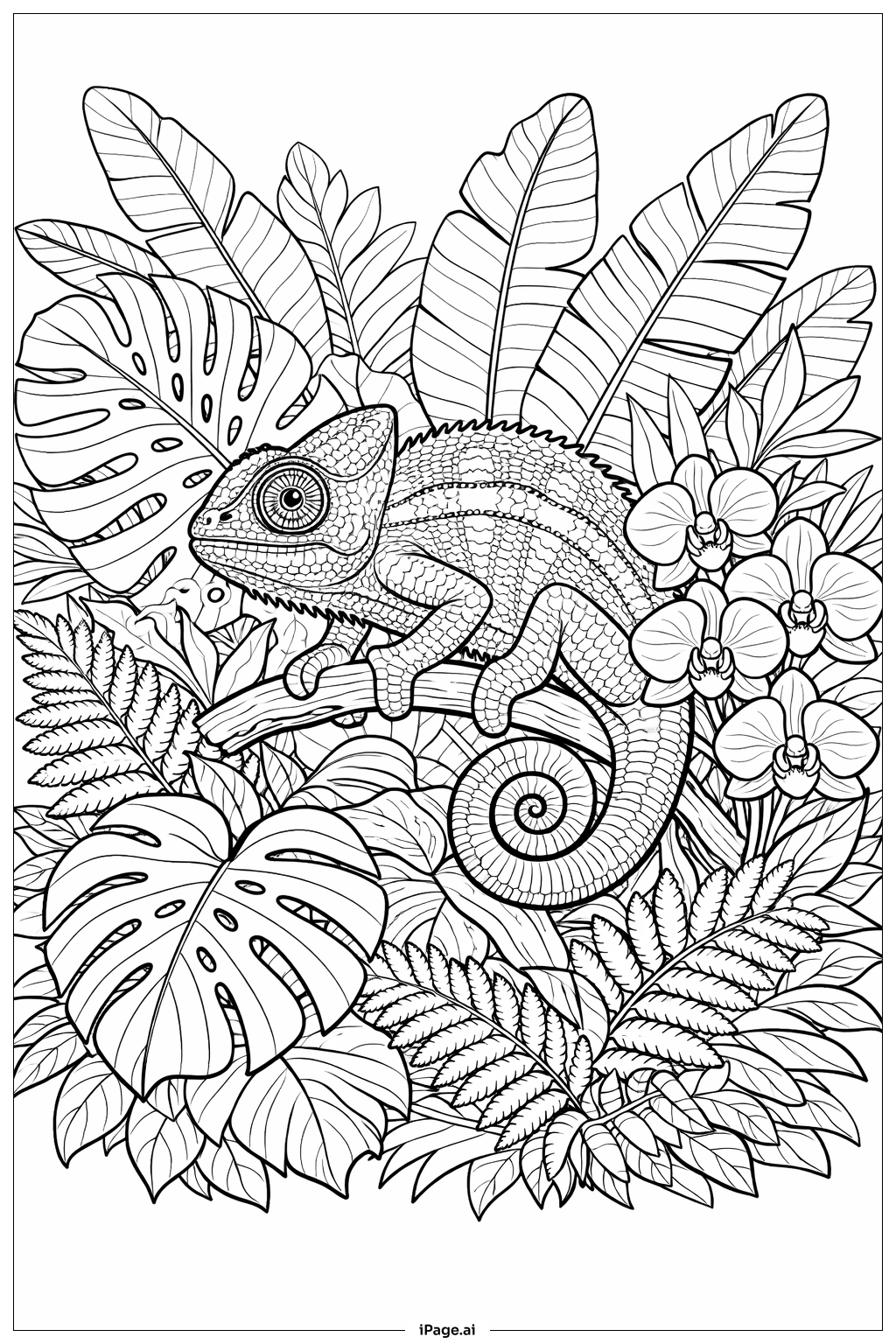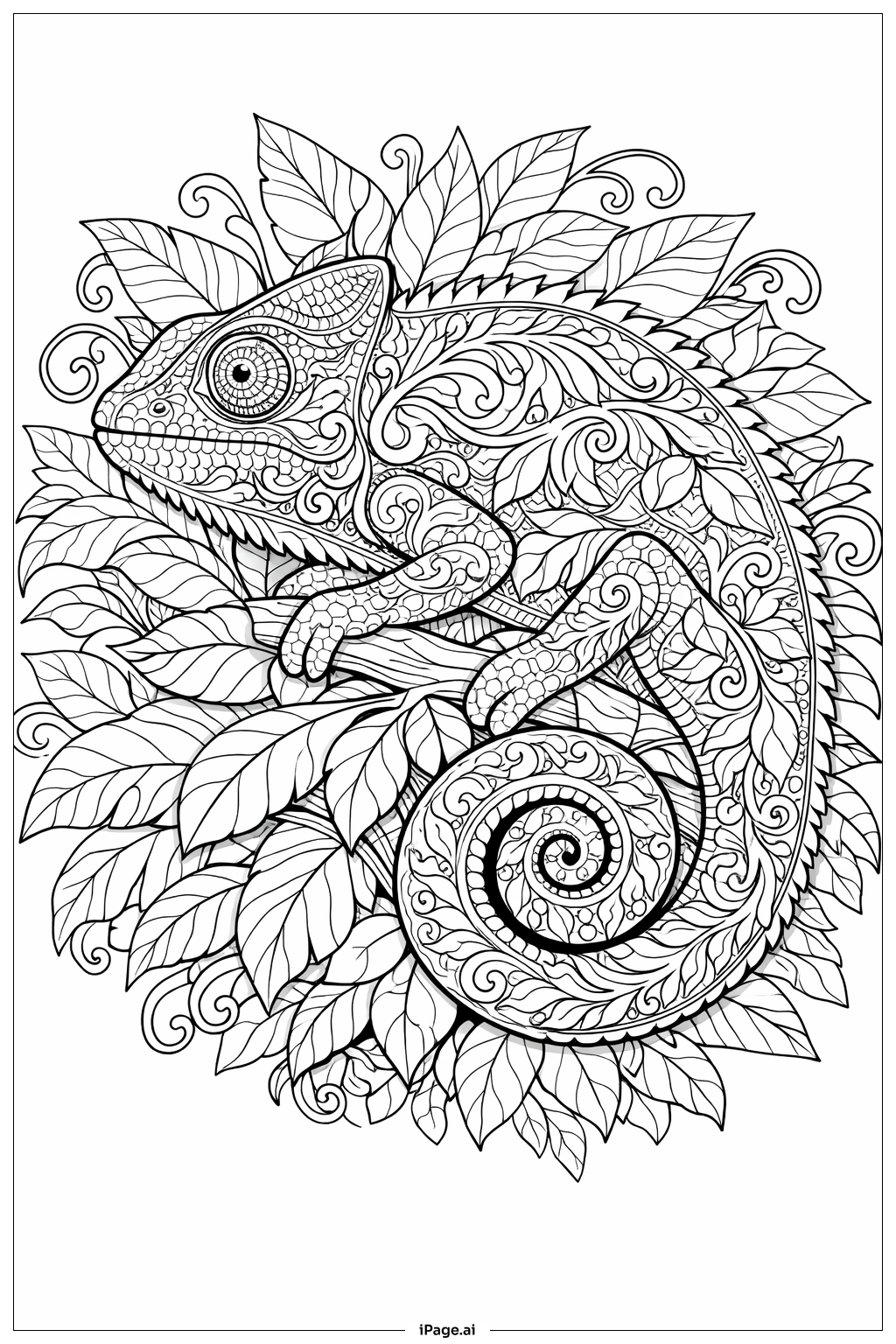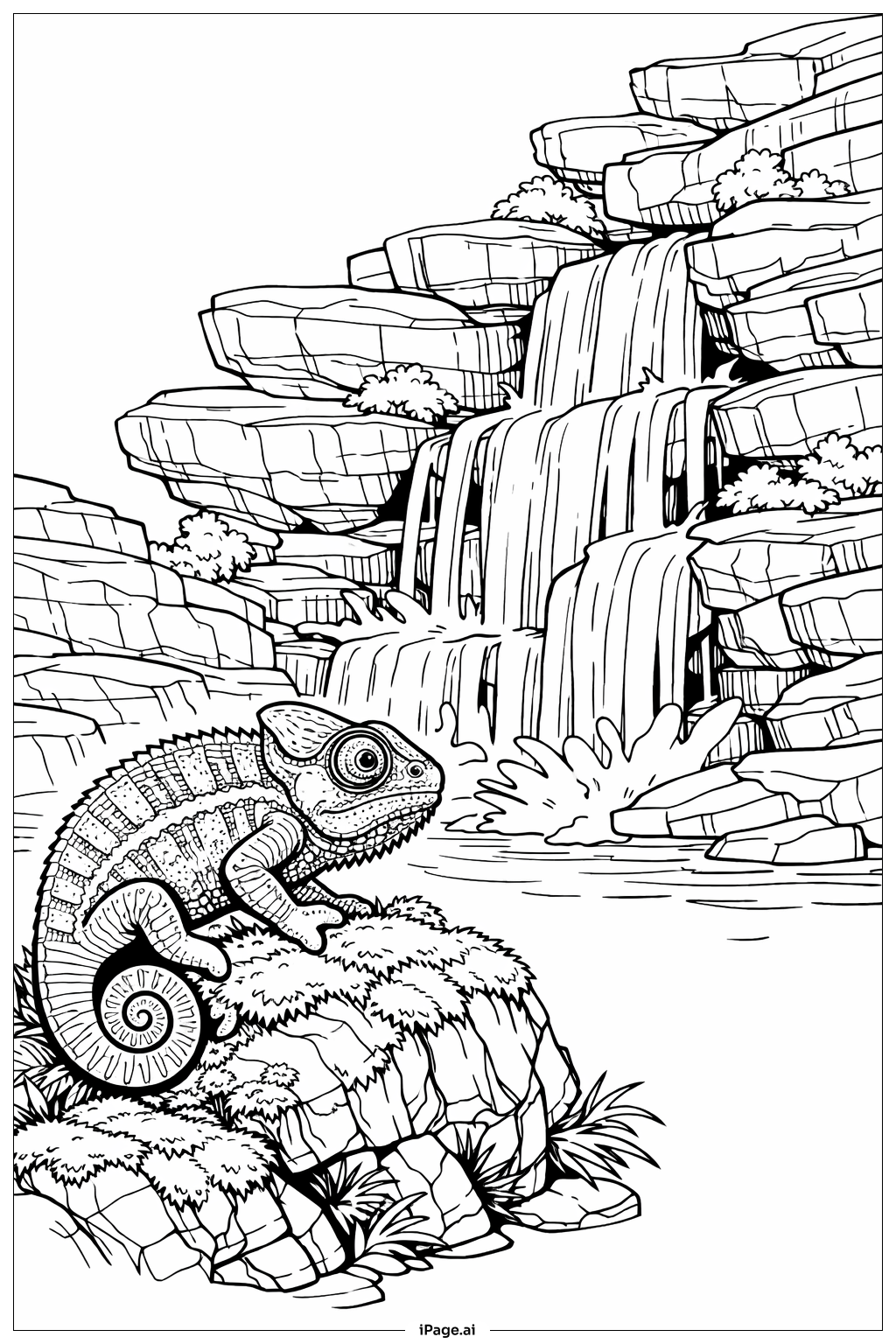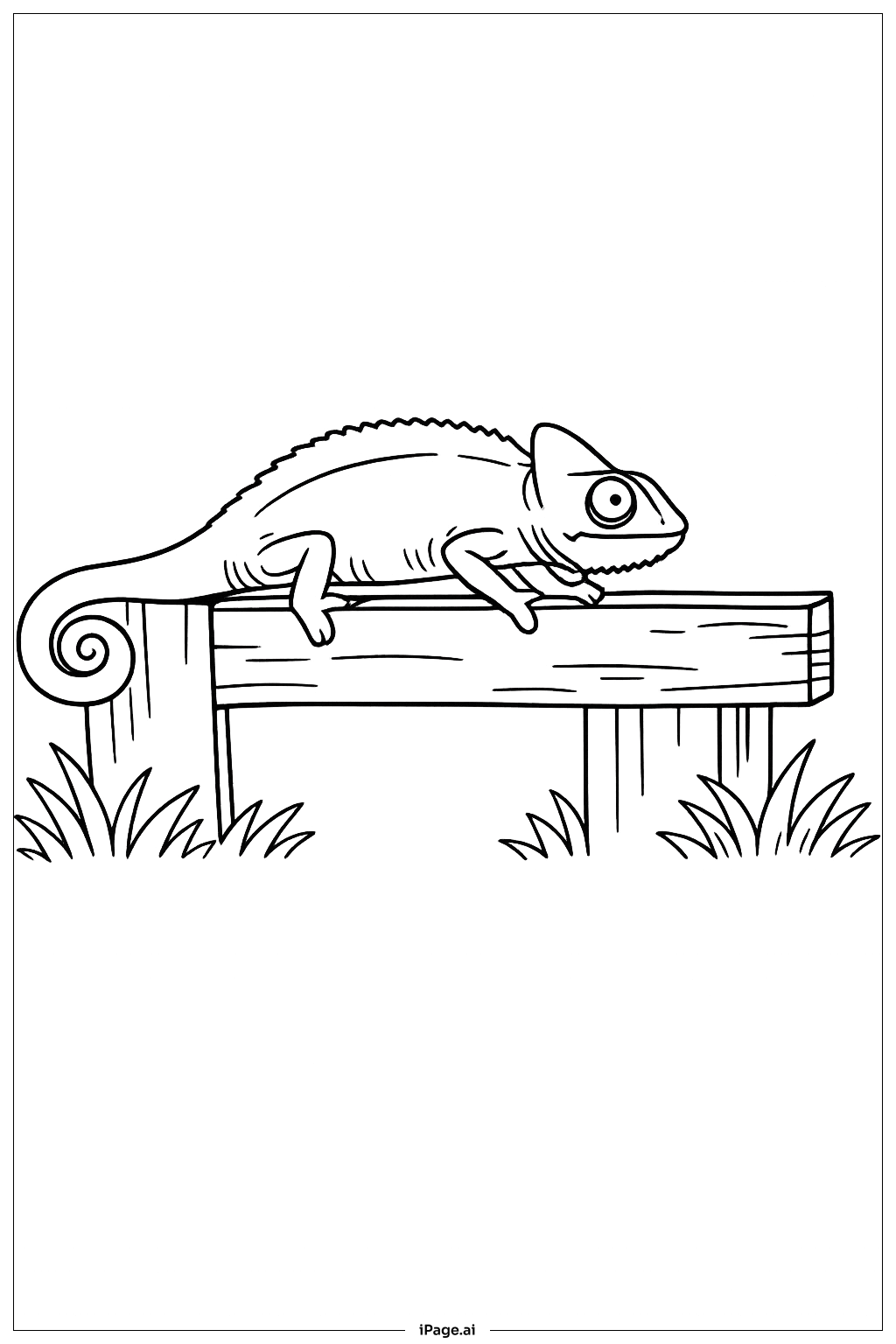
Coloring tips: How to color Chameleon On Wooden Fence coloring page well?
Use bright and varied colors for the chameleon like green, yellow, and hints of red or blue to show its unique look. For the wooden fence, try shades of brown to give it a natural texture. You can use darker browns to show wood grain and lighter browns for smooth areas. Color the grass in different shades of green for depth and realism. Don't forget to color the chameleon's eyes with bold colors like yellow or orange to make them pop. Try adding some soft shading to create dimension, especially under the chameleon and along the fence.
Coloring challenges: Which parts are difficult to color and need attention for Chameleon On Wooden Fence coloring page?
1. The chameleon's body has many small details and curves, especially the tail which is curled, making it tricky to color inside the lines.
2. The wooden fence has textures and grain lines that require careful coloring to keep the natural look.
3. The chameleon's eyes are large and round, needing precise coloring to make them stand out.
4. The grass blades around the fence have thin, pointed shapes that can be hard to color neatly.
5. Shadows and highlights are suggested to create a 3D effect, which might be a challenge for beginners.
Benefits of coloring books: Advantages of drawing Chameleon On Wooden Fence coloring page
Coloring this picture helps improve fine motor skills because it requires careful coloring inside small areas like the chameleon's legs and tail. It also encourages creativity by allowing the artist to choose vibrant colors for the chameleon and natural tones for the wood and grass. Coloring the wood grain helps children practice attention to detail and patience. This activity can teach young artists about nature and animals, especially the unique features of a chameleon. Overall, it’s a fun way to develop focus and artistic skills.