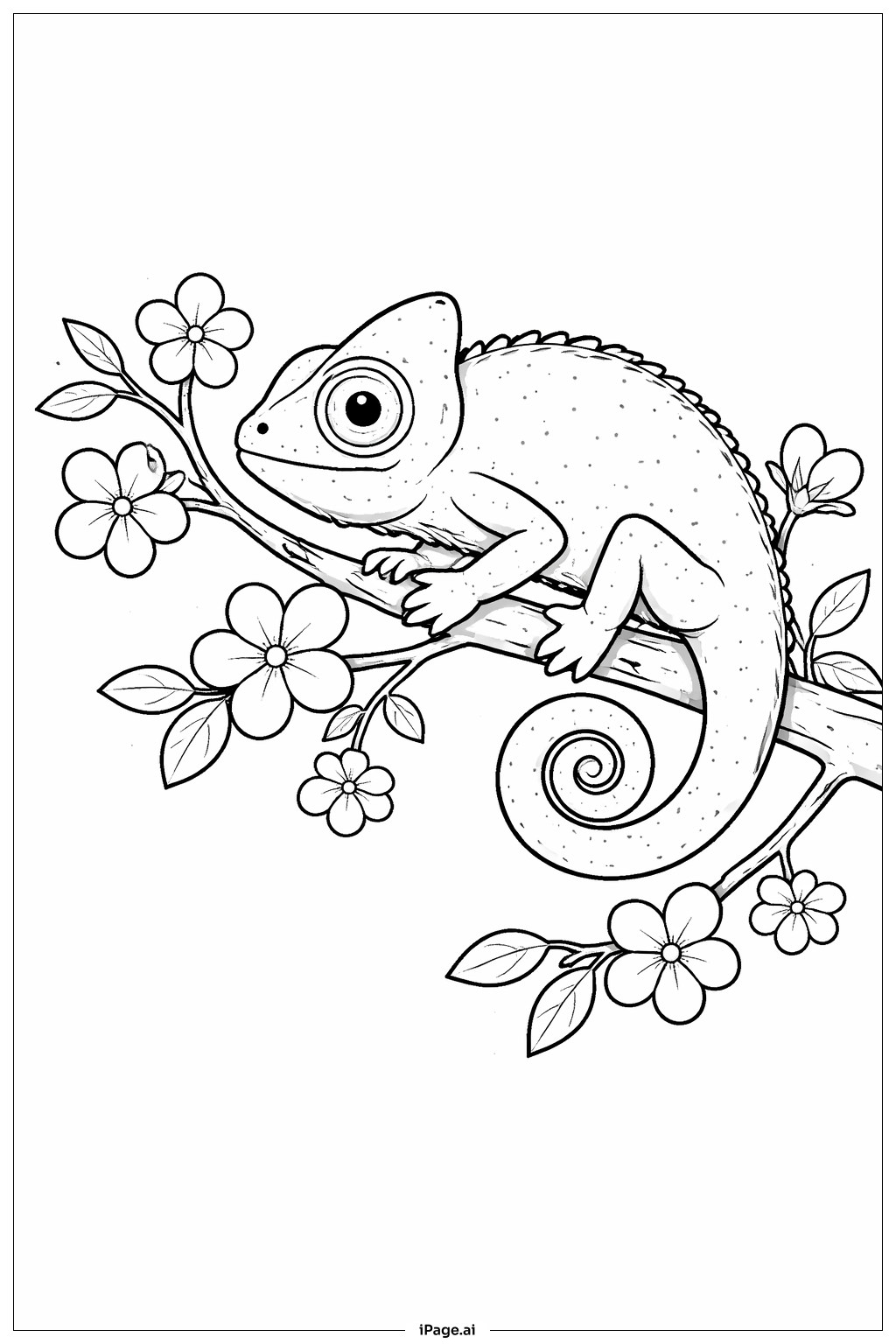
Coloring tips: How to color Chameleon On Flower Branch coloring page well?
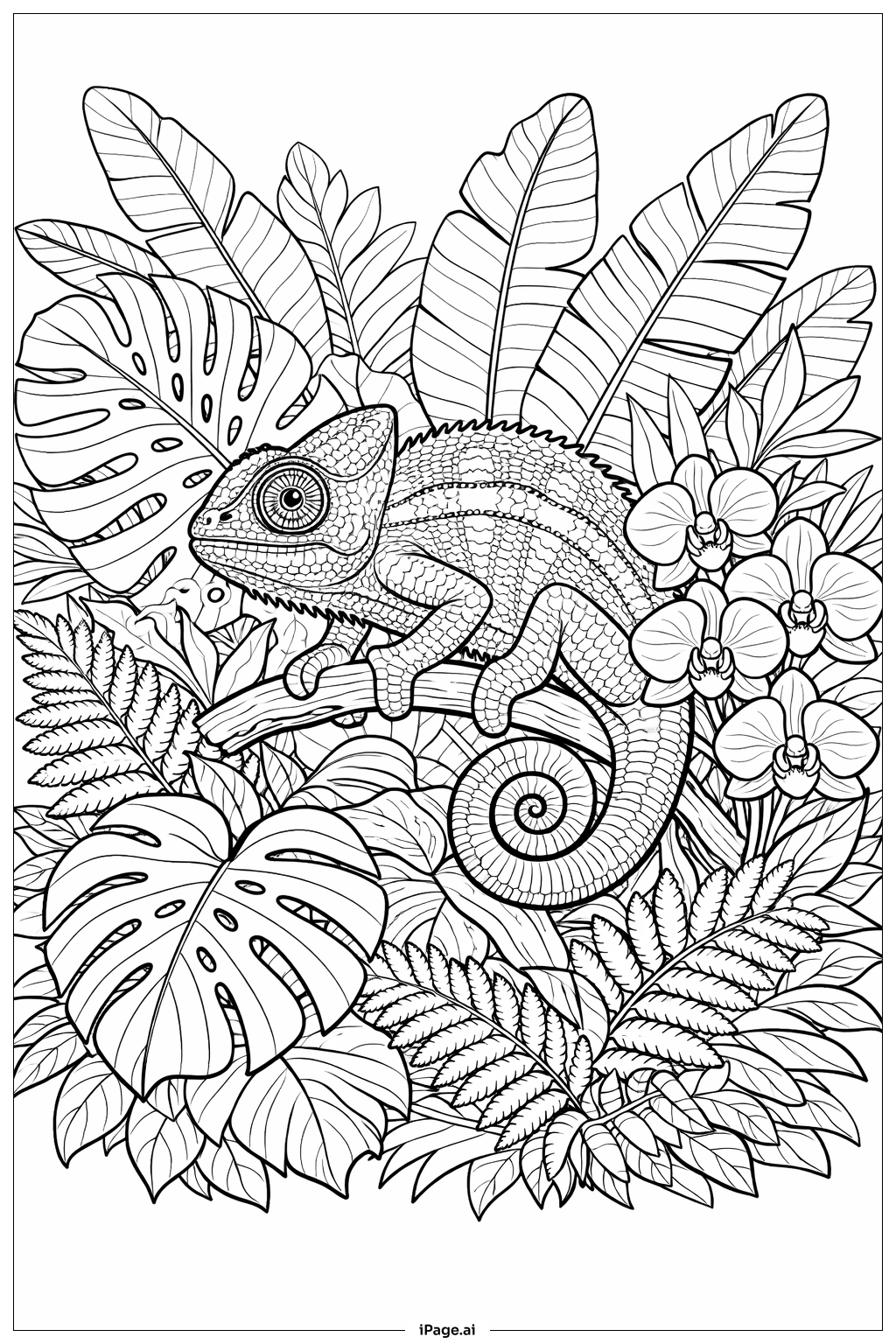
Start with the chameleon using bright, vibrant colors like green, turquoise, or even rainbow hues to capture its color-changing magic. Consider blending yellows and blues for a tropical look. The scales offer a perfect opportunity for shading—use darker tones along the edges and lighter colors in the centers. Color the flowers in cheerful pinks, purples, or reds with yellow centers to make them pop. The branch can be brown with hints of gray or tan for realistic bark texture. Leaves work beautifully in various shades of green, from lime to forest green. Try adding highlights with lighter colors to create depth. The eye can be colored in gold or orange with a dark pupil. Experiment with complementary colors to make the chameleon stand out against the floral background.
Coloring challenges: Which parts are difficult to color and need attention for Chameleon On Flower Branch coloring page?
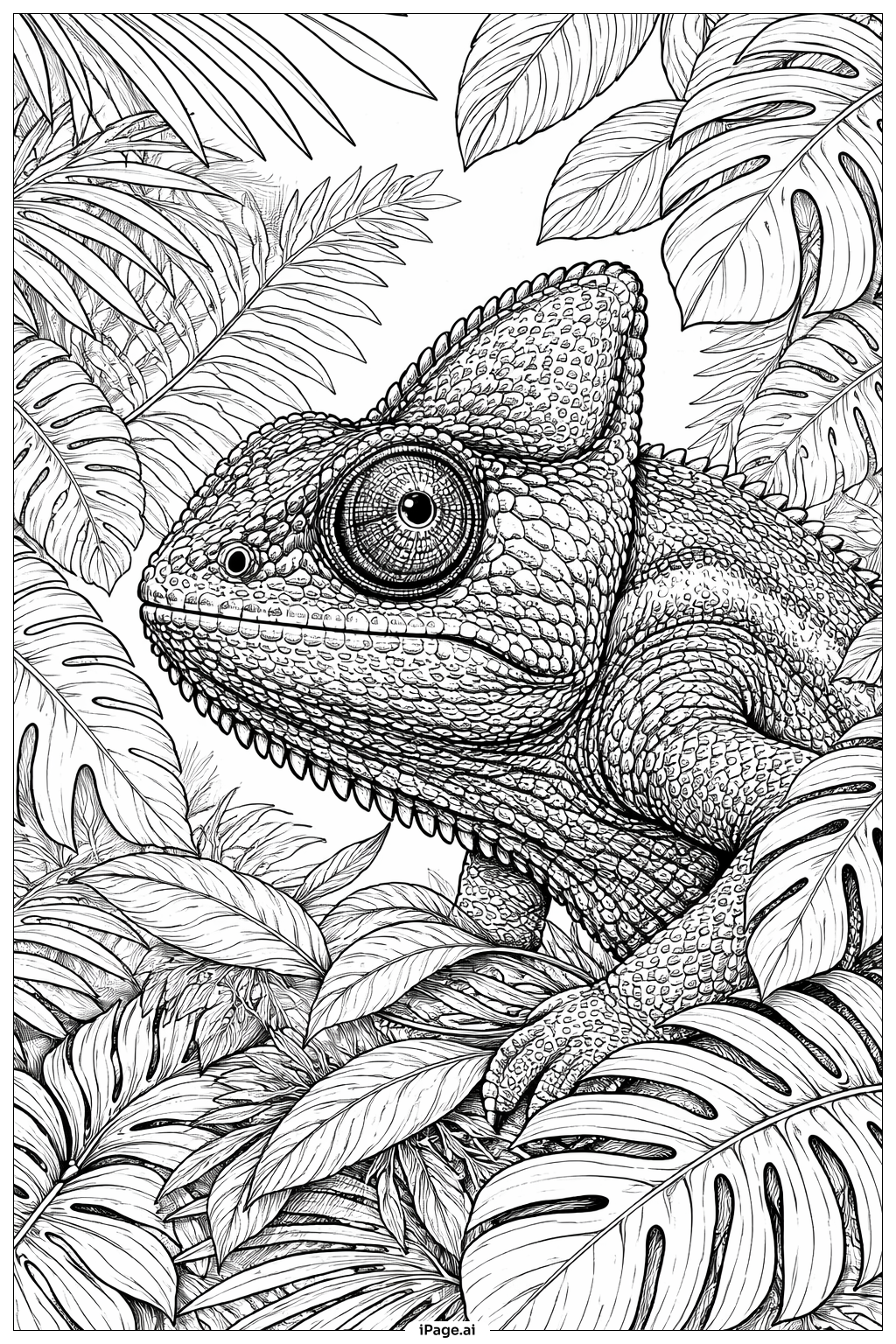
• Scale Pattern Precision: The chameleon's body features numerous small, overlapping scales that require careful attention and patience. Each scale can be colored individually for maximum detail, or you can use gradient techniques to create smooth color transitions. Staying within the tiny boundaries demands steady hand control and focus, making this a rewarding challenge for developing fine motor skills.
• Petal Layering Complexity: The flowers contain multiple overlapping petals that create depth and dimension. Distinguishing between foreground and background petals while maintaining consistent color schemes requires planning. Applying lighter shades to front petals and darker tones to those behind helps create realistic depth, but coordinating these values throughout the entire bloom tests your shading abilities.
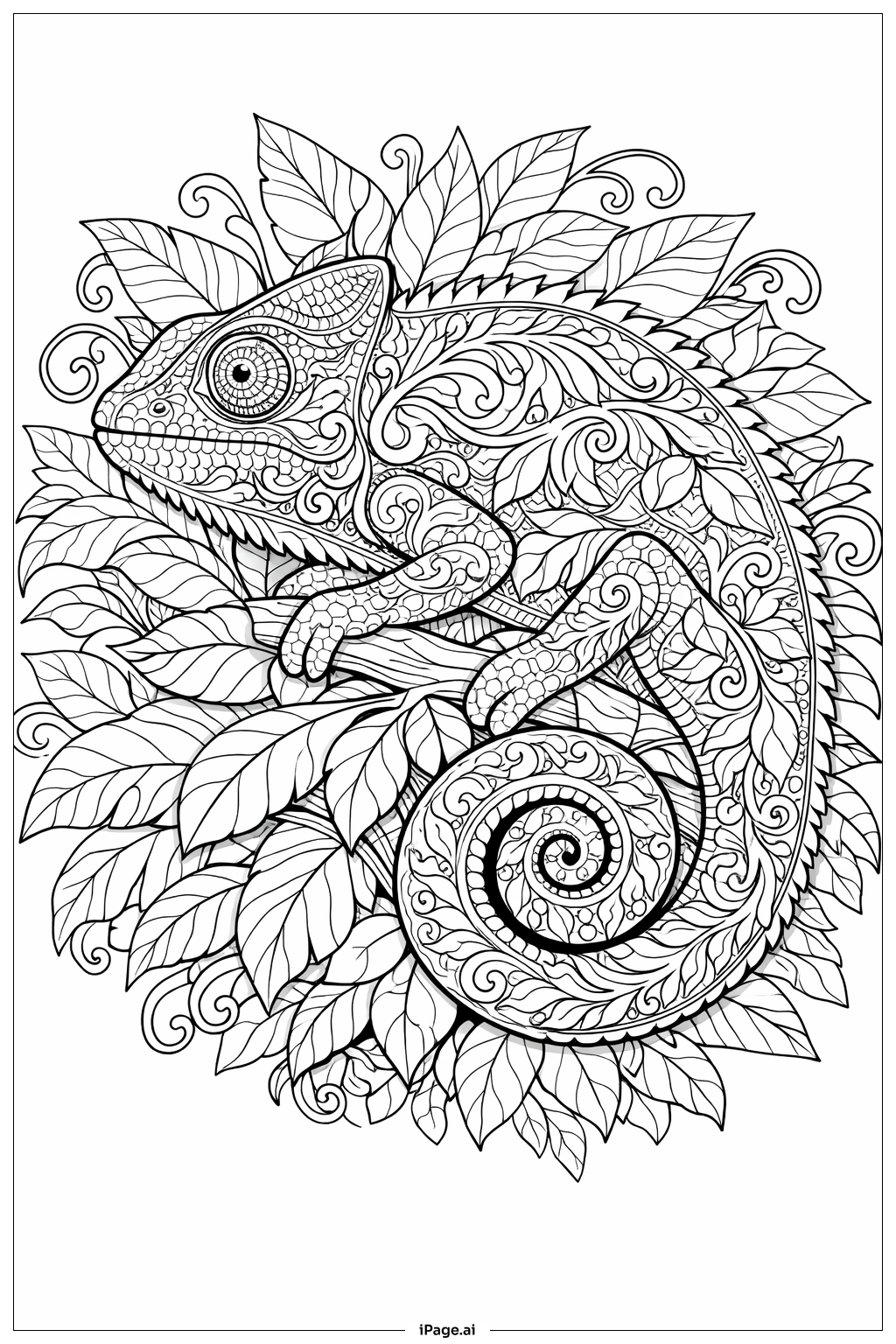
• Tail Spiral Shading: The chameleon's curled tail presents a three-dimensional challenge. As the tail coils and curves, the lighting naturally changes, requiring gradual color shifts to show volume. Darker colors should appear where the tail curves away, while highlights belong on the top surfaces. This gradient work builds understanding of light and shadow.
• Branch Texture Detail: The branch features bark patterns, knots, and natural irregularities that add realism. Creating convincing wood grain requires varied brown tones and directional strokes. Small cracks and texture lines need careful coloring to avoid a flat appearance while maintaining the organic feel of natural wood.
Benefits of coloring books: Advantages of drawing Chameleon On Flower Branch coloring page
Coloring this chameleon scene offers wonderful developmental benefits for young artists. The detailed scales and patterns strengthen fine motor skills and hand-eye coordination through precise coloring work. Children learn about color mixing and blending while experimenting with the chameleon's naturally vibrant appearance. The combination of reptile and flowers introduces color theory concepts like complementary colors and contrast. This design encourages patience and focus as kids work through intricate details. It also sparks curiosity about nature, chameleons, and how these amazing creatures change colors. The satisfying result builds confidence and pride in artistic abilities. Completing this page provides a calming, mindful activity that reduces stress while fostering creativity and self-expression through personal color choices.