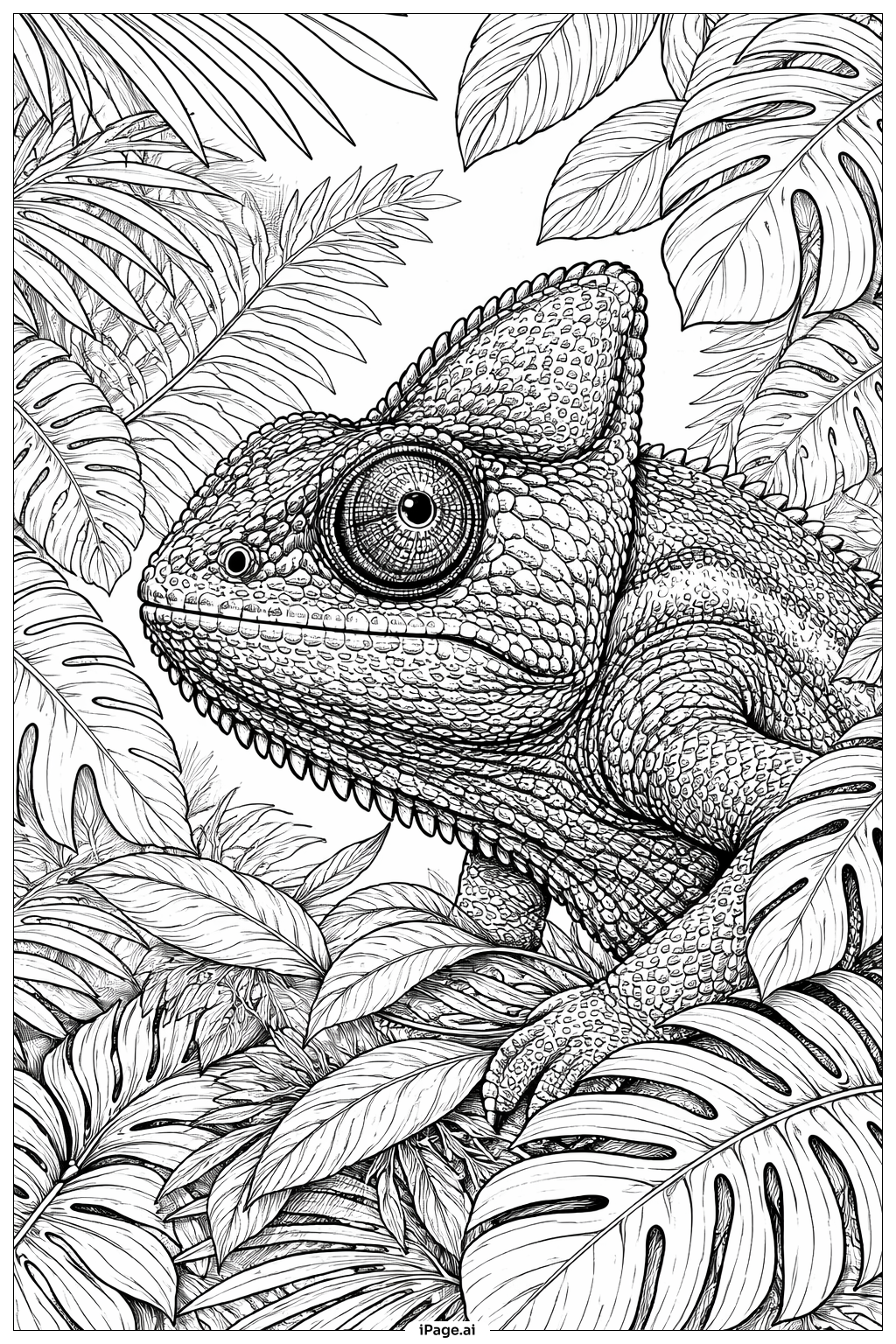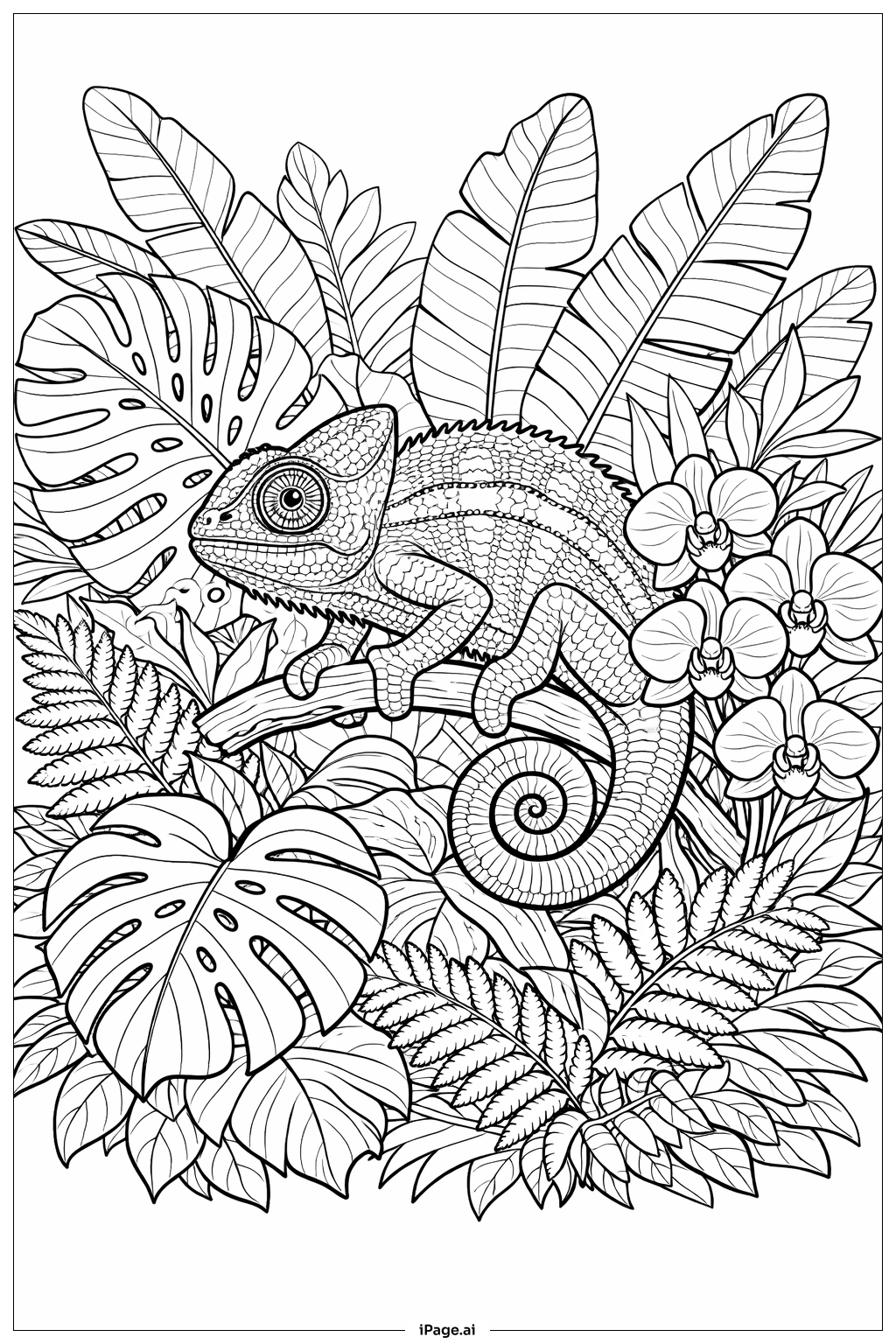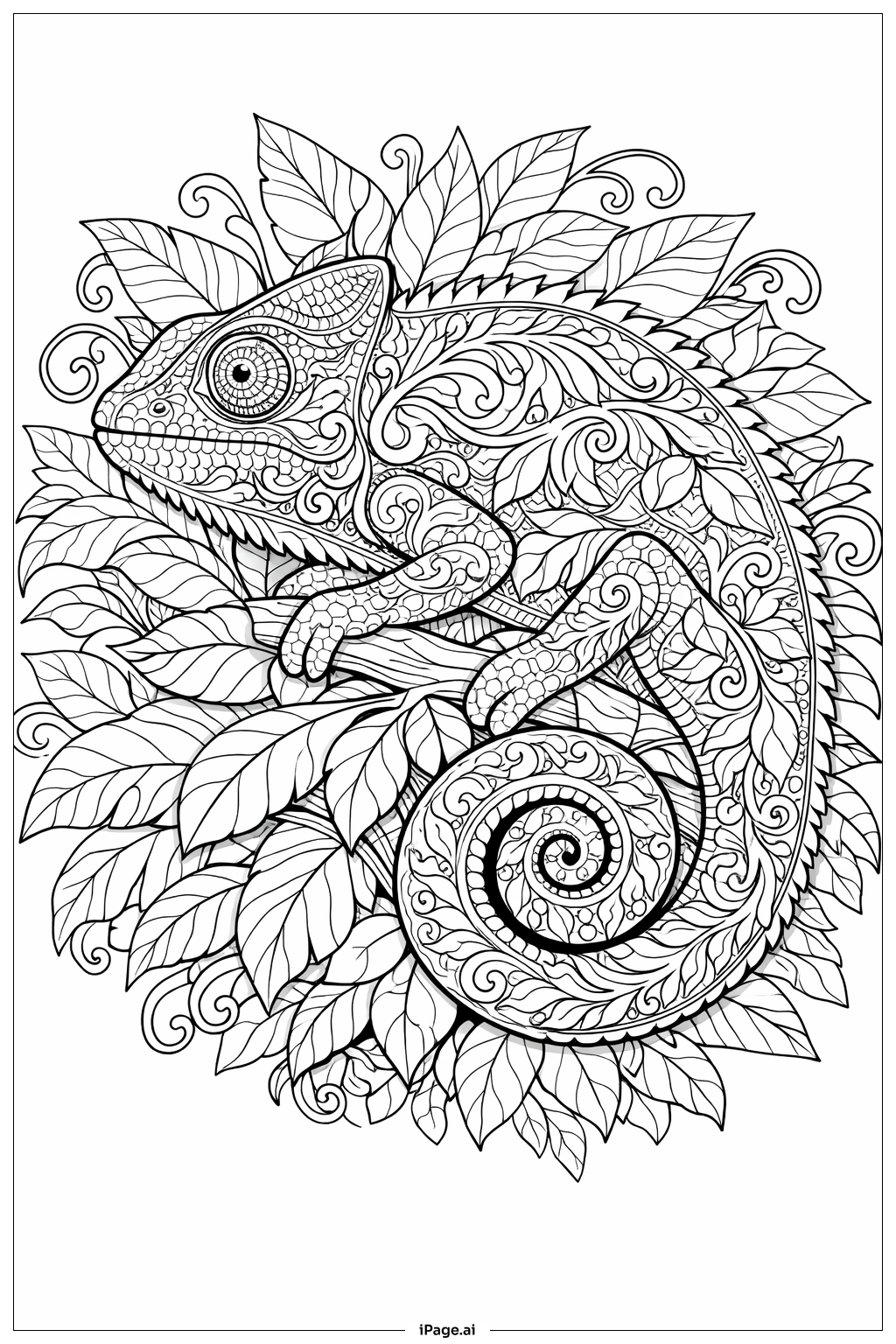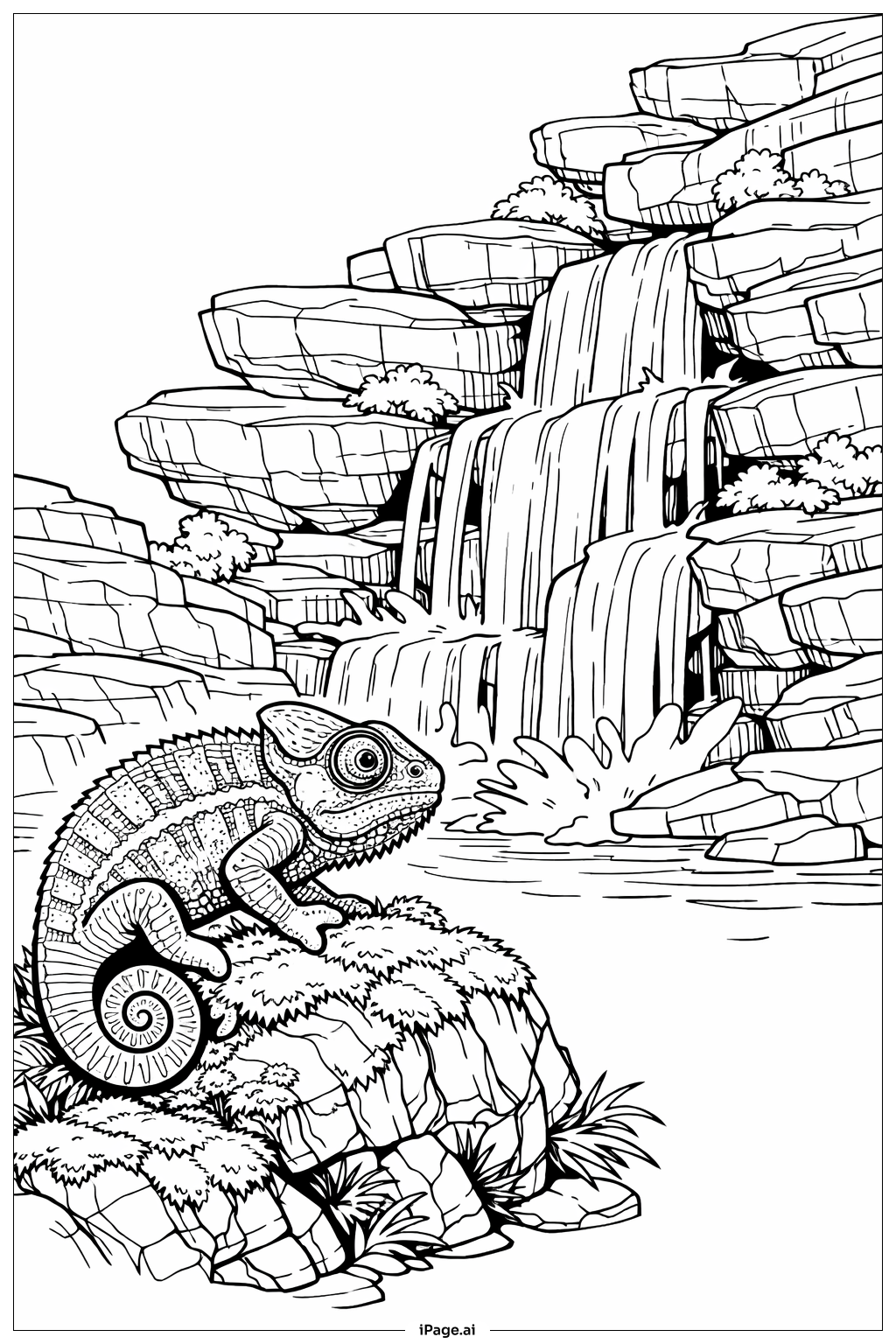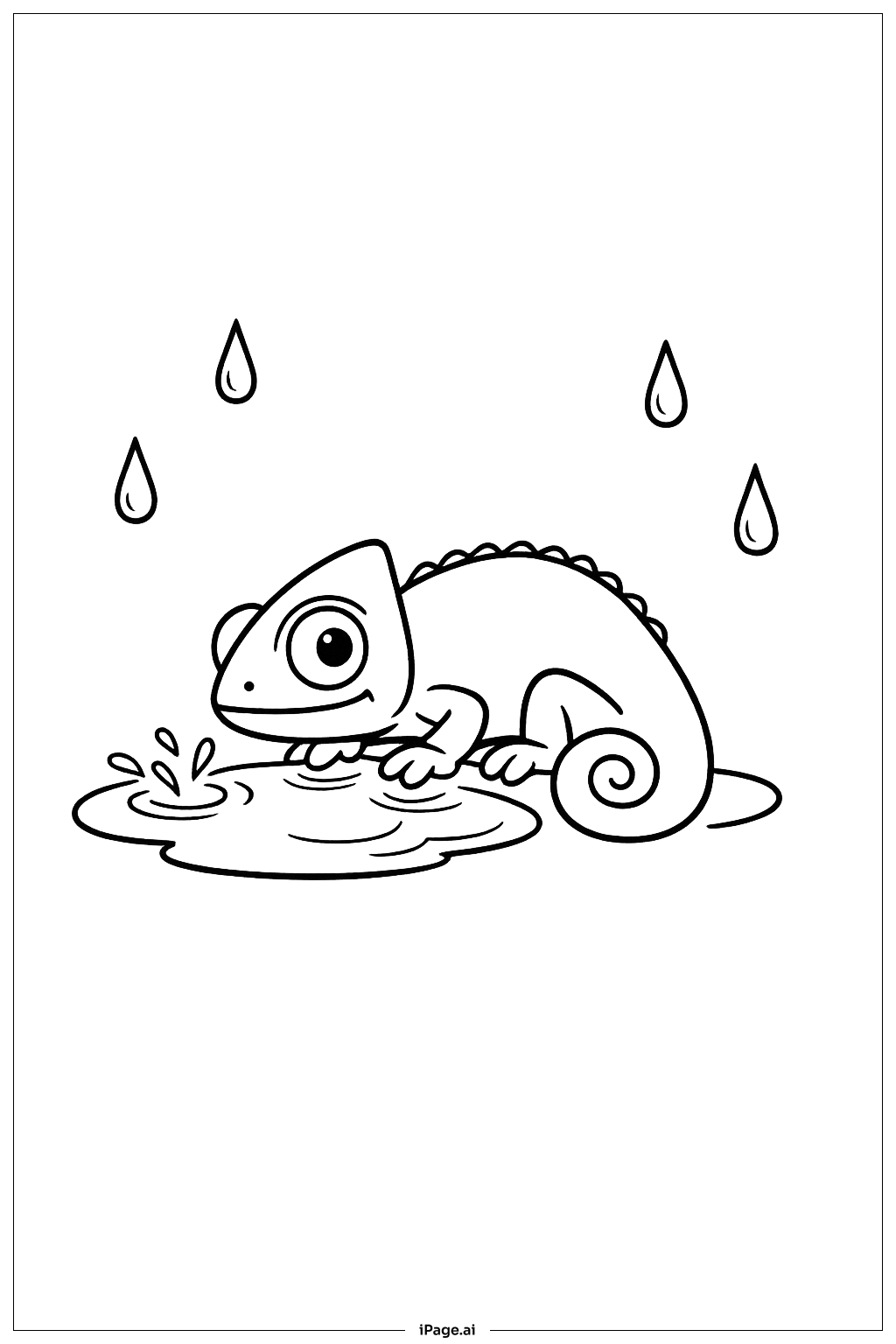
Coloring tips: How to color Chameleon In Rain coloring page well?
Start with the chameleon itself using vibrant greens, ranging from lime to emerald, or explore creative color-changing possibilities like blues, purples, or even rainbow gradients to showcase its famous camouflage abilities. Add yellow or orange accents around the eyes and on the belly for depth. Color the branch in rich browns with darker shading for the bark texture. The raindrops can be colored with light blues, grays, or left white with subtle blue outlines to create a translucent water effect. Consider using darker blue or gray tones for the rain splashes to show movement and impact. Background elements like leaves can be various shades of green to create a lush rainforest atmosphere. Use lighter pressure for raindrops to maintain their delicate appearance, and layer colors on the chameleon's scales for a three-dimensional reptilian texture.
Coloring challenges: Which parts are difficult to color and need attention for Chameleon In Rain coloring page?
• Scaled Skin Texture: The chameleon's body features numerous small scales that require careful attention and patience. Each scale can be individually shaded to create realistic reptilian texture, which means working with tiny spaces and maintaining consistent patterns across the entire body. This repetitive detail work helps develop fine motor control and concentration skills.
• Raindrop Transparency Effects: Creating the illusion of transparent, falling raindrops presents a unique artistic challenge. Colorists must decide whether to leave drops white, use very light blues, or apply subtle shading techniques to suggest water's translucent quality. Achieving the right balance so raindrops look like water rather than solid objects requires understanding of light and transparency concepts.
• Depth and Layering: The composition includes multiple elements at different distances including the chameleon in the foreground, the branch it sits on, raindrops at various positions, and background foliage. Creating visual depth requires using different color intensities and shading techniques to make some elements appear closer while others recede into the background.
• Wet Surface Effects: The splashes where raindrops hit surfaces need special treatment to convey water movement and impact. These dynamic splash shapes require blending techniques and thoughtful color choices to show motion and the interaction between rain and solid surfaces, adding complexity to the overall scene.
Benefits of coloring books: Advantages of drawing Chameleon In Rain coloring page
Coloring this chameleon in the rain offers wonderful educational and developmental benefits for young artists. The detailed scales provide excellent practice for fine motor skills and hand-eye coordination, essential for handwriting and other precise tasks. The nature theme encourages learning about reptiles, weather patterns, and rainforest ecosystems, sparking curiosity about the natural world. Working with the rain effects teaches children about transparency, water properties, and movement, introducing basic physics concepts through art. The scene's complexity helps build patience and focus as children work through the intricate details. Creative color choices for the chameleon allow experimentation with color theory and imagination, since chameleons naturally change colors. The peaceful rainy day setting can have calming effects, reducing stress while promoting mindfulness and concentration. Completing this detailed page builds confidence and provides a sense of accomplishment that encourages further artistic exploration.