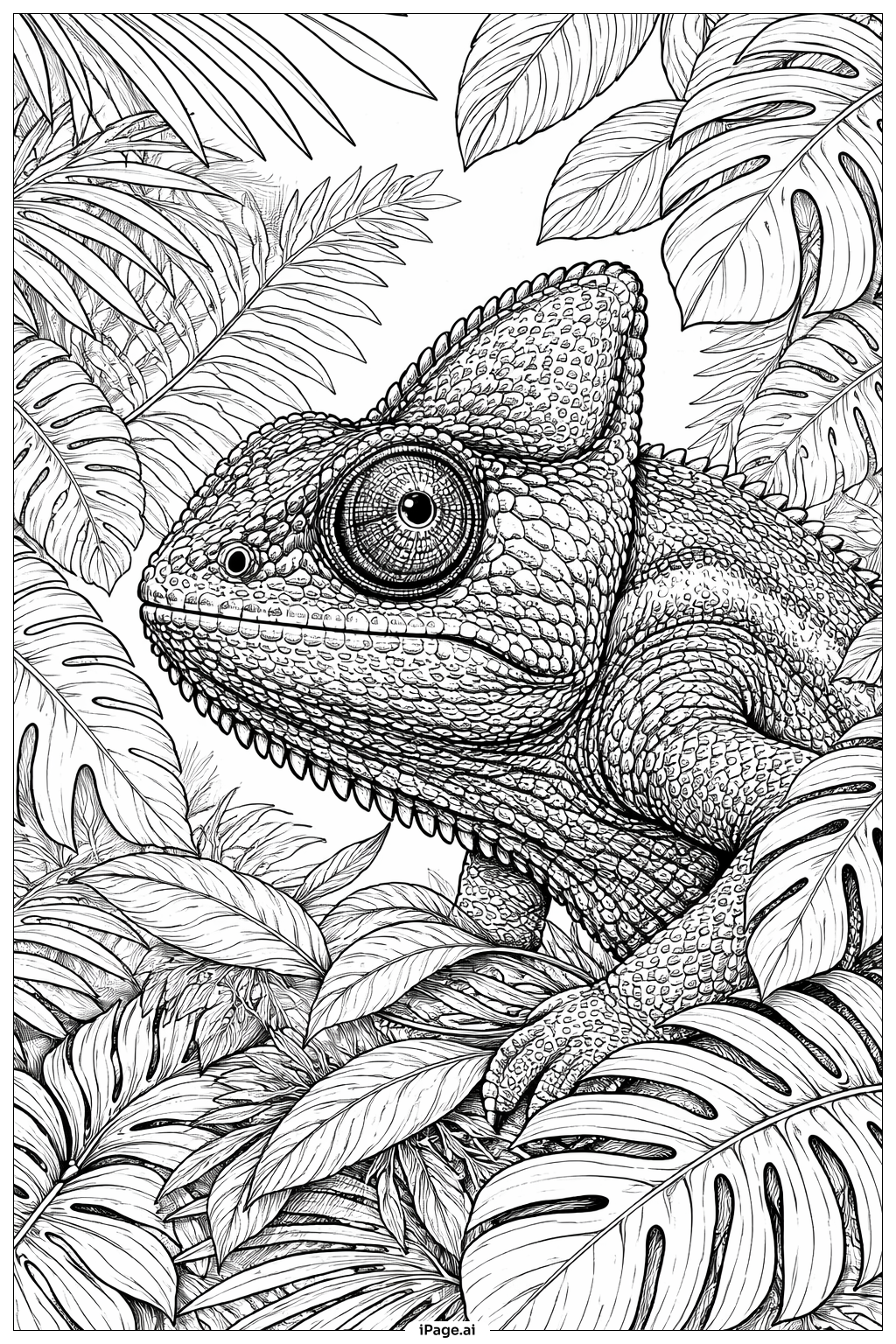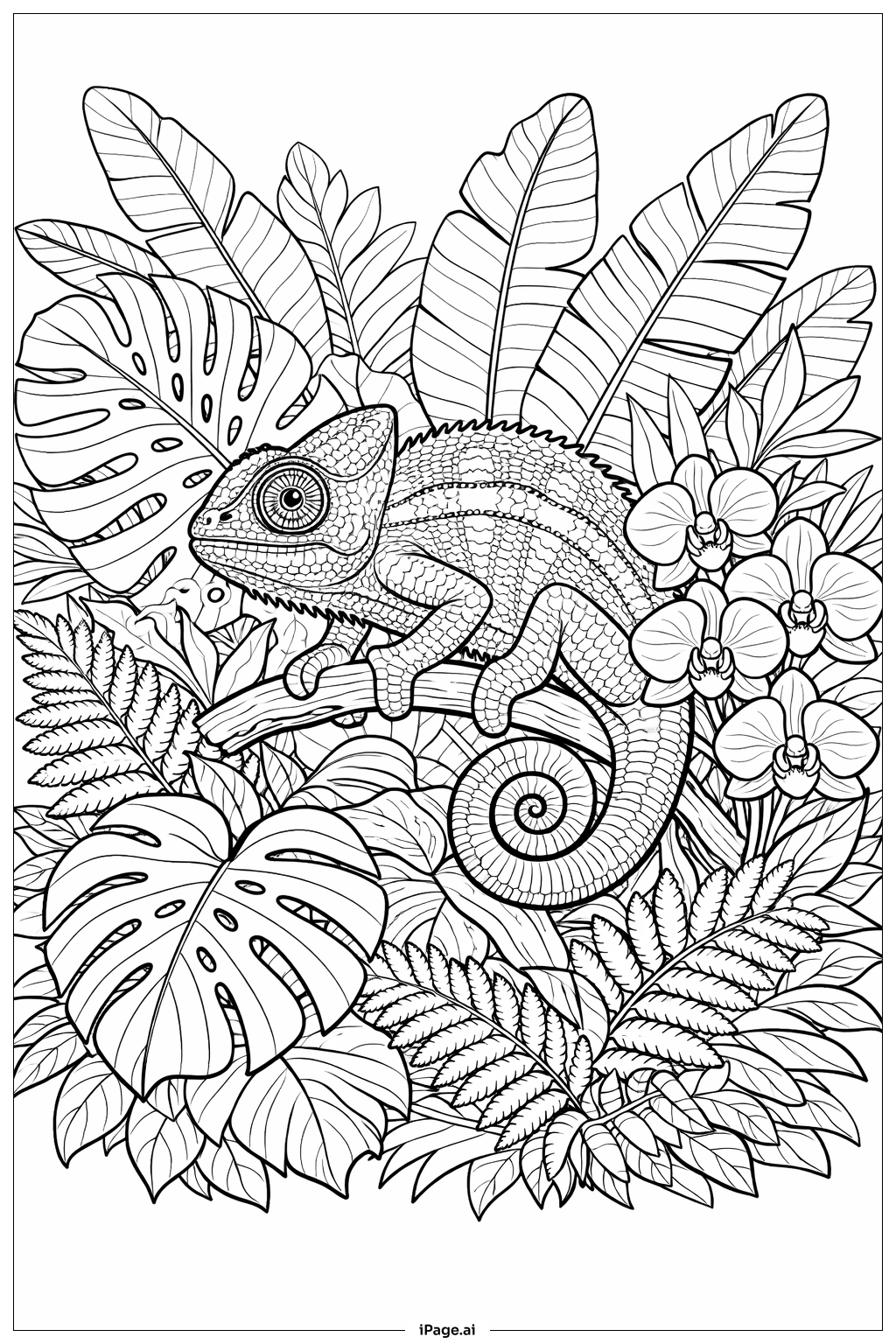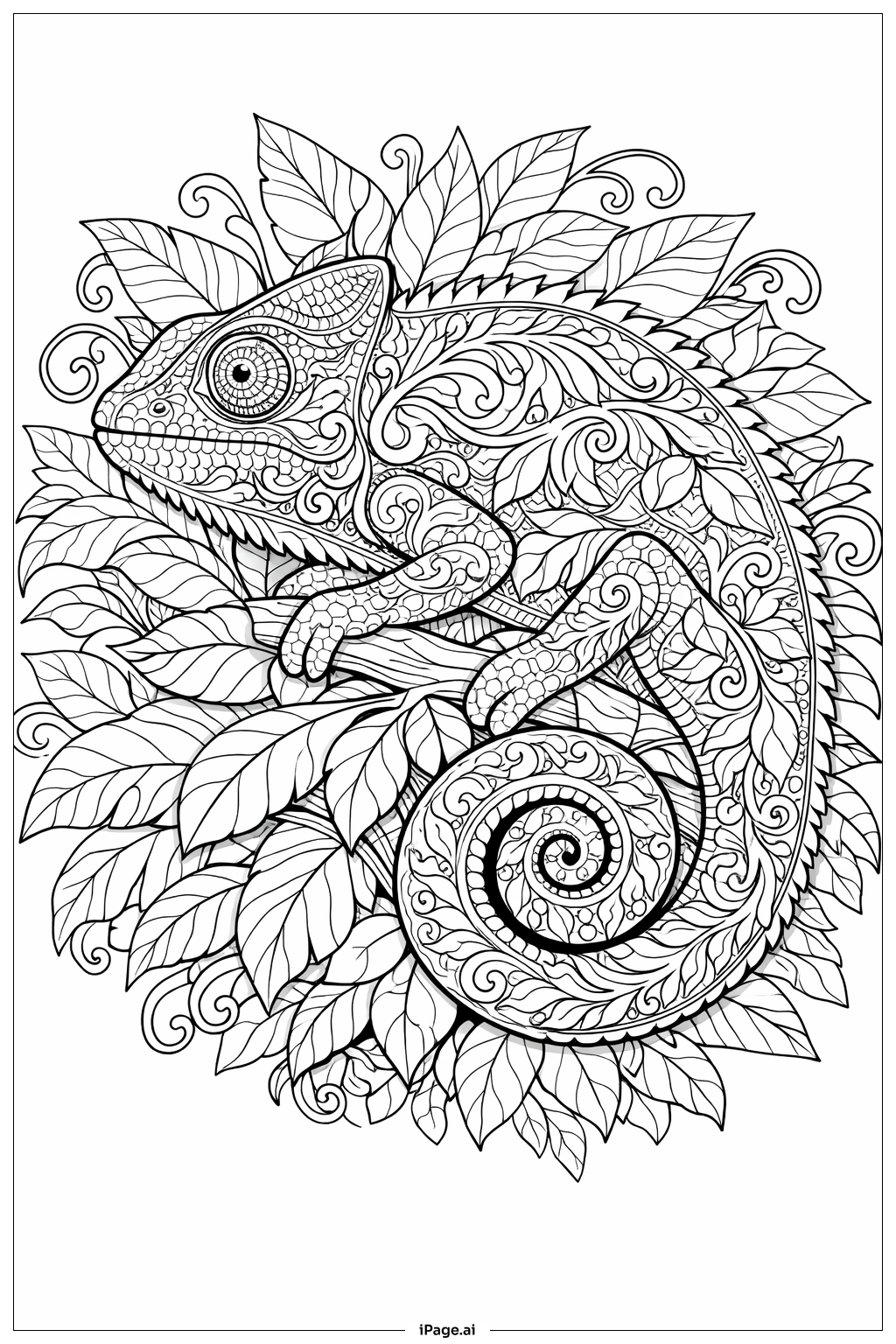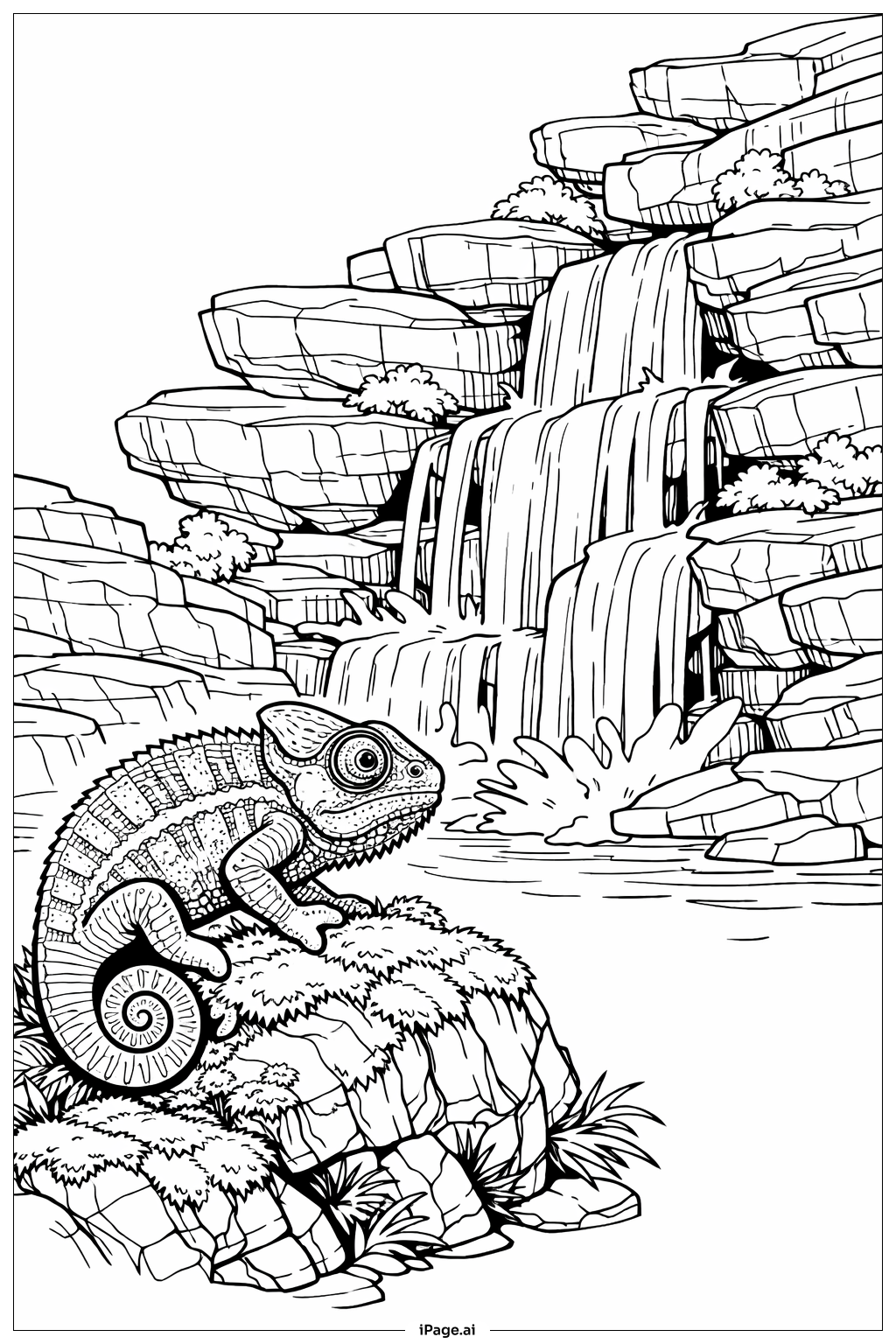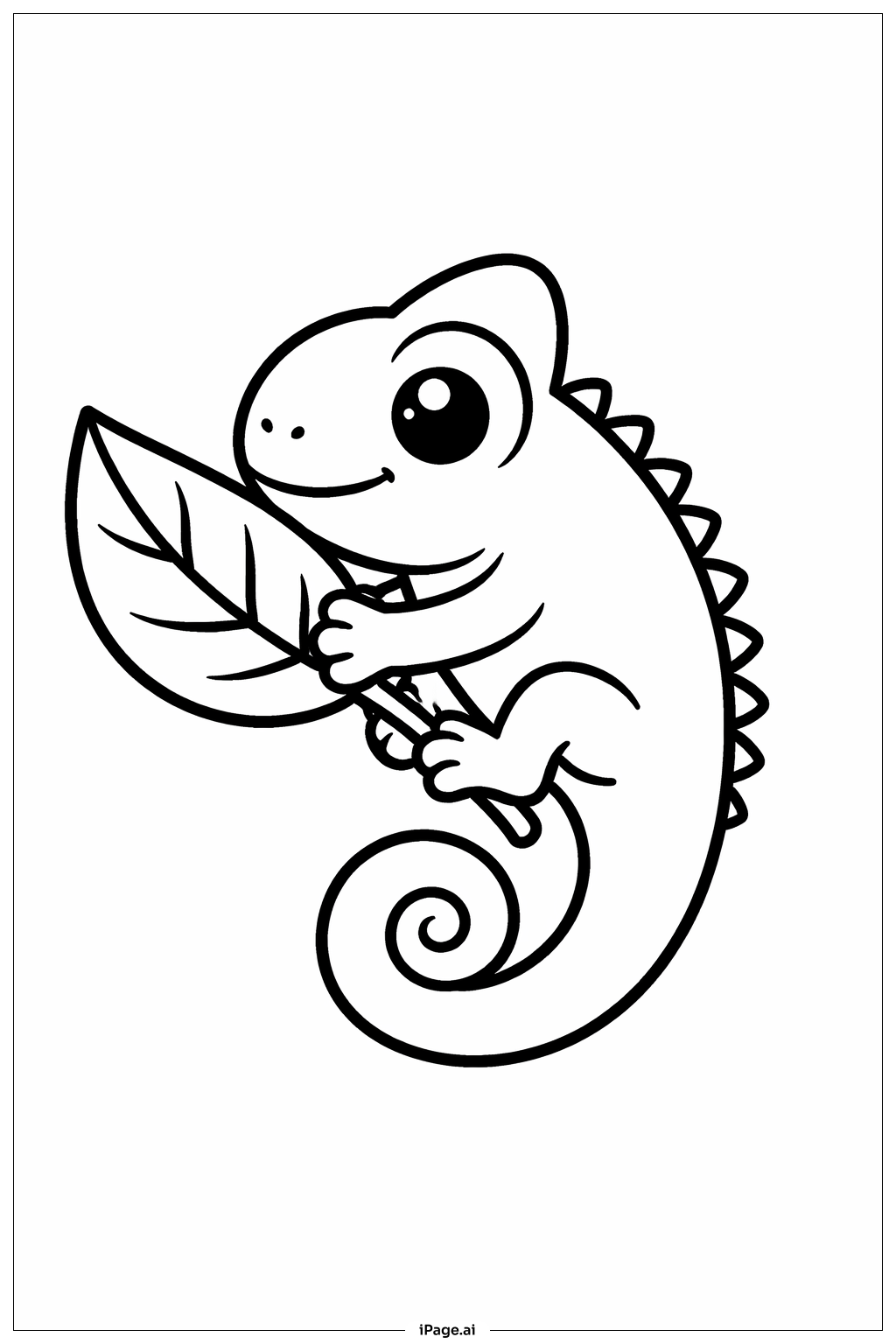
Coloring tips: How to color Chameleon Holding Leaf coloring page well?
Start with the chameleon's body using vibrant greens, transitioning from lime green on the back to yellow-green on the belly. Chameleons are famous for changing colors, so feel free to add blues, purples, or even orange and pink spots for a creative rainbow effect. Use darker green or brown for the textured scales to add depth and dimension. Color the large round eye with bright yellow or orange, adding a black pupil for contrast. For the leaf, choose natural green shades with darker green veins running through it, or try autumn colors like yellow, orange, and red for seasonal variety. The curled tail can feature gradient coloring, blending multiple hues together. Consider adding light blue or purple shadows beneath the chameleon to create a three-dimensional effect and make your artwork pop off the page.
Coloring challenges: Which parts are difficult to color and need attention for Chameleon Holding Leaf coloring page?
• Scaled Texture Details: The chameleon's body features numerous small scaled patterns and textured segments that require careful attention and patience. Staying within these tiny areas while maintaining consistent color can be challenging, especially when creating gradient effects across the scales. Using fine-tipped markers or colored pencils helps achieve precision in these detailed sections.
• Curved Tail Spiral: The chameleon's distinctive curled tail presents a unique coloring challenge due to its spiral shape and overlapping sections. Creating realistic shading to show which parts of the tail are in front or behind requires understanding of depth and dimension. Colorists must carefully blend lighter and darker tones to make the spiral appear three-dimensional rather than flat.
• Leaf Vein Network: The leaf held by the chameleon contains an intricate network of veins branching throughout its surface. Coloring these thin lines without bleeding into surrounding areas demands steady hand control and concentration. Choosing appropriate contrasting colors for the veins versus the leaf body helps create a natural, realistic appearance.
• Smooth Color Transitions: Achieving smooth gradient effects across the chameleon's body, especially when creating the multicolored appearance chameleons are known for, requires blending skills. Transitioning between different colors without creating harsh lines or muddy mixtures takes practice and the right technique, whether using layering, circular motions, or color-matching strategies.
Benefits of coloring books: Advantages of drawing Chameleon Holding Leaf coloring page
Coloring this chameleon holding a leaf offers wonderful benefits for young artists. It helps develop fine motor skills and hand-eye coordination through the detailed scales and intricate patterns. Children learn about color theory by experimenting with the chameleon's famous color-changing abilities, encouraging creativity and imagination as they choose unexpected color combinations. The organic shapes and curved lines improve spatial awareness and understanding of three-dimensional forms. This page also provides an educational opportunity to learn about chameleons, their habitats, and unique characteristics like prehensile tails and color adaptation. The varying levels of detail, from large body sections to tiny scales, accommodate different skill levels and build confidence. Completing this engaging image promotes focus, patience, and a sense of accomplishment while providing a relaxing, screen-free activity that reduces stress and encourages artistic self-expression.