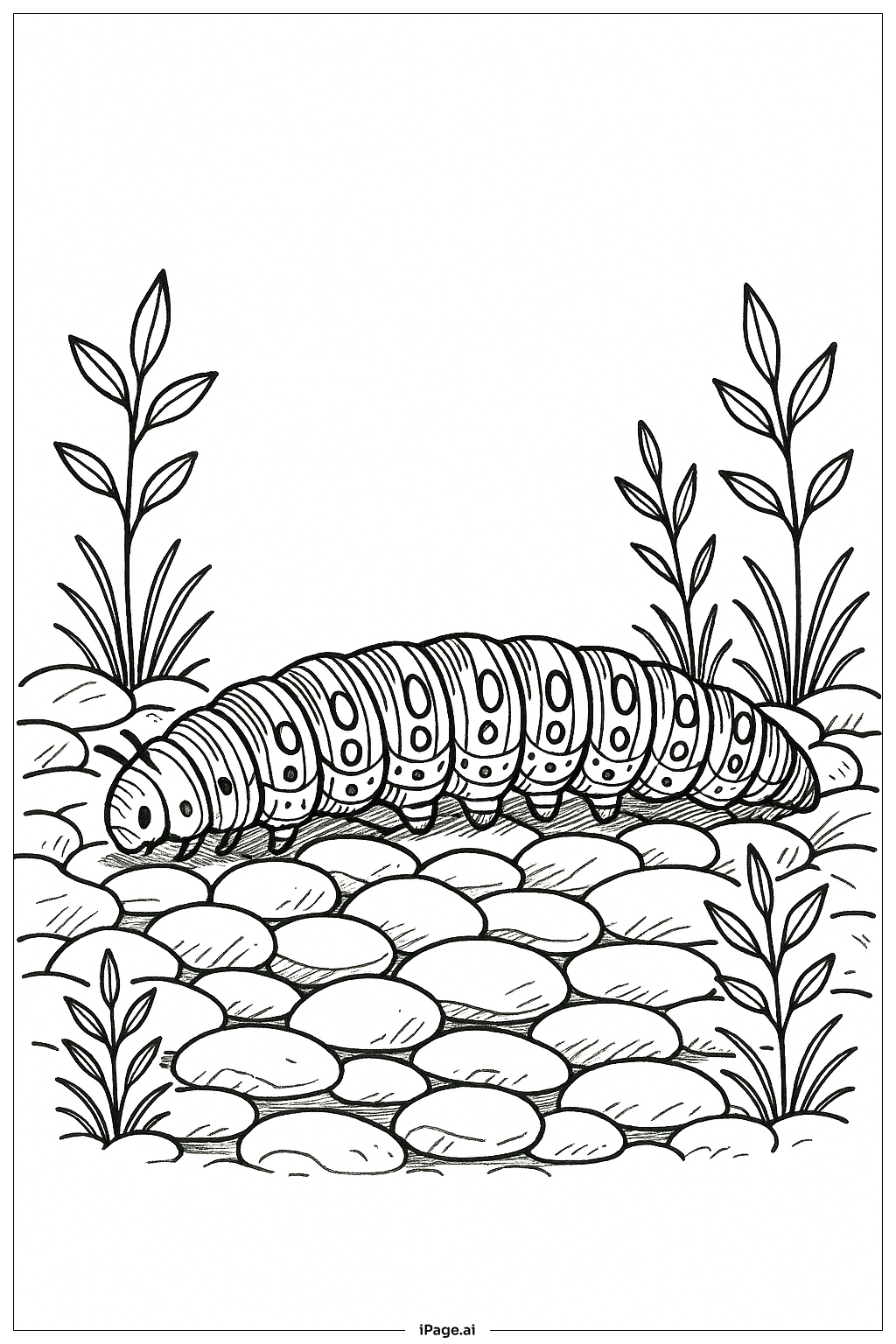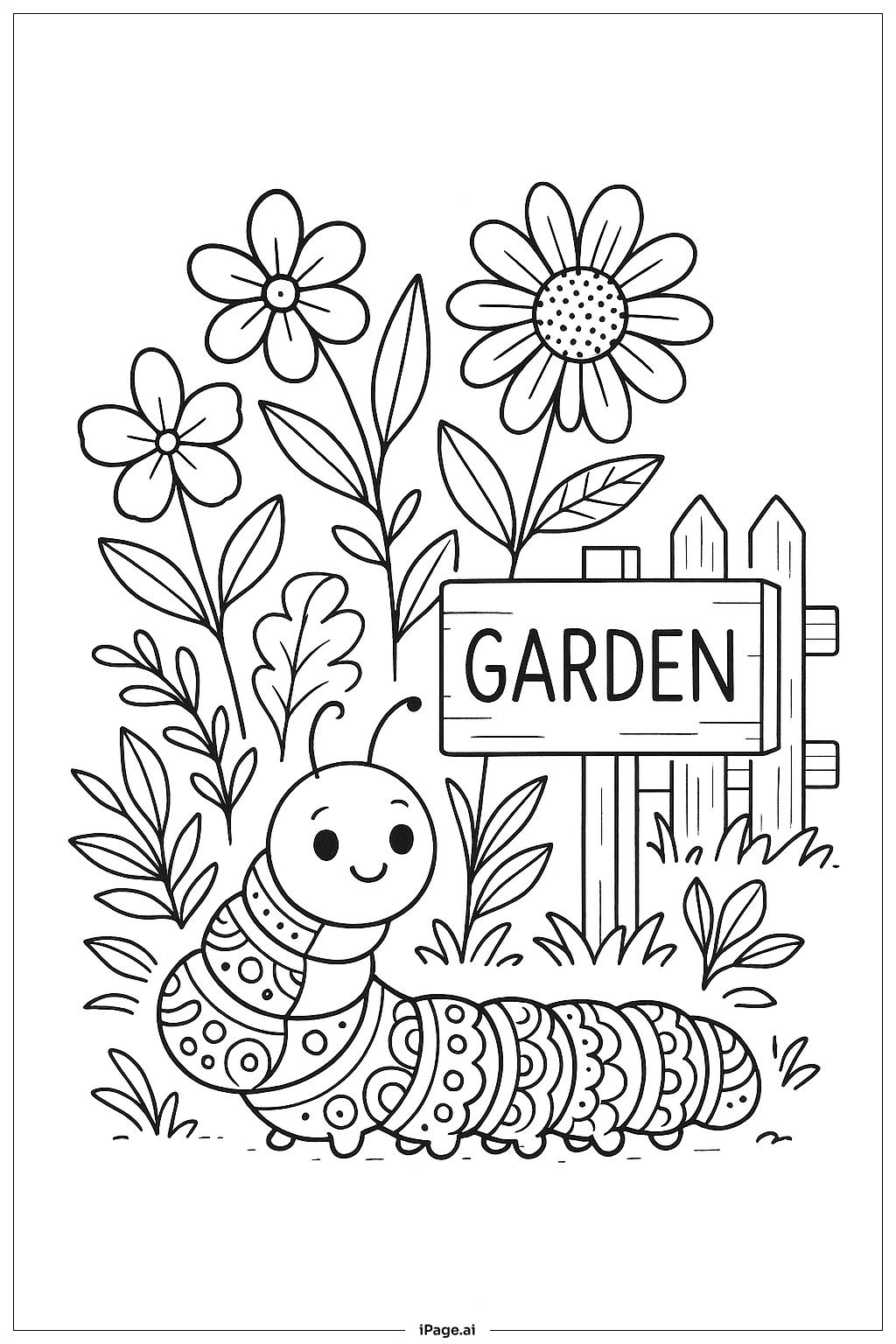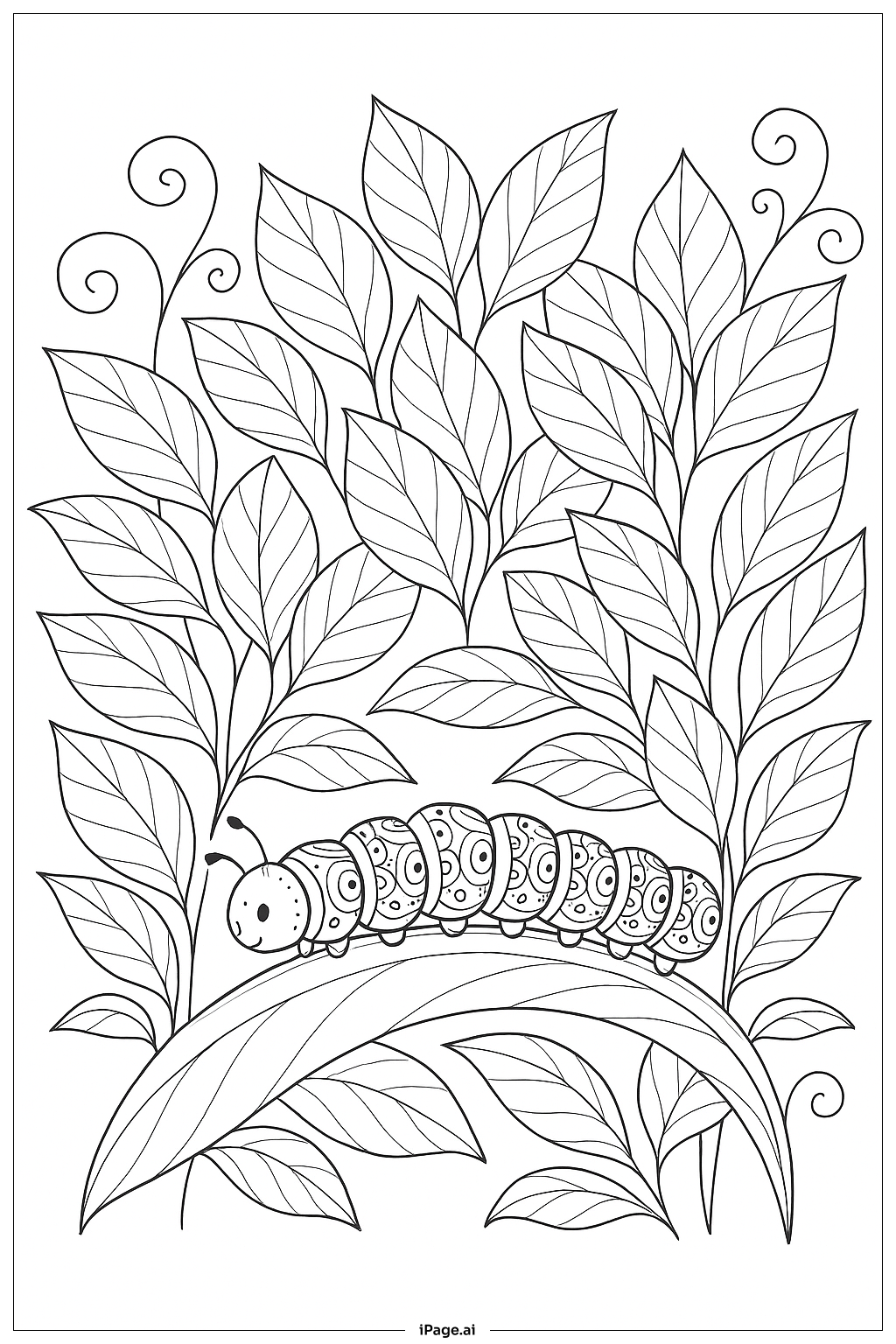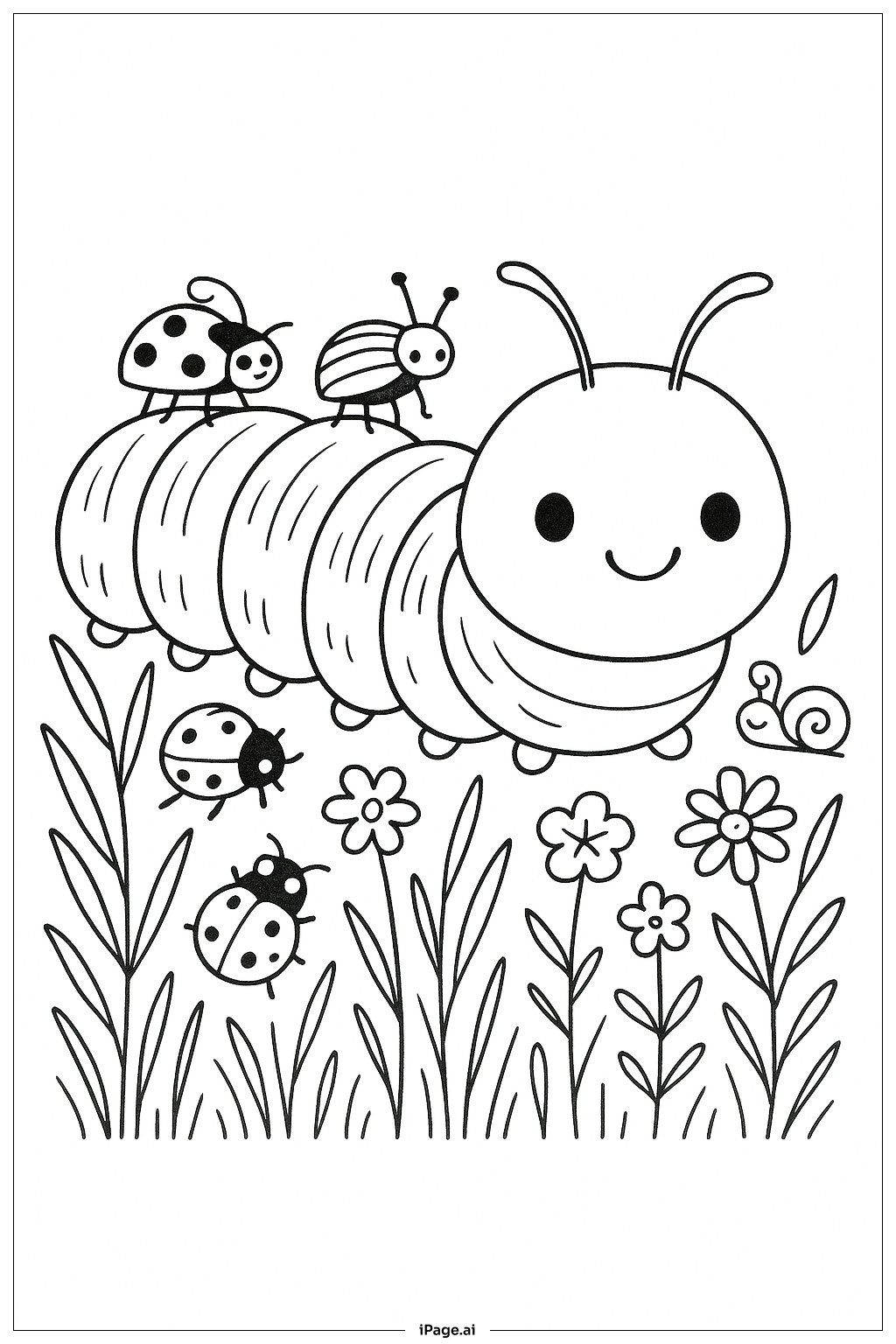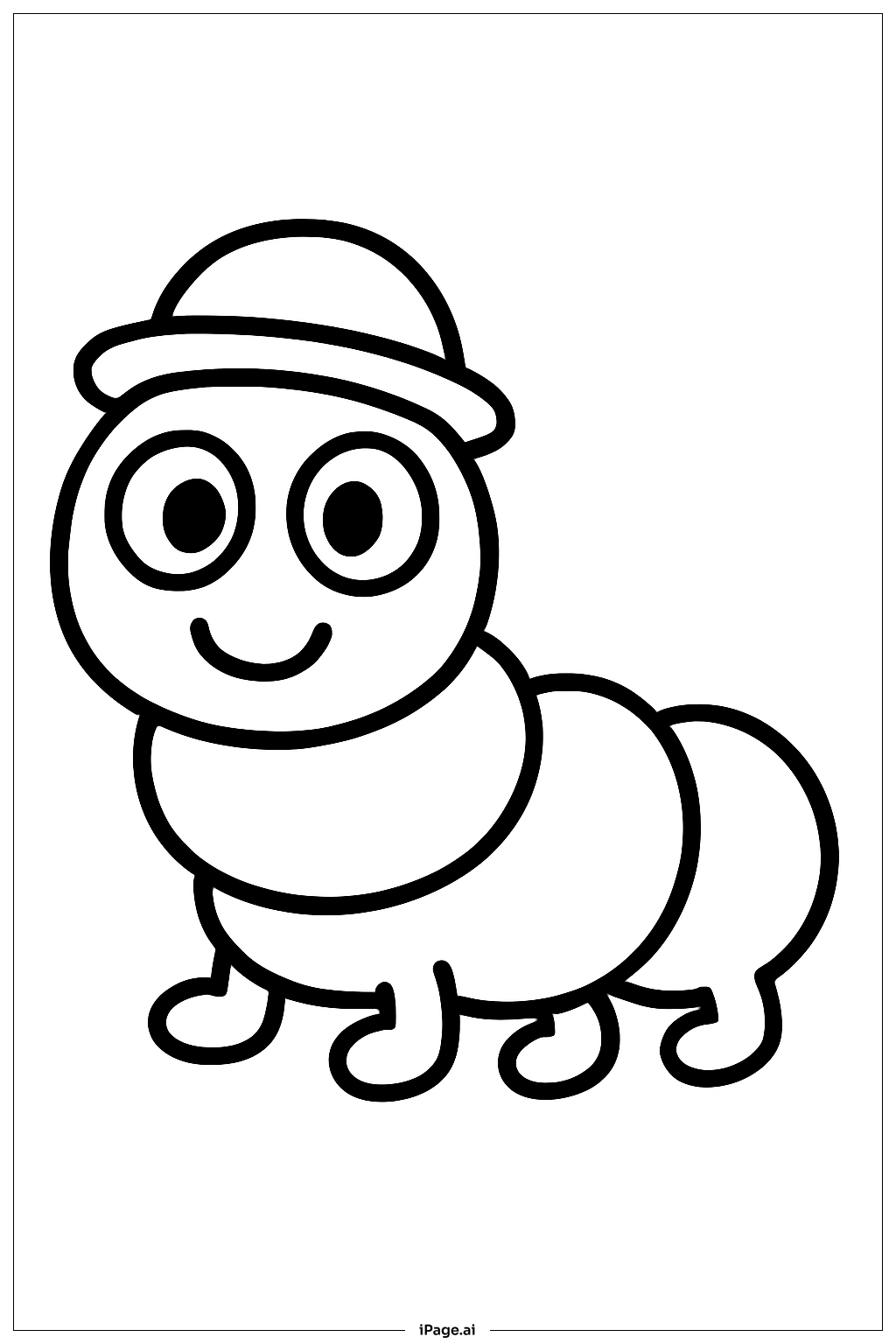
Coloring tips: How to color Caterpillar Wearing Hat coloring page well?
Start with the caterpillar's body. Try using two or three shades of green to make the segments look round and full. Add a slightly darker green along the edges of each segment to create depth. For a fun twist, try alternating colors like green and yellow for each body section. The hat is a great place to get creative — go with a classic brown or black, or choose a bright color like red or purple to make it pop. Add a decorative band around the hat in a contrasting color. Use warm skin tones or soft yellows for the face, and color the eyes bright blue or brown. For the leaves in the background, use different shades of green to keep the scene lively. Light watercolor pencils or crayons work great for this image. Keep your strokes smooth and stay inside the bold outlines for a clean, polished finish.
Coloring challenges: Which parts are difficult to color and need attention for Caterpillar Wearing Hat coloring page?
• Segment Shading: The caterpillar's body is made up of multiple round segments. Making each one look three-dimensional takes patience. You need to apply a lighter color in the center and a darker shade along the edges of each section. This technique, called shading, can be tricky for younger colorists who are still learning how to blend colors smoothly without going over the outlines.
• Hat Details: The hat sitting on the caterpillar's head has a brim, a crown, and often a decorative band. These small areas are close together, which makes it hard to color each part in a different shade without accidentally mixing them together. Using a fine-tipped coloring tool helps, but controlling it in tight spaces is a real challenge.
• Tiny Legs: The small legs along the underside of the caterpillar are narrow and closely spaced. Filling them in neatly without smearing color into the body or the background requires a steady hand and a sharpened pencil or a thin marker. This part is especially challenging for younger children.
• Facial Features: The caterpillar's face includes eyes, a smile, and possibly eyebrows or eyelashes. These features are small and detailed. Coloring them precisely without making the face look messy is difficult. Choosing the right colors for the eyes and keeping the whites of the eyes clean adds another layer of challenge.
• Background Leaves and Branches: The surrounding leaves and branches overlap with the caterpillar's body in some areas. Knowing where one element ends and another begins can be confusing. Carefully following the outlines and using different color families for the caterpillar and the background helps keep the image clear and readable.
Benefits of coloring books: Advantages of drawing Caterpillar Wearing Hat coloring page
Coloring this cheerful Caterpillar Wearing Hat page offers a range of wonderful benefits for kids of all ages. First, it builds fine motor skills. Carefully staying inside the lines and handling coloring tools strengthens the small muscles in the hands and fingers, which also supports handwriting development. Second, it encourages creativity. Choosing colors for the caterpillar's body, the hat, and the background lets children make their own artistic decisions and express their personal style. There is no single right answer, which makes the process feel free and fun. Third, it supports focus and concentration. Working through each section of the image one step at a time teaches children to slow down, pay attention to detail, and complete a task from start to finish. This kind of focused activity is great for building patience. Fourth, it provides a calming experience. The simple, repetitive motion of coloring is known to reduce stress and anxiety in both children and adults. It creates a quiet moment away from screens and noise. Finally, finishing the page gives children a real sense of pride and accomplishment, boosting their confidence and motivating them to take on new creative challenges.