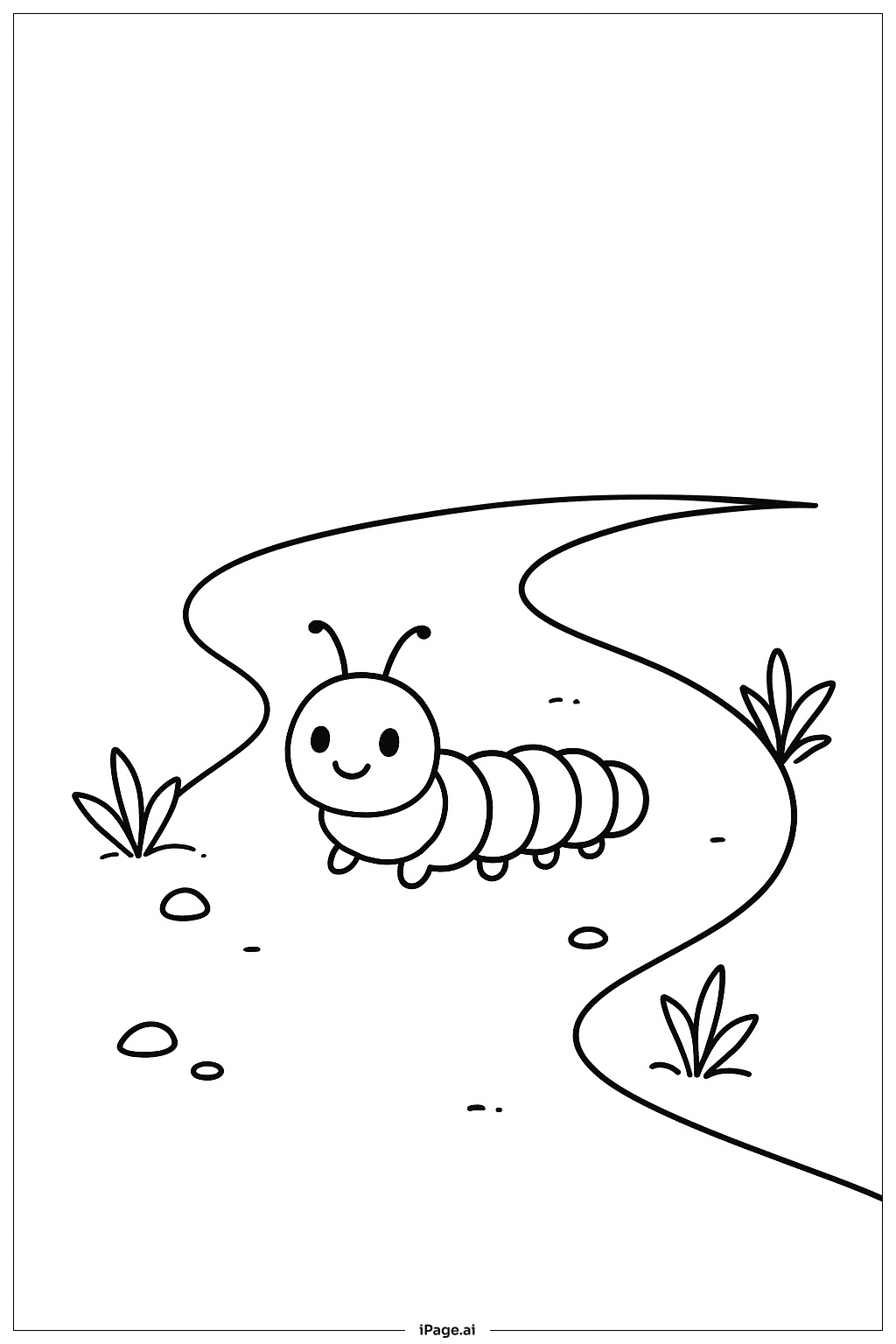
Coloring tips: How to color Caterpillar On Garden Path coloring page well?
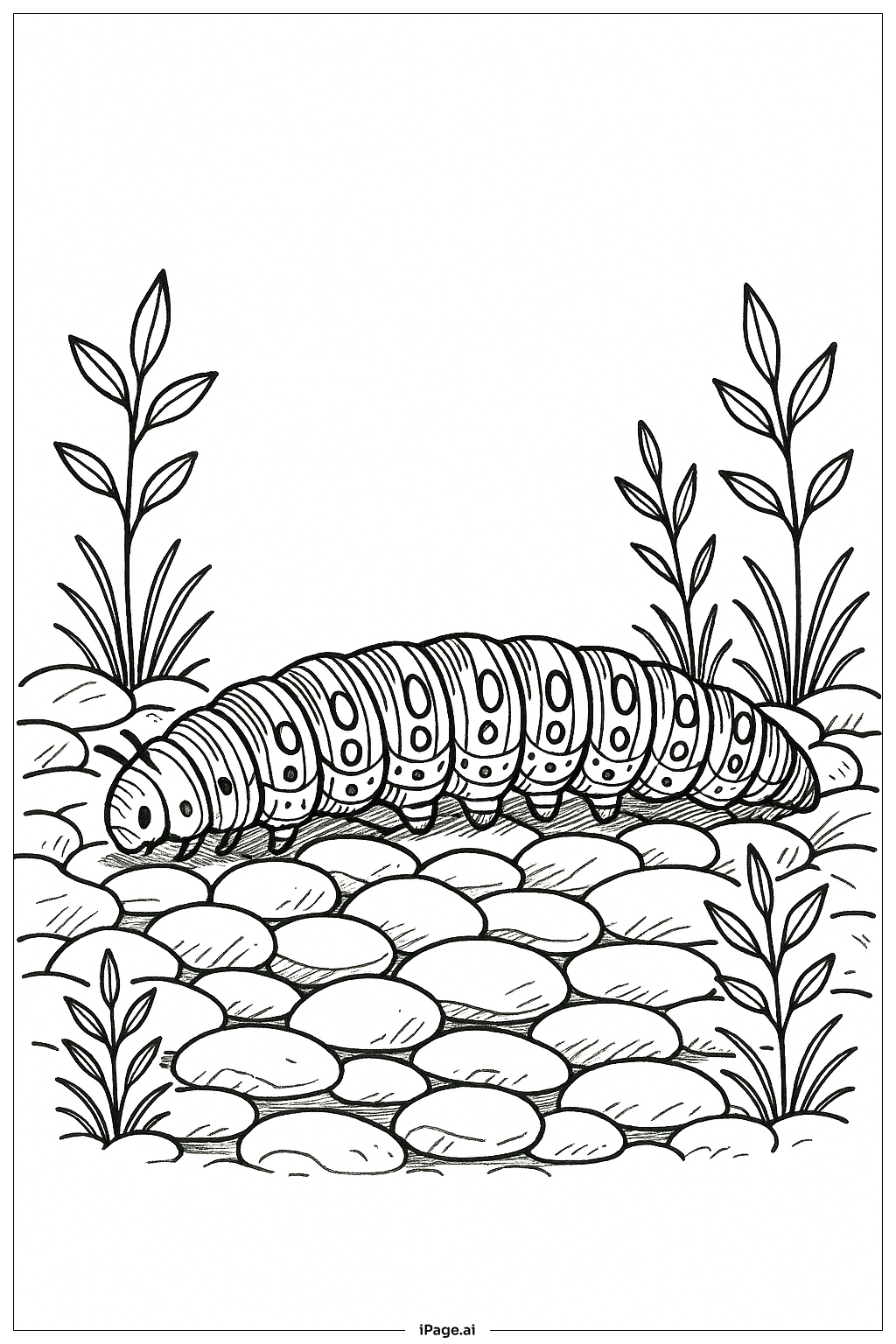
Start by coloring the caterpillar in bright, cheerful colors. Try using greens, yellows, or even rainbow patterns for the body segments, alternating colors to make each section stand out. The friendly face can feature rosy pink cheeks and a warm smile. For the garden path, use browns, grays, or sandy tones to create a natural walkway. Color the surrounding plants in various shades of green, from light lime to deep forest tones, to add dimension. The flowers can be vibrant pinks, purples, yellows, or reds. Add blue or yellow tones to small details like pebbles. Consider using lighter colors in the background and darker, richer colors in the foreground to create depth. Don't forget to add shadows under the caterpillar and plants using slightly darker versions of your chosen colors.
Coloring challenges: Which parts are difficult to color and need attention for Caterpillar On Garden Path coloring page?
• Caterpillar Body Segments: The caterpillar's multiple rounded segments require careful attention to create distinct sections while maintaining a cohesive look. Young colorists may find it challenging to alternate colors evenly or keep coloring within the curved boundaries of each segment without overlap. This demands steady hand control and patience to achieve clean transitions between segments.
• Dense Foliage Details: The garden setting includes numerous overlapping leaves, flowers, and grass clusters with intricate outlines and varying sizes. Distinguishing between different plant elements and staying within their borders can be difficult, especially in areas where vegetation overlaps. Children may struggle to decide which leaf belongs to which plant and how to color layered elements to show depth.
• Path Texture and Small Elements: The garden path contains small pebbles, stones, and texture details that require precision coloring. These tiny elements need different colors to stand out from the path itself, but their small size makes them challenging for younger children with developing fine motor skills. Keeping colors consistent across many small objects takes concentration and control.
Benefits of coloring books: Advantages of drawing Caterpillar On Garden Path coloring page
Coloring this garden scene helps children develop fine motor skills and hand-eye coordination through detailed work on the caterpillar's segments and intricate plant life. The varying sizes of elements, from tiny pebbles to large leaves, allow practice with different pressure levels and coloring techniques. This image encourages creativity as children choose color schemes for the caterpillar and garden, learning about nature and color harmony. The cheerful caterpillar character makes the activity emotionally engaging and fun, reducing stress while building focus and patience. Working through the complex foliage teaches problem-solving skills as children decide how to differentiate overlapping elements. This coloring page also provides an opportunity to learn about insects, gardens, and outdoor environments, connecting art with natural science education in an enjoyable way.