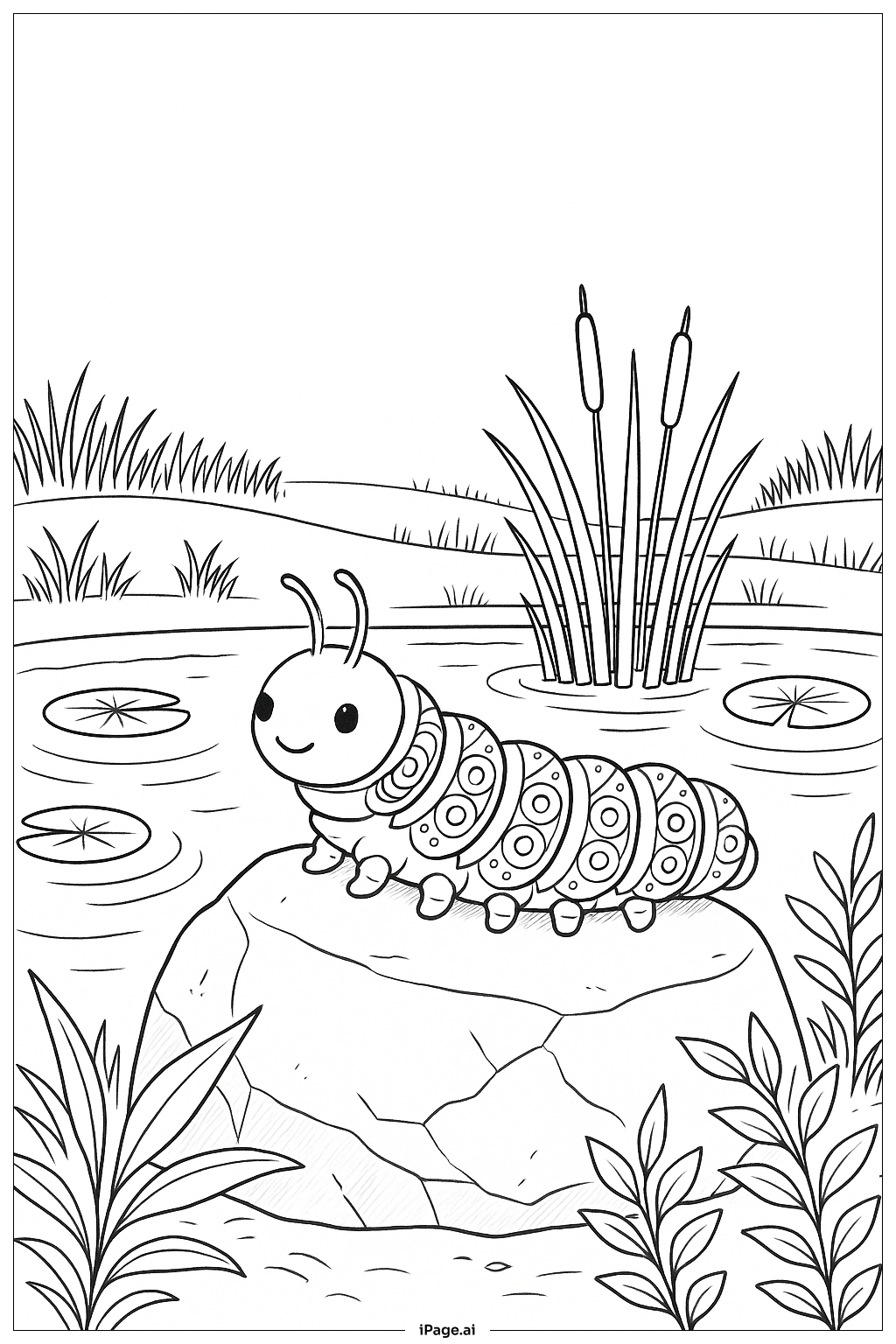
Coloring tips: How to color Caterpillar Near Small Pond coloring page well?
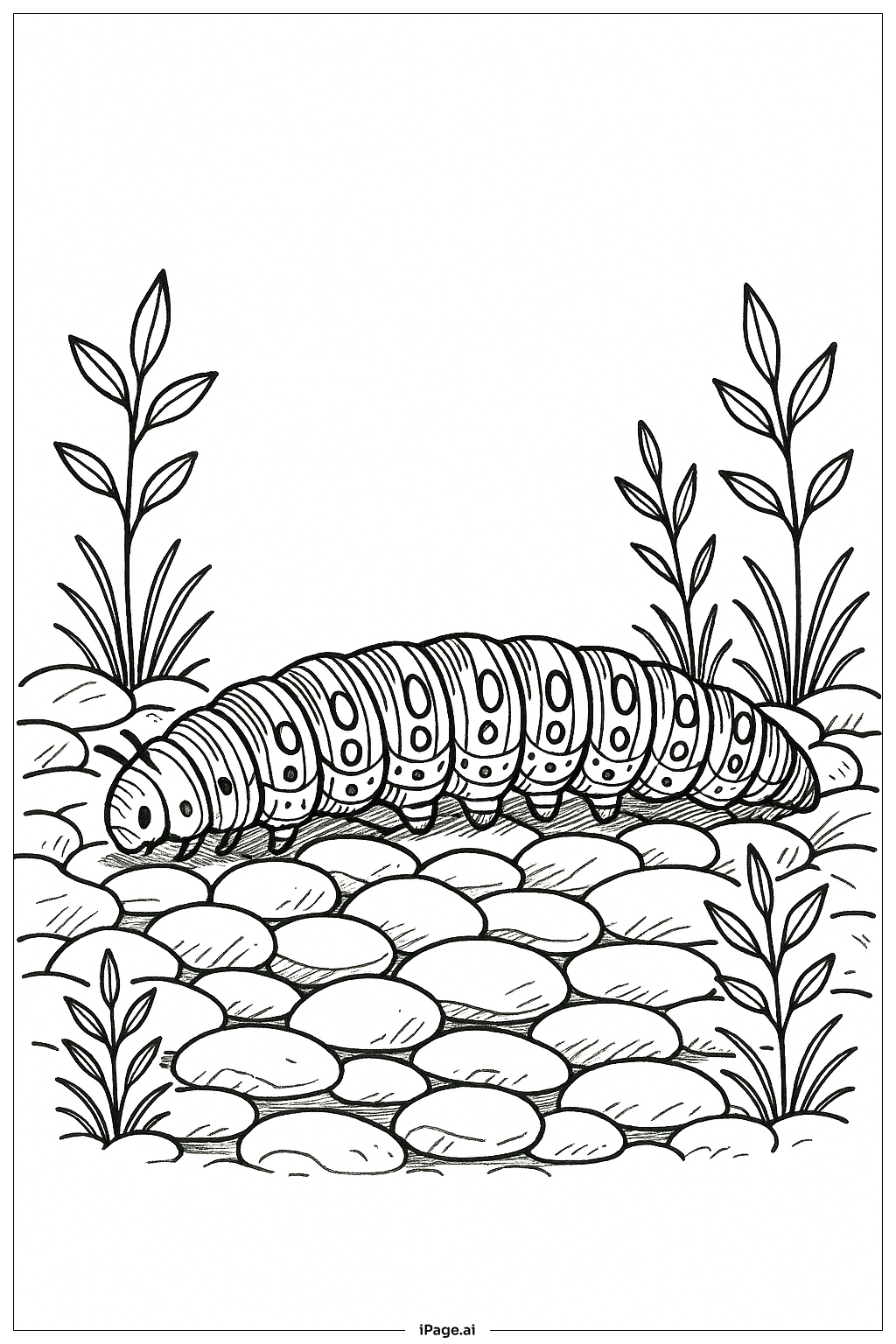
Start with the caterpillar itself. Use bright greens or yellows for its body segments. You can make each segment a slightly different shade to show its round, bumpy shape. Add a warm orange or red stripe along the sides for a fun pop of color. Use brown or tan for the branch or leaf it sits on. For the pond, try light blue or teal, with a deeper blue at the center to show depth. Color the lily pads in medium green, and add white or pink for any flowers. Use earthy greens and browns for the grasses and pebbles around the water. Keep the sky or background soft, using pale yellow or light blue, so the caterpillar stands out as the star of the scene. Feel free to mix colors and try your own combinations. There are no wrong choices — just have fun with it!
Coloring challenges: Which parts are difficult to color and need attention for Caterpillar Near Small Pond coloring page?
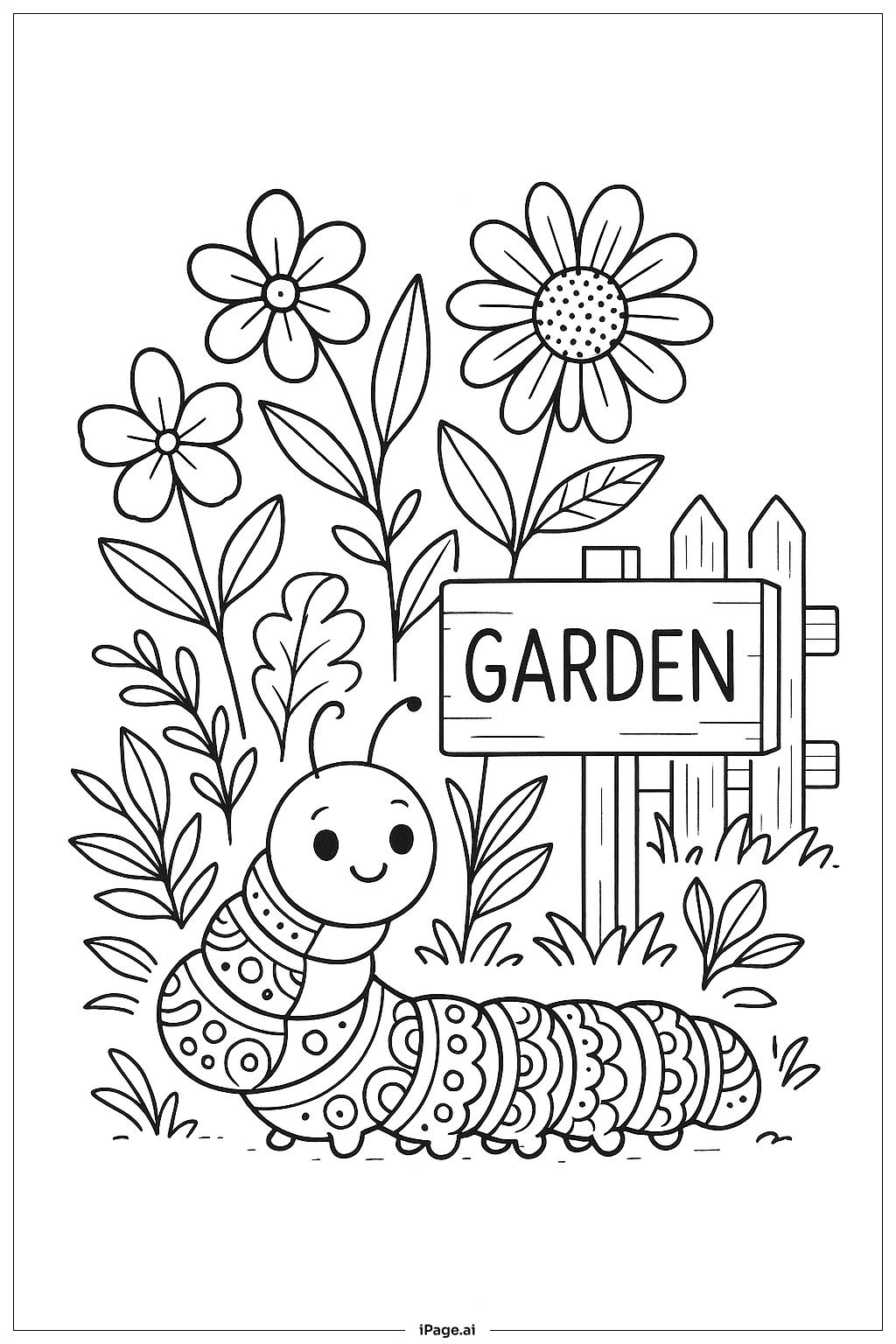
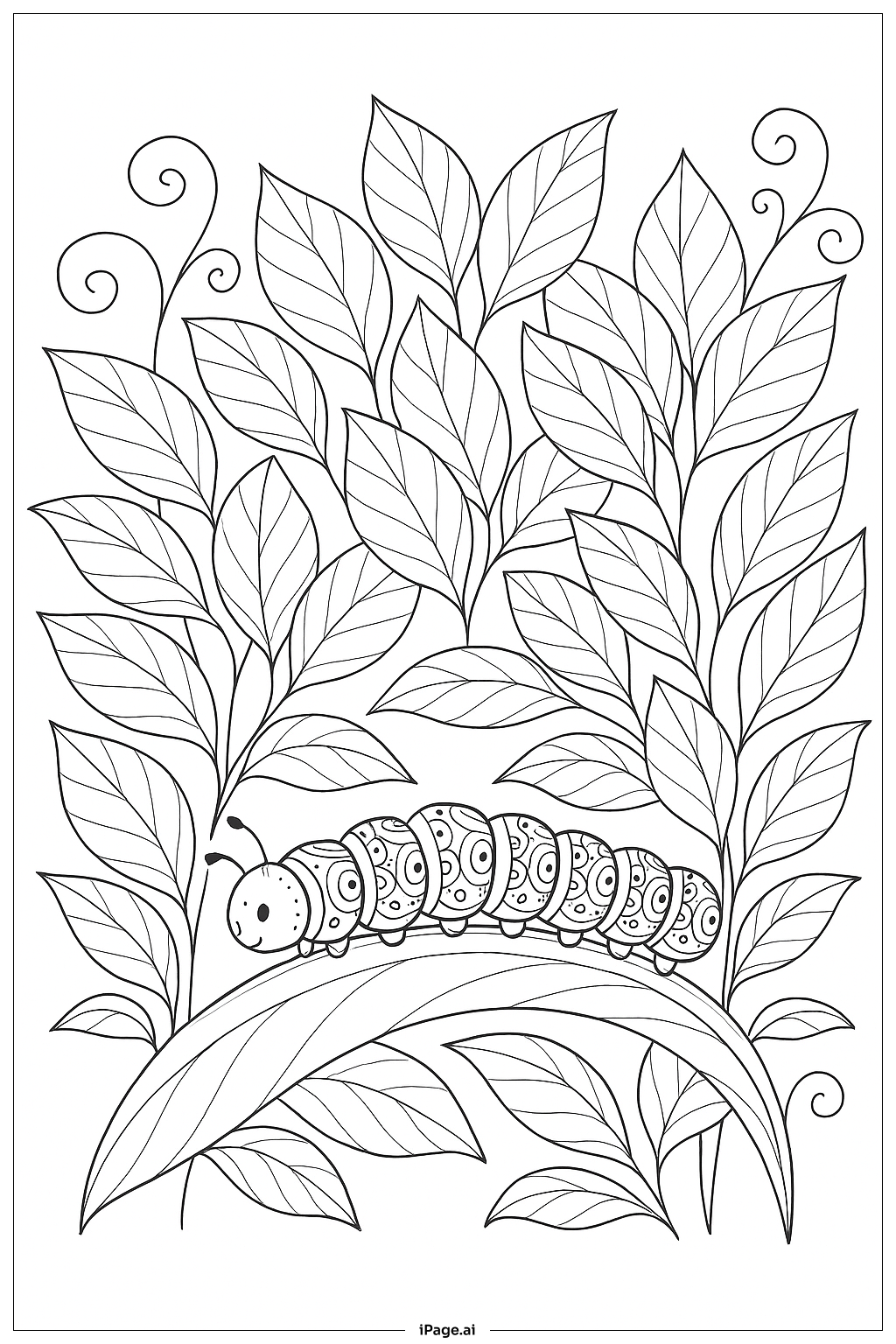
• Caterpillar Segments: The caterpillar's body is made up of many small, rounded segments placed close together. Coloring each one neatly without the colors bleeding into each other takes a steady hand and careful control of your crayon or marker. Young colorists may find it tricky to stay within each tiny curved section.
• Tiny Legs and Details: The caterpillar has small legs and fine facial features like eyes and a mouth. These are very small areas that require a sharp pencil or a fine-tipped tool to color precisely. Rushing through these details can easily cause smudging or going outside the lines.
• Water Reflection in the Pond: Ponds look most realistic when they show a mirror-like reflection of the surroundings. Creating this effect with flat coloring tools is challenging. Blending two or three shades of blue and leaving some areas lighter can help suggest calm, still water, but it requires practice and patience.
• Layered Background Elements: The scene includes grasses, pebbles, reeds, and possibly a frog or dragonfly in the background. These overlapping elements can be confusing to color, especially deciding which object goes in front of another. Keeping background colors softer and lighter than the main subject helps create a sense of depth.
• Balancing the Overall Color Palette: With so many different elements, such as the caterpillar, the water, the plants, and the rocks, choosing colors that look good together is its own challenge. Using colors from the same family, like warm greens and soft blues, helps keep the whole picture feeling balanced and natural.
Benefits of coloring books: Advantages of drawing Caterpillar Near Small Pond coloring page
Coloring this Caterpillar Near Small Pond scene offers a wide range of benefits for children and beginners alike. First, it builds focus and patience. Carefully filling in the caterpillar's many small segments trains the hand and mind to slow down and work with attention. This is great practice for school tasks that also require concentration.
Second, it sparks curiosity about nature. The pond setting introduces children to real-world creatures and habitats. While coloring the lily pads, grasses, and water, kids naturally start to wonder about the world outside their window.
Third, it supports fine motor skill development. Coloring small areas like the caterpillar's legs and facial features strengthens the small muscles in the hand and fingers, which helps with writing and drawing skills later on.
Fourth, it encourages creative thinking. Choosing which colors to use for each part of the scene lets children make their own artistic decisions. There is no single right answer, and that freedom builds confidence.
Finally, coloring is simply relaxing and fun. Spending quiet time with a coloring page is a healthy way for kids to unwind, express themselves, and feel proud of something they made with their own hands. This image is a wonderful starting point for any young artist.