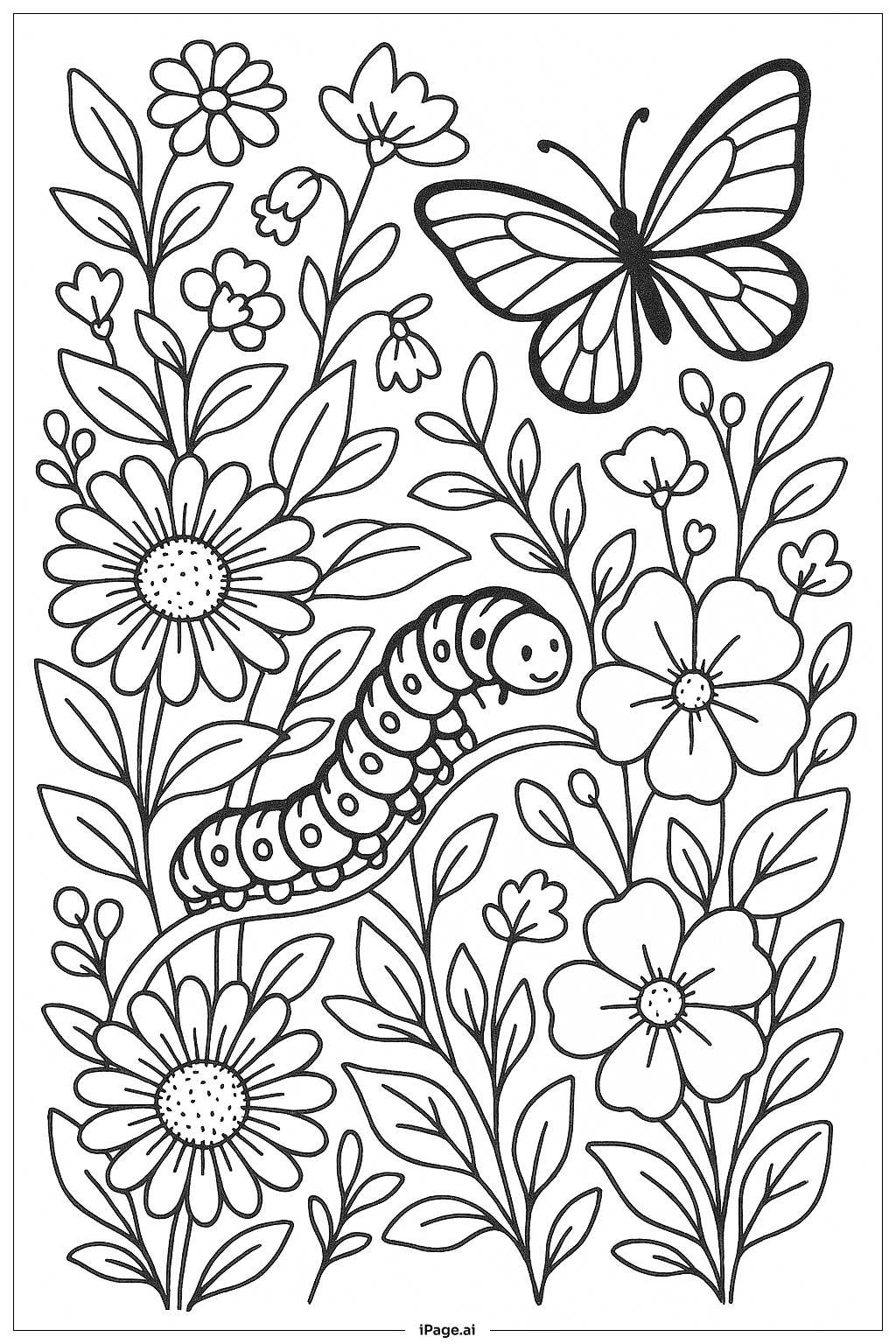
Coloring tips: How to color Caterpillar And Busy Flower Bed coloring page well?
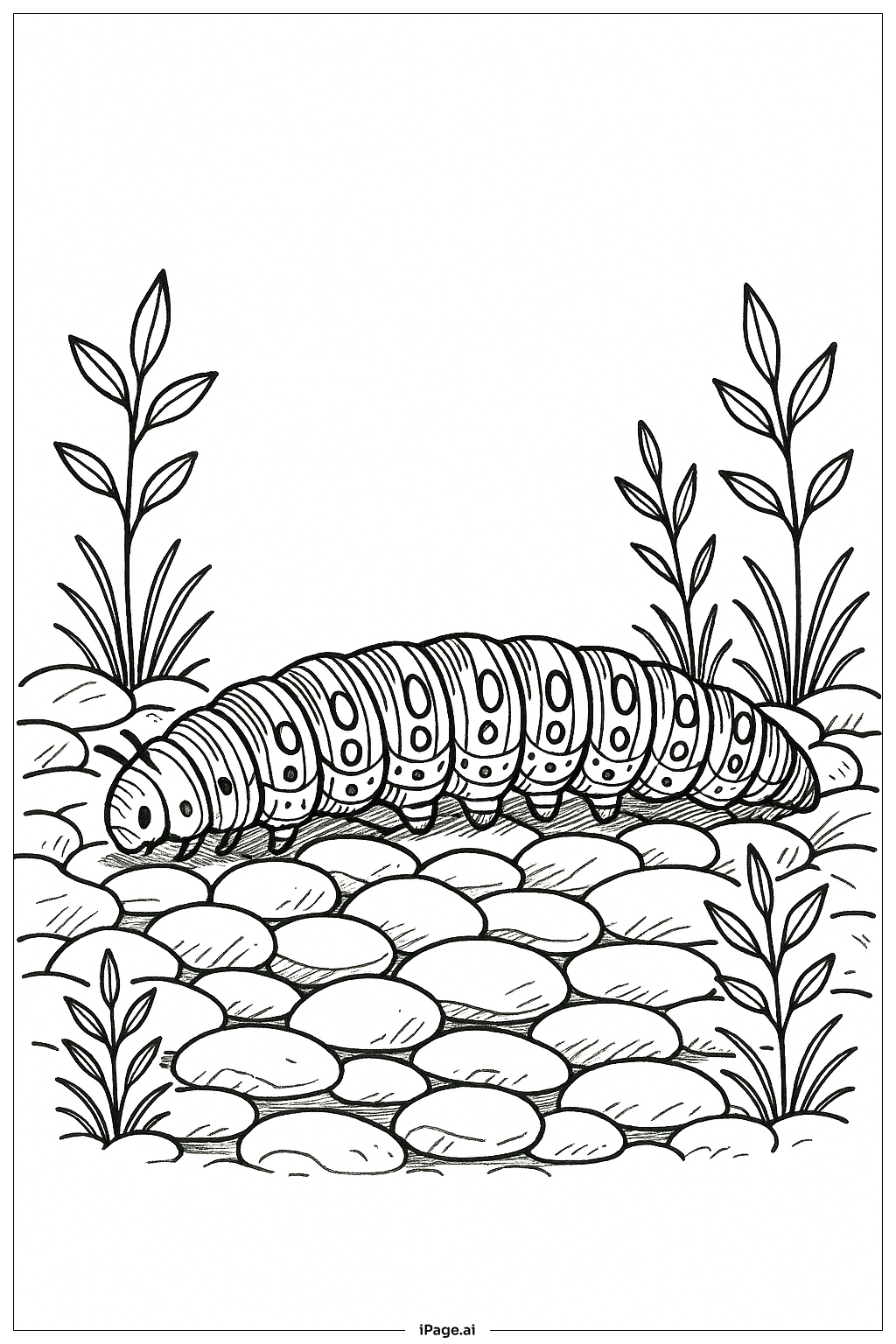
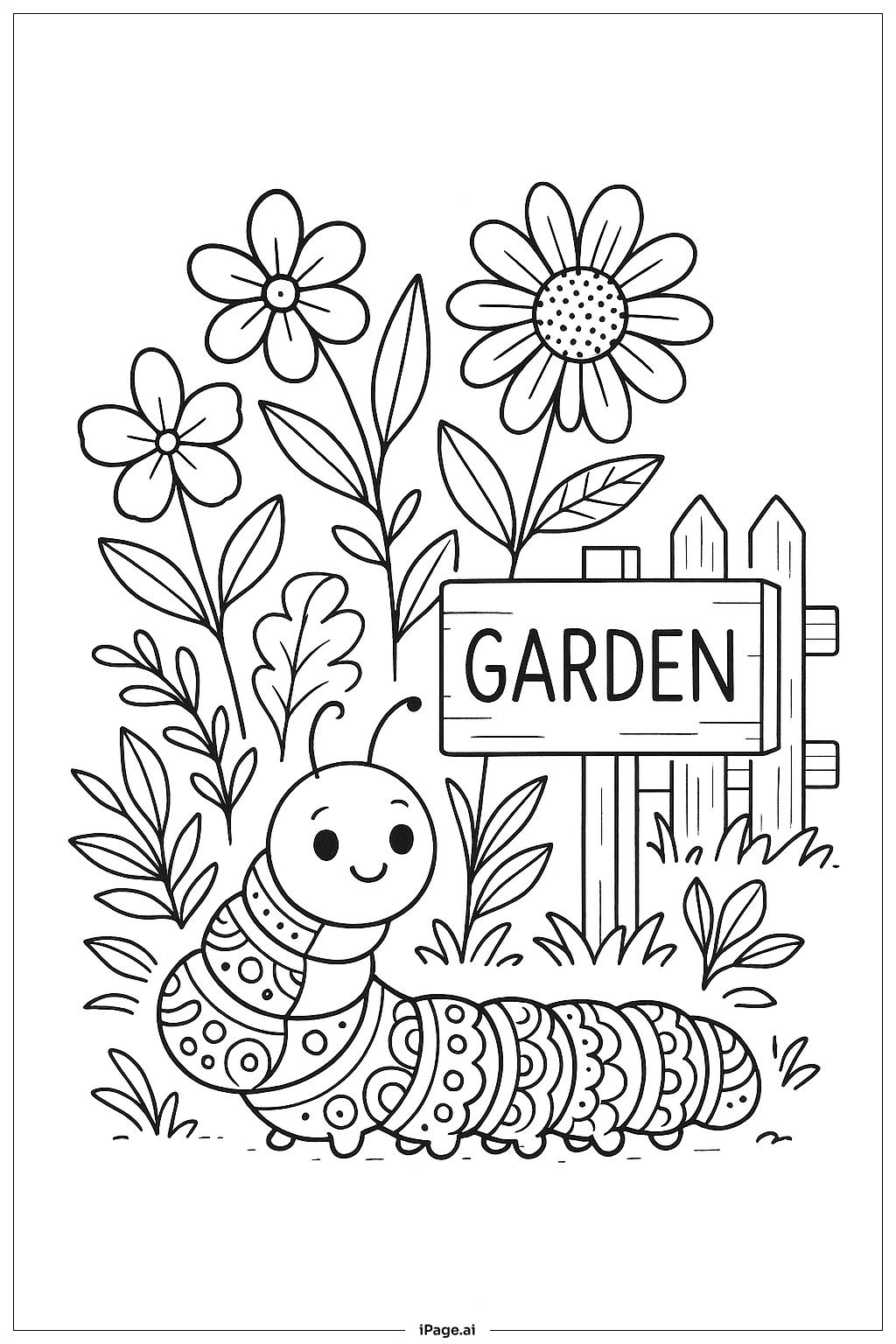
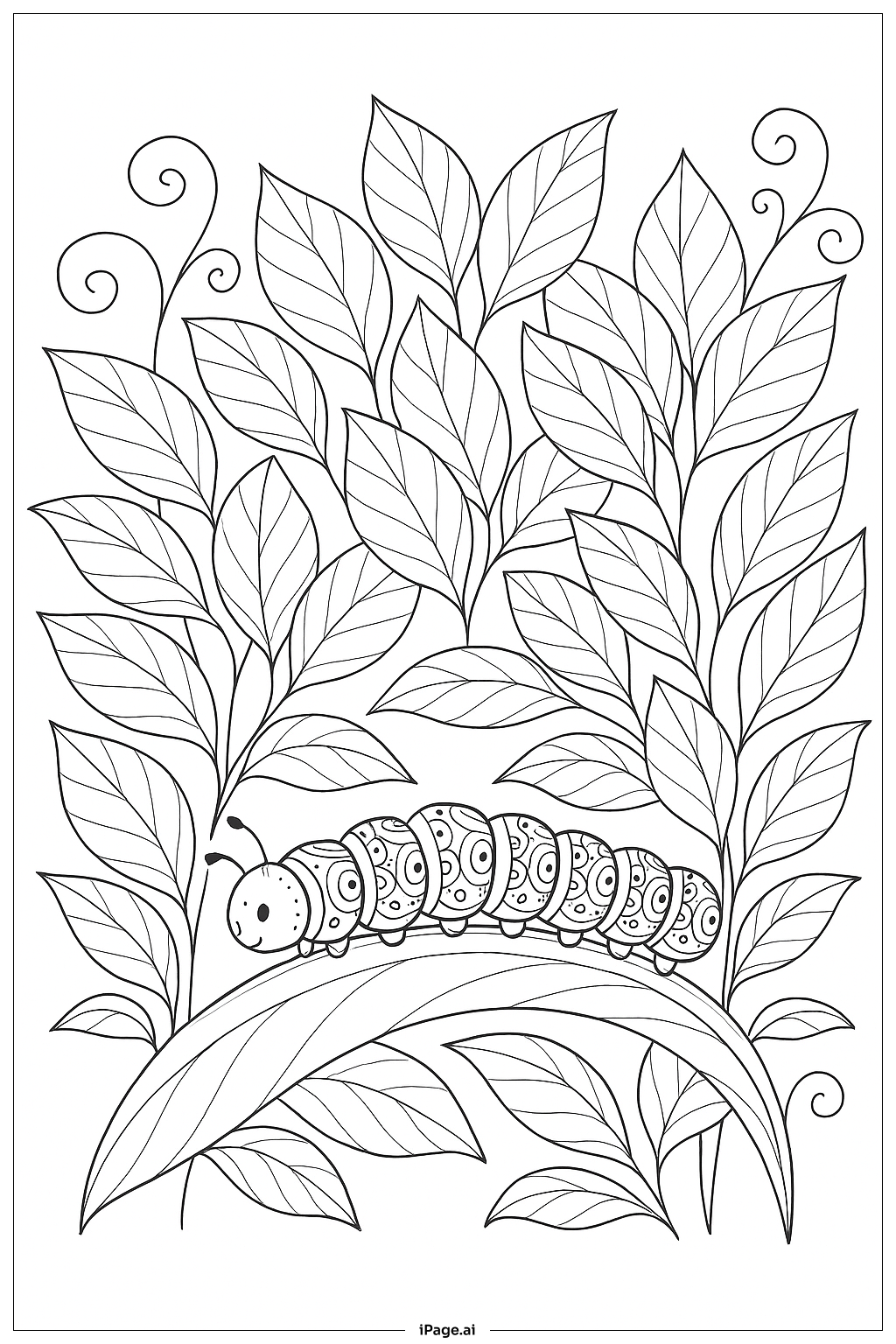
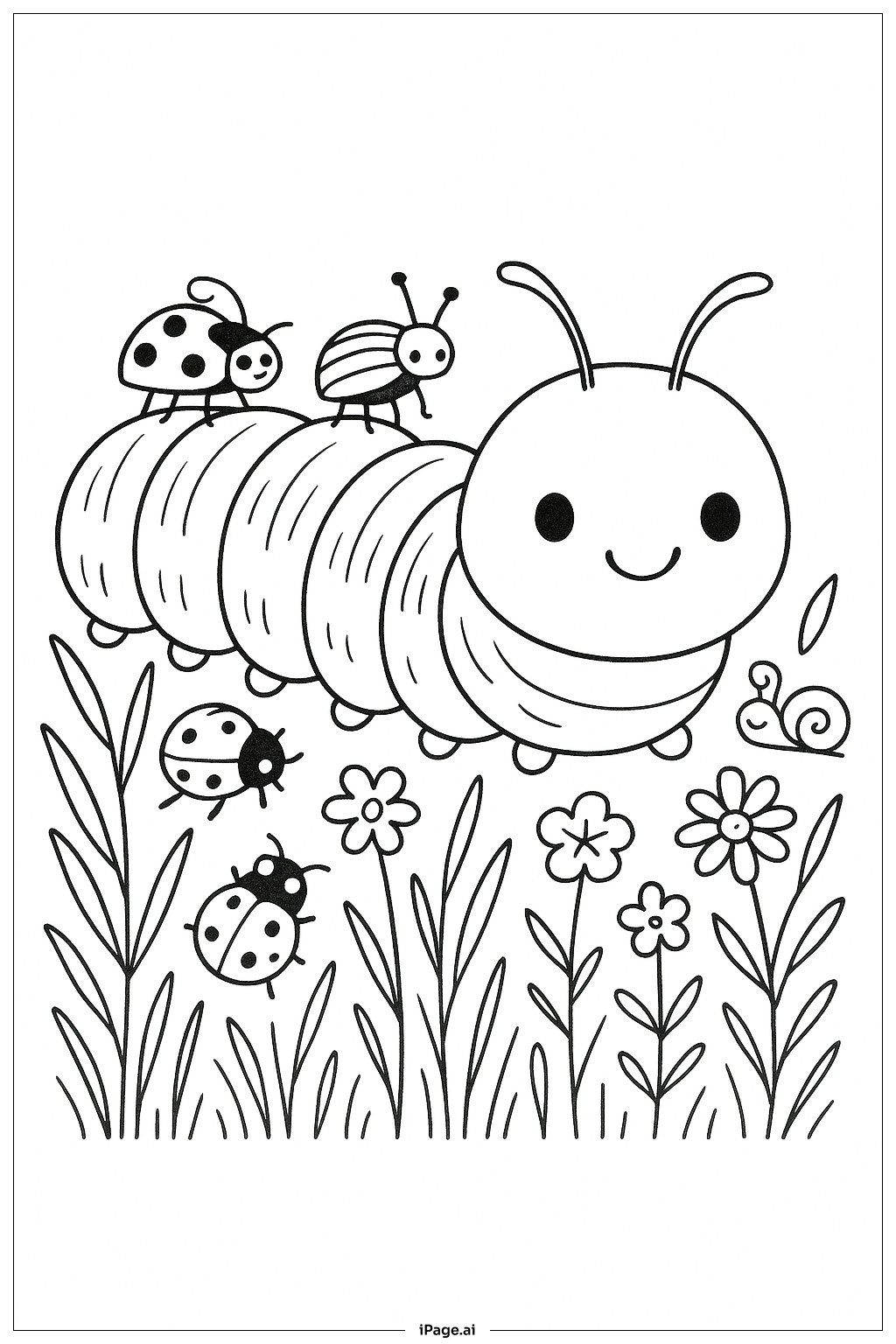
Use bright and cheerful colors to make the scene lively. Color the caterpillar with shades of green or yellow, adding some spots in contrasting colors. For the flowers, choose a mix of red, pink, yellow, and purple to show variety. Leaves can be different shades of green to add depth. The butterfly wings can be colored with vibrant patterns using blues, oranges, or purples. Use lighter colors for small buds and a little darker for larger petals to create contrast. You can also add shading near the edges for a 3D look.
Coloring challenges: Which parts are difficult to color and need attention for Caterpillar And Busy Flower Bed coloring page?
1. The many small leaves and buds require careful coloring not to go outside the lines, which can be difficult for younger children. 2. Balancing the flower colors so the picture looks colorful but not too busy. Choosing harmonious color combinations is a challenge. 3. Coloring the caterpillar’s spots neatly may need attention to detail to keep them distinct. 4. Adding shading or gradients to flowers and leaves needs some skill to blend colors smoothly. 5. The butterfly wings have many sections that need precision to avoid coloring outside lines and maintain symmetry.
Benefits of coloring books: Advantages of drawing Caterpillar And Busy Flower Bed coloring page
Coloring this picture helps children improve their focus and hand-eye coordination because of the many small details. It encourages creativity through choosing colors and patterns for flowers, leaves, and insects. This activity also teaches patience and fine motor skills while coloring small shapes. It offers a relaxing way to connect with nature by imagining colors of the garden. Overall, it boosts confidence as children see their colorful work come alive.