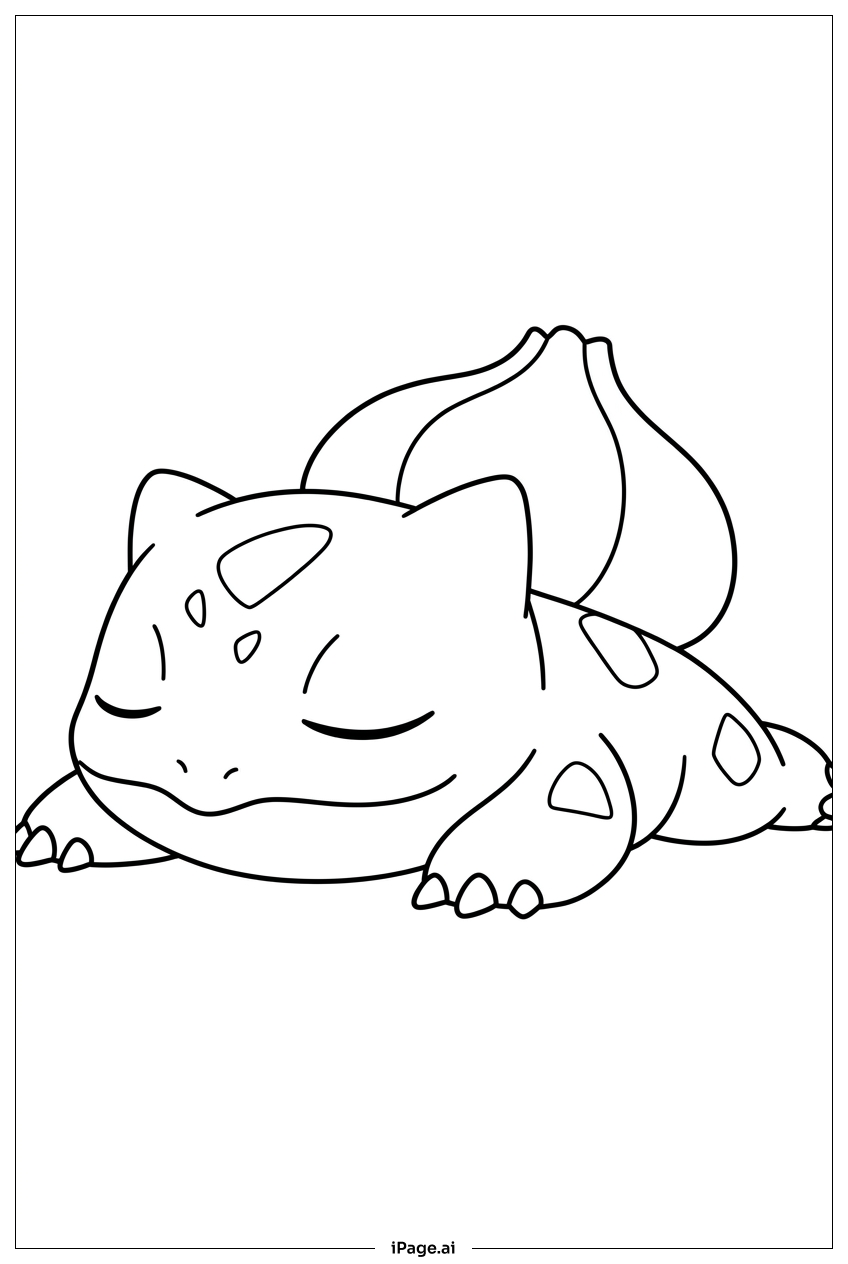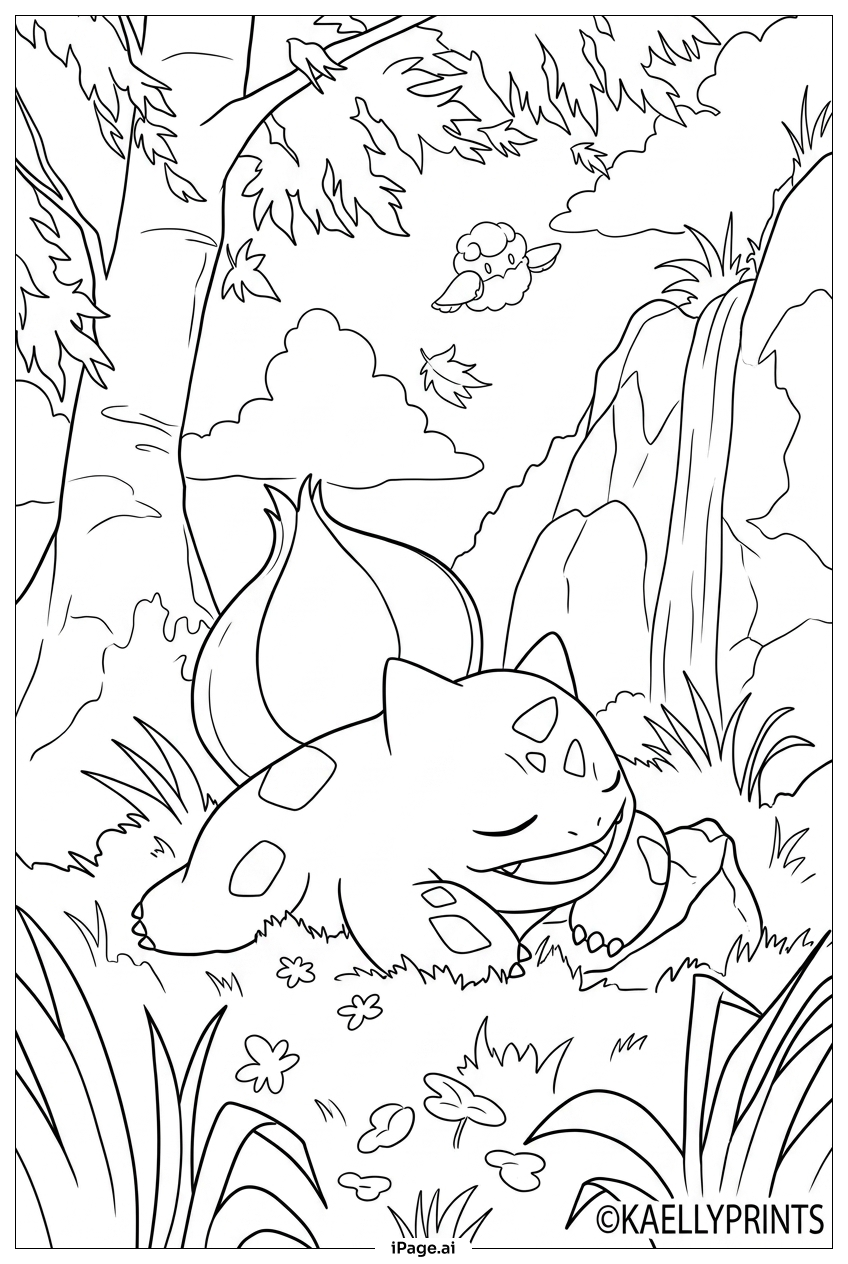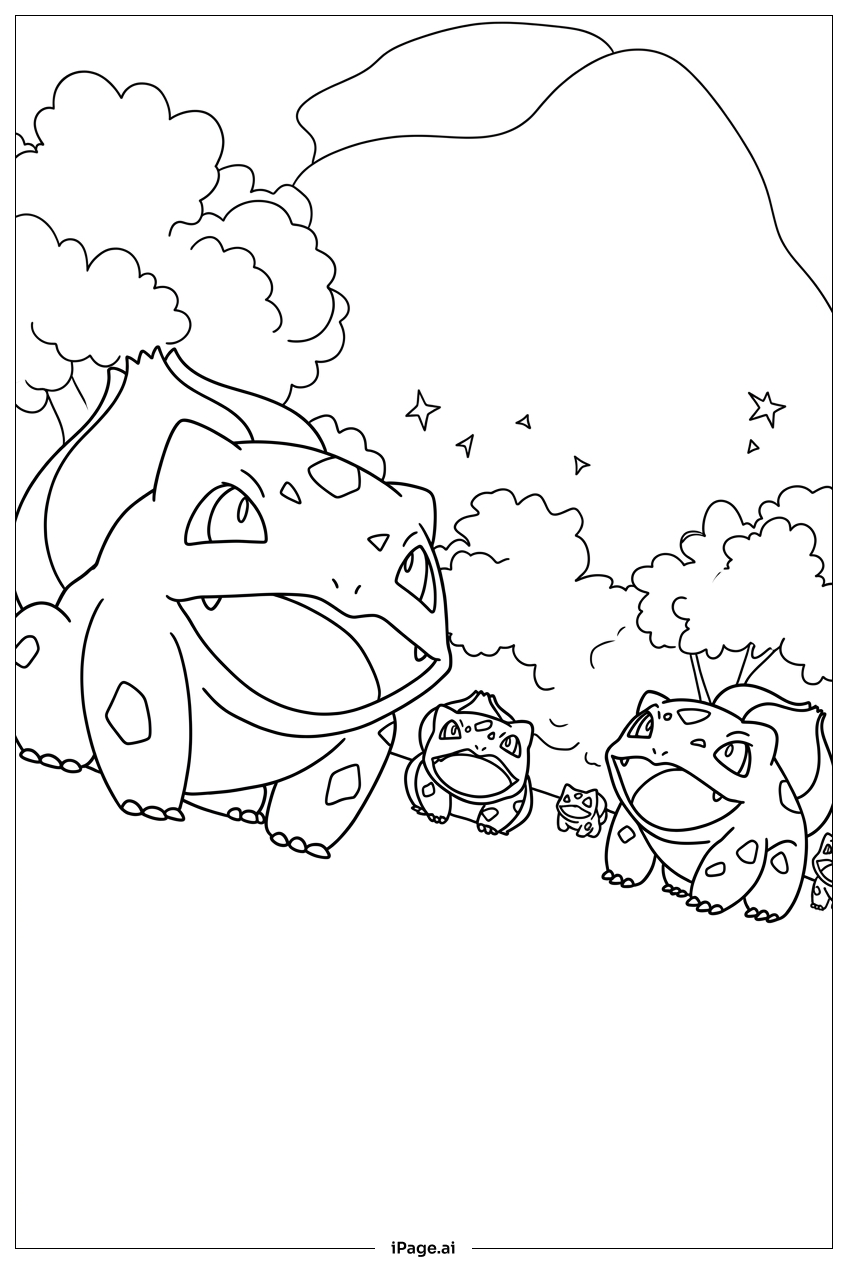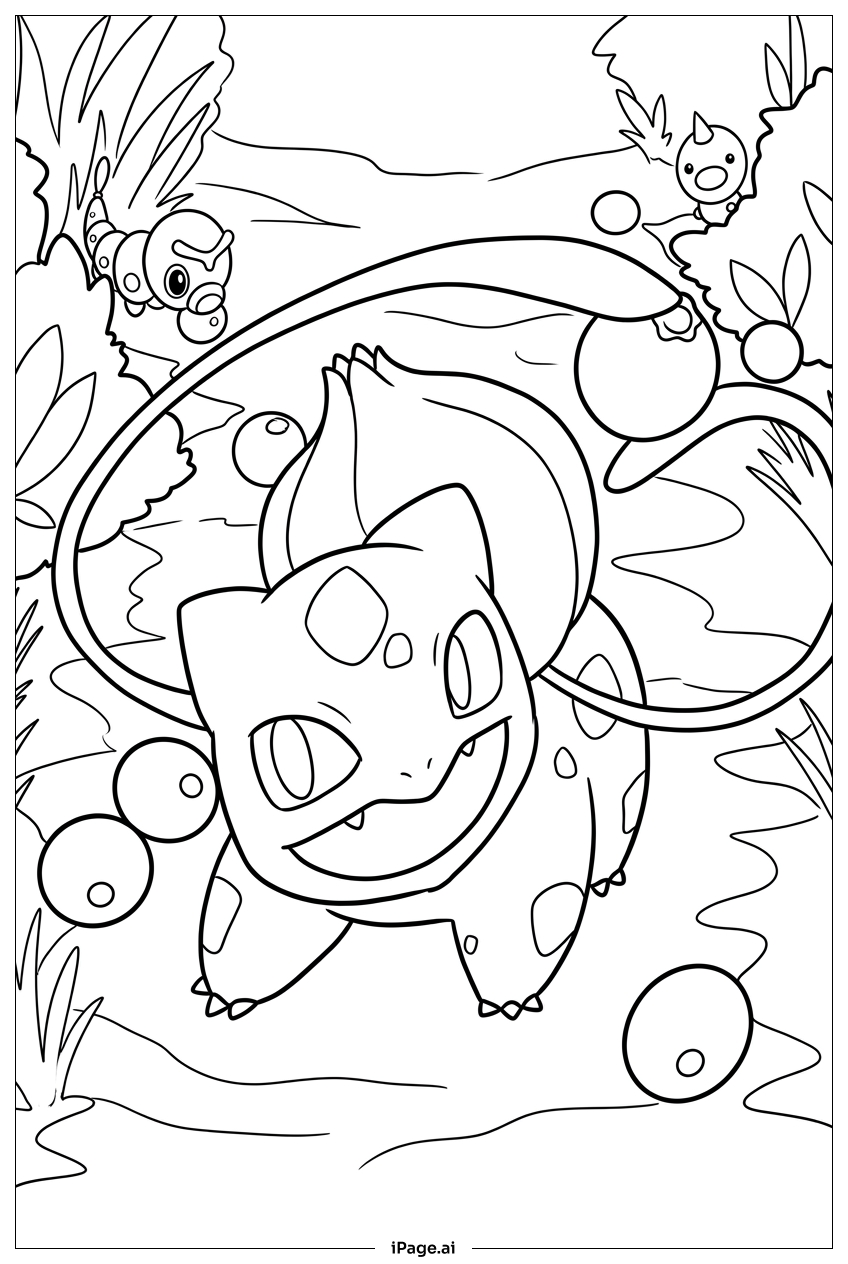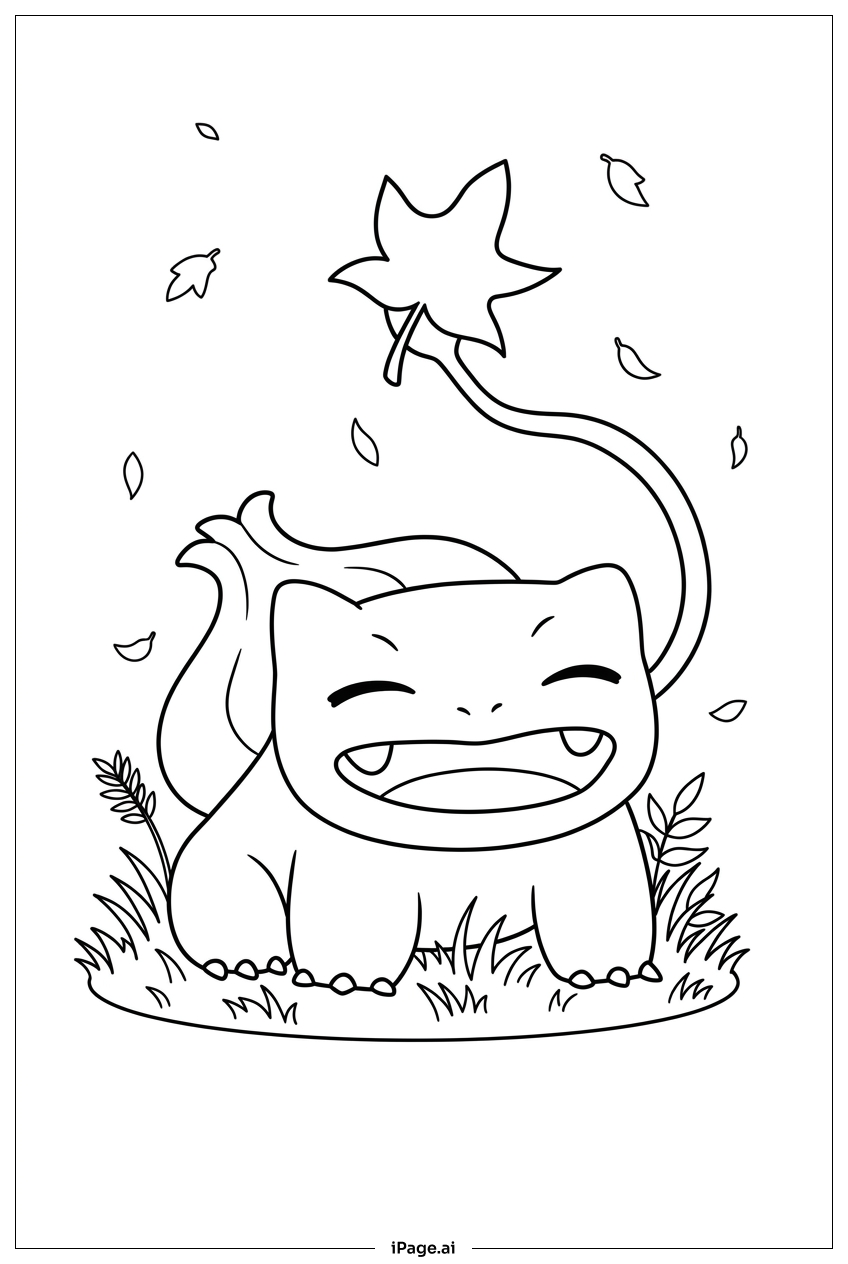
Coloring tips: How to color Laughing Bulbasaur Enjoying a Breezy Afternoon coloring page well?
Start with Bulbasaur's body using a soft blue-green or teal shade. Use a slightly darker green for the spots and patches on its skin to add depth. The bulb on its back looks great in medium green, with darker green for the leaves sprouting from the top. Add hints of purple or pink to the bulb's base to give it a natural, plant-like feel. For the laughing expression, use a warm pink inside the open mouth and white for the teeth. Color the eyes a deep red or brown. For the swirling wind and floating leaves around Bulbasaur, try light yellows, soft greens, and pale blues to capture that breezy, airy feeling. Keep the background light — a pale sky blue or soft yellow works beautifully to suggest a sunny afternoon. Don't be afraid to blend colors gently for a smooth, polished look!
Coloring challenges: Which parts are difficult to color and need attention for Laughing Bulbasaur Enjoying a Breezy Afternoon coloring page?
Coloring this image comes with a few fun challenges to keep in mind:
• **Bulbasaur's textured skin:** Bulbasaur's body has a unique blue-green skin tone with darker spots and patches. Blending these two shades smoothly without making the transitions look harsh can be tricky, especially for younger colorists. Take your time layering the colors gradually.
• **The bulb details:** The large bulb on Bulbasaur's back has multiple layers — the rounded base, the leafy top, and subtle shading to show its round shape. Capturing the three-dimensional look of the bulb requires careful use of light and shadow. Try using at least two or three shades of green to make it pop.
• **The laughing expression:** The open mouth with visible teeth and the squinted, joyful eyes need precise coloring to look expressive and lively. Staying within the small lines of the teeth and the inner mouth area requires a fine-tipped tool or a steady hand with colored pencils.
• **Wind and floating elements:** The swirling wind lines, drifting leaves, and scattered petals surrounding Bulbasaur are small and closely spaced. Coloring each element individually without smudging into neighboring areas demands patience and a light touch, particularly with markers or watercolors.
• **Background balance:** Choosing a background color that complements Bulbasaur's green tones without making the whole image look too similar in hue is a creative challenge. Warm, contrasting tones like soft yellows or light oranges can help Bulbasaur stand out beautifully.
Benefits of coloring books: Advantages of drawing Laughing Bulbasaur Enjoying a Breezy Afternoon coloring page
Coloring this cheerful Bulbasaur page offers a wonderful range of benefits for kids and Pokémon fans of all ages. Focusing on staying within the lines and blending colors carefully helps build fine motor skills and hand-eye coordination, which are important for everyday tasks like writing and drawing. The variety of shapes — from Bulbasaur's rounded body to the tiny floating leaves — encourages children to practice control and precision with their coloring tools. Choosing colors for Bulbasaur's skin, bulb, and the breezy surroundings sparks creativity and color theory thinking, helping young artists understand how colors work together. The joyful, lighthearted scene also makes this a relaxing and stress-relieving activity, giving kids a calm, focused outlet after a busy day. For Pokémon fans, bringing a favorite character to life through color deepens their connection to the story and world they love. It's a simple, screen-free activity that blends fun with learning in the best possible way.