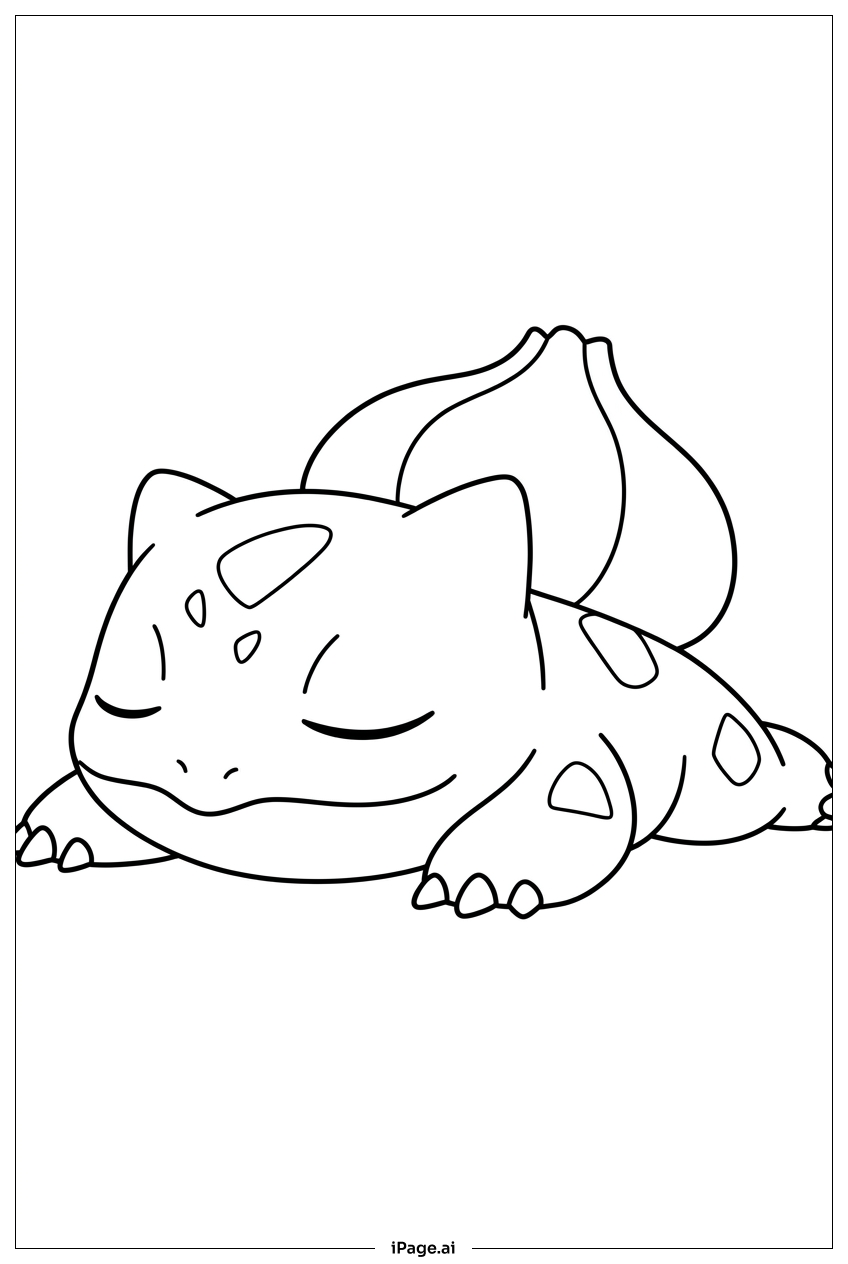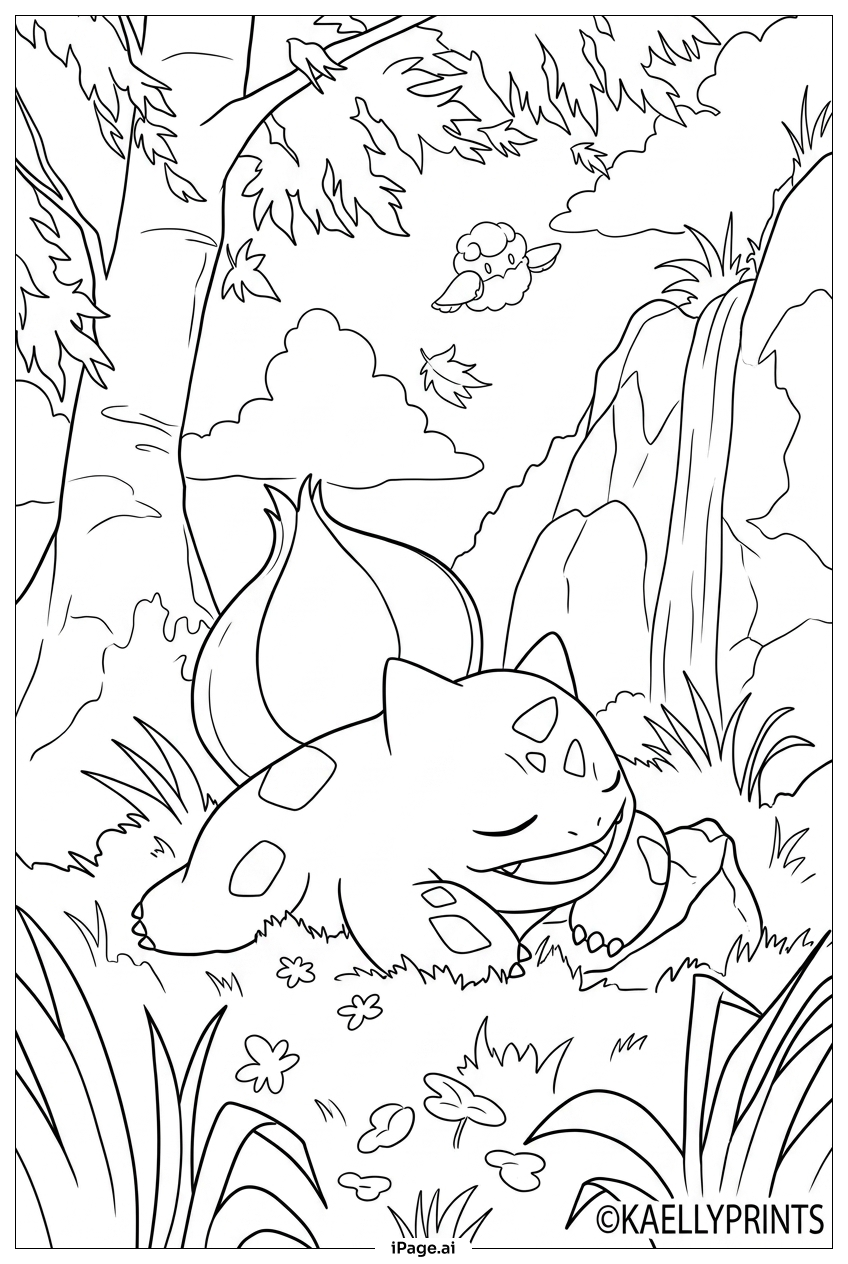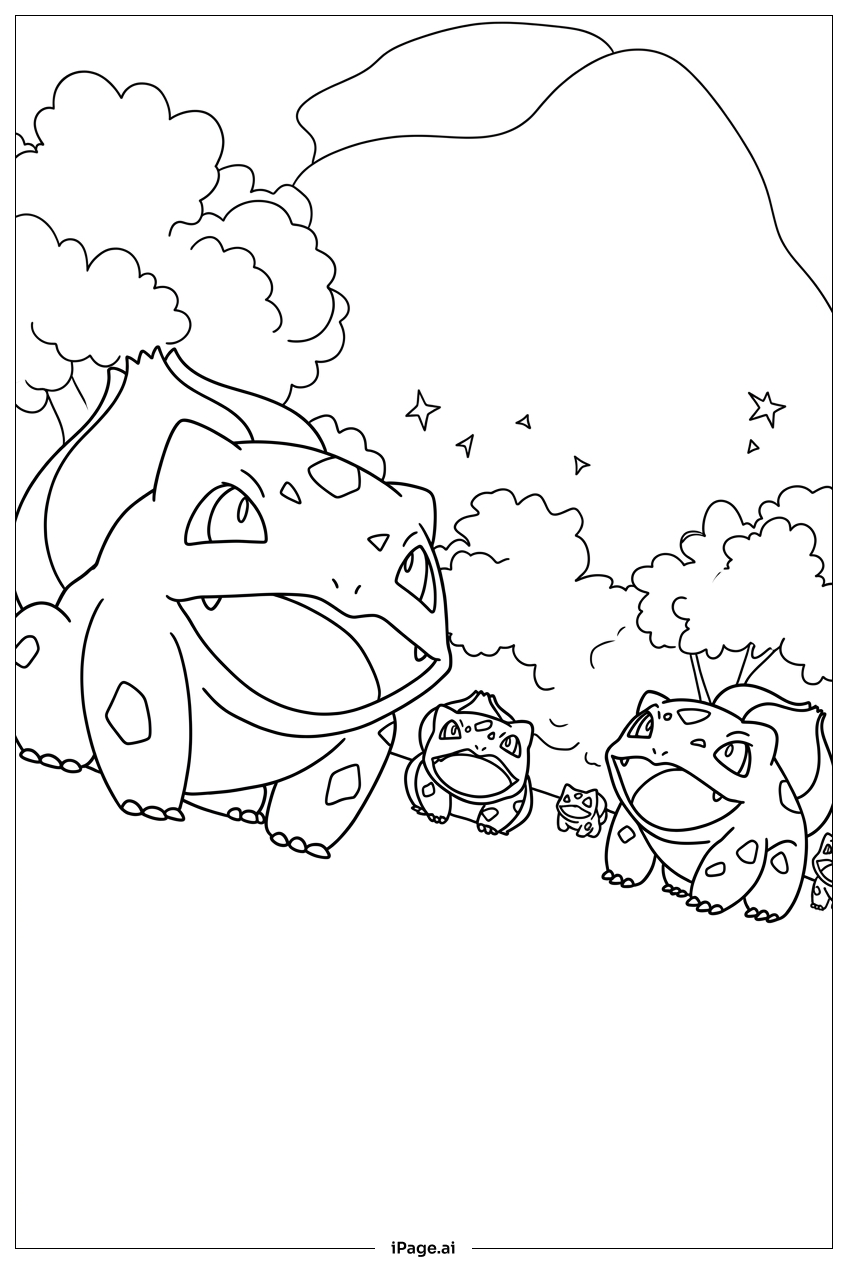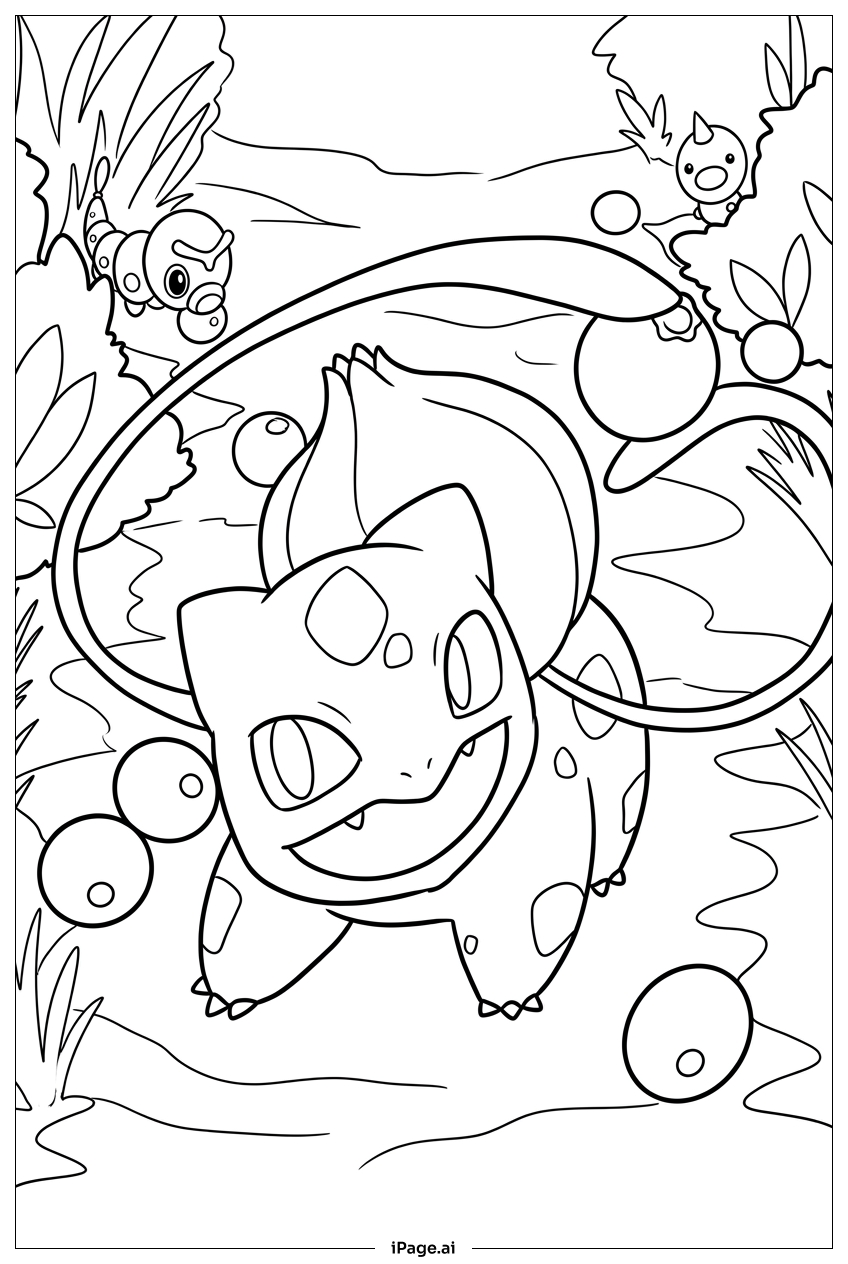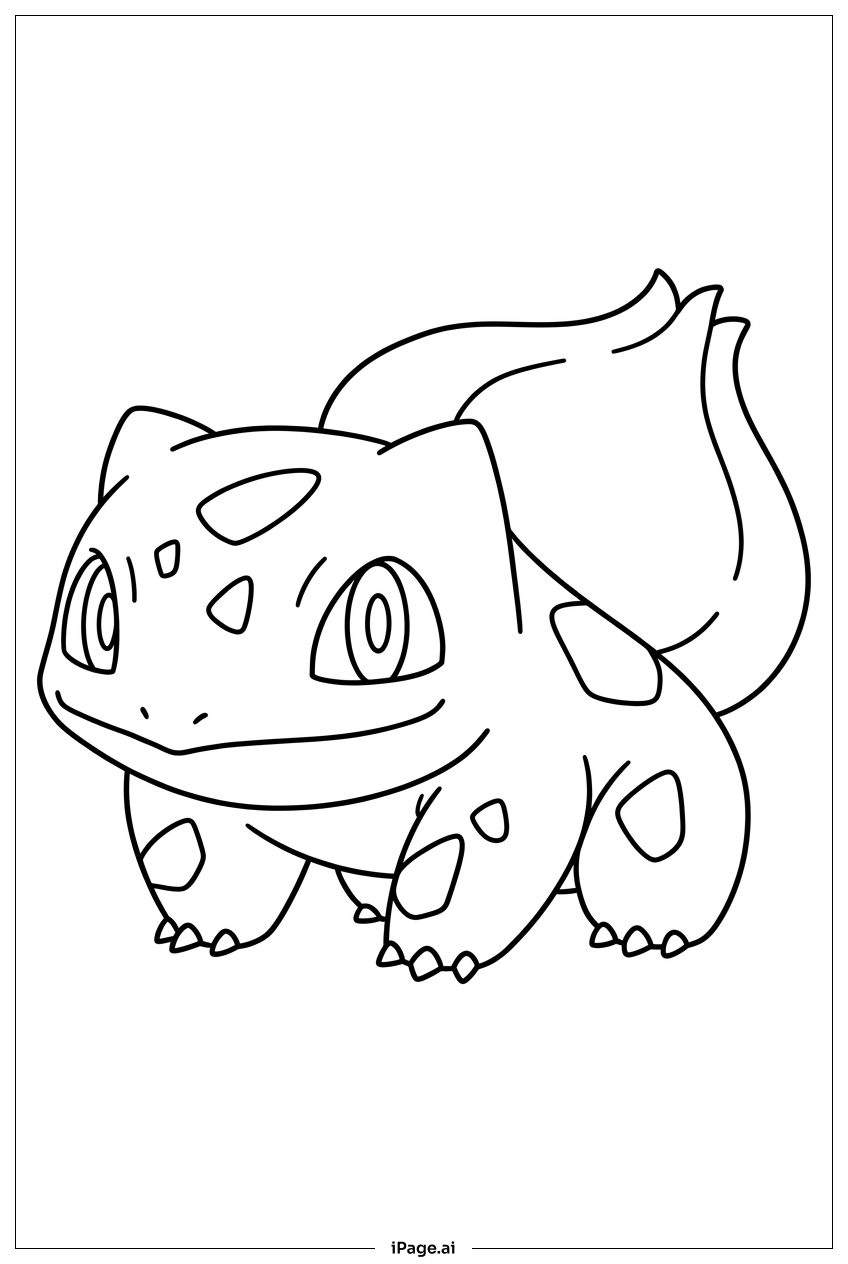
Coloring tips: How to color Bulbasaur Ready for Adventure with Friends coloring page well?
Start with Bulbasaur's body using a soft blue-green or teal color. Keep the shading light to give the skin a smooth, friendly look. For the bulb on its back, use a deeper green for the leaves and a dark teal or olive tone for the bulb itself. Add subtle darker shading along the edges of the leaves to make them look full and layered. Bulbasaur's eyes are a rich red — fill them in boldly and leave a tiny white dot for a shiny effect. Use a warm cream or light tan for the belly area. For the background, try bright yellows and greens to suggest sunshine and a grassy meadow. You can add splashes of blue for the sky and small flowers in pink or purple to make the scene feel cheerful and full of life. Keep your colors bright and fun to match Bulbasaur's adventurous spirit!
Coloring challenges: Which parts are difficult to color and need attention for Bulbasaur Ready for Adventure with Friends coloring page?
Coloring this image comes with a few fun challenges to keep in mind:
• **Bulbasaur's Textured Skin:** Bulbasaur has a distinctive spotted pattern across its blue-green body. Carefully coloring each spot in a slightly darker shade without muddying the base color requires a steady hand and patience. Using a fine-tipped marker or colored pencil works best here.
• **The Layered Bulb and Leaves:** The bulb on Bulbasaur's back has multiple overlapping leaves with natural curves and folds. Each leaf needs its own light and shadow to look three-dimensional. Blending two or three shades of green — light, medium, and dark — will help the leaves look realistic and full rather than flat.
• **Expressive Eyes:** Bulbasaur's large, round eyes are a key part of its personality. Getting the deep red color right while preserving a small white highlight takes careful control. Coloring too heavily can make the eyes look dull, so build up the color gradually.
• **Small Details and Outlines:** The claws, toes, and facial features are small and closely spaced. Staying within the lines in these tight areas can be tricky, especially for younger colorists. A sharpened pencil or a fine-point tool is recommended for these sections.
• **Background Depth:** If you choose to color the background scene with trees, grass, or sky, creating a sense of depth — where distant elements are lighter and closer ones are darker — adds realism but requires planning your color palette in advance.
Benefits of coloring books: Advantages of drawing Bulbasaur Ready for Adventure with Friends coloring page
Coloring this Bulbasaur adventure scene offers a wonderful range of benefits for kids and Pokémon fans of all ages.
For younger children, filling in Bulbasaur's rounded shapes and simple outlines helps build fine motor skills and hand-eye coordination. Staying within the lines takes focus and practice, which strengthens concentration over time.
Choosing colors for Bulbasaur's skin, bulb, and background encourages creative thinking and color awareness. Kids learn how different shades work together and how light and shadow can make a flat drawing look alive.
The adventurous theme of the image — Bulbasaur heading out with friends — sparks imagination and storytelling. Children may invent their own Pokémon journey while they color, boosting language skills and creative expression.
Coloring is also a calming, screen-free activity. It gives kids a chance to slow down, focus on one task, and feel a satisfying sense of accomplishment when the page is complete.
For Pokémon fans, coloring a favorite character deepens their connection to the story and world they love. It makes the activity feel personal and meaningful, turning a simple coloring page into a cherished piece of art they can proudly display or share with friends.