Coloring tips: How to color Black History Month Young Scientist At Lab coloring page well?
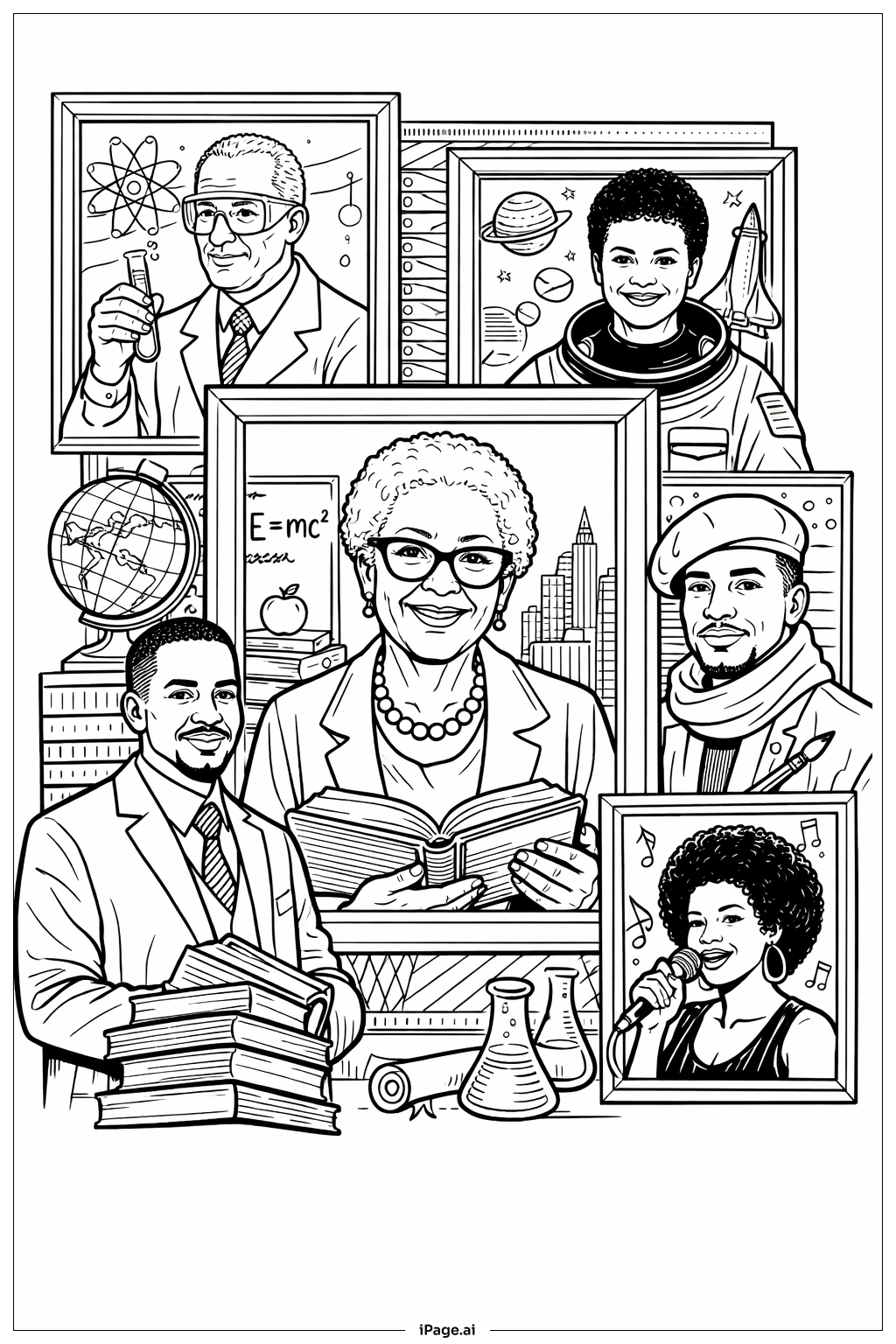
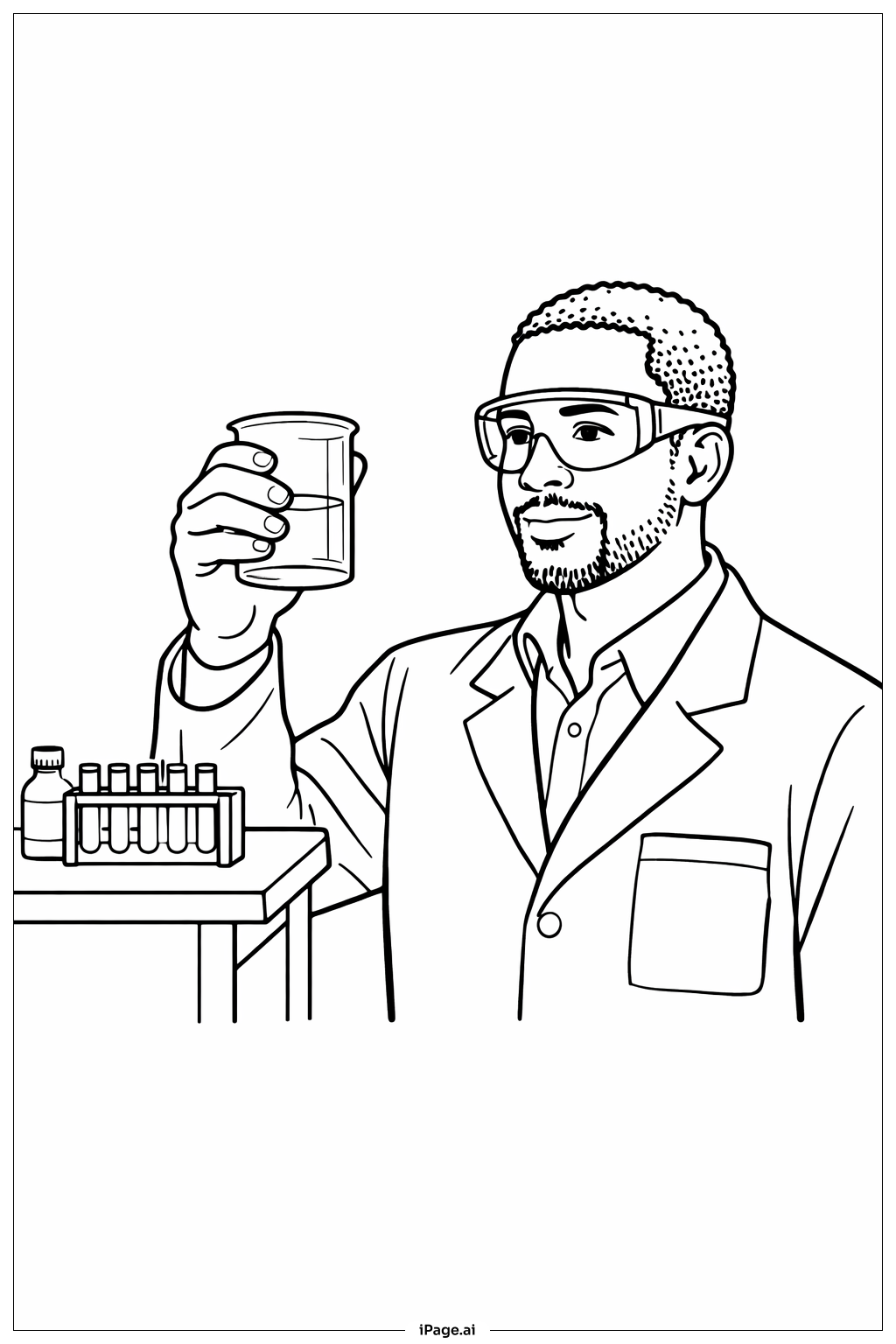
Start with the young scientist as your focal point. Choose warm skin tones like browns, deep tans, or rich amber shades. For the lab coat, traditional white works well, but you could add light blue or cream for visual interest. Make the safety goggles pop with bright colors like orange, yellow, or clear blue frames. Use vibrant colors for the liquids in beakers and test tubes - try purple, green, pink, or blue to show different chemical reactions. Color the lab equipment in realistic metallic grays and silvers, or get creative with colorful scientific tools. The background shelves can be wooden browns or modern white. Add details like colorful labels on bottles and containers to bring the laboratory to life.
Coloring challenges: Which parts are difficult to color and need attention for Black History Month Young Scientist At Lab coloring page?
• Fine Laboratory Equipment Details: The scientific instruments like test tubes, beakers, flasks, and microscope contain many small, intricate parts that require careful coloring. Young children may find it challenging to stay within the thin lines of delicate glassware and tiny measurement markings. Using fine-tipped markers or sharp colored pencils helps achieve precision in these tight spaces.
• Safety Goggles and Reflective Surfaces: The safety goggles present a unique challenge because they need to look transparent yet visible. Children must decide how to show the glass effect - perhaps leaving some areas lighter or using light blue tones. Creating the illusion of reflection and shine on glass equipment requires understanding how to blend colors and leave white highlights.
• Layered Composition Depth: This image has multiple layers with the scientist in front, the workbench in the middle, and shelves in the background. Younger colorists might struggle to differentiate these depths and create visual separation. Learning to use darker colors for foreground objects and lighter shades for background elements helps create dimension.
• Lab Coat Folds and Fabric Texture: The lab coat has natural folds, wrinkles, and shadows that give it realistic form. Coloring these areas requires subtle shading techniques rather than flat coloring. Children can practice adding light gray or blue shadows in the creases while keeping highlighted areas white or very pale to show the coat's three-dimensional shape.
Benefits of coloring books: Advantages of drawing Black History Month Young Scientist At Lab coloring page
Coloring this image teaches children about Black History Month while celebrating scientists of color who have made important contributions to STEM fields. It promotes positive representation and shows that anyone can become a scientist regardless of their background. The detailed laboratory setting introduces kids to scientific equipment and vocabulary, sparking curiosity about chemistry and biology. Working on the intricate details improves fine motor skills and hand-eye coordination. The various textures and materials in the scene - from fabric to glass to metal - encourage experimentation with different coloring techniques and color combinations. This coloring page builds concentration and patience as children work through the complex composition. It also provides an opportunity for parents and teachers to discuss famous Black scientists and their achievements, making it both an artistic and educational experience.