Coloring tips: How to color Black History Month Woman With Book coloring page well?
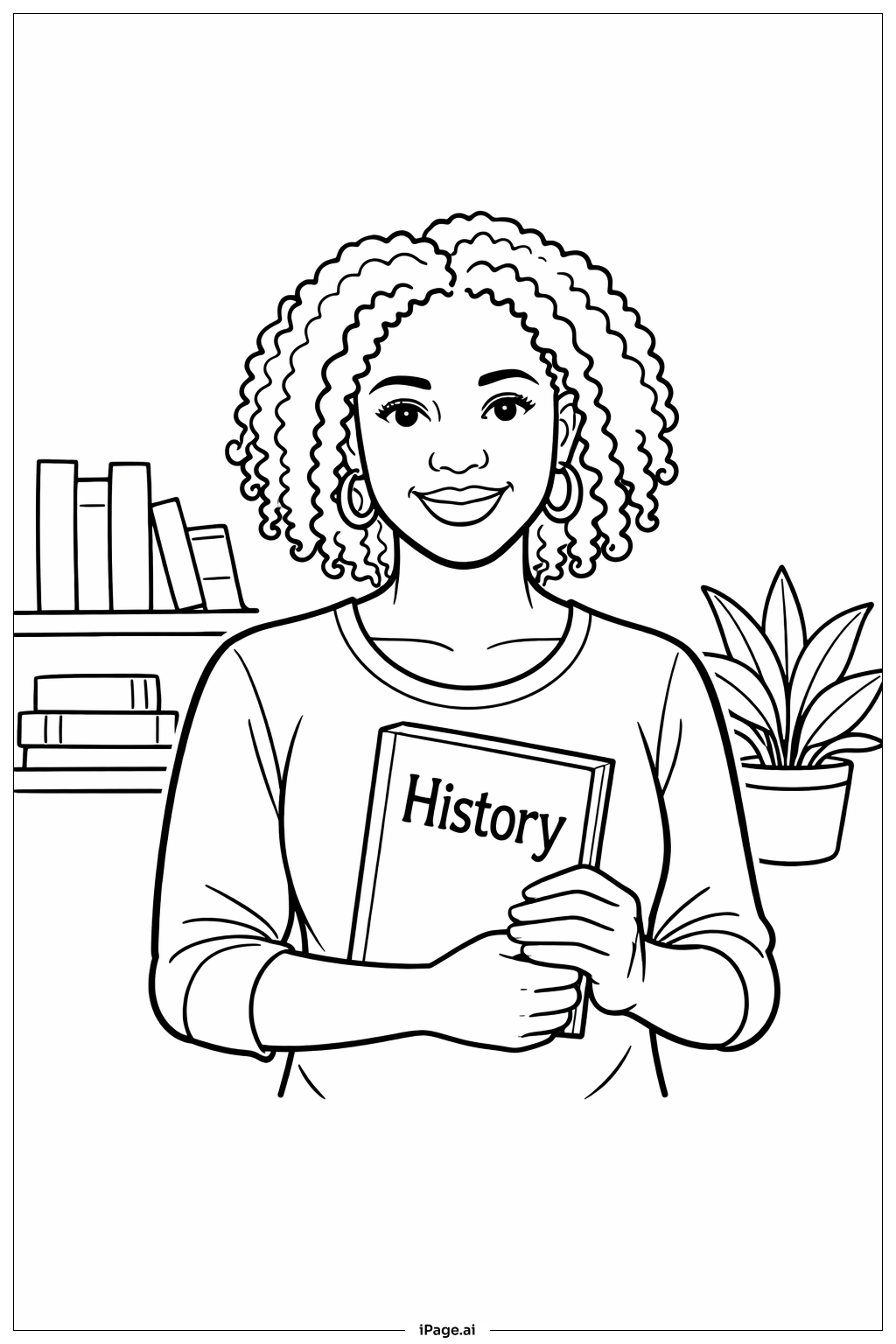
For the woman's skin tone, use warm browns ranging from light caramel to rich chocolate tones, adding depth with gentle shading. Color her clothing in vibrant hues that reflect African heritage, such as deep purples, rich golds, warm oranges, or royal blues. If she wears a head wrap, consider traditional African patterns using combinations of yellow, red, green, and orange. The book can be colored in neutral tones like tan or cream for pages, with a contrasting cover in burgundy, forest green, or navy blue. Add warm highlights to her hair if visible, using blacks mixed with hints of brown. For background elements, use soft pastels or leave them light to keep focus on the central figure. Consider adding golden accents to represent the value of knowledge and celebration.
Coloring challenges: Which parts are difficult to color and need attention for Black History Month Woman With Book coloring page?
• Facial Features and Expression: Capturing the woman's thoughtful, peaceful expression requires careful attention to subtle shading around the eyes, mouth, and cheeks. The gentle curves of her face need smooth color transitions to show dimension and life. Children may find it challenging to color within the delicate lines of facial features without making the expression appear harsh or unnatural.
• Hair Texture and Head Wrap Details: If the image includes natural hair or an intricately wrapped head covering, these elements present unique coloring challenges. Natural hair textures require layering different shades to show depth and individual strands or curls. Head wraps with folds and pleats need careful shading to show where fabric overlaps and creates shadows, helping the wrap appear three-dimensional rather than flat.
• Book Pages and Text Details: The open book may contain fine lines representing text or page edges that require precision coloring. Keeping the pages looking crisp and white while adding subtle shadows in the creases demands control and patience. The contrast between the bright pages and darker book cover needs careful color selection.
• Clothing Folds and Fabric Texture: The drape and folds of the woman's clothing create areas of light and shadow that give the garment realistic form. Coloring these transitions smoothly while maintaining consistent color throughout the fabric challenges young artists to think about light sources and three-dimensional form. Pattern details on clothing add another layer of complexity requiring steady hands.
Benefits of coloring books: Advantages of drawing Black History Month Woman With Book coloring page
Coloring this Black History Month image offers valuable educational and developmental benefits. It provides an opportunity to learn about the importance of literacy and education in African American history while celebrating Black women's contributions to learning and culture. Children develop cultural awareness and appreciation for diversity through engaging with meaningful historical themes. The activity improves fine motor skills and hand-eye coordination as they carefully color facial features and detailed elements. It encourages discussions about heroes, role models, and the ongoing journey toward equality and representation. The act of choosing colors for skin tones, clothing, and cultural elements promotes understanding that beauty comes in many shades. This peaceful scene also supports mindfulness and concentration, teaching patience and attention to detail. Completing the page builds confidence and creates a personal connection to Black History Month celebrations and the universal value of knowledge.