Coloring tips: How to color Black History Month Teacher In Classroom coloring page well?
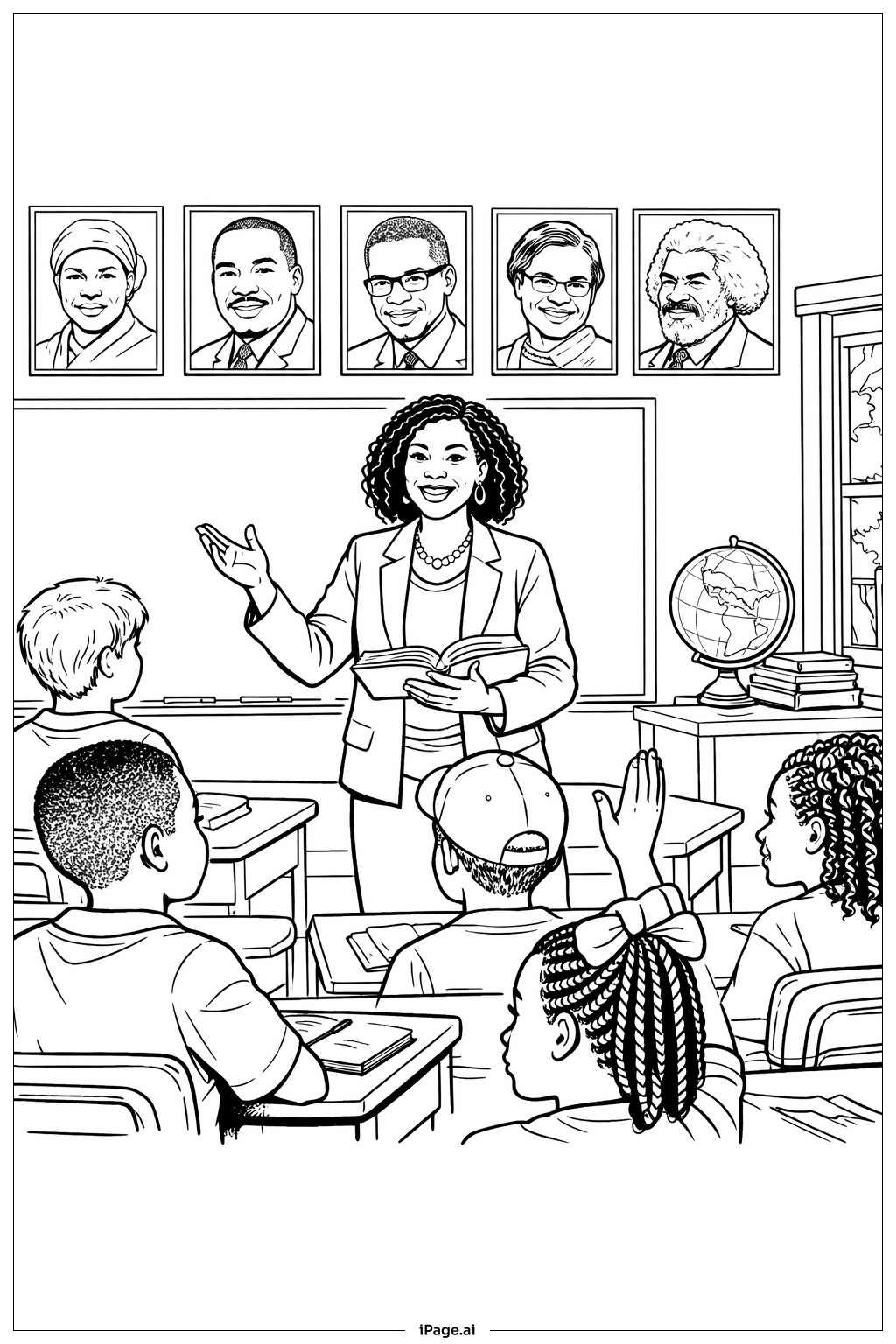
Use soft and bright colors for the classroom walls and furniture to create a welcoming and happy learning atmosphere. The teacher’s clothes can be colored in warm shades like brown, burgundy, or deep green to show kindness and professionalism. For the blackboard, use a dark color such as green or black, and vibrant colors for the letters to make them stand out. The clock and bulletin boards can have simple colors like white, yellow, or blue. Use shades to color the books and pencils on the shelves for more detail. Feel free to use colorful chairs and desks to make the classroom more lively and fun.
Coloring challenges: Which parts are difficult to color and need attention for Black History Month Teacher In Classroom coloring page?
1. Coloring the teacher's curly hair might be tricky because of its many curves and small details. 2. The letters on the blackboard need careful coloring to keep them clear and visible. 3. The desks and chairs have small lines and edges that require precise coloring. 4. The different items on the shelves and bulletin boards are small, making it a challenge to color without crossing lines. 5. Balancing colors between the teacher, blackboard, and classroom elements is important to keep the image attractive and not too crowded with colors.
Benefits of coloring books: Advantages of drawing Black History Month Teacher In Classroom coloring page
Coloring this image helps children practice fine motor skills by working on small spaces like the letters and hair curls. It encourages attention to detail and patience while coloring carefully within lines. The scene also sparks creativity as children choose colors to design a lively classroom. Coloring the teacher and classroom environment can inspire a positive feeling about school and learning. Overall, the activity supports focus and imagination, making it a fun and educational experience.