Coloring tips: How to color Black History Month Smiling Child Portrait coloring page well?
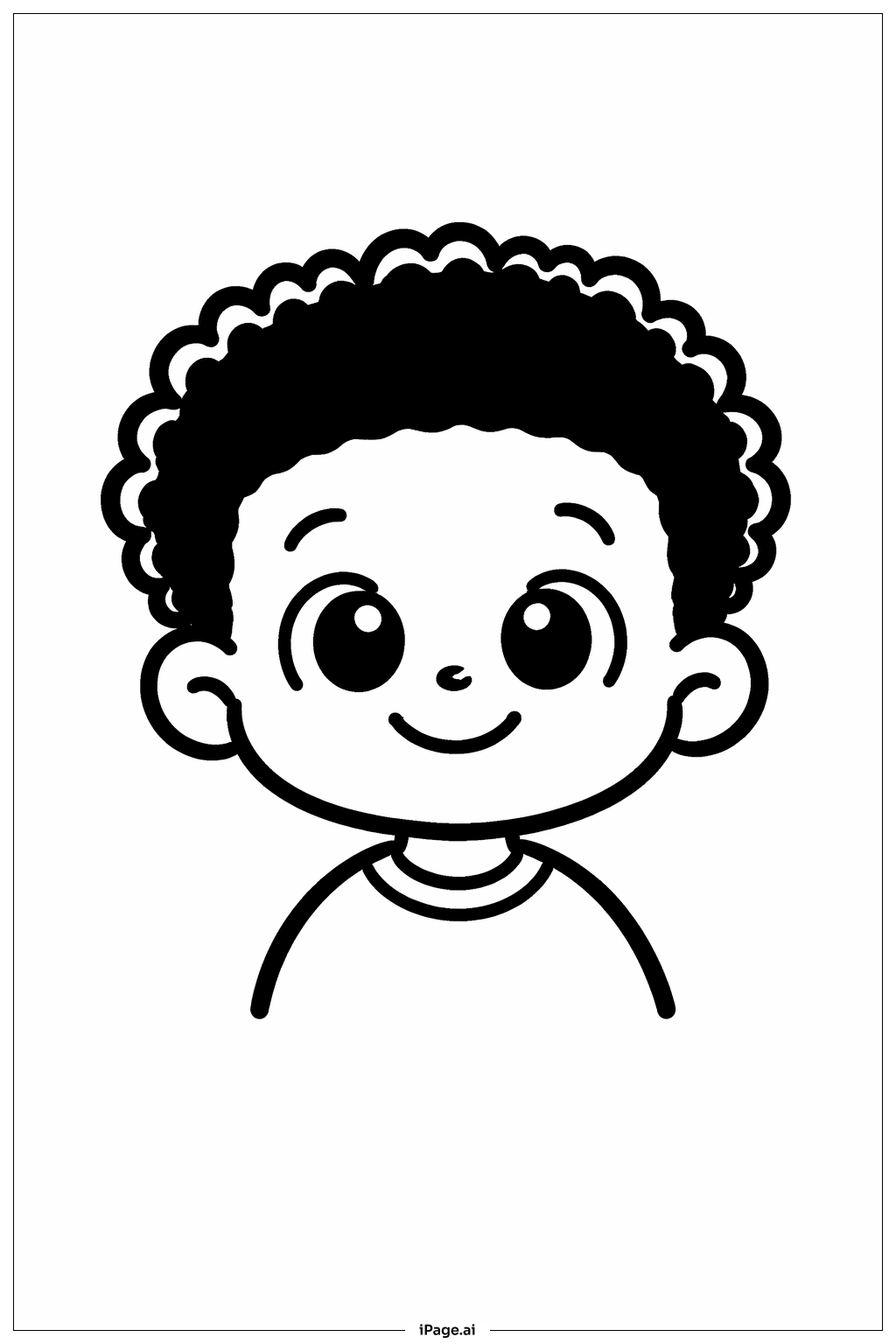
For coloring this image, consider natural skin tones ranging from light to dark brown. Use soft colors for the cheeks to show warmth and happiness. The hair can be colored in dark brown or black shades, but adding hints of blue or purple can give it a fun touch. The shirt can be bright and colorful, such as red, blue, or green to contrast with the hair. Children could use markers, crayons or colored pencils for smooth coloring. Encourage them to try shading lightly to add depth, especially on the hair curls and face. Keep the eyes shiny by leaving some white space around the pupils for a lively look.
Coloring challenges: Which parts are difficult to color and need attention for Black History Month Smiling Child Portrait coloring page?
1. The hair curls are detailed and close together. This may require careful coloring to avoid going outside the lines.
2. The facial features like eyes and mouth are big but have small white spaces to keep the bright look, so children need to color around these carefully.
3. The simplicity of the shirt offers a big space that might be challenging to color evenly without streaks or patches.
4. Shading the face to show natural skin tone requires some blending skills, which might be difficult for younger children.
5. Maintaining the shine in the eyes while coloring nearby needs attention to avoid coloring the white spots that create the sparkle.
Benefits of coloring books: Advantages of drawing Black History Month Smiling Child Portrait coloring page
Coloring this image helps children improve their fine motor skills by practicing precise movements within small areas. It encourages creativity as kids decide which colors to use and how to shade the curls and face. This activity also promotes cultural awareness by celebrating a joyful child with natural hair during Black History Month. Children learn to appreciate diversity and identity while having fun. Moreover, coloring boosts concentration and patience, as coloring the curls and facial features requires care and focus. This activity can be relaxing and uplifting, helping kids express happiness through art.