Coloring tips: How to color Black History Month Jazz Club Performance coloring page well?
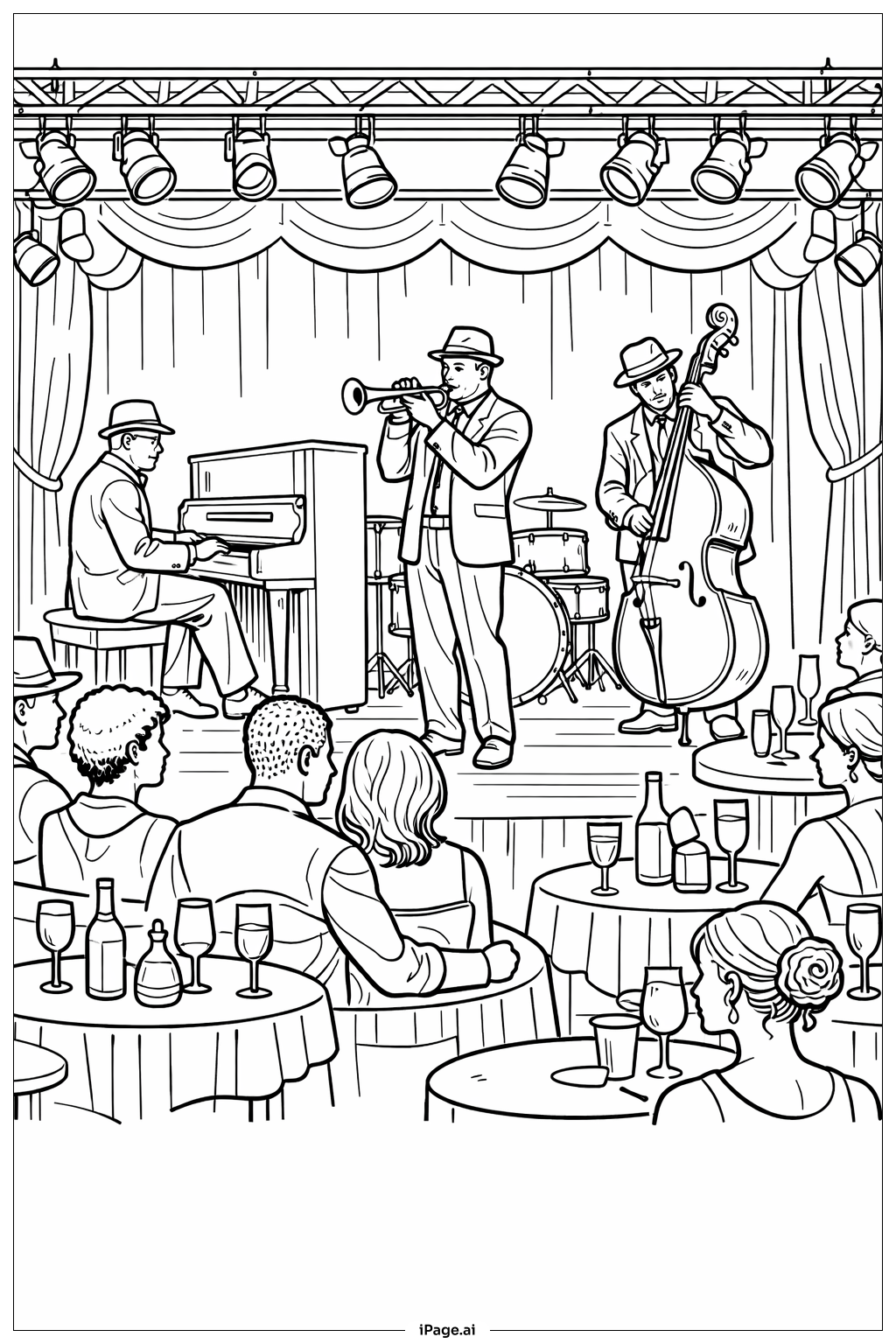
For the musicians' clothing, use rich colors like deep burgundy, navy blue, or classic black for suits, with white or cream for dress shirts. The saxophone can be colored in bright gold or brass tones with darker bronze shadows. Color the double bass in warm brown wood tones with black tuning pegs. The drum kit can feature silver or chrome metallic colors with wooden rims. Stage curtains look stunning in deep red, royal purple, or emerald green. Use warm yellows and oranges for the stage lights to create a spotlight effect. The background audience silhouettes can be colored in dark shades to maintain focus on the performers. Musical notes can be colored in gold, silver, or left simple in black. Add warm ambient lighting effects with yellows and oranges to capture the intimate jazz club atmosphere.
Coloring challenges: Which parts are difficult to color and need attention for Black History Month Jazz Club Performance coloring page?
• Musical Instruments Details: The saxophone, double bass, and drum kit contain intricate mechanical details like keys, valves, strings, and hardware that require careful coloring within small spaces. Young colorists may find it challenging to stay within the lines of these complex instrument components while maintaining realistic metallic and wood textures.
• Layered Depth and Perspective: The image contains multiple depth layers including foreground audience silhouettes, mid-ground performers, and background stage elements. Coordinating colors to create proper visual depth while distinguishing between these layers requires planning and understanding of how darker foreground elements contrast with illuminated stage performers.
• Fabric Textures and Patterns: The musicians' elegant clothing may include suit jackets, shirts, ties, and dress pants that benefit from varied shading techniques to show fabric folds, creases, and different material textures. Creating realistic clothing requires blending and shading skills that intermediate colorists are still developing.
• Lighting Effects and Atmosphere: Capturing the dramatic stage lighting with spotlights, shadows, and ambient glow requires advanced coloring techniques like gradient blending and light source awareness. Children may struggle to represent how light affects different surfaces and creates the warm, intimate jazz club atmosphere that makes this scene authentic.
• Musical Notes and Motion Elements: The floating musical notes need to be colored in a way that makes them visible but not overwhelming to the overall composition. Balancing these decorative elements while maintaining focus on the main performers requires thoughtful color choices and restraint.
Benefits of coloring books: Advantages of drawing Black History Month Jazz Club Performance coloring page
Coloring this Black History Month Jazz Club Performance page offers wonderful educational and developmental benefits for children. It introduces young artists to the important cultural legacy of African American musicians and the birth of jazz as an American art form. As children color the instruments, they learn to recognize saxophones, double basses, and drum kits, sparking curiosity about music and different instruments. The detailed elements improve fine motor skills and hand-eye coordination through careful coloring within intricate spaces. The scene encourages creativity as children choose color combinations to create mood and atmosphere, understanding how colors convey emotion and setting. This coloring page promotes cultural appreciation and historical awareness, teaching children about the significant contributions of Black musicians to American culture. The performance setting also introduces concepts of live entertainment, artistic expression, and community gathering. Completing this detailed image builds patience, focus, and confidence while celebrating diversity and artistic achievement throughout history.