Coloring tips: How to color Black History Month Family Picnic Scene coloring page well?
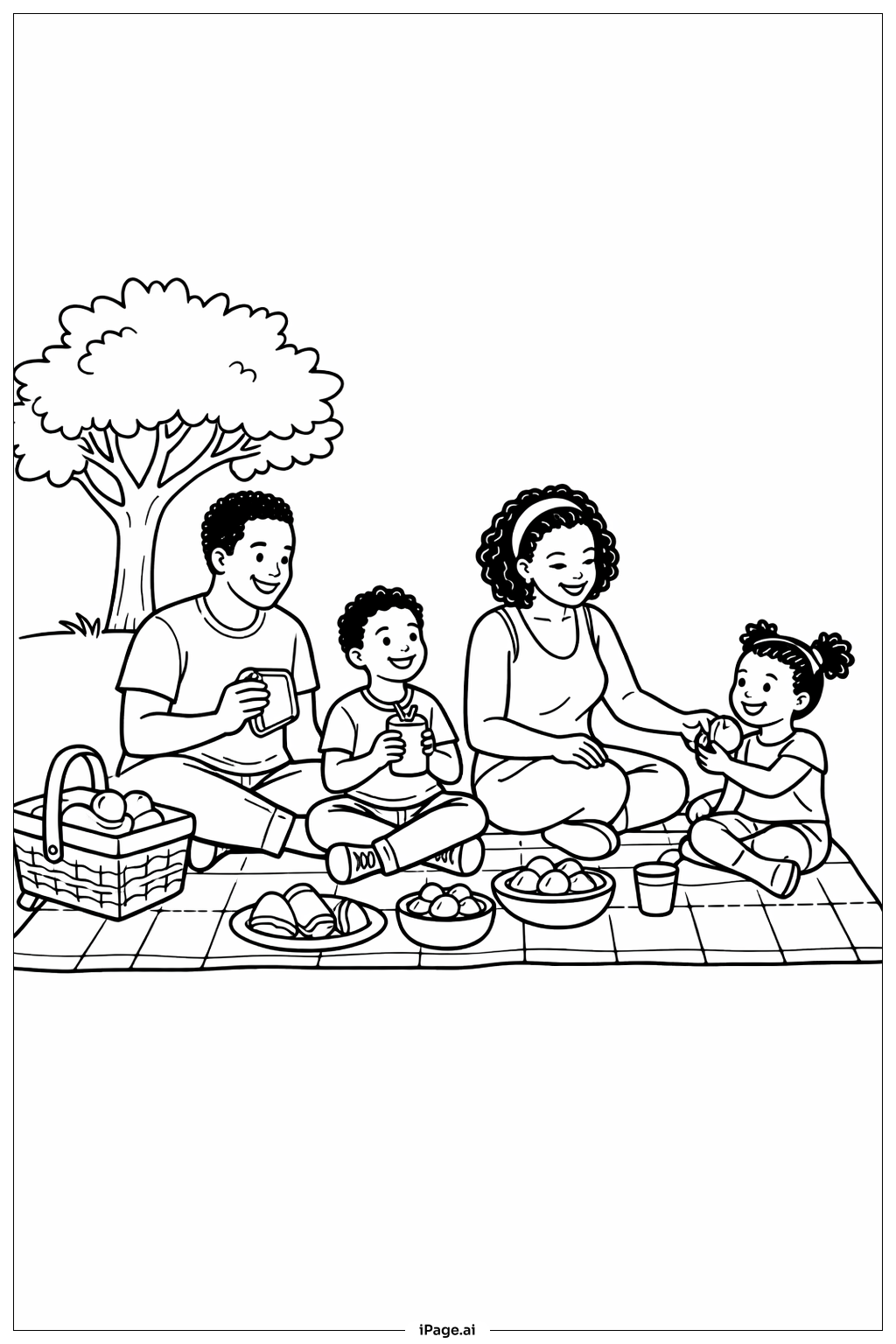
Start with the skin tones of the family members. Use warm shades like brown, caramel, and deep sienna to celebrate diverse and beautiful skin tones. For clothing, go bold and bright — try reds, yellows, greens, and blues to give each character their own unique style. Color the picnic blanket with a fun pattern using two or three contrasting colors. Use rich greens for the grass and tree leaves, and a bright blue for the sky. The food and drinks can be colored in natural, realistic shades — golden yellows for corn, reds for watermelon, and browns for fried chicken. Use warm oranges and yellows for the sunlight peeking through the tree. For the Black History Month banners and decorations, use the pan-African colors — red, black, and green — to honor the cultural significance of the celebration. Take your time with each section and enjoy making this family scene come alive with color.
Coloring challenges: Which parts are difficult to color and need attention for Black History Month Family Picnic Scene coloring page?
• Skin Tone Blending: One of the most nuanced challenges in this scene is coloring the skin tones of multiple family members. Each person may have a slightly different shade, so colorists need to blend warm browns, tans, and deeper tones carefully to create a natural and respectful representation. Rushing this step can result in flat, unrealistic skin tones that take away from the scene's warmth.\n\n• Overlapping Figures and Details: The family members are grouped closely together, which means arms, clothing, and other elements overlap. Staying within the lines between these overlapping areas requires patience and a steady hand, especially for younger colorists working with markers or thick crayons.\n\n• Patterned Surfaces: The picnic blanket and clothing may feature stripes, plaids, or other patterns. Keeping these patterns consistent and neat across folds and wrinkles in the fabric is a detailed task that demands careful attention and color planning before starting.\n\n• Food Items and Small Objects: The picnic spread includes small items like fruits, dishes, and drinks. These tiny details require fine-tipped tools to color accurately without bleeding into surrounding areas. Getting the colors right on small food items also takes careful observation and color choice.\n\n• Background Depth and Layering: Creating a sense of depth in the background — with the grass in the foreground, the tree in the middle ground, and the sky beyond — requires using lighter and darker shades of the same color family. Without this layering, the scene may look flat and lose its outdoor, sunlit atmosphere.
Benefits of coloring books: Advantages of drawing Black History Month Family Picnic Scene coloring page
Coloring this Black History Month Family Picnic Scene offers a rich blend of creative and educational rewards for children and adults alike. As colorists fill in the scene, they naturally learn about cultural pride and the significance of Black History Month in a fun and hands-on way. The act of choosing colors for skin tones encourages awareness and appreciation of human diversity, helping young colorists develop empathy and respect from an early age. Working through the details of a multi-figure family scene also builds fine motor skills, hand-eye coordination, and concentration. Deciding which colors go where encourages creative thinking and personal expression — there is no single right answer, so every finished page is unique. For children, completing a complex scene like this builds confidence and a sense of accomplishment. For adults, the focused, repetitive motion of coloring promotes relaxation and stress relief, making it a calming mindfulness activity. Sharing the finished artwork with family can spark meaningful conversations about history, heritage, and the value of togetherness. Overall, this coloring page is both an artistic activity and a gentle, joyful introduction to cultural celebration.