Coloring tips: How to color Black History Month Child With Paintbrush coloring page well?
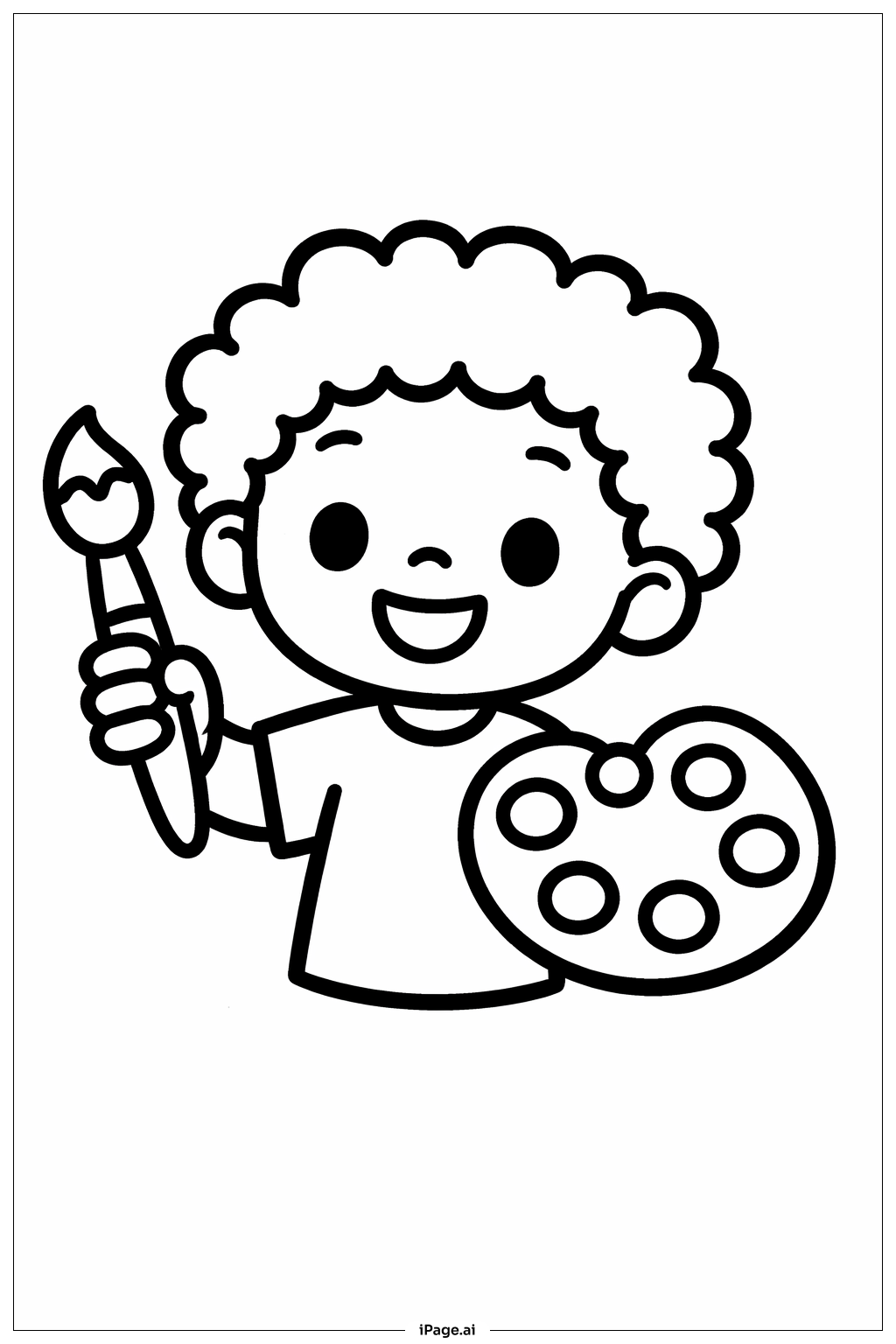
Use bright and cheerful colors for the child’s clothes, like red, blue, or yellow, to make it lively. Color the hair in different shades of brown or black to represent curly hair textures. The palette spots can be colored in a rainbow of colors like red, orange, yellow, green, blue, and purple to encourage creativity. You may also use skin tones to highlight the child’s beautiful complexion. Keep the background light or white so the child stands out clearly.
Coloring challenges: Which parts are difficult to color and need attention for Black History Month Child With Paintbrush coloring page?
1. Curly Hair Texture: Coloring curly hair can be tricky because it has many small curves and edges that need careful coloring.
2. Small Details on the Palette: The small circles on the paint palette require precise coloring to avoid going outside the lines.
3. Facial Features: Coloring the child’s face, especially around the eyes and mouth, needs attention to keep expressions clear.
4. Hands and Fingers: Small fingers holding the paintbrush might be hard to color without overlapping lines.
5. Balancing Colors: Choosing colors that look good together to make the picture lively but not messy can be challenging.
Benefits of coloring books: Advantages of drawing Black History Month Child With Paintbrush coloring page
Coloring this picture helps improve hand-eye coordination as children carefully color inside the lines. It encourages creativity by allowing choices in colors for the palette and the child’s clothes. Children practice attention to detail while coloring small parts like the paint palette and fingers. It also teaches patience and focus as they work on different parts of the image. Lastly, it promotes a positive connection to Black History Month by celebrating the joy of art and self-expression.