Coloring tips: How to color Black History Month Child Planting Seeds coloring page well?
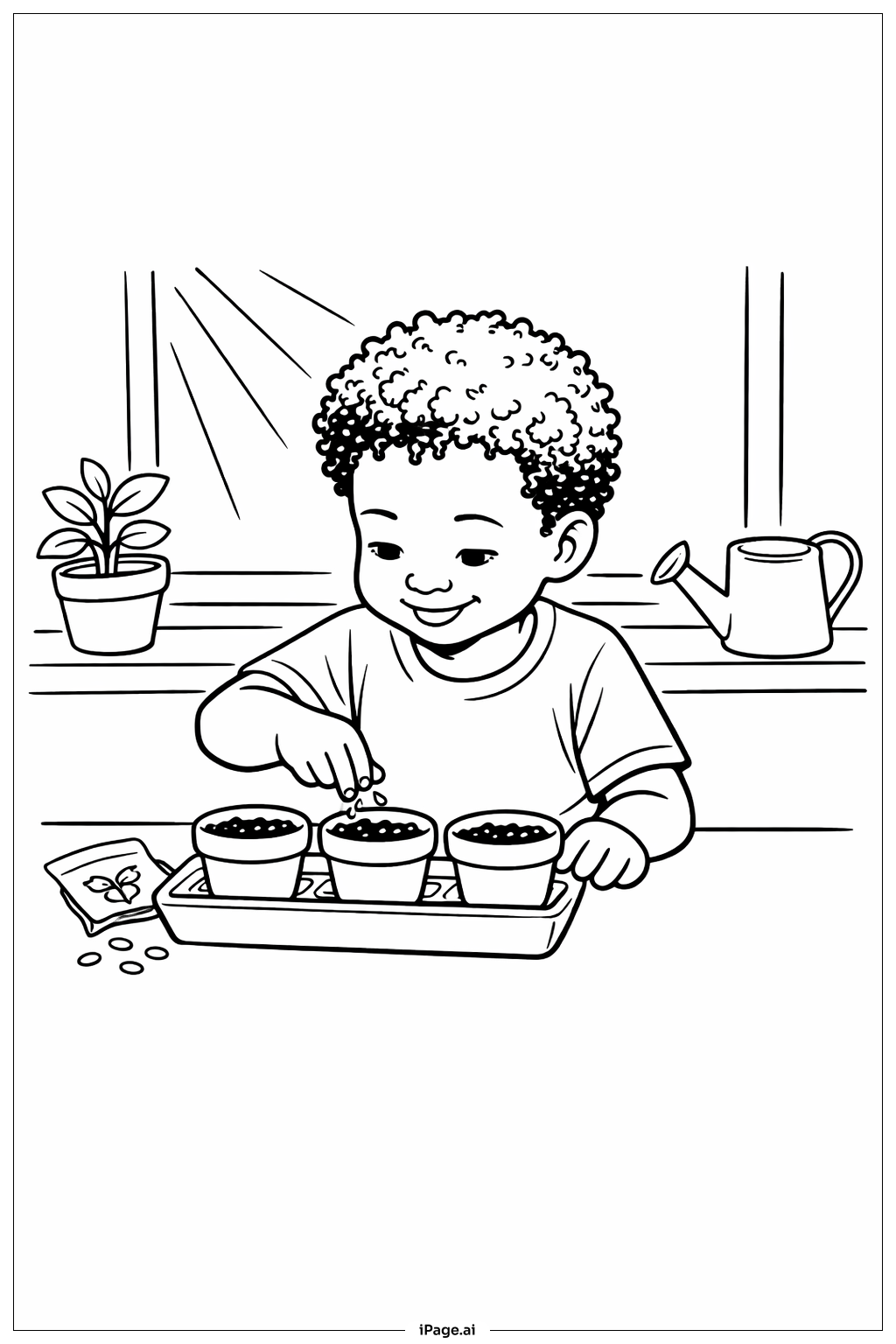
Use bright colors for the child’s clothes, such as red, blue, or green, to make the character stand out. Color the soil in brown shades for realism. Use different shades of green for the plant on the windowsill and leaves. The watering can can be blue or yellow to add contrast. The sunlight can be colored yellow or light orange to show warmth. Try using lighter colors for the window and background to keep the focus on the child and the planting activity.
Coloring challenges: Which parts are difficult to color and need attention for Black History Month Child Planting Seeds coloring page?
1. Coloring the child’s curly hair can be tricky because of the detailed curves and texture, needing careful coloring to show curls nicely. 2. The small seeds and soil in the pots require attention to detail due to their small size. 3. Achieving the right light effect from the sun rays can be challenging, as it involves coloring in a way that looks soft and natural. 4. Coloring the different objects like the watering can, pots, and seed packet needs care to keep each item distinct and clear. 5. Balancing bright and soft colors so the scene looks lively but not too busy requires some effort.
Benefits of coloring books: Advantages of drawing Black History Month Child Planting Seeds coloring page
Coloring this page helps children practice fine motor skills as they color small and detailed parts like the seeds and curls in the hair. It encourages creativity by choosing colors for nature and objects. It also teaches patience and focus through careful coloring. The image promotes learning about planting and caring for plants, connecting kids to nature and growth concepts. Overall, it’s a fun and educational activity that supports both artistic development and environmental awareness.