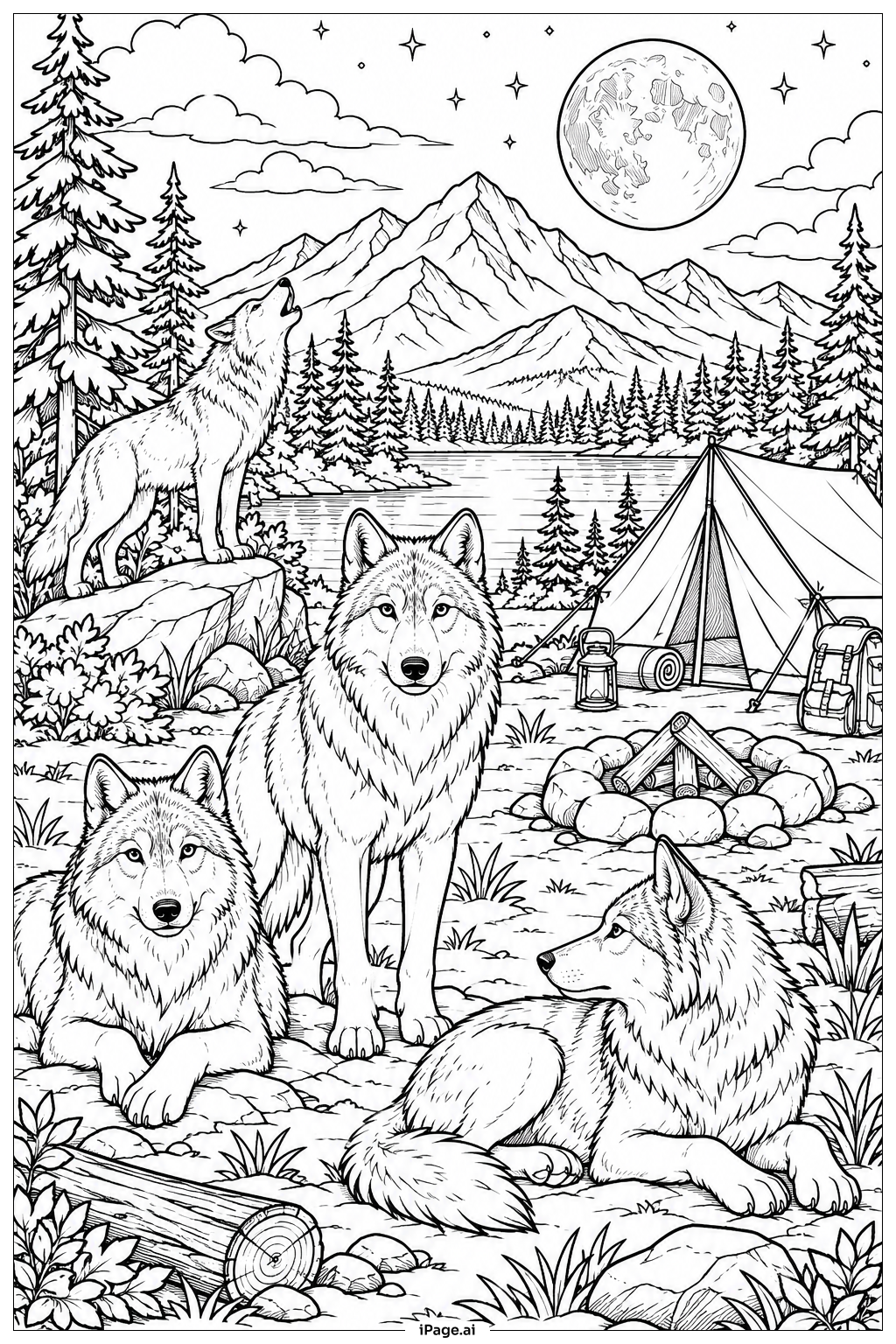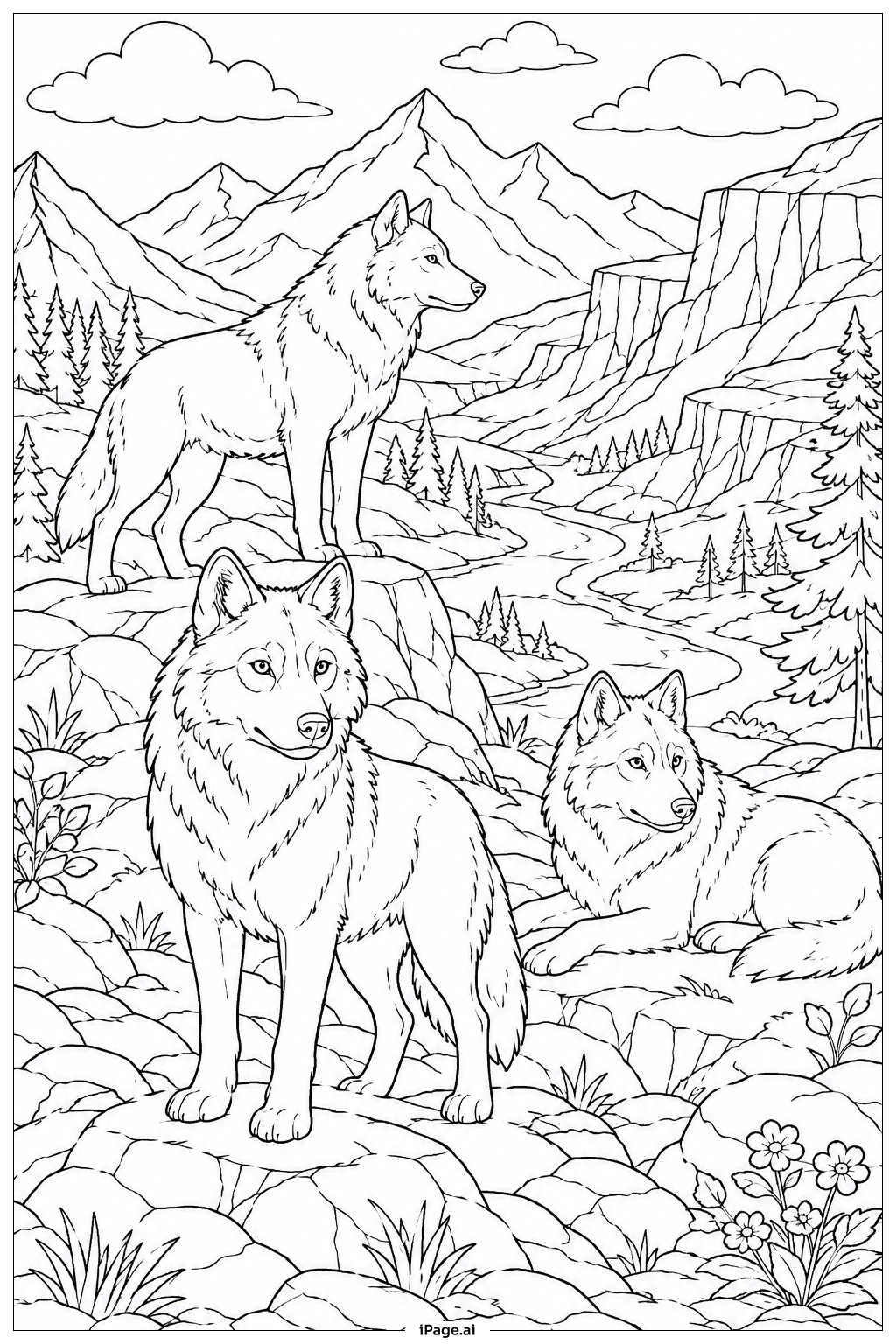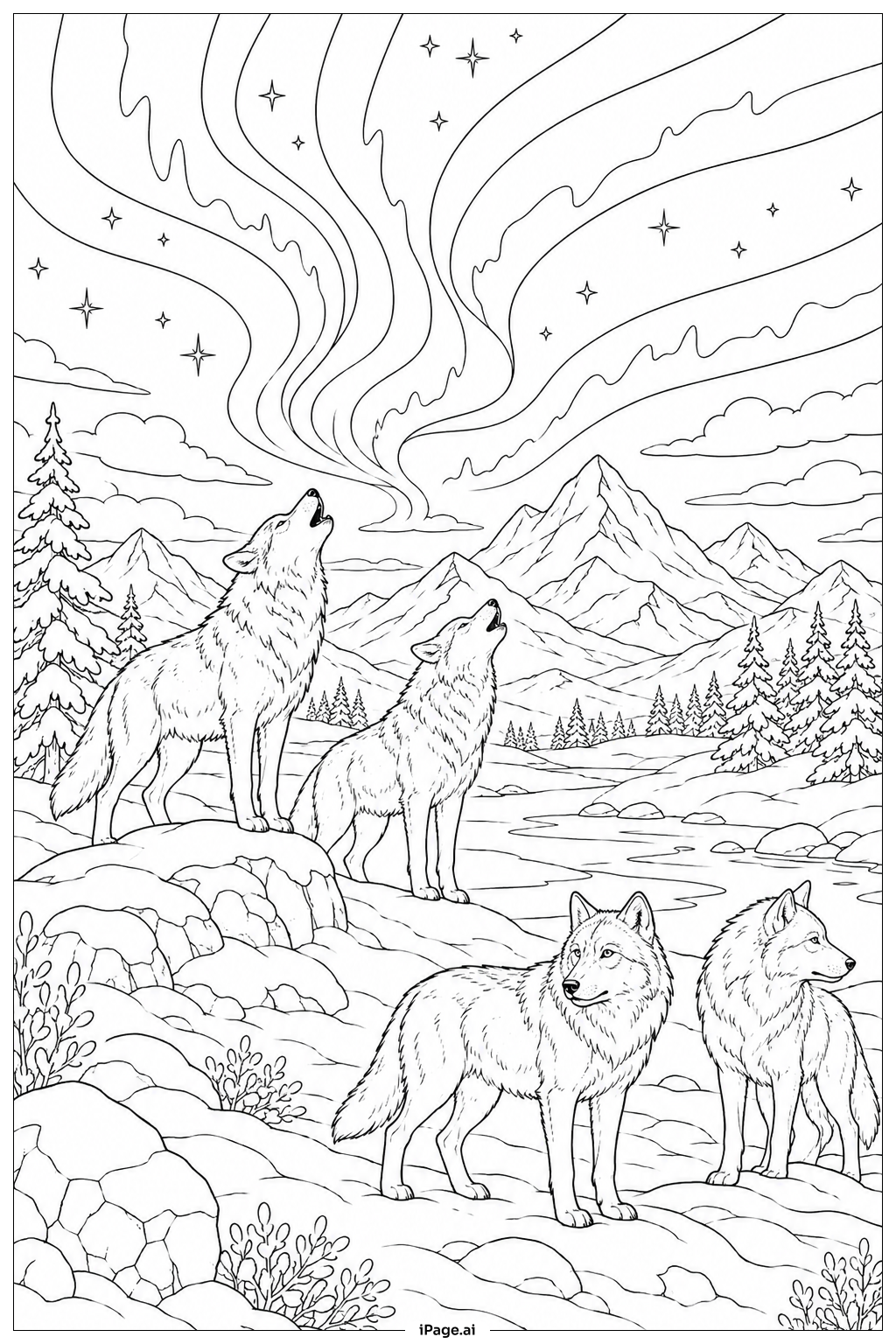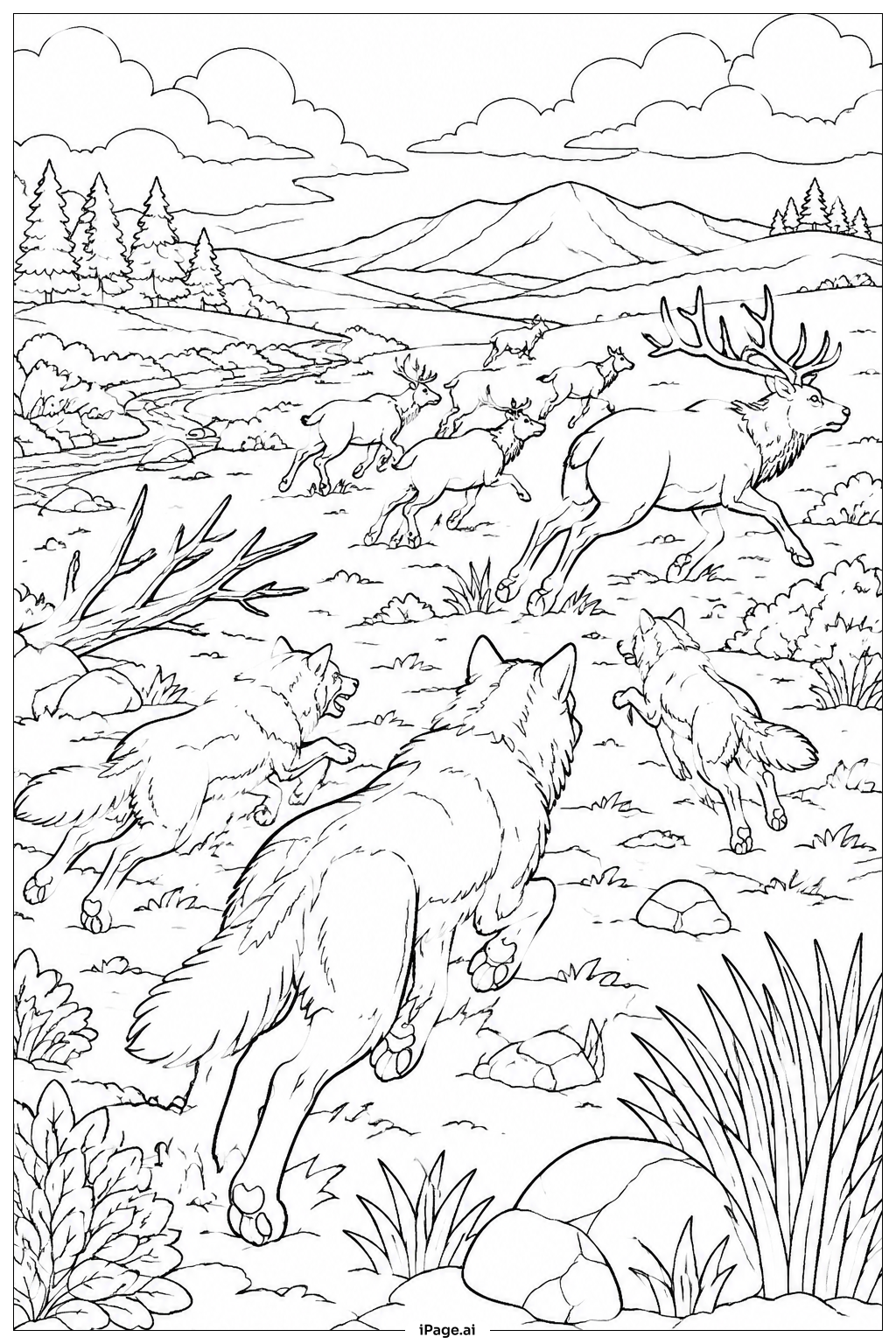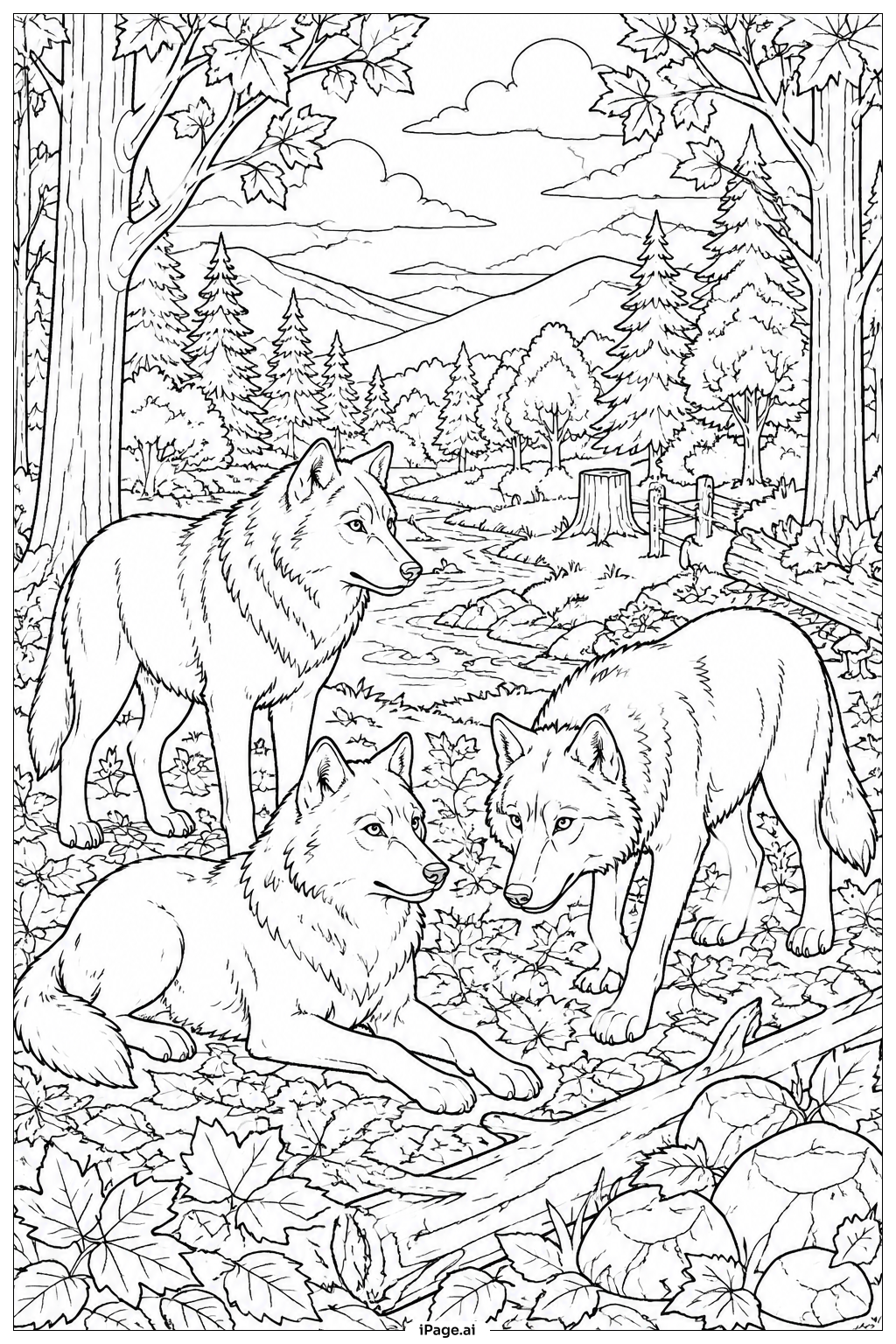
Coloring tips: How to color Wolves In Autumn Forest coloring page well?
Start with the background trees and sky to set the mood. Use warm autumn tones like deep orange, golden yellow, burnt sienna, and rusty red for the falling and resting leaves. For the tree trunks, try brown, gray, and dark tan to give them a rough, natural look. Color the wolves with layered shades of gray, white, and black for their fur. Add light brown or cream tones to the chest and belly areas to make them look soft and realistic. Use amber or golden yellow for the wolves' eyes to give them a fierce, glowing look. Finally, add dark green or olive tones to any remaining foliage to balance the warm autumn colors. Take your time layering colors to bring depth and life to the whole scene.
Coloring challenges: Which parts are difficult to color and need attention for Wolves In Autumn Forest coloring page?
• Wolf Fur Texture: The wolves have dense, multi-layered fur with many fine lines and tufts. Coloring fur realistically requires blending several shades of gray, white, and brown. You need to follow the direction of the fur strokes carefully to avoid a flat, unnatural look. This can be tricky, especially around the face, neck, and tail areas where the fur changes direction.
• Facial Expressions and Details: The wolves' faces include small, precise features like eyes, noses, and mouth lines. Getting these details right takes a steady hand and fine-tipped coloring tools. The eyes especially need careful shading to look bright and lifelike without being accidentally covered by surrounding fur colors.
• Autumn Leaf Variation: The forest floor and branches are covered in leaves of many shapes and sizes. Each leaf benefits from a slightly different shade of orange, yellow, red, or brown to look natural. Coloring dozens of overlapping leaves while keeping them visually distinct from one another is a real challenge.
• Tree Bark and Forest Background: The tree trunks and roots have deep grooves and rough textures that require careful light and shadow work. Using too uniform a color will make the trees look flat. Alternating lighter and darker shades along the bark lines creates a much more convincing three-dimensional effect.
• Balancing the Overall Composition: With so many elements in one scene — wolves, trees, leaves, and ground — keeping a balanced color palette throughout the entire page takes planning. Without careful thought, some areas may become too dark or too colorful compared to others, making the scene feel unbalanced.
Benefits of coloring books: Advantages of drawing Wolves In Autumn Forest coloring page
Coloring this Wolves In Autumn Forest page offers a wide range of benefits for both kids and Adults. The detailed wolf fur and layered forest scenery encourage focus and patience, helping colorists build concentration skills that are useful in school and everyday life. Choosing the right autumn colors — oranges, reds, yellows, and browns — sparks creativity and teaches children about seasonal color palettes found in nature. For Boys and Girls alike, connecting with wildlife imagery like wolves builds curiosity about animals and the natural world. The complexity of the scene also makes it a satisfying challenge for older children and Adults who enjoy detailed artwork. Completing a large, intricate page gives a real sense of accomplishment and boosts confidence. The calming, repetitive motion of coloring is also a great stress reliever, helping both kids and grown-ups unwind after a busy day. Overall, this page is a wonderful blend of artistic challenge, nature education, and mindful relaxation that the whole family can enjoy together.