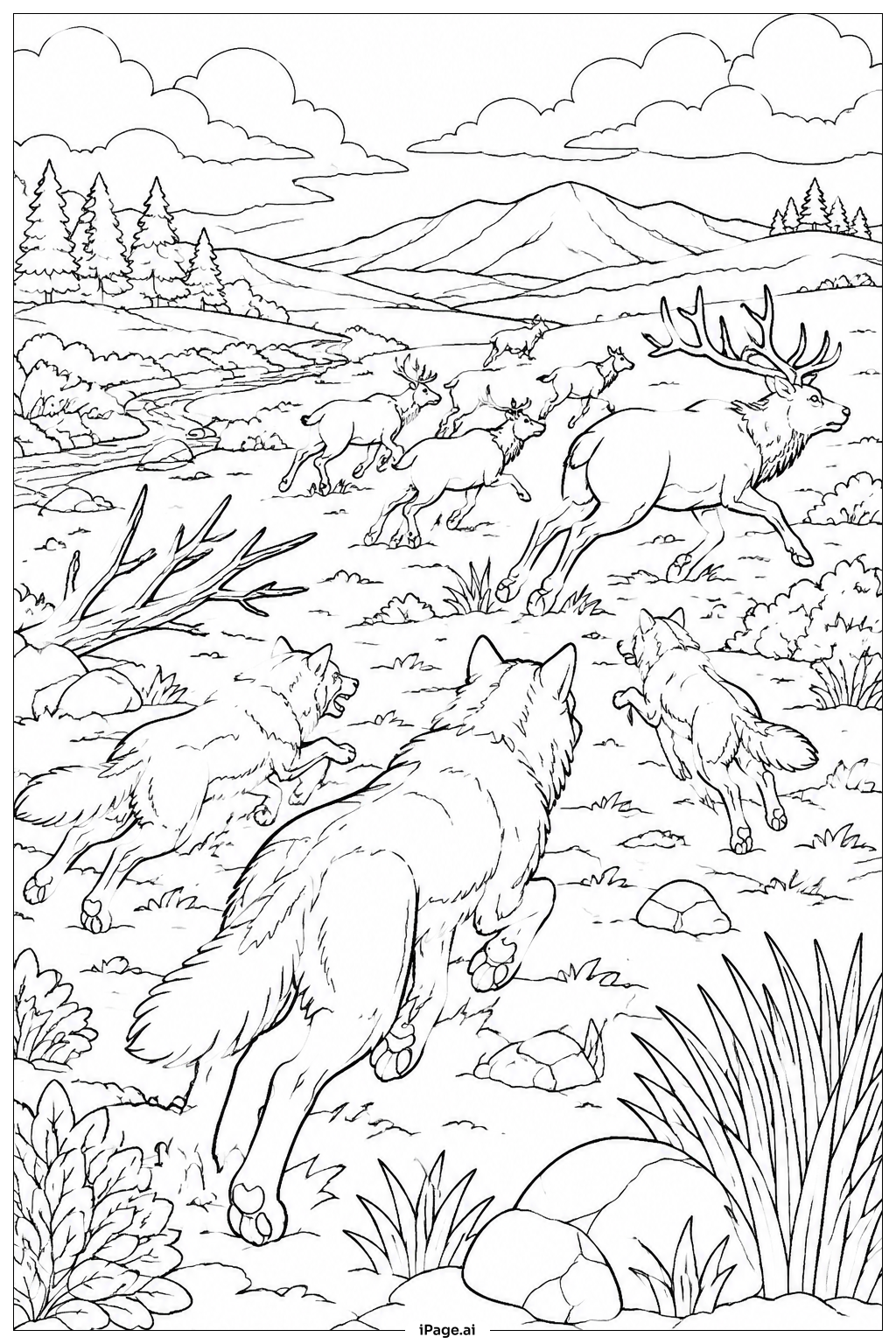
Coloring tips: How to color Wolves Chasing Elk Herd coloring page well?
Start with the wolves. Use dark gray, charcoal, or deep brown for their fur. Add lighter gray or white on their bellies and around their muzzles. For the elk, use warm tan, golden brown, or reddish-brown tones. Make the antlers a lighter beige or cream color. Color the hooves and nose areas dark brown or black. Use soft greens for the grassy ground and background trees. The sky can be a pale blue or soft orange if you want a sunset mood. Add some dust clouds in light tan near the hooves to show movement. Use bold, confident strokes to bring the scene to life. Kids can keep colors simple, while older colorists can blend shades for a more realistic and dramatic effect.
Coloring challenges: Which parts are difficult to color and need attention for Wolves Chasing Elk Herd coloring page?
• Wolf Fur Texture: Wolves have layered, thick fur with multiple tones — dark on the back, lighter on the sides, and nearly white on the belly. Capturing this gradient with colored pencils or markers takes patience. You will need at least two or three shades of gray or brown per wolf to make the fur look realistic and full of depth.
• Elk Antler Detail: The elk antlers are complex branching structures with many small points and curves. Staying inside the lines on such narrow shapes is tricky, especially for younger colorists. Use a fine-tipped marker or a sharp colored pencil to fill these in carefully without smudging neighboring areas.
• Overlapping Animals: Several wolves and elk overlap in the composition. When two animals are layered on top of each other, it can be hard to keep their colors separate and clear. Plan your color choices in advance so that adjacent animals have enough contrast to stand apart visually.
• Conveying Motion and Speed: This scene is full of energy and movement. To show speed, try adding light directional streaks behind the animals or use slightly blurred edges with your coloring tool. This is an advanced technique but makes the scene feel truly alive.
• Background Depth: The trees and ground in the background need to feel distant. Use lighter, less saturated versions of green and brown for the far background. Keep the foreground animals more vivid and bold so the eye naturally focuses on the chase action first.
Benefits of coloring books: Advantages of drawing Wolves Chasing Elk Herd coloring page
Coloring this exciting wolf and elk chase scene offers many great benefits for kids and adults alike. It builds focus and concentration as you work through detailed fur textures, antler shapes, and layered animal figures. Choosing the right colors for wolves, elk, and the natural landscape encourages creative thinking and color awareness. Kids learn about wildlife and nature while they color, making it both a fun and educational activity. The dynamic action in the scene also makes it especially engaging — it feels like telling a story with color. For older colorists and adults, the complexity of blending fur tones and creating depth in the background provides a satisfying, calming challenge. Coloring detailed scenes like this has been shown to reduce stress and promote mindfulness. It also improves fine motor skills, especially when working on small details like antler tips and paw shapes. Whether you are coloring solo or with family, this scene sparks conversation about animals, ecosystems, and the natural world. It is a wonderful way to spend creative time while learning something real and meaningful.