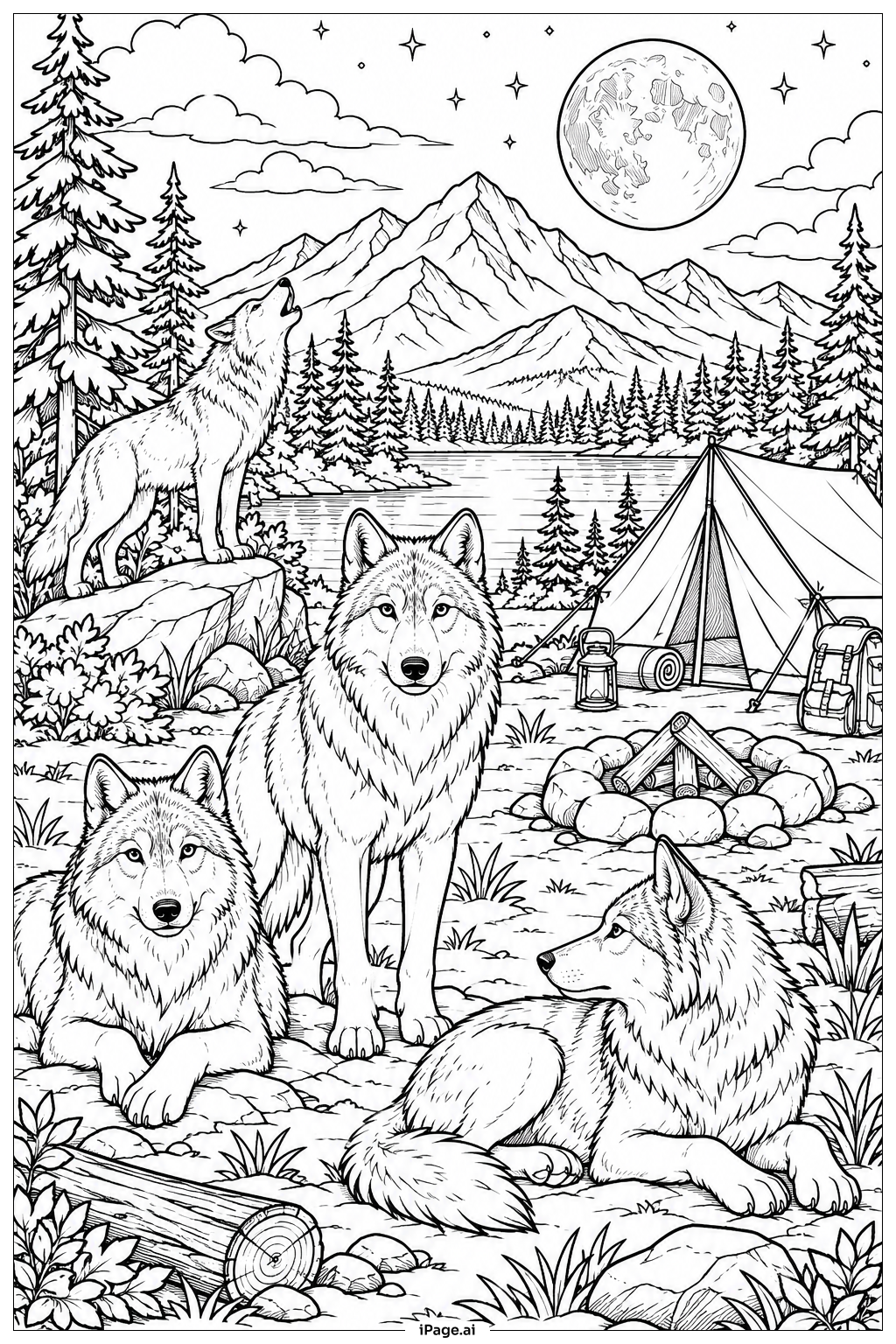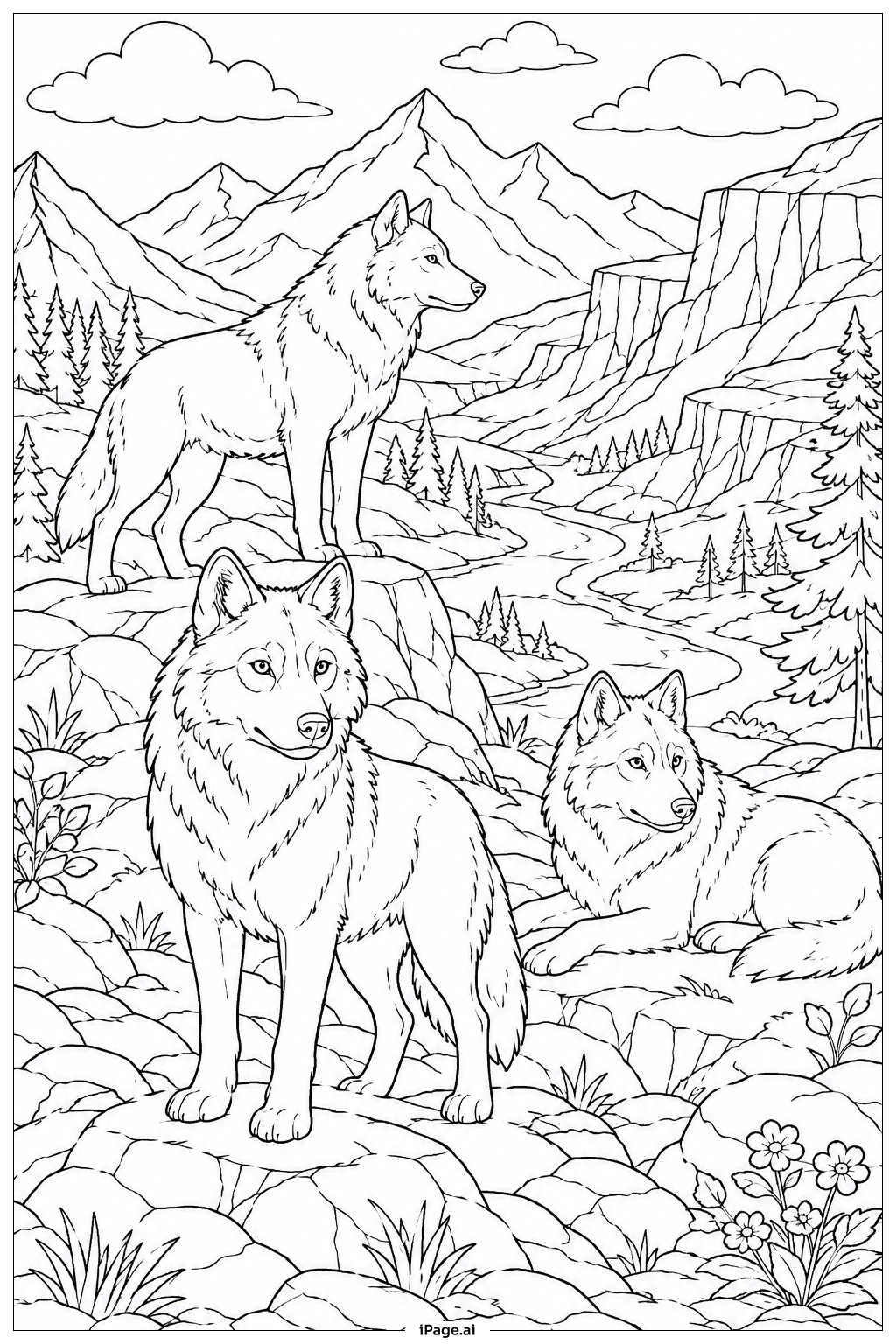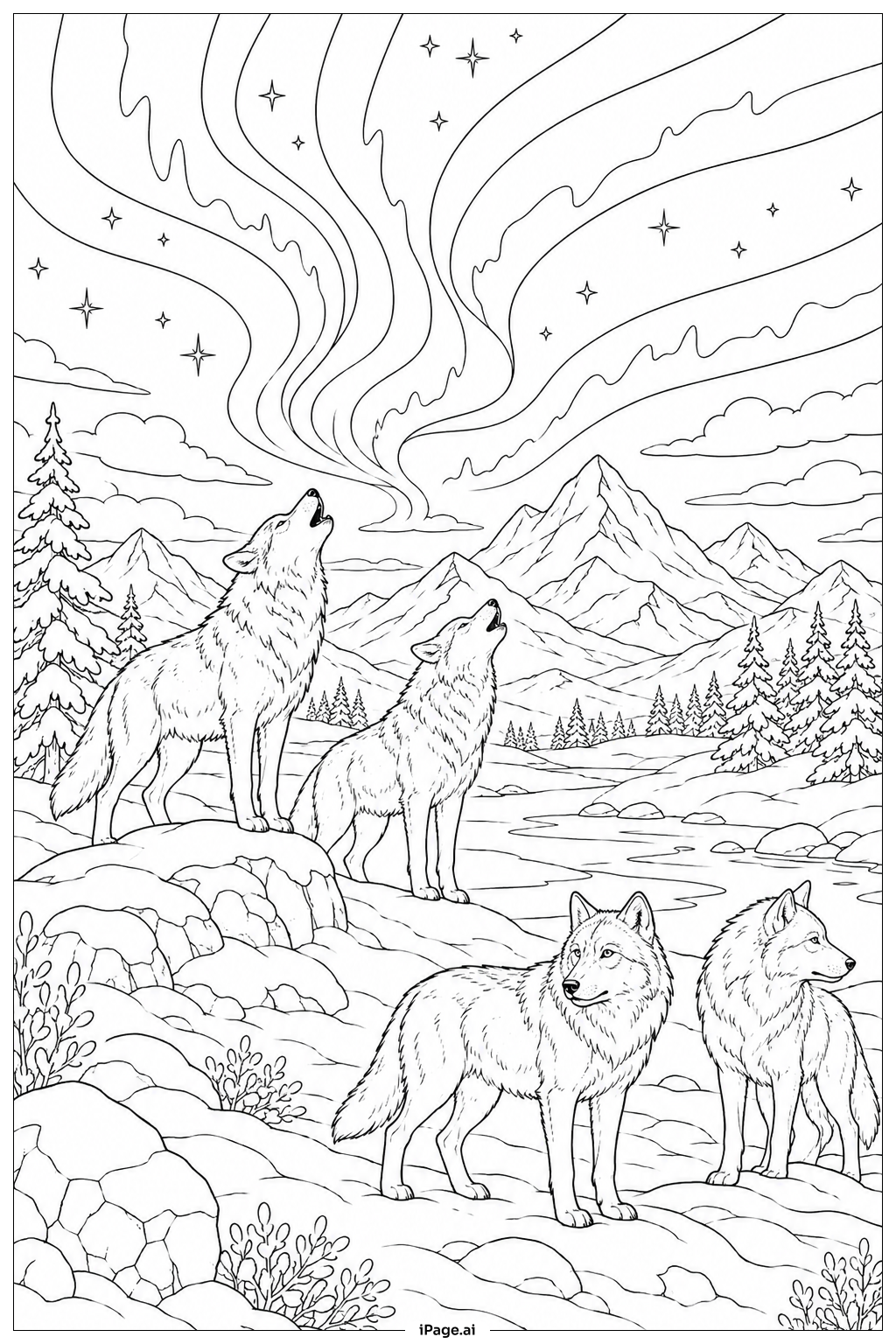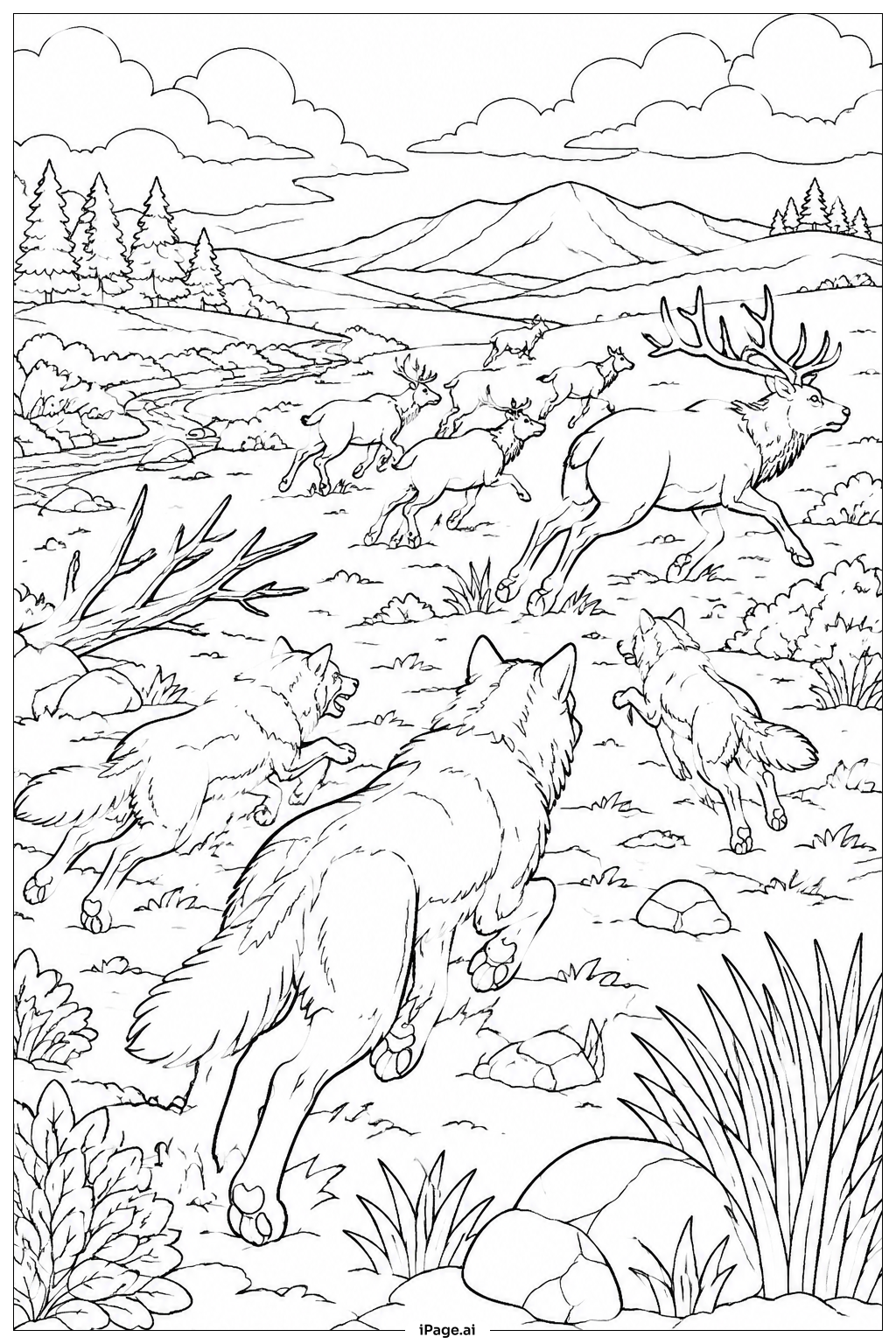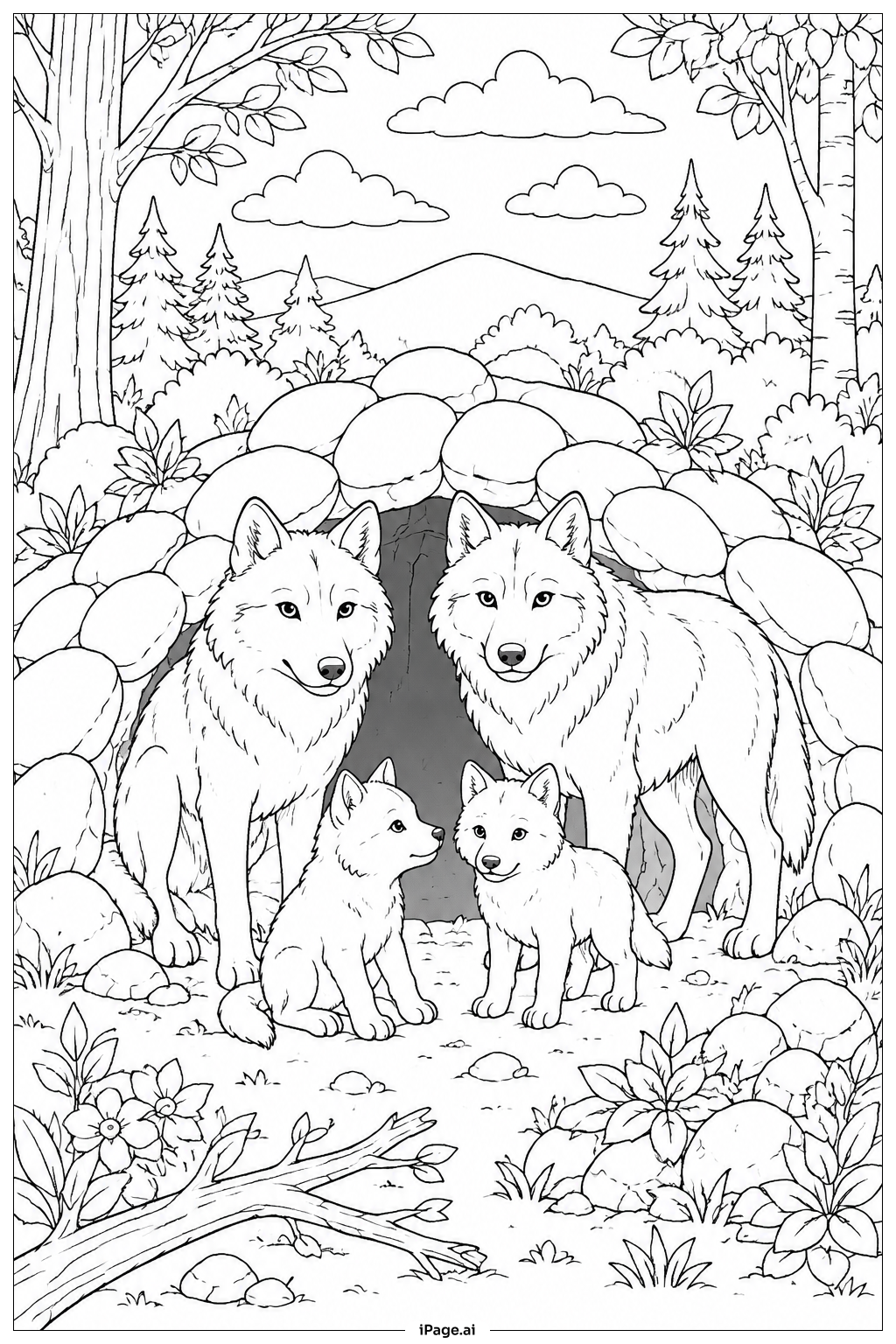
Coloring tips: How to color Wolf Family At Den Entrance coloring page well?
Start with the background. Use deep greens and dark browns for the trees and forest floor. Add grey and tan tones to the rocky den entrance to give it a rough, natural feel. For the adult wolves, use layered shades of grey, brown, and cream to bring their thick fur to life. Try blending light and dark tones to show depth in the fur. The wolf pups can be colored slightly lighter than the adults to show their youth. Use soft golden or amber shades for their eyes to make them look warm and curious. Add earthy greens and yellows to the grass and leaves on the ground. Keep the overall color palette natural and muted to match the woodland setting. Boys and Girls alike will enjoy bringing this wolf family scene to life with earthy, nature-inspired colors.
Coloring challenges: Which parts are difficult to color and need attention for Wolf Family At Den Entrance coloring page?
• Fur Texture and Layering: The wolves have thick, multi-layered fur that requires careful blending. Using a single flat color will make them look unnatural. You need to layer at least two or three shades of grey, brown, or cream, applying lighter tones at the tips and darker tones at the base of the fur to create realistic depth and volume.
• Distinguishing the Wolves: With multiple wolves in the scene — adults and pups — it can be tricky to keep each one visually distinct. Pay close attention to size differences and use slightly varied color tones for each wolf so they do not blend into one another. The pups should look noticeably lighter and softer than the adult wolves.
• Rocky Den Entrance Details: The rocks and root structures around the den have lots of crevices and uneven surfaces. Coloring these areas requires patience. Use multiple shades of grey, brown, and dark tan, and leave some areas lighter to suggest where light hits the surface. This creates a convincing three-dimensional look.
• Background Forest Depth: The trees and foliage in the background need to feel distant without stealing attention from the wolves. Use cooler, muted greens and soft dark blues in the background, gradually making them lighter and less detailed as they recede. This technique, called atmospheric depth, helps the wolves stand out as the focal point.
• Small Pup Details: The wolf pups are smaller figures with fine facial features — tiny eyes, small noses, and delicate ears. These areas need a steady hand and a fine-tipped coloring tool to avoid smudging or going outside the lines.
Benefits of coloring books: Advantages of drawing Wolf Family At Den Entrance coloring page
Coloring this wolf family scene offers many wonderful benefits for children and Adults alike. For younger kids, carefully filling in the wolves and forest details builds fine motor skills and helps develop hand-eye coordination. Staying within the lines of smaller details like the pups' faces takes focus and patience — skills that carry over into reading, writing, and everyday tasks.
The scene also sparks curiosity about nature and wildlife. As children color the wolves and their den, they naturally begin to wonder about how wolves live, how they care for their young, and what the forest looks and feels like. This is a great gateway into learning about animals and ecosystems.
For older children and Adults, the layering and blending required for realistic fur and rocky textures offers a satisfying creative challenge. It encourages artistic thinking and helps develop an eye for light, shadow, and color harmony.
Emotionally, coloring a scene of a family together — even a wolf family — can feel calming and comforting. It gently reinforces themes of love, protection, and togetherness. The repetitive, focused nature of coloring also reduces stress and helps quiet a busy mind, making it a healthy and enjoyable activity for all ages.