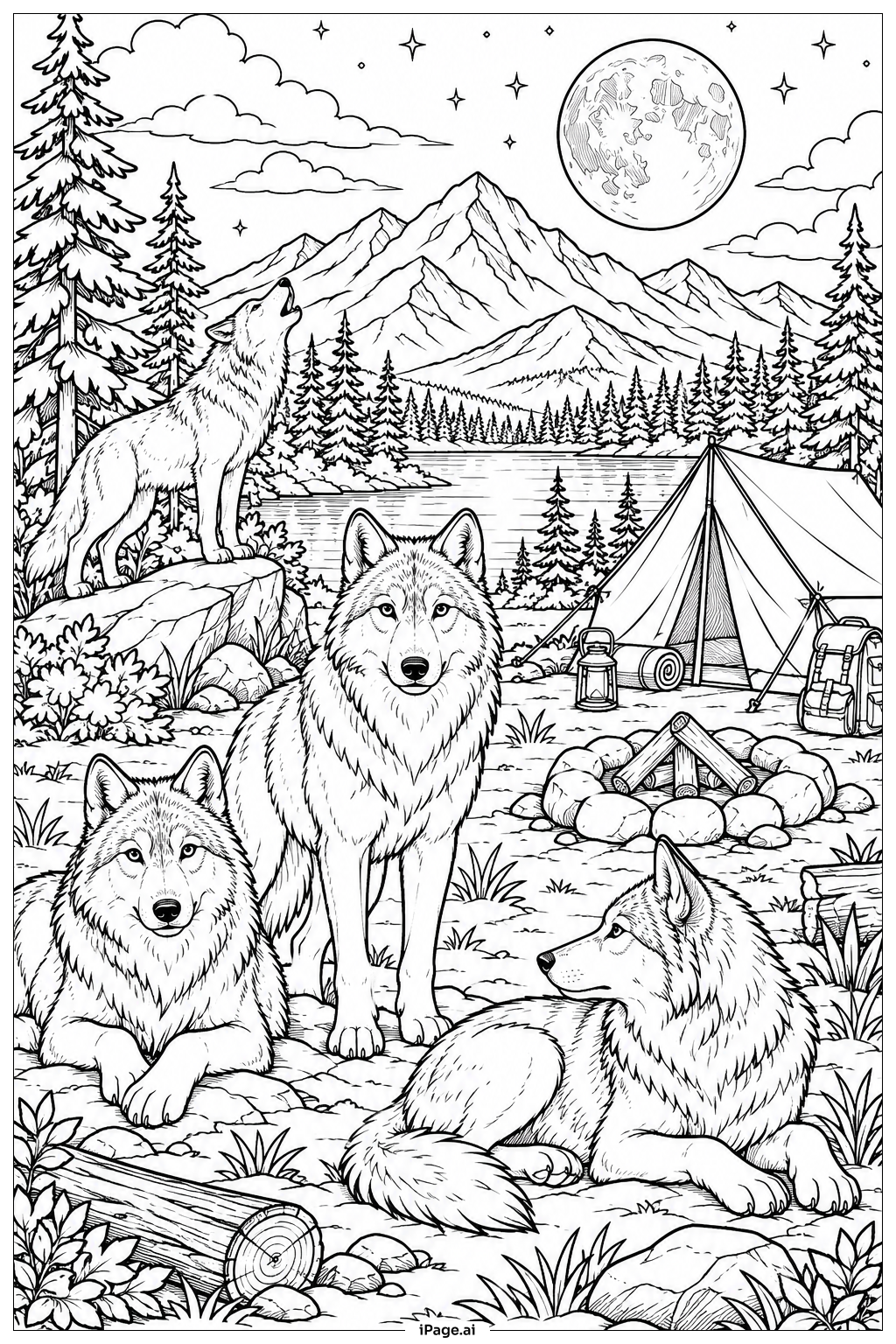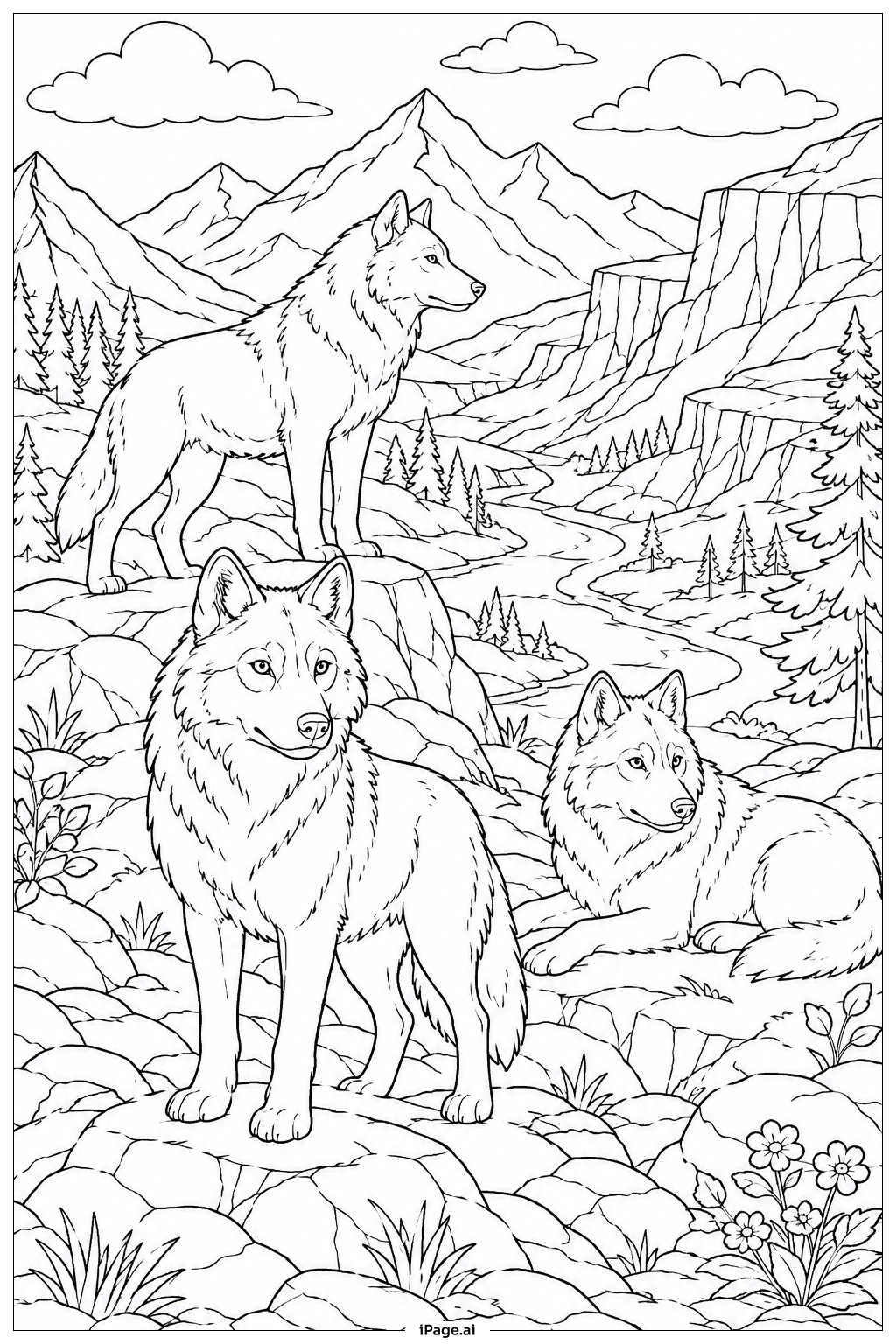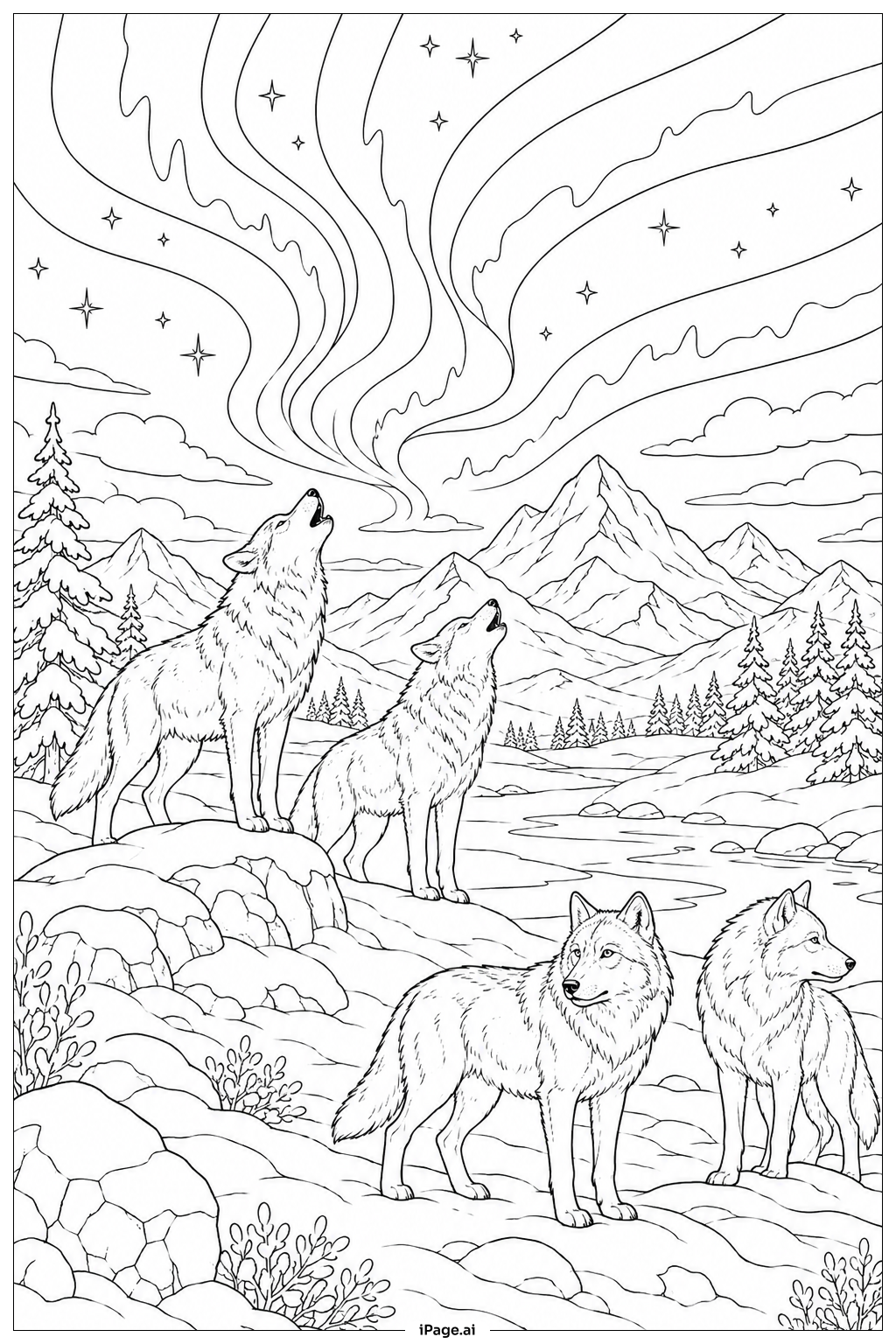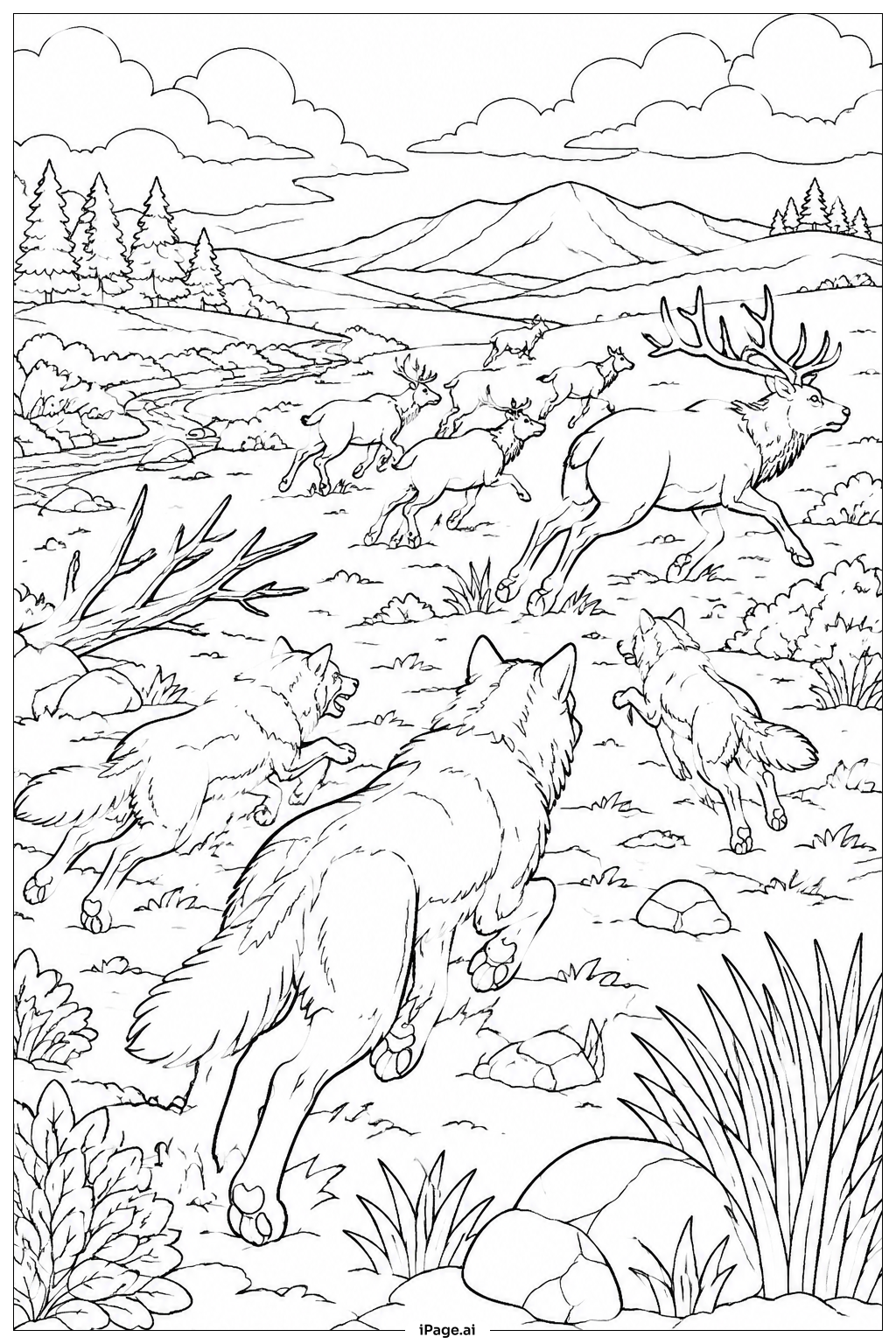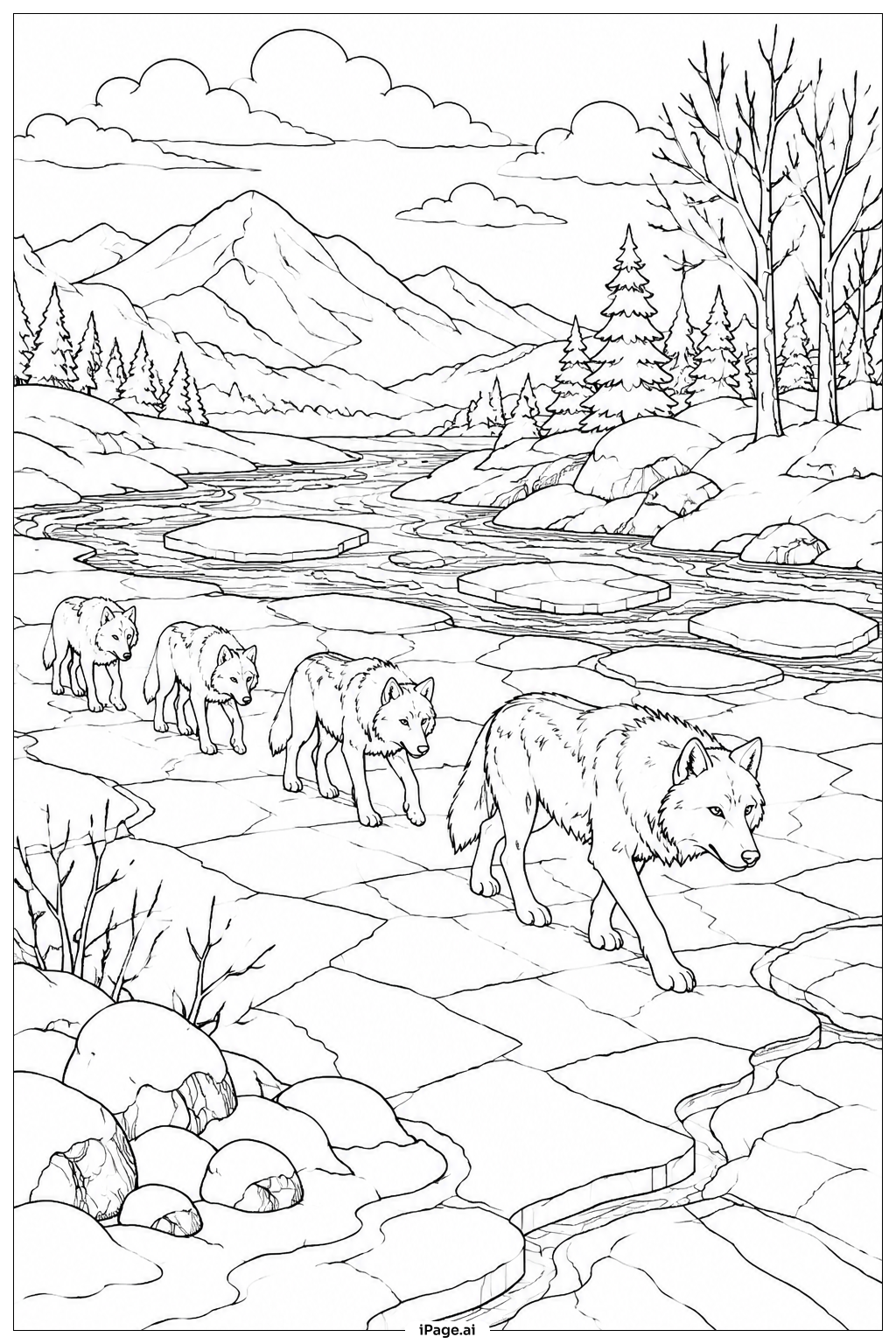
Coloring tips: How to color Wolves Crossing Frozen River coloring page well?
Start with the wolves' fur using shades of gray, white, and brown. Mix lighter tones on the chest and belly, and darker shades along the back and head. For the alpha wolf, use a deeper charcoal gray to make it stand out. Color the frozen river with pale blues and soft whites, adding hints of light gray to show the cracked ice texture. Use dark gray or silver for the shadowed areas beneath the ice. Paint the snowy banks with off-white and pale blue. Add warm browns and tans to the bare tree trunks in the background. Use a muted, cool color palette throughout to capture the cold winter atmosphere. You can add a light purple or blue tint to the sky and shadows to give the scene a frosty, early-morning feel. Keep the wolves' eyes a bright amber or golden yellow to add a striking contrast against the cool tones.
Coloring challenges: Which parts are difficult to color and need attention for Wolves Crossing Frozen River coloring page?
• Wolf Fur Texture: The wolves' thick, layered coats require careful blending of multiple shades. Using only one flat color will make the fur look dull. Try layering light gray, white, and dark brown in short, overlapping strokes to mimic the direction of natural fur growth. This takes patience but makes the wolves look realistic and full of life.
• Frozen River Ice Details: The cracked and uneven surface of the frozen river is one of the trickiest parts. The ice has many fine lines, ridges, and shadows. Use very light pressure with a blue or gray pencil to shade the cracks gently. Leave some areas almost completely white to show where light reflects off the ice. Pressing too hard can make the river look muddy instead of icy.
• Depth and Shadows: Creating a sense of depth in this scene is challenging. Wolves in the foreground should have stronger, darker colors, while wolves further back should be lighter and slightly less detailed. Adding soft shadows beneath each wolf on the ice helps them look grounded and three-dimensional rather than flat.
• Background Trees and Snow: The bare winter trees in the background need a delicate touch. Use light, thin strokes of brown and gray for the trunks and branches. The snow on the banks should be mostly white with very soft blue shadows. Overcoloring the background can pull attention away from the wolves, so keep it subtle.
• Balancing Cool and Warm Tones: The entire scene uses a cool winter palette, but the wolves' golden eyes and warm brown fur add warmth. Balancing these contrasting temperatures without making the image look mismatched requires careful color choices throughout the coloring process.
Benefits of coloring books: Advantages of drawing Wolves Crossing Frozen River coloring page
Coloring this Wolves Crossing Frozen River scene offers wonderful benefits for both kids and Adults. Working through the detailed fur patterns and icy textures helps build focus and concentration skills. Children learn to be patient as they carefully blend colors to bring each wolf to life. The scene also sparks curiosity about nature and wildlife, encouraging kids to learn more about wolf behavior and winter ecosystems. Choosing the right shades of gray, blue, and white for the ice and snow helps develop color recognition and artistic thinking. For older colorists and Adults, the intricate details of the frozen river and wolf pack provide a calming, meditative experience that relieves stress and quiets a busy mind. The process of layering colors and creating texture builds fine motor skills and hand-eye coordination, which is especially valuable for younger children. Completing a complex scene like this also builds confidence and a sense of pride. Sharing the finished artwork with family and friends encourages communication and creativity. Overall, this coloring page is a joyful and educational activity that connects people with the beauty of the natural world.