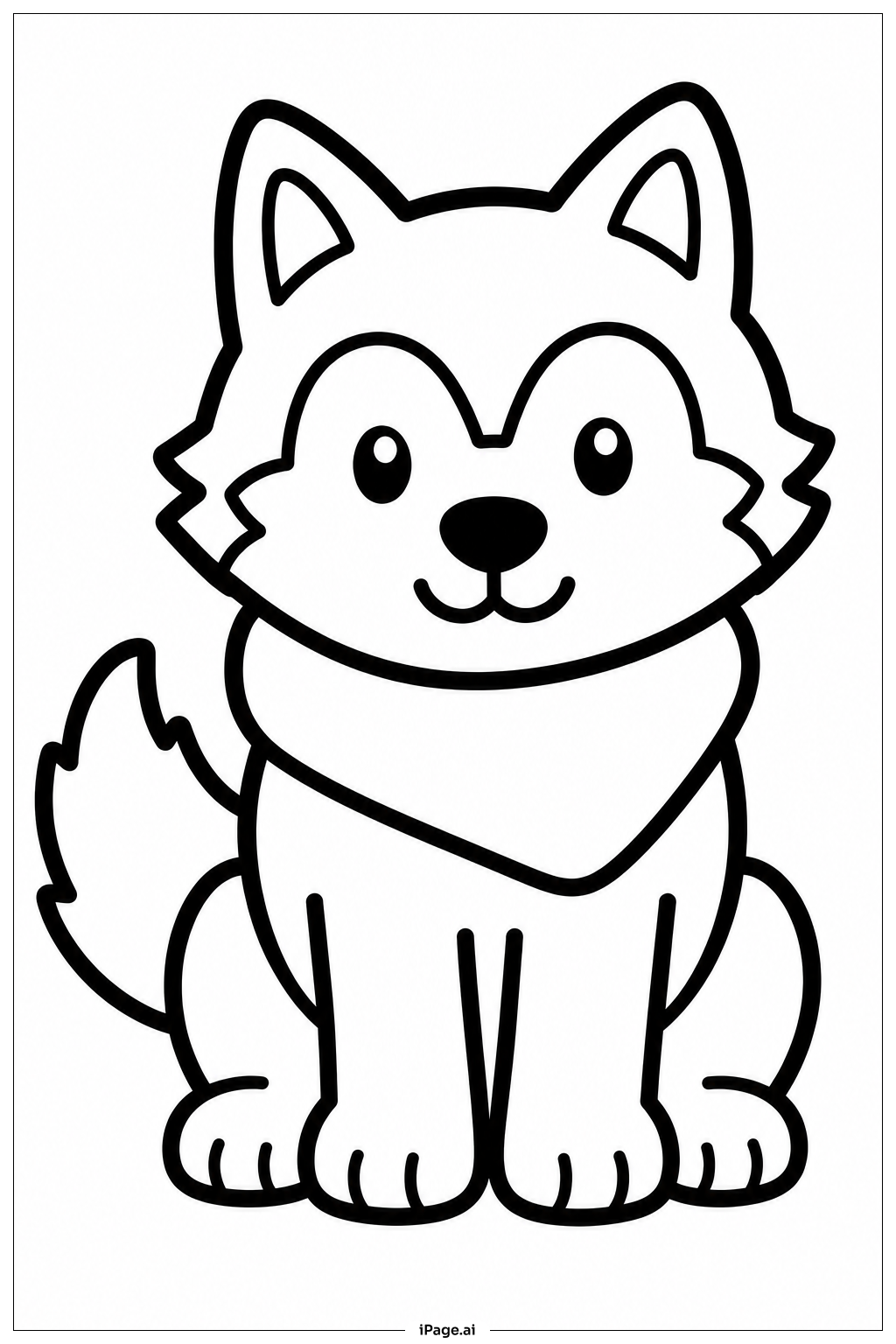
Coloring tips: How to color Wolf With Scarf coloring page well?
Start with the wolf's fur by choosing warm, natural tones like gray, brown, or tan. Use a slightly darker shade to add depth along the edges of the fur and around the face. For the scarf, pick a bright, fun color like red, blue, or green to make it pop against the wolf's coat. You can add stripes or a pattern to the scarf to make it more exciting. Use a light yellow or white for the belly and chest area to create contrast. Add darker shading under the chin, around the ears, and along the legs to give the wolf a three-dimensional look. The eyes can be colored amber, gold, or bright blue to bring the face to life. Kids can try blending two colors together for a more natural fur effect. There are no strict rules here — feel free to use your favorite colors and make this wolf uniquely yours!
Coloring challenges: Which parts are difficult to color and need attention for Wolf With Scarf coloring page?
• Fur Texture Details: The wolf's body is covered in layered fur lines that require careful attention. Coloring within these fine strokes without going outside the lines can be tricky, especially for younger artists. Using short, light strokes that follow the direction of the fur will help create a realistic and polished look.\n\n• Scarf Folds and Shadows: The scarf has soft wrinkles and overlapping folds that need shading to look three-dimensional. Identifying where the light hits and where shadows fall takes some practice. Using a base color first and then adding a darker tone in the creases will bring the fabric to life.\n\n• Facial Expression Preservation: The wolf's face has detailed features including the eyes, nose, and mouth that give it its friendly character. Coloring these small areas requires a fine-tip tool and a steady hand. Choosing the wrong colors or going outside the lines here can change the entire mood of the image.\n\n• Contrast Between Fur and Scarf: Choosing colors that look good together while keeping the wolf's coat and the scarf visually distinct is a real challenge. If both are colored in similar tones, the scarf may blend into the fur and lose its impact. Planning your color palette before you start will help you avoid this problem.\n\n• Blending for Depth: Achieving smooth gradients across the wolf's large body areas — such as the back, tail, and chest — requires patience and skill. Uneven coloring in these open spaces can look flat. Practicing gentle color layering or using colored pencils in circular motions can greatly improve the final result.
Benefits of coloring books: Advantages of drawing Wolf With Scarf coloring page
Coloring this Wolf With Scarf page offers a wonderful range of benefits for children and anyone who picks up a crayon or pencil. First, it helps build fine motor skills. Carefully staying within the detailed fur lines and small facial features strengthens hand control and improves coordination. Second, it encourages creativity. Choosing colors for the fur, scarf, and background lets kids express themselves freely and build confidence in their artistic choices. Third, it promotes focus and patience. Working through the intricate details of the image teaches children how to slow down, concentrate, and complete a task step by step. Fourth, it can be calming and relaxing. The repetitive motion of coloring has a soothing effect that helps reduce stress and anxiety, making it a great quiet-time activity. Fifth, it introduces color theory in a fun, hands-on way. Deciding which colors work well together for the wolf and scarf gives kids a natural introduction to contrast, shading, and blending. Overall, this coloring page is a joyful, educational experience that nurtures both the creative and cognitive development of young artists.