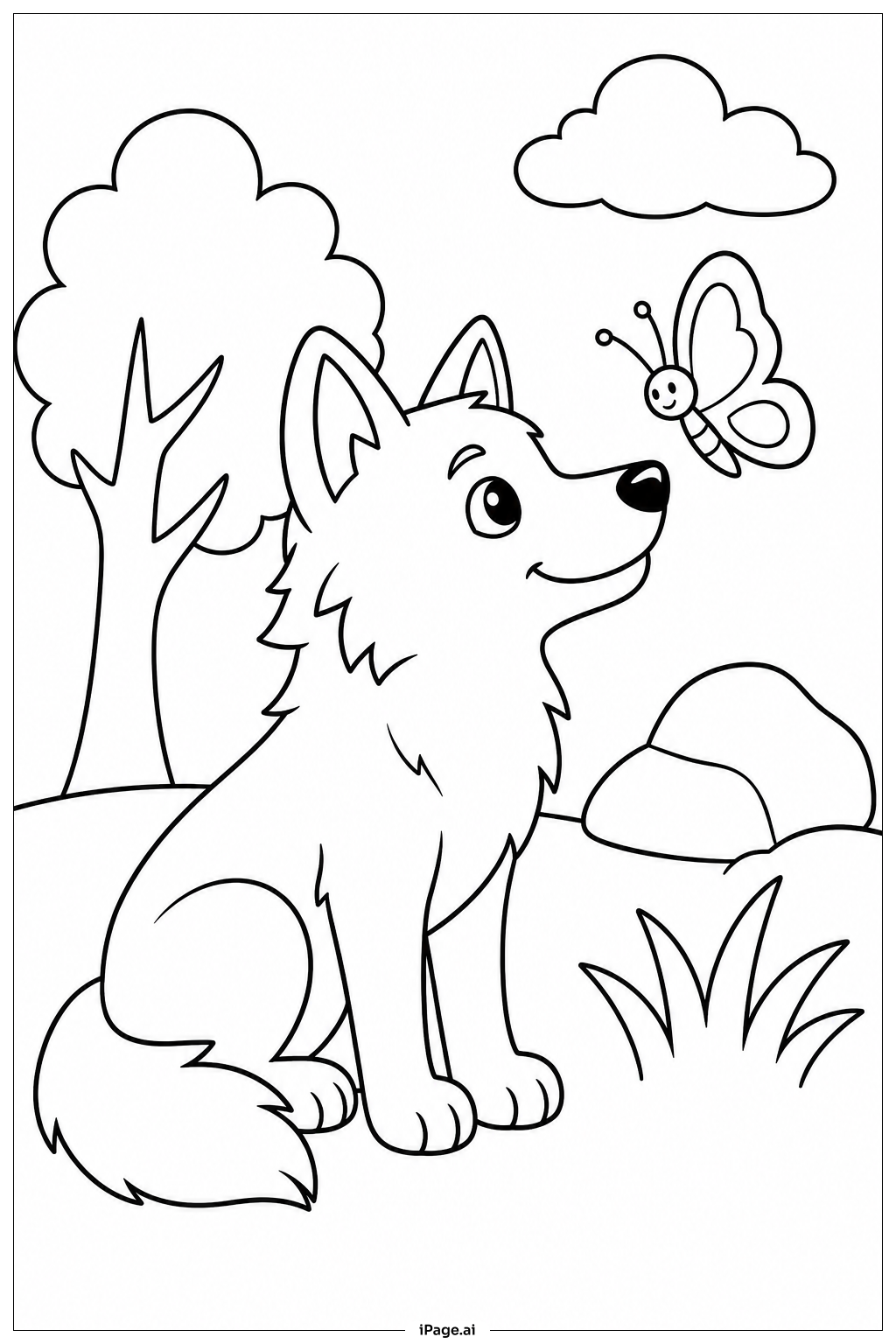
Coloring tips: How to color Wolf With Butterfly coloring page well?
Start with the butterfly's wings using bright, vivid colors like orange, yellow, purple, or blue to make it stand out. Try adding patterns like dots or swirls on the wings for extra detail. For the wolf, use a mix of grays, browns, and whites to create a natural, realistic look. You can blend light gray on the chest and belly, and darker gray or brown along the back and face. Use black for the wolf's nose, eyes, and the tips of its fur. For the background, soft greens and earthy tones work well to suggest a forest or meadow setting. Don't be afraid to use warm golden or amber tones to give the scene a cozy, magical mood. Kids can also try bold, fantasy colors for a fun, imaginative twist — like a blue wolf or rainbow butterfly wings!
Coloring challenges: Which parts are difficult to color and need attention for Wolf With Butterfly coloring page?
• Wolf Fur Texture: The wolf's fur is made up of many overlapping lines and layers. Coloring it realistically takes patience. You need to follow the direction of the fur strokes and layer multiple shades — light, medium, and dark — to create depth and dimension. Rushing this section can make the fur look flat or unnatural.
• Butterfly Wing Patterns: The butterfly's wings contain small, detailed symmetrical patterns. Keeping both wings looking balanced and consistent is tricky. Each section of the wing may need a different color or shade, and staying inside the tiny lines requires a fine-tipped tool and a steady hand.
• Contrasting the Two Subjects: The wolf and butterfly are very different in size and texture. Making both subjects visually interesting without one overpowering the other is a real challenge. You need to balance bold colors on the butterfly with more muted tones on the wolf so neither gets lost.
• Facial Details on the Wolf: The wolf's face includes fine details like the eyes, nose, whiskers, and the subtle shading around the muzzle. These small areas are easy to overcolor. Using light pressure and thin tools helps preserve the delicate expression and keeps the face looking lifelike.
• Background Blending: If the image includes nature elements in the background, blending those colors smoothly without clashing with the main subjects can be difficult. The background should feel soft and secondary, supporting the wolf and butterfly without competing for attention.
Benefits of coloring books: Advantages of drawing Wolf With Butterfly coloring page
Coloring this Wolf With Butterfly page offers a wonderful range of benefits for children and young learners. First, it helps build fine motor skills. Carefully coloring the wolf's fur and the butterfly's tiny wing patterns trains hand control and pencil grip — skills that are essential for writing and drawing. Second, it encourages focus and patience. The detailed sections of this image require children to slow down, concentrate, and work through one area at a time, building their ability to stay on task. Third, it sparks creativity. Choosing colors for both the wild wolf and the delicate butterfly lets kids express their imagination freely — there are no wrong answers! Fourth, it introduces children to the idea of contrasts and harmony in nature, gently teaching that strength and gentleness can exist side by side. Finally, completing this coloring page gives children a sense of accomplishment and pride in their work. It can also be a calming, meditative activity that helps reduce stress and anxiety, making it a great quiet-time choice for kids of all ages.