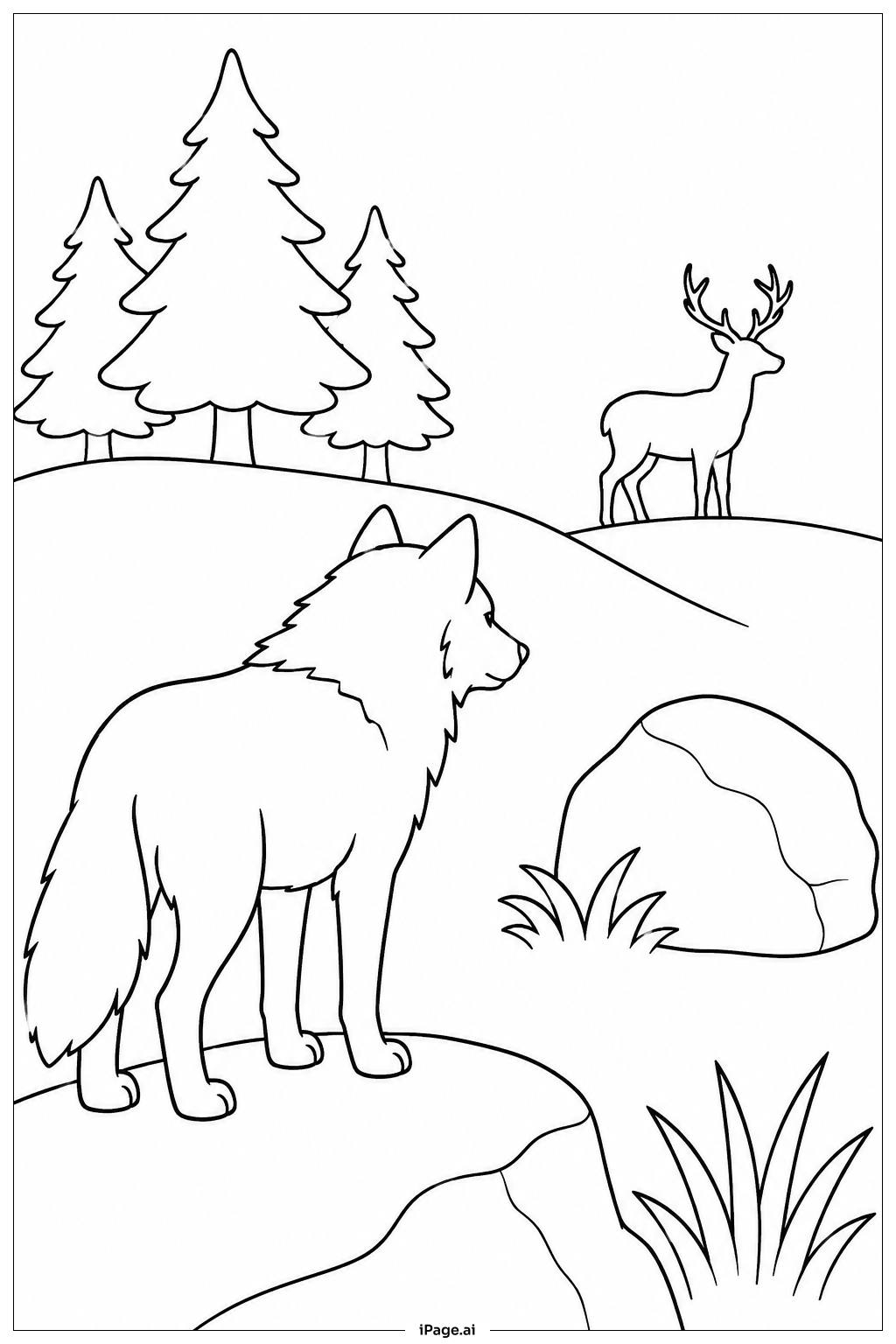
Coloring tips: How to color Wolf Watching Deer coloring page well?
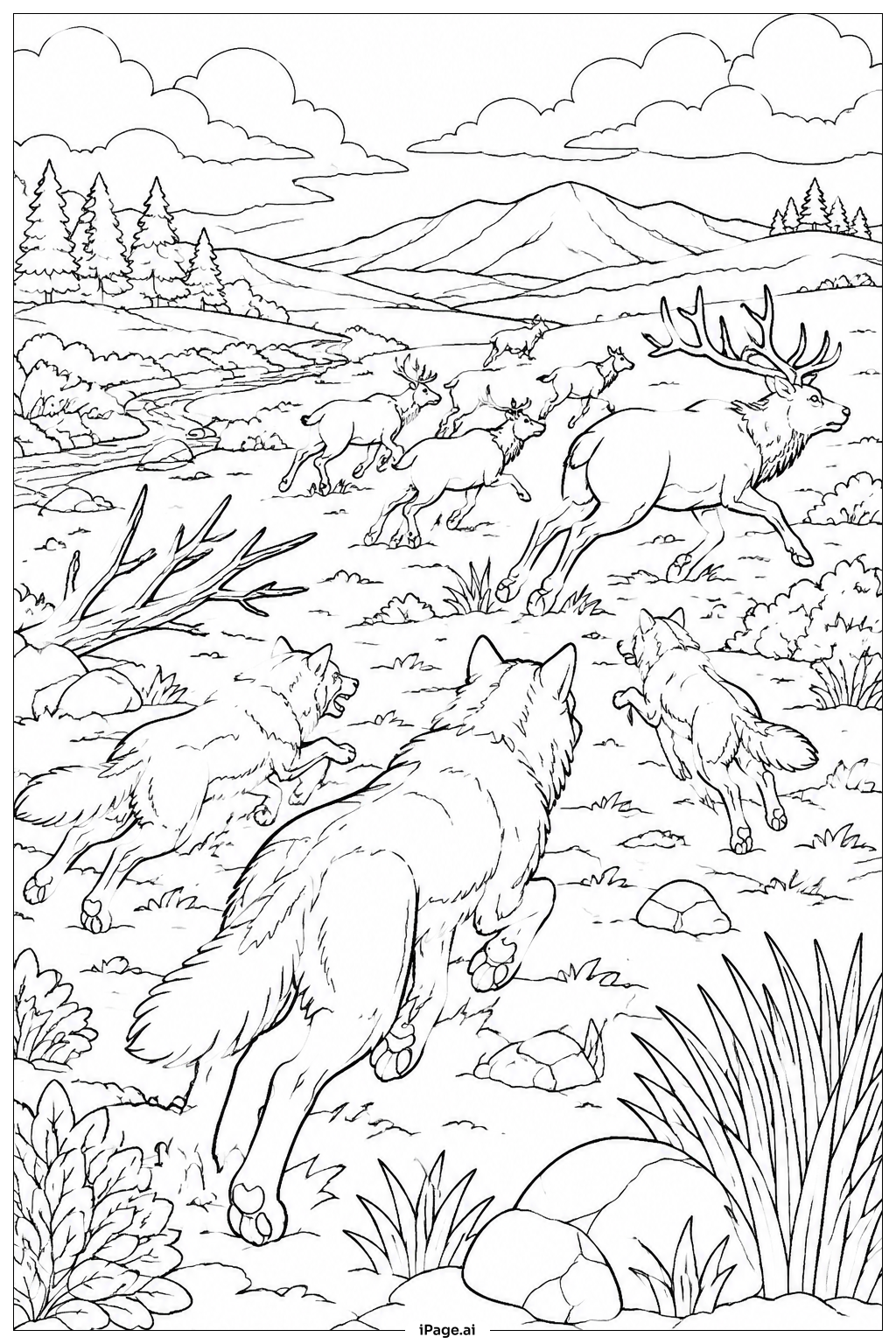
Start with the background. Use deep greens and dark browns for the trees and forest floor. Add hints of golden yellow and orange for fallen leaves to bring warmth to the scene. For the wolf, use layered shades of gray, from light silver on the chest and belly to dark charcoal along the back. Add hints of warm brown or tan for a more natural look. Color the wolf's eyes with a bright amber or golden yellow to make them feel alive and intense. For the deer, use soft tan and light brown tones. Add a slightly darker shade along the back and a creamy white on the belly and face. Keep the deer's eyes soft and dark. Use light and dark shading throughout to create depth and make the animals look three-dimensional. This image is great for kids who love nature and wildlife.
Coloring challenges: Which parts are difficult to color and need attention for Wolf Watching Deer coloring page?
• Wolf Fur Texture: The wolf's coat has many layers of fur with varying lengths and directions. Capturing this texture requires patience. Try using short, directional strokes with your coloring tool to mimic the flow of real fur. Blend multiple shades of gray, brown, and white to create a natural, multi-toned coat rather than a flat single color.
• Deer's Delicate Features: The deer has fine, graceful details such as slender legs, soft facial features, and subtle body curves. These areas are small and require a sharp pencil or fine-tipped marker. Be careful not to over-color and lose the delicate lines that define the deer's gentle appearance.
• Forest Background Depth: The trees, branches, and foliage in the background need to look layered and deep. Using lighter greens and blues in the distance and darker greens and browns closer to the foreground can create a strong sense of depth. This technique, called atmospheric perspective, makes the forest feel real and expansive.
• Contrasting the Two Animals: The wolf and deer are positioned close together, so their colors must be distinct enough to avoid visual confusion. Make sure the wolf's darker, cooler tones contrast clearly with the deer's warmer, lighter coat. This separation helps both animals stand out and tells the story of the scene more effectively.
• Lighting and Shadow: Deciding where the light source is coming from and applying consistent shadows across both animals and the environment is challenging. Consistent shading adds realism and makes the whole scene feel cohesive and professionally finished.
Benefits of coloring books: Advantages of drawing Wolf Watching Deer coloring page
Coloring this Wolf Watching Deer scene offers many wonderful benefits for kids and young artists. It builds focus and concentration as children carefully fill in detailed areas like fur, leaves, and forest textures. Working on this image encourages patience, since getting the colors just right takes time and attention. It also sparks curiosity about nature and wildlife. Kids may want to learn more about wolves and deer after spending time with this scene. Choosing the right color combinations for the wolf and deer helps develop color awareness and artistic thinking. Blending shades of gray for the wolf or warm browns for the deer builds early skills in color mixing and tonal contrast. The forest background gives children freedom to be creative, choosing their own seasonal colors, like a bright green summer forest or a warm orange autumn woodland. Completing a detailed coloring page like this also builds confidence. Finishing something beautiful feels rewarding. Overall, this image is a fun and educational activity that connects children with the natural world while helping them grow as artists.