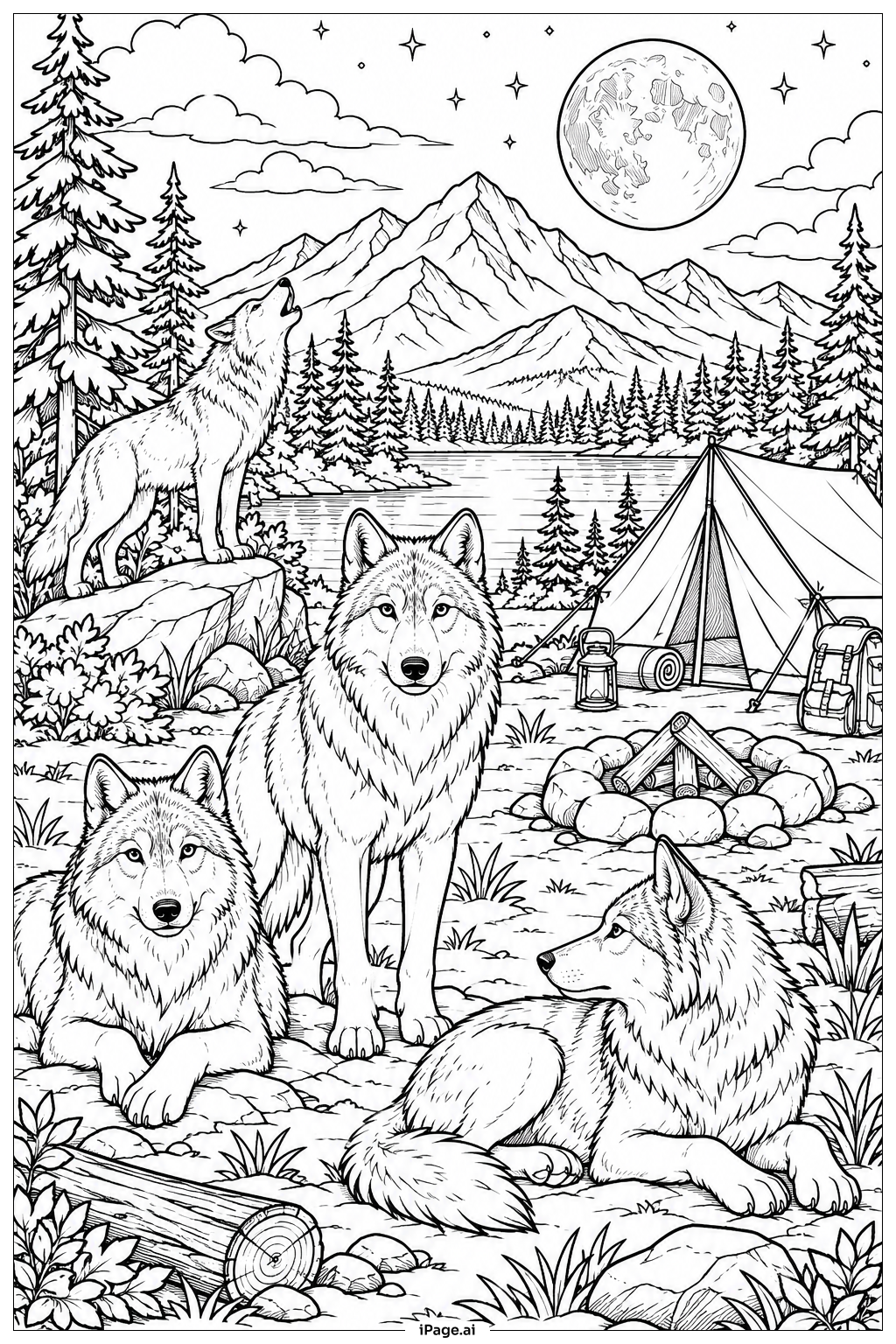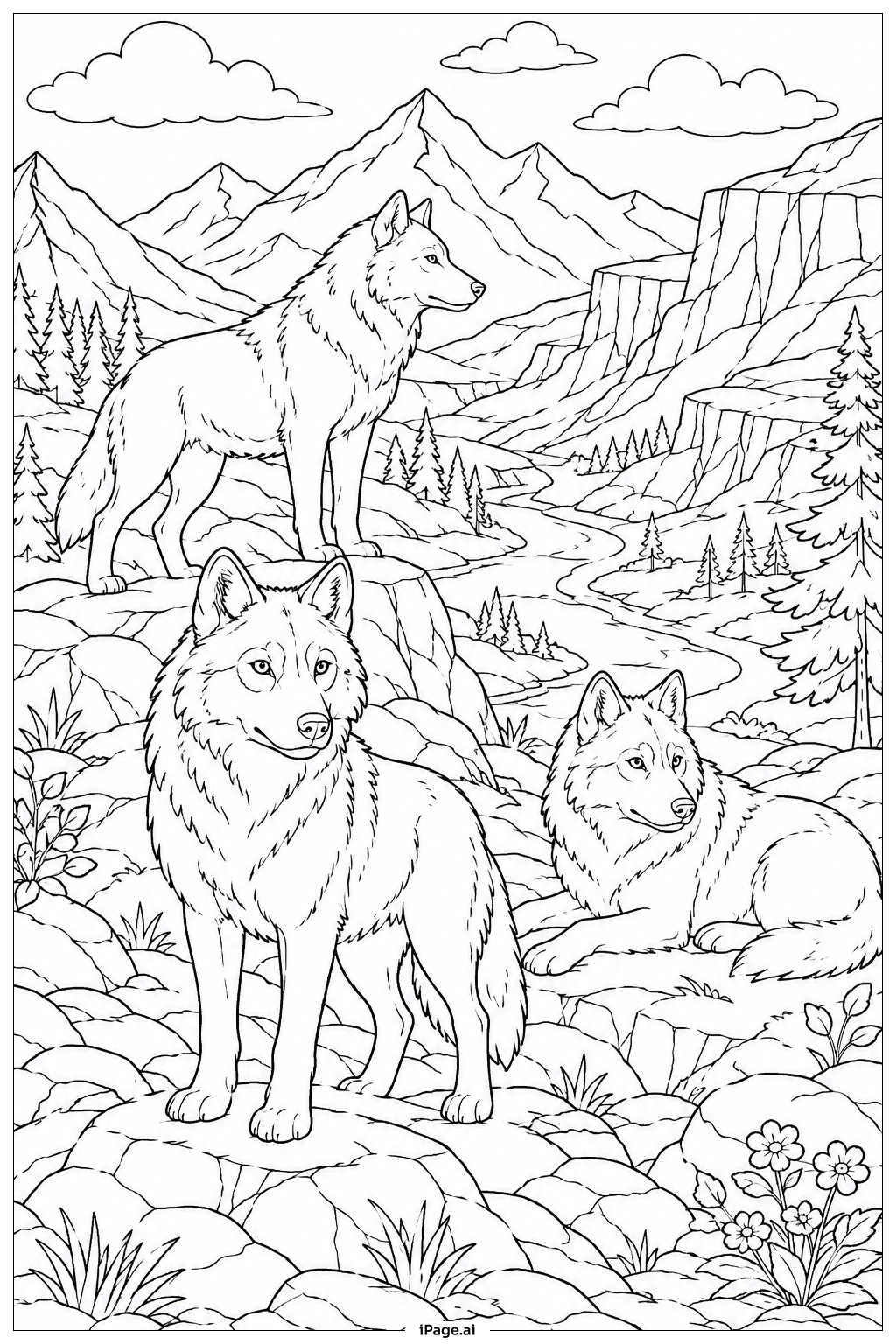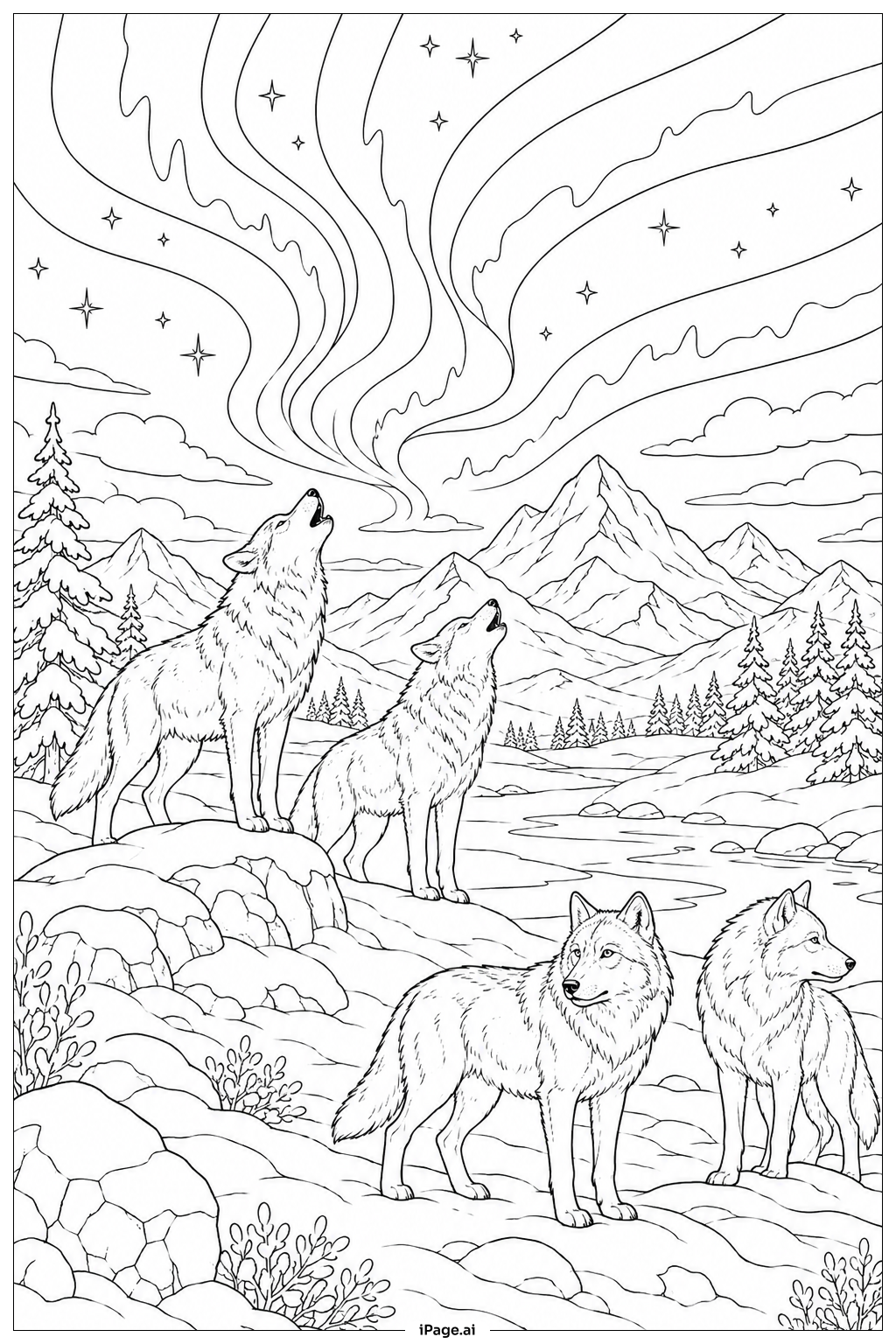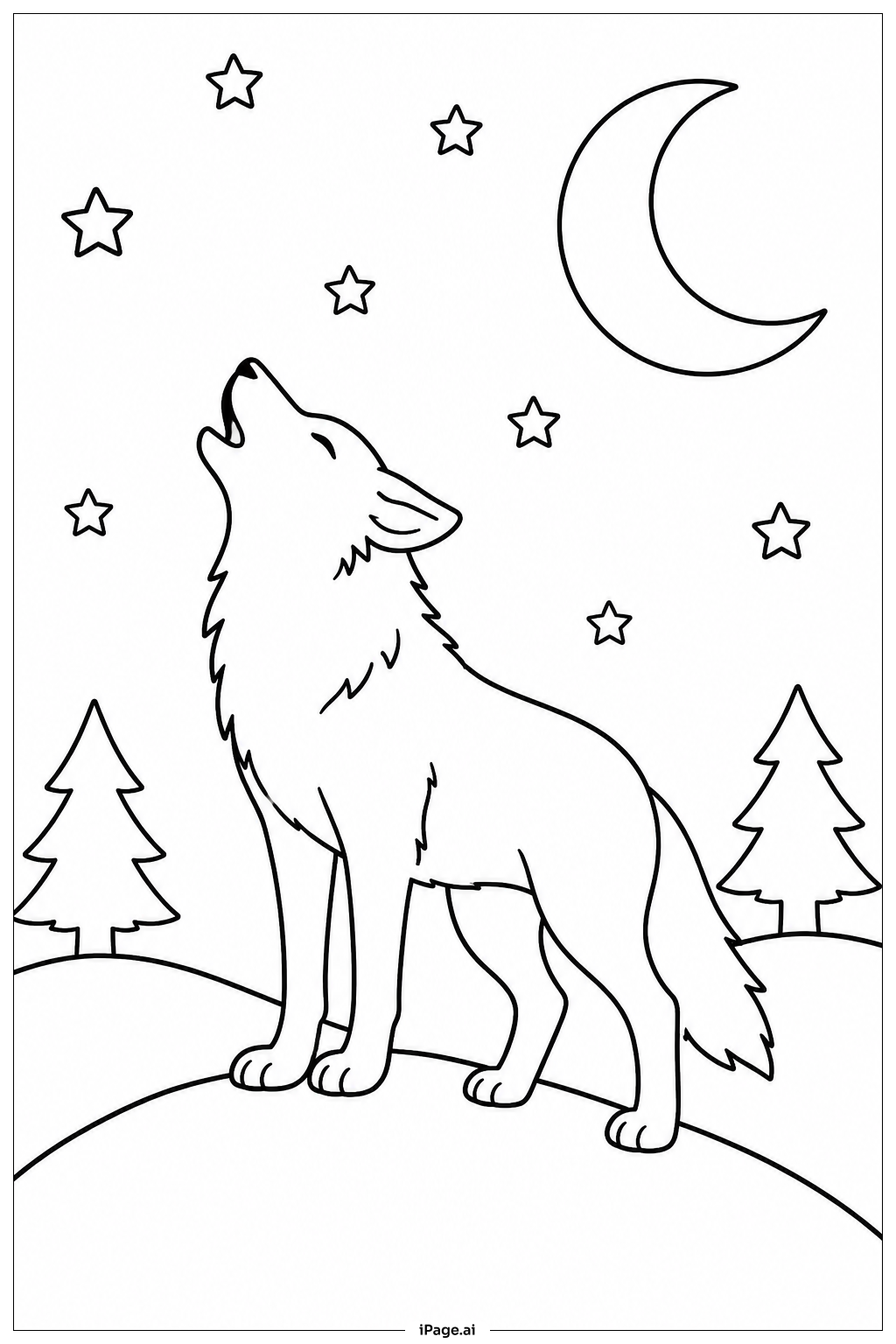
Coloring tips: How to color Wolf Under Starry Sky coloring page well?
Start with the sky. Use deep navy blue or purple as your base color and blend in lighter shades of blue and violet toward the horizon. Add bright yellow or white dots for the stars, and use a soft yellow or silver for the moon. For the wolf, think about natural gray and brown tones. Try layering light gray for the base coat, then add medium gray and dark brown shadows to show depth in the fur. Use white or very light gray on the chest and inner legs. The muzzle can be a warmer tan shade. For the landscape, use dark forest green or deep teal for trees and hills, keeping them darker than the sky so the wolf stands out. If you want a magical feel, try adding pale blue or pink highlights to the fur where the moonlight would hit. Younger colorists can keep it simple with three to four solid colors, while older kids can practice blending and shading for a more realistic look.
Coloring challenges: Which parts are difficult to color and need attention for Wolf Under Starry Sky coloring page?
• Wolf Fur Texture: The wolf's coat has many overlapping layers of fine, flowing strands. Coloring each section to look natural and three-dimensional takes patience. You need to vary the pressure on your pencil or marker to create light and dark areas. Going in the direction the fur flows helps it look more realistic. This is one of the trickiest parts of the whole image.
• Star-Filled Sky: The night sky is packed with stars of different sizes and brightness levels. Coloring a dark sky without accidentally covering small star details requires care. One good approach is to color the stars first with white or yellow, then carefully fill in the dark background around them. Rushing this step often leads to muddy or uneven results.
• Smooth Color Blending: To make the sky look deep and atmospheric, you need to blend from very dark at the top to slightly lighter near the horizon. This kind of gradient is hard to achieve cleanly, especially with crayons or colored pencils. Taking your time and using circular strokes helps smooth out the transitions.
• Wolf and Background Separation: Since the wolf is a dark-toned animal against a dark night sky, making the two look distinct from each other can be tricky. Using slightly different shades or adding a subtle light outline effect around the wolf helps prevent it from blending into the background.
• Small Landscape Details: Trees, grass, or hill edges in the background may include tiny lines and fine shapes. These small areas are hard to color neatly and require a sharpened pencil or a fine-tipped marker to fill in without going outside the lines.
Benefits of coloring books: Advantages of drawing Wolf Under Starry Sky coloring page
Coloring this Wolf Under Starry Sky image offers a wide range of benefits for kids and creative learners of all ages. First, it builds focus and concentration. Staying within the lines and making careful color choices trains the brain to pay attention to detail. Second, it develops fine motor skills. Holding a pencil or marker and making controlled strokes strengthens the small muscles in the hands, which supports handwriting and other precise tasks. Third, it encourages creativity. Choosing colors, experimenting with shading, and deciding how to bring the night sky to life lets every child express their own unique style. Fourth, it introduces nature awareness. The wolf is a fascinating wild animal, and coloring it can spark curiosity about wildlife, ecosystems, and the natural world. Fifth, it promotes relaxation and emotional calm. The quiet, focused activity of coloring has been shown to reduce stress and anxiety in children and adults alike. Finally, finishing the page gives a genuine sense of accomplishment, boosting confidence and encouraging kids to take on new creative challenges.