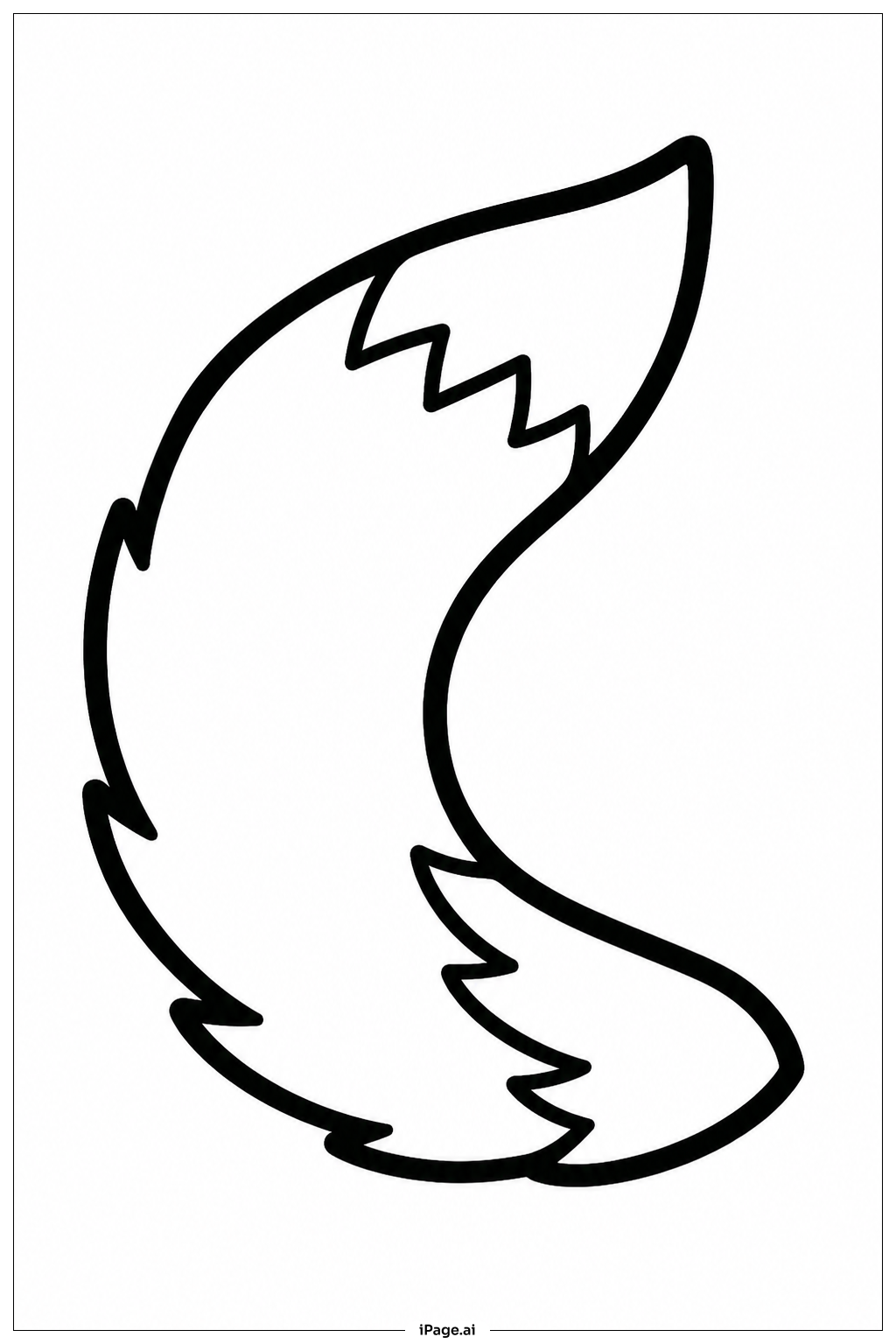
Coloring tips: How to color Wolf Tail Curve coloring page well?
Start with a light base coat across the whole tail. Gray, brown, or tan are great natural wolf colors. Use a slightly darker shade along the outer edges to define the shape. Add a lighter tone near the center of the tail to show where light hits the fur. Work in short, gentle strokes that follow the direction of the fur lines. This helps the tail look soft and realistic. For the tip of the tail, many wolves have a darker patch, so try deep gray or black there. You can also go creative and try white or even a mix of warm tones for a fantasy wolf look. Blending colors smoothly where they meet will make the fur look full and fluffy. Kids can keep it simple with two or three colors, while older colorists can layer many shades for a more detailed finish.
Coloring challenges: Which parts are difficult to color and need attention for Wolf Tail Curve coloring page?
• Following Fur Direction: The tail contains many overlapping lines that represent individual strands of fur. Staying consistent with the direction of each stroke is tricky. Coloring against the fur lines can make the image look messy, so patience and careful observation are needed to keep every stroke flowing the right way.
• Layering Light and Shadow: A curved tail naturally has areas where light hits and areas that fall into shadow. Identifying these zones and applying the right shades in the right places takes practice. Using too dark a tone everywhere flattens the image, while ignoring shadows leaves it looking unrealistic.
• Blending at Color Transitions: Where one color meets another, such as where a darker edge meets a lighter center, smooth blending is essential. Hard lines between colors can break the illusion of soft fur. This is especially challenging for beginners who are still learning how to feather or blend colored pencils or markers.
• Detailing the Tip: The tail tip is often a focal point with its own distinct color or texture. Filling this small area neatly without bleeding into surrounding sections requires a fine-tipped tool and steady hands.
• Keeping Consistency Across the Full Curve: Because the tail sweeps in a long arc, maintaining the same color intensity and style from the base all the way to the tip without the work looking uneven or rushed is one of the biggest overall challenges of this piece.
Benefits of coloring books: Advantages of drawing Wolf Tail Curve coloring page
Coloring this wolf tail image offers a wonderful range of benefits for young artists and older colorists alike. The flowing, curved lines of the tail naturally guide the hand in smooth, rhythmic motions, which helps develop fine motor control and steady hand coordination. Kids practice holding and directing their coloring tools with greater precision as they follow the detailed fur lines.
The image also encourages focus and patience. Working through the layered texture of the fur trains the brain to slow down and pay attention to small details, which is a great skill both inside and outside the classroom.
Choosing colors for a wolf tail sparks creative thinking. Whether a child picks realistic gray tones or decides to paint a magical purple wolf, they are making independent decisions and expressing their own personality through art.
For older colorists and adults, this image serves as a mindful, calming activity. The repetitive strokes needed to fill in the fur can ease stress and bring a quiet sense of accomplishment. Completing a detailed piece like this also builds confidence and a sense of pride in finished work. Overall, this coloring page is a fun, enriching experience for all ages.