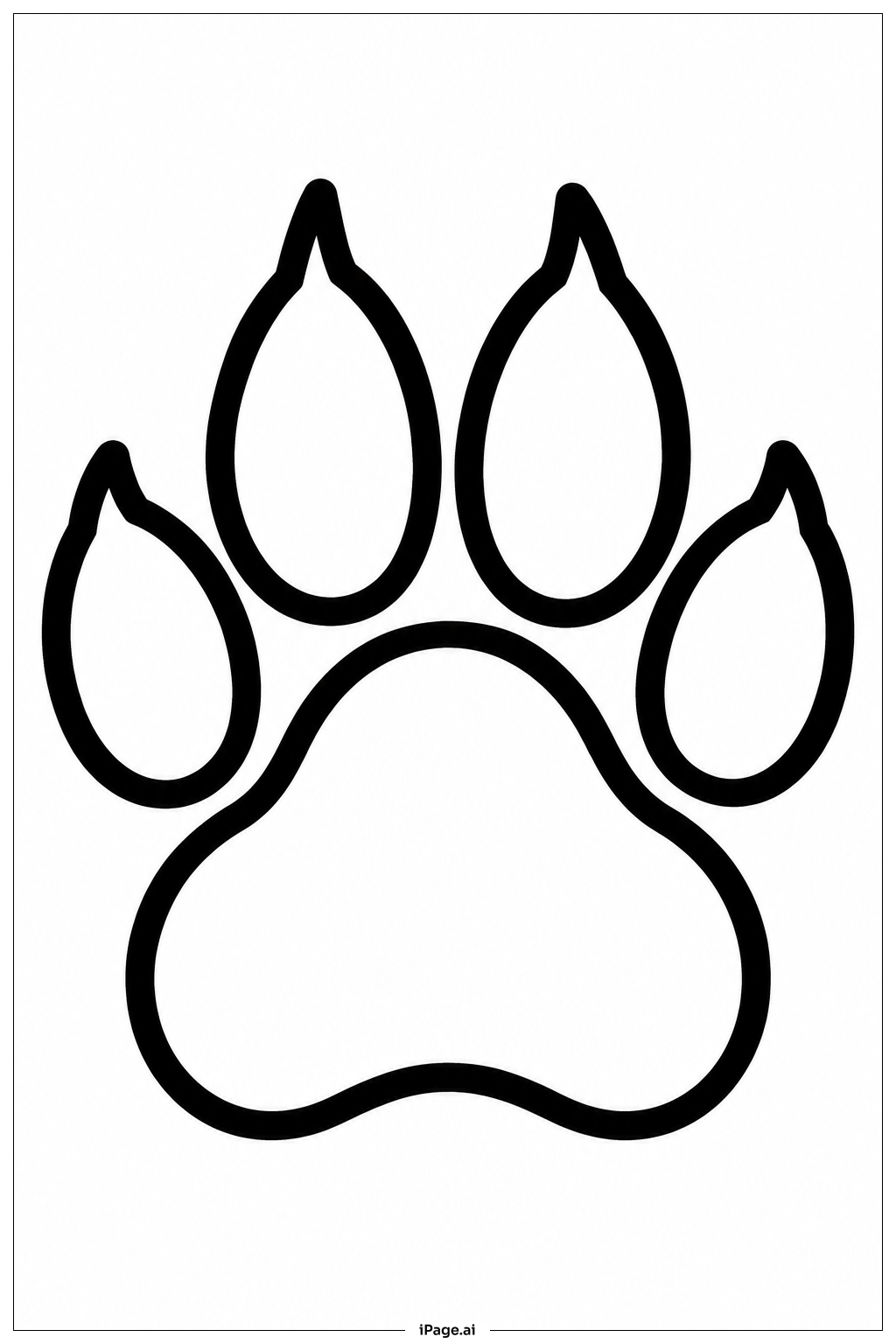
Coloring tips: How to color Wolf Paw Print coloring page well?
Start with the large central pad. Use a medium gray or warm brown as your base color. This gives the paw a natural, earthy tone. For the four toe pads, use a slightly lighter or darker shade of the same color to create contrast. The claw marks look great in dark gray, charcoal, or black. You can also try a cool blue-gray palette to give the paw a frosty, wintry feel — perfect for imagining a wolf in the snow. If you want a more creative look, try using deep purples or midnight blues for a mystical wolf vibe. Add shading along the edges of each pad to give the print a three-dimensional look. Light pressure at the center and heavier pressure at the edges works well with colored pencils. For younger colorists, using just two or three simple colors keeps it fun and easy. There are no wrong choices — just enjoy the process!
Coloring challenges: Which parts are difficult to color and need attention for Wolf Paw Print coloring page?
• Staying Within the Curved Edges: The paw pads have rounded, organic shapes with no perfectly straight lines. Coloring inside these curved outlines can be tricky, especially for younger children. Take your time and use the tip of your colored pencil or marker to carefully trace just inside the edge before filling in the center.
• Coloring the Claw Marks Cleanly: The claw shapes at the top of each toe pad are narrow and pointed. These small areas require a sharp pencil or a fine-tipped marker to fill in neatly without going outside the lines. A dull pencil will make this part much harder.
• Creating Contrast Between the Pads: The central pad and the four toe pads are separate sections but sit close together. Choosing colors that are different enough to tell each section apart without looking mismatched takes a bit of planning. Lay out your colors side by side before you start to see how they look together.
• Adding Texture and Shading: The fine texture lines etched across the pads are a great opportunity to add depth, but blending shading around them without covering them up is a real challenge. Use light, gentle strokes and work in layers. Pressing too hard too soon can flatten the detail.
• Keeping the Overall Design Balanced: Because the paw print is symmetrical, any uneven coloring on one side will stand out compared to the other. Try to apply similar pressure and coverage on both sides to keep the finished piece looking polished and even.
Benefits of coloring books: Advantages of drawing Wolf Paw Print coloring page
Coloring this wolf paw print page offers a wonderful mix of fun and learning for kids and adults alike. For younger children, tracing around the curved pads and small claw shapes helps build fine motor skills and strengthens hand-eye coordination. It also encourages focus and patience as they work carefully within each section.
For older kids and teens, this page is a great way to explore color theory. Experimenting with shading, blending, and contrast on the pads teaches real art techniques in a low-pressure way.
For adults, coloring the bold, simple shapes of the paw print is deeply relaxing. The repetitive, mindful strokes help reduce stress and quiet a busy mind — much like meditation.
This image also sparks curiosity about wildlife. Children may become interested in learning more about wolves, their habitats, and their tracks in nature. It opens up conversations about animals and the natural world.
Finally, completing this page gives colorists of all ages a real sense of accomplishment. The finished paw print looks striking on display, making it a piece kids are genuinely proud to show off. Coloring Pages like this one are a simple, screen-free activity the whole family can enjoy together.