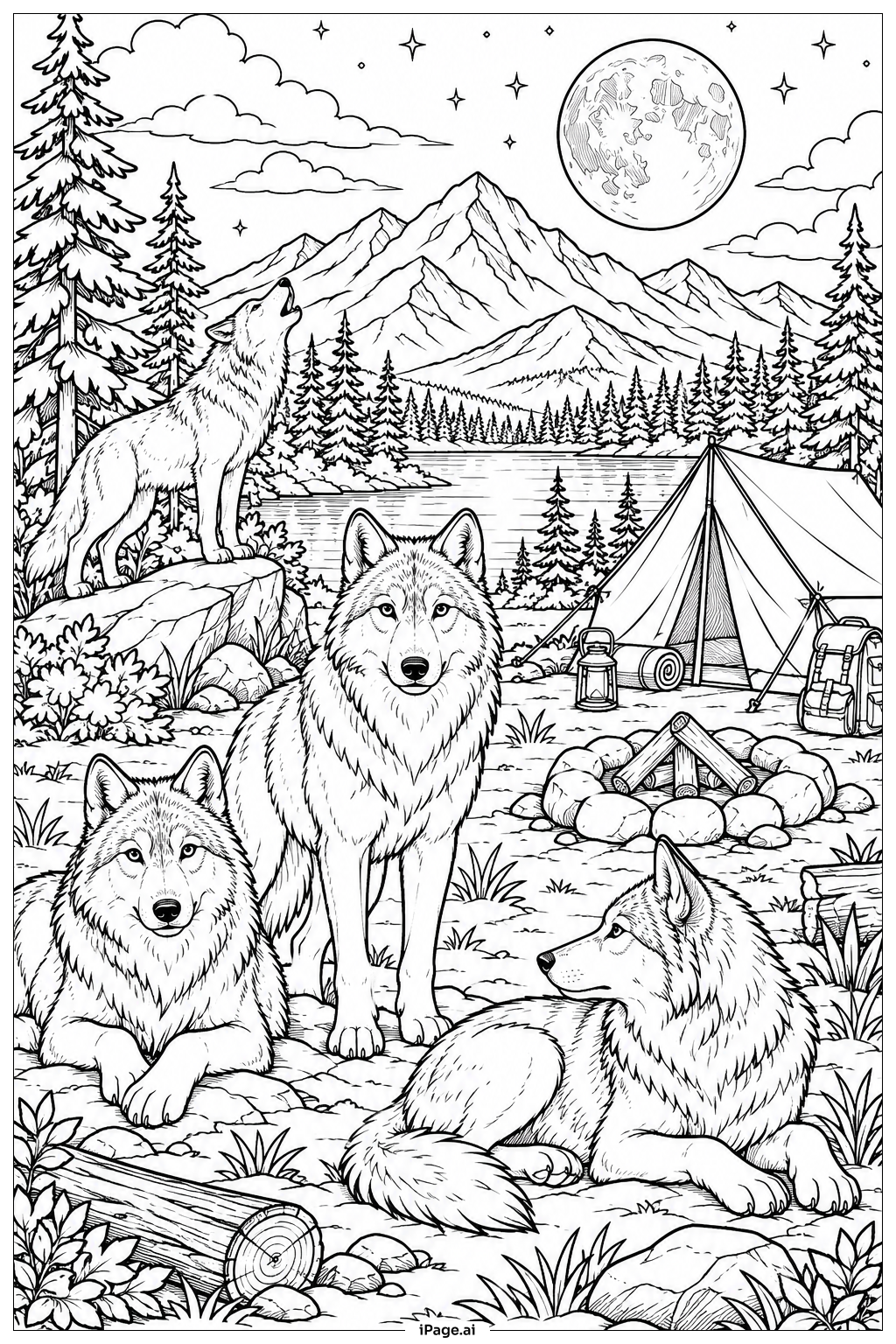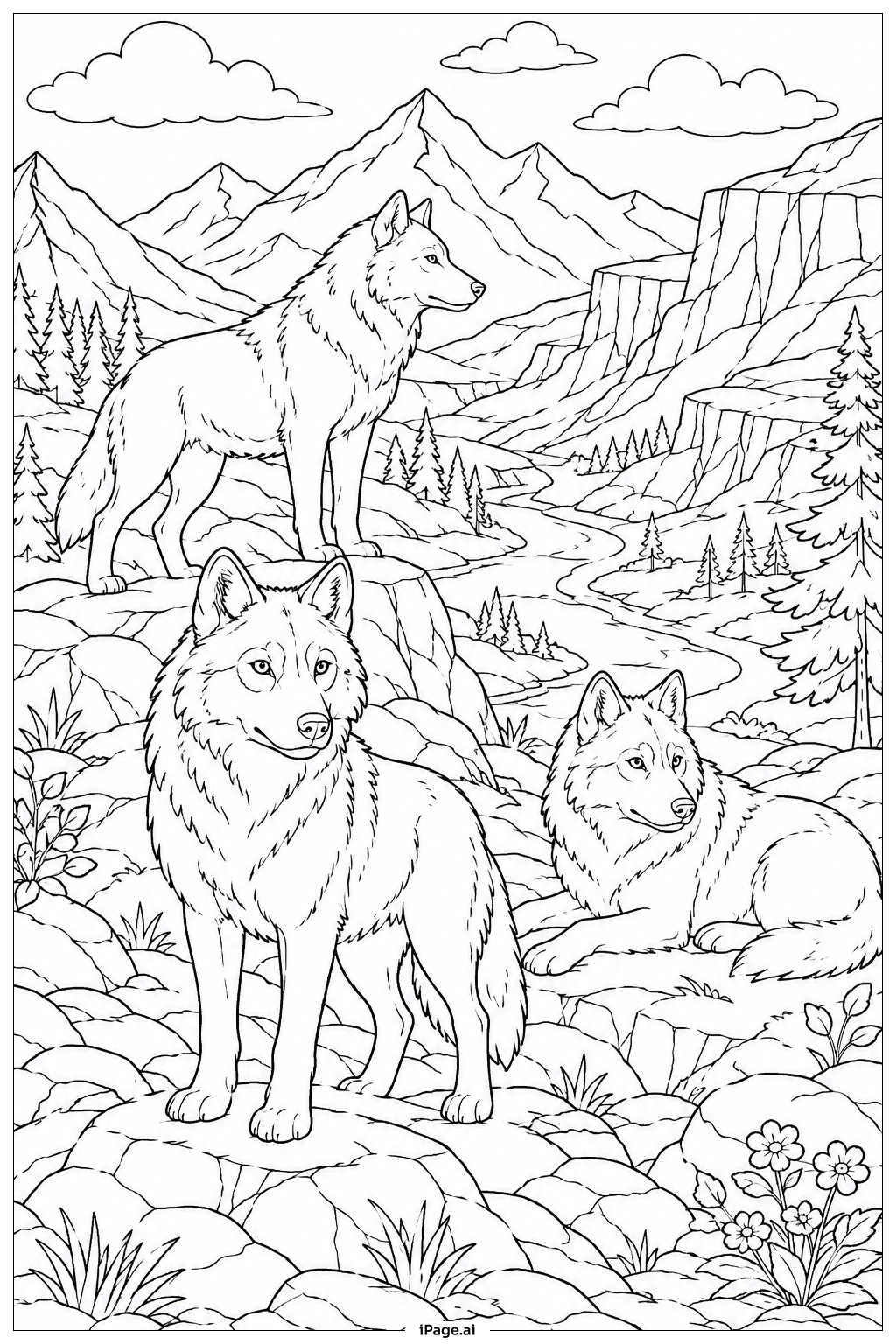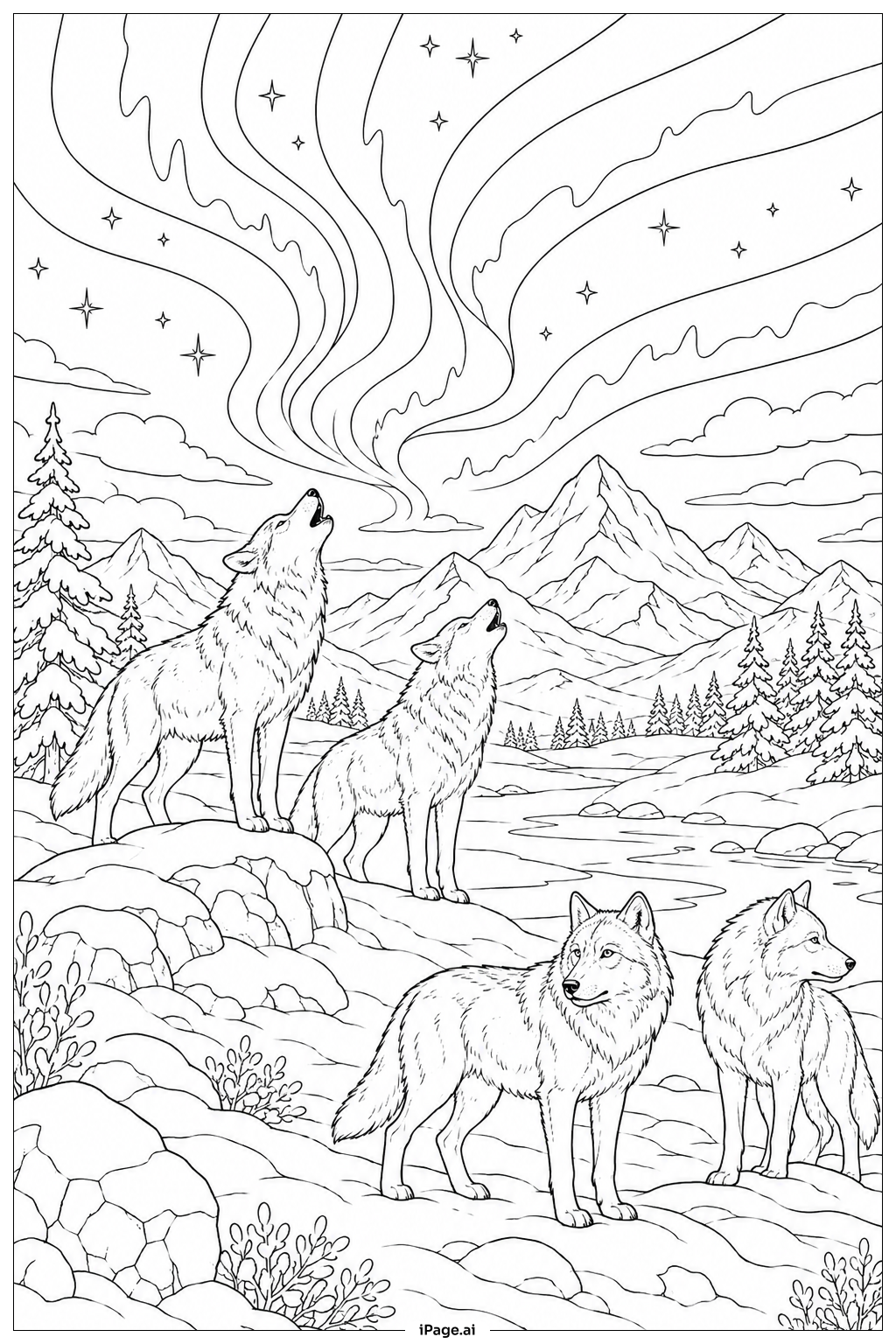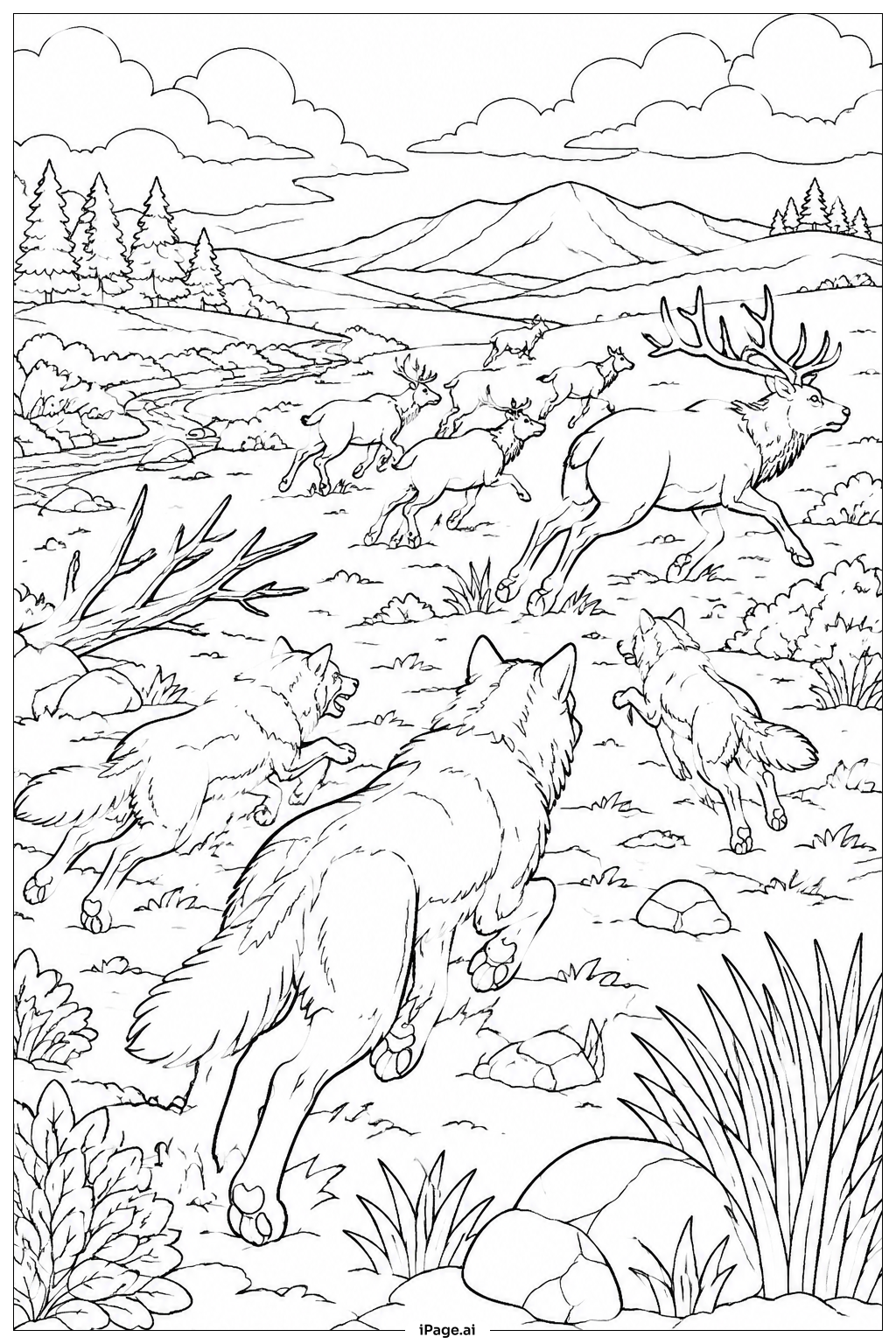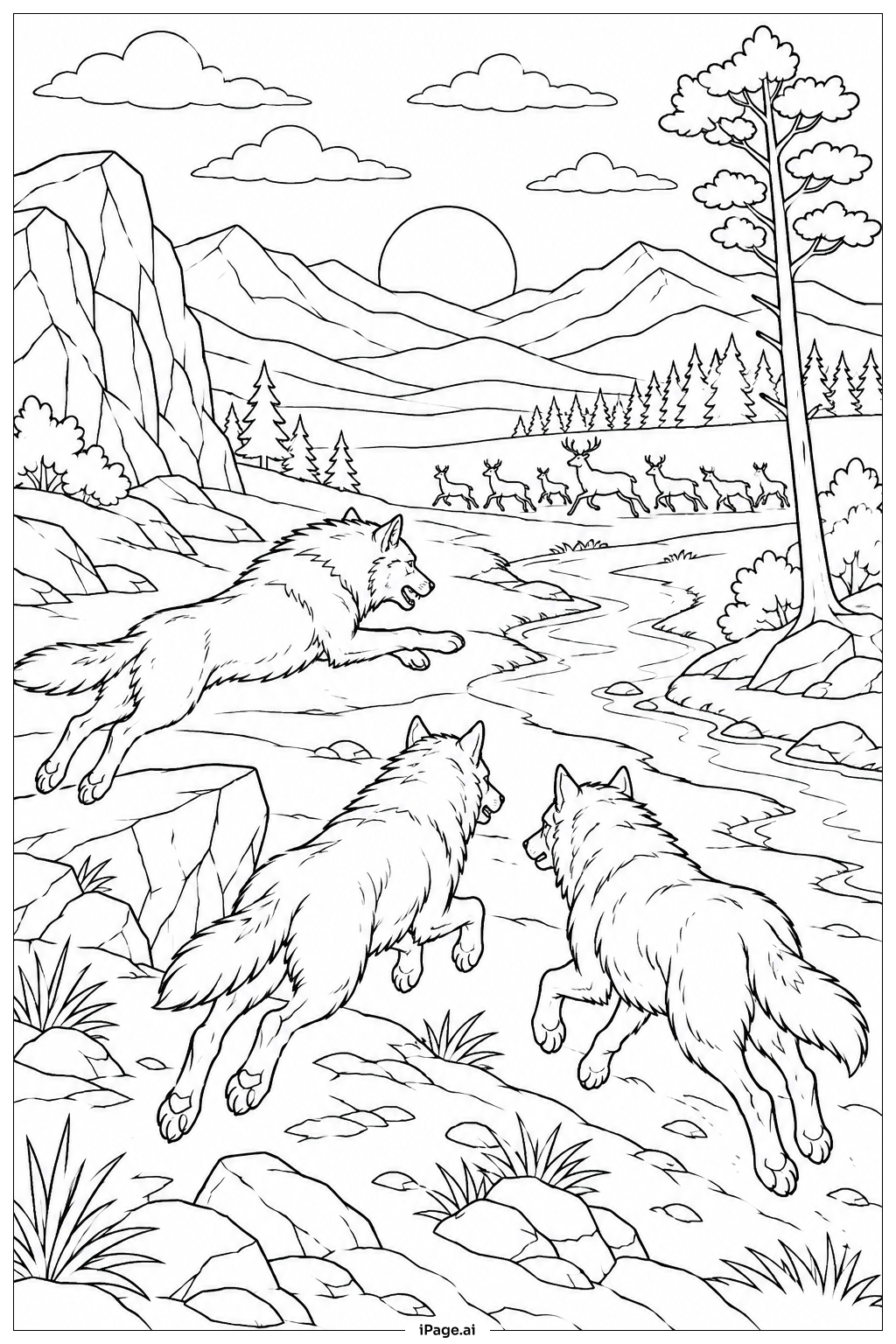
Coloring tips: How to color Wolf Pack Hunting Scene coloring page well?
Start with the wolves' fur using shades of gray, brown, and cream. Use darker gray or charcoal for the back and sides, and lighter tones like tan or white for the belly and muzzle. Add warmth with hints of golden brown on the legs and ears. Make the eyes bright amber or yellow to give each wolf a fierce, focused look. For the background, use earthy tones like sandy yellow and olive green for the grass and ground. Color the rocks in cool gray and brown. Use dark green and deep brown for the distant trees. Keep shadows under the wolves' bodies darker to add depth. If you want the scene to feel like dusk or dawn, try adding soft orange and pink tones to the sky area. Take your time with the fur — short, overlapping strokes in different shades will make it look full and realistic.
Coloring challenges: Which parts are difficult to color and need attention for Wolf Pack Hunting Scene coloring page?
• Fur Texture and Layering: Wolves have thick, multi-toned coats that are hard to replicate with flat color. You need to blend at least two or three shades per wolf to show depth and volume. Using short, directional strokes that follow the fur growth pattern takes patience and steady hands. Rushing this step can make the wolves look flat and lifeless.
• Multiple Figures with Consistent Coloring: This scene features several wolves, and keeping their coloring consistent while still making each one look slightly different is a real challenge. You need to decide on a color palette early and stick to it, while adding small variations in shade or markings to distinguish individual animals.
• Dynamic Poses and Proportions: The wolves are in motion, with stretched limbs, lowered bodies, and angled heads. Coloring these dynamic poses without losing the sense of movement is tricky. Shadows must follow the body curves, and highlights need to land in the right spots to make the motion feel real.
• Background Depth and Detail: The landscape behind the wolves includes grass, rocks, and trees at different distances. Creating a believable sense of depth means using lighter, cooler tones for far-away elements and stronger, warmer tones for things up close. Getting this balance right requires careful color planning.
• Eyes and Facial Expressions: The wolves' eyes carry a lot of emotion and intensity. Coloring them with a bright, glowing amber or yellow while keeping a dark pupil and a subtle shine takes precision. Small mistakes here can change the mood of the entire scene.
Benefits of coloring books: Advantages of drawing Wolf Pack Hunting Scene coloring page
Coloring a wolf pack hunting scene is a wonderful activity for kids and adults alike. It builds focus and concentration as you work through the fine details of fur, movement, and landscape. Staying within the lines and planning your color choices helps develop patience and hand control, which are great skills for everyday life.
Learning about wolf packs while you color adds an educational layer to the fun. Kids discover that wolves are social animals who work together as a team — just like people do. This can spark curiosity about nature, wildlife, and animal behavior.
The action-packed scene also encourages creative thinking. Choosing colors for the sky, ground, and each individual wolf lets you express your own artistic vision. There are no wrong answers, which makes coloring a low-pressure, confidence-building experience.
For older kids and adults, blending fur tones and adding realistic shadows offers a satisfying artistic challenge. Finishing a complex, detailed page like this gives a real sense of achievement. It is also a calming, screen-free way to relax and recharge. Whether you are a beginner or a seasoned colorist, this scene has something engaging for everyone.