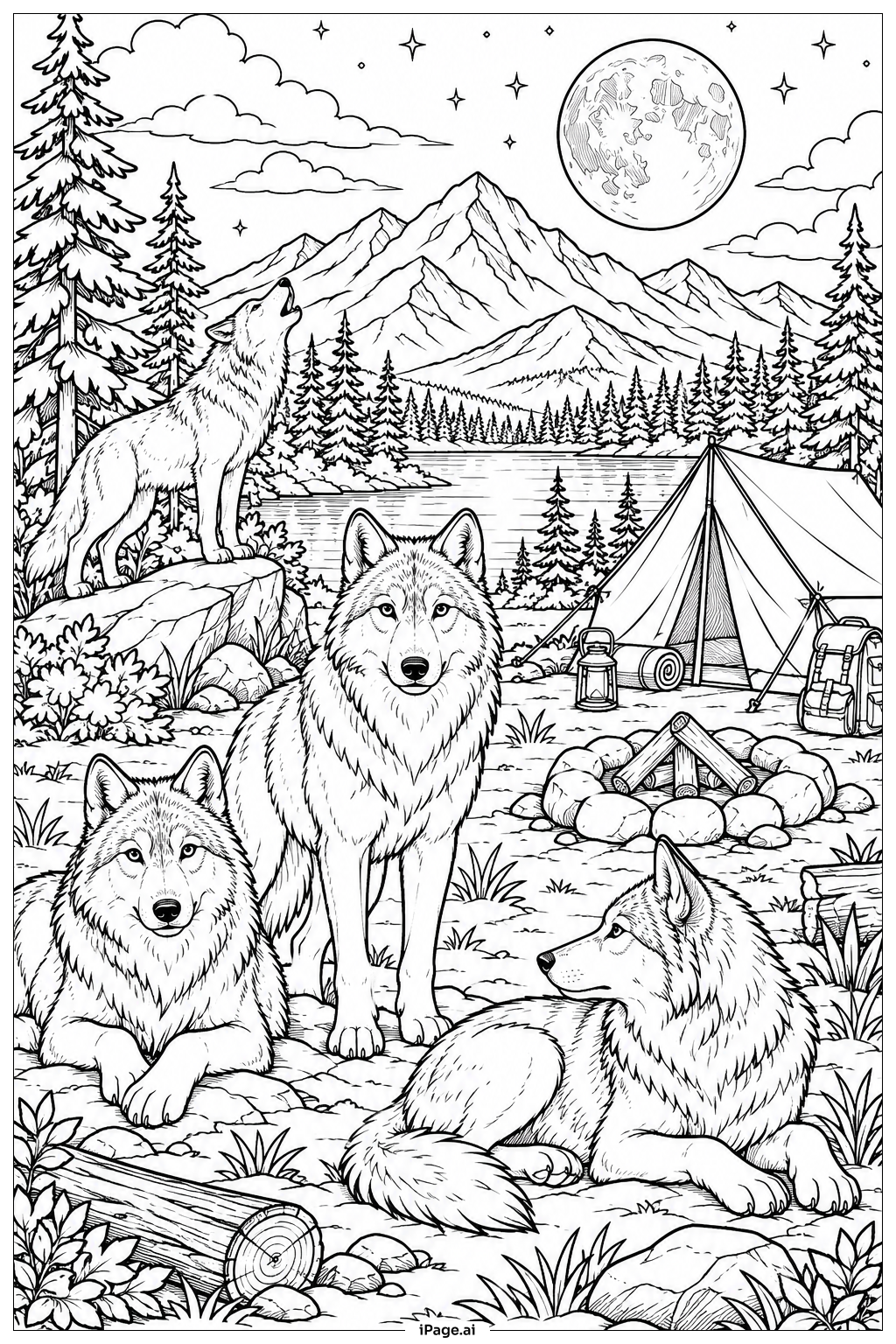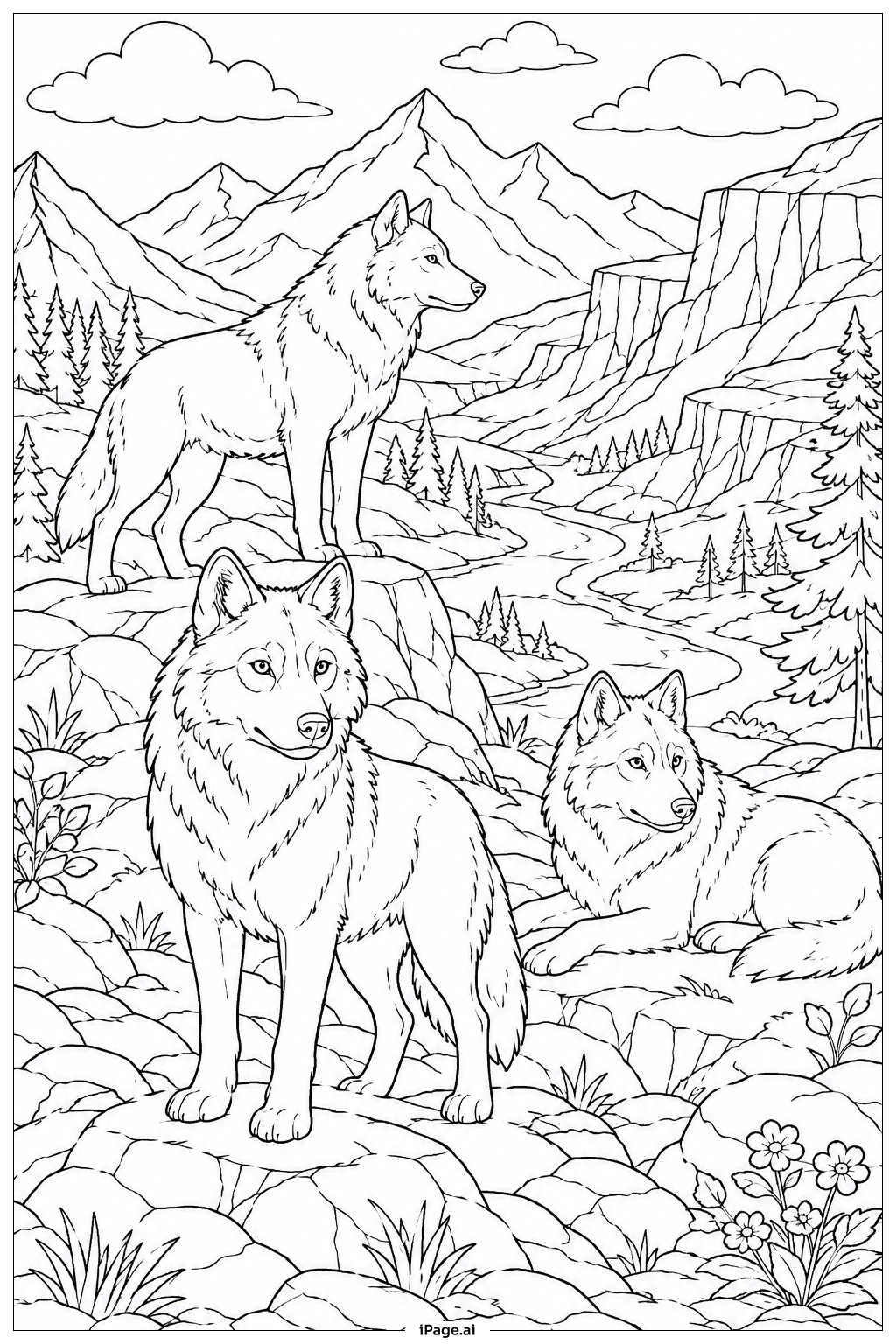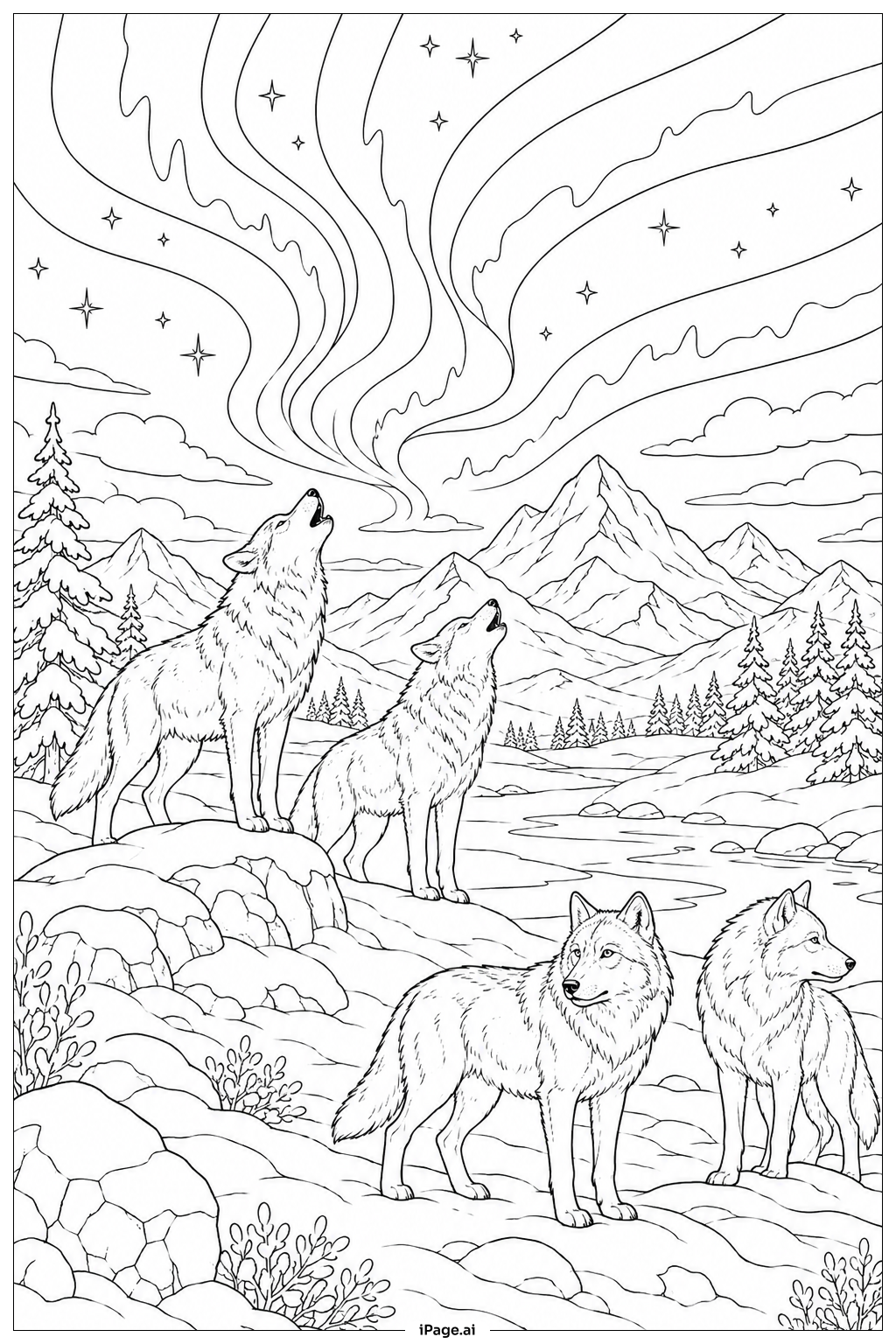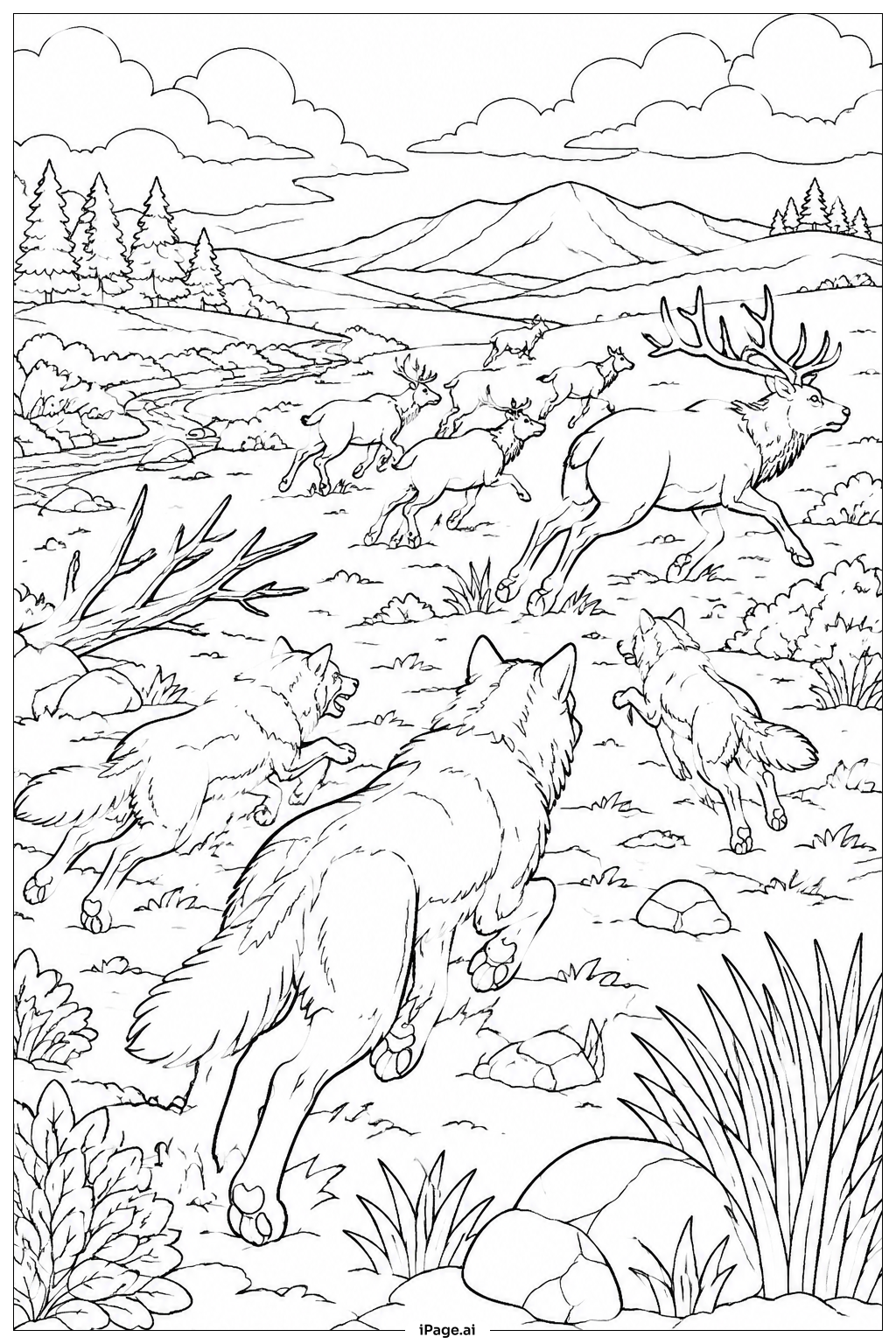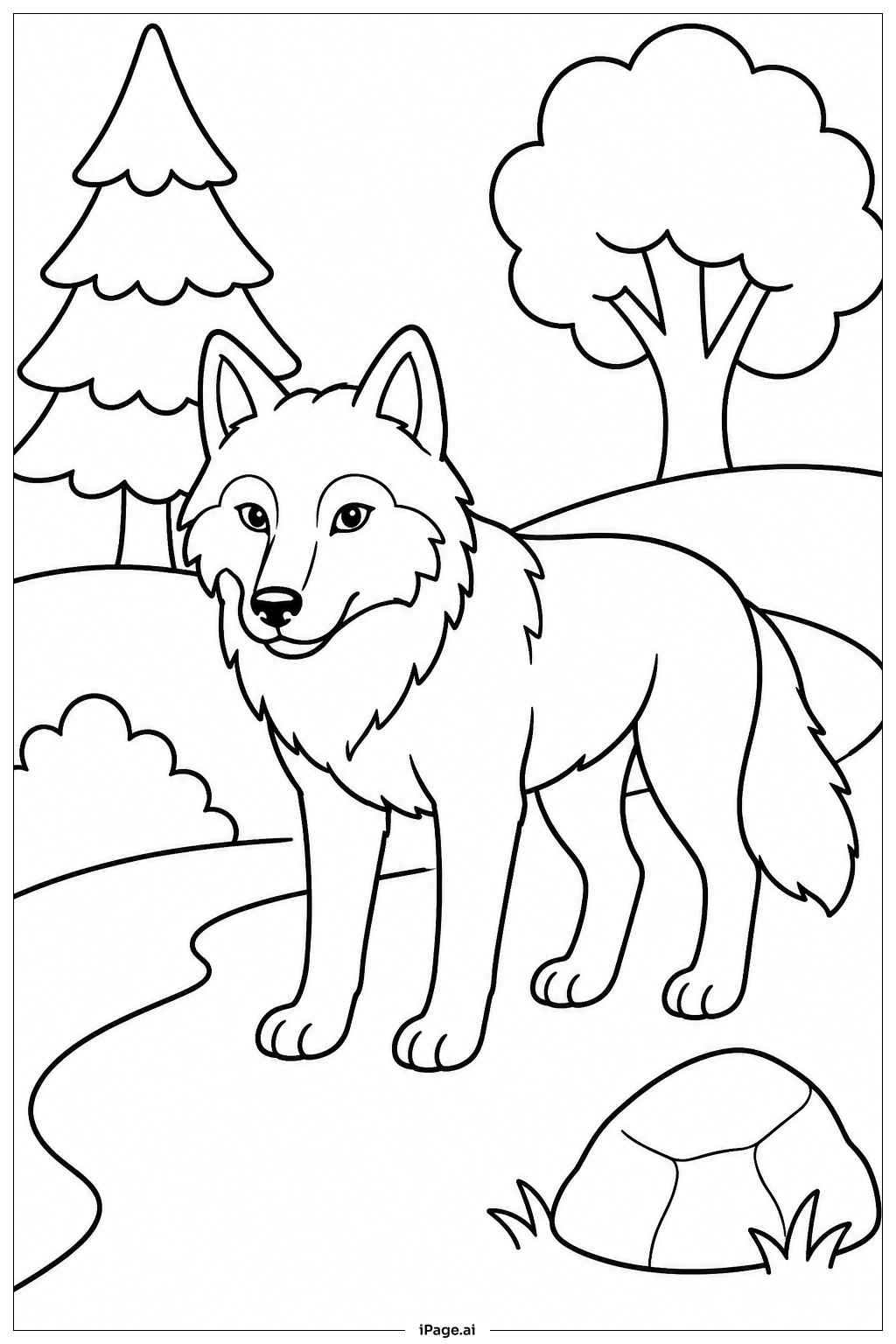
Coloring tips: How to color Wolf On Woodland Path coloring page well?
Start with the wolf's fur using shades of gray, brown, or tan. Use a lighter tone on the belly and inner legs to add depth. For the eyes, try amber or golden yellow to bring them to life. Add dark tips to the ears and tail for a natural look. Color the woodland path in warm earthy tones like tan, sandy beige, or light brown. Use multiple shades of green for the leaves, grass, and shrubs. Tree trunks look great in medium and dark brown with hints of gray. Try adding a soft blue or pale purple to shadowed areas on the ground to make the scene feel more three-dimensional. Older kids and adults can experiment with blending colors to give the wolf's coat a realistic, layered appearance.
Coloring challenges: Which parts are difficult to color and need attention for Wolf On Woodland Path coloring page?
• Wolf Fur Texture: The wolf's coat is made up of many overlapping lines that suggest individual strands of fur. Coloring these areas requires patience. Using short, directional strokes that follow the fur's natural flow will make the result look more realistic. Blending two or three shades of the same color family works well here.\n\n• Facial Details: The wolf's face contains closely spaced lines around the eyes, nose, and muzzle. These small areas are easy to color outside the lines. Using a fine-tipped colored pencil or a thin marker will help you stay precise and capture the wolf's expressive look.\n\n• Tree Bark and Background Layers: The trees in the background have detailed bark textures with ridges and curves. It can be tricky to decide where one tree ends and the background begins. Choosing slightly different shades of brown and gray for each tree helps separate them visually.\n\n• Ground Surface: The woodland path includes scattered leaves, pebbles, and uneven ground. Coloring each element a slightly different shade of brown, tan, or rust keeps the ground area from looking flat. Using a light touch for highlights adds a natural, earthy feel.\n\n• Depth and Shadow: Creating a sense of distance in the forest background is one of the bigger challenges. Coloring closer elements darker and background elements lighter gives the scene a feeling of depth. Adding soft shadows beneath the wolf and along the path helps anchor the figure in the scene.
Benefits of coloring books: Advantages of drawing Wolf On Woodland Path coloring page
Coloring this wolf and woodland scene offers a wide range of benefits for kids and adults alike. For younger children, tracing and filling in the detailed shapes helps build fine motor skills and improves hand-eye coordination. Choosing colors for the wolf's fur, the trees, and the forest floor encourages creative thinking and helps children learn about nature and wildlife. For older kids and teens, the more detailed areas of the image — like the wolf's coat and the tree bark — offer a satisfying challenge that builds focus and patience. Completing a detailed piece also gives a real sense of accomplishment. For adults, the rhythmic process of coloring can be deeply calming. It provides a mindful break from screens and daily stress, helping lower anxiety and promote relaxation. The forest setting adds to this effect, bringing a sense of peace and connection to the natural world. Overall, this image makes coloring both a fun activity and a meaningful creative practice for all ages.